
1940s Hairstyles: 20 Classic Ideas
1940s hair relied on rolls, sets, and controlled movement.
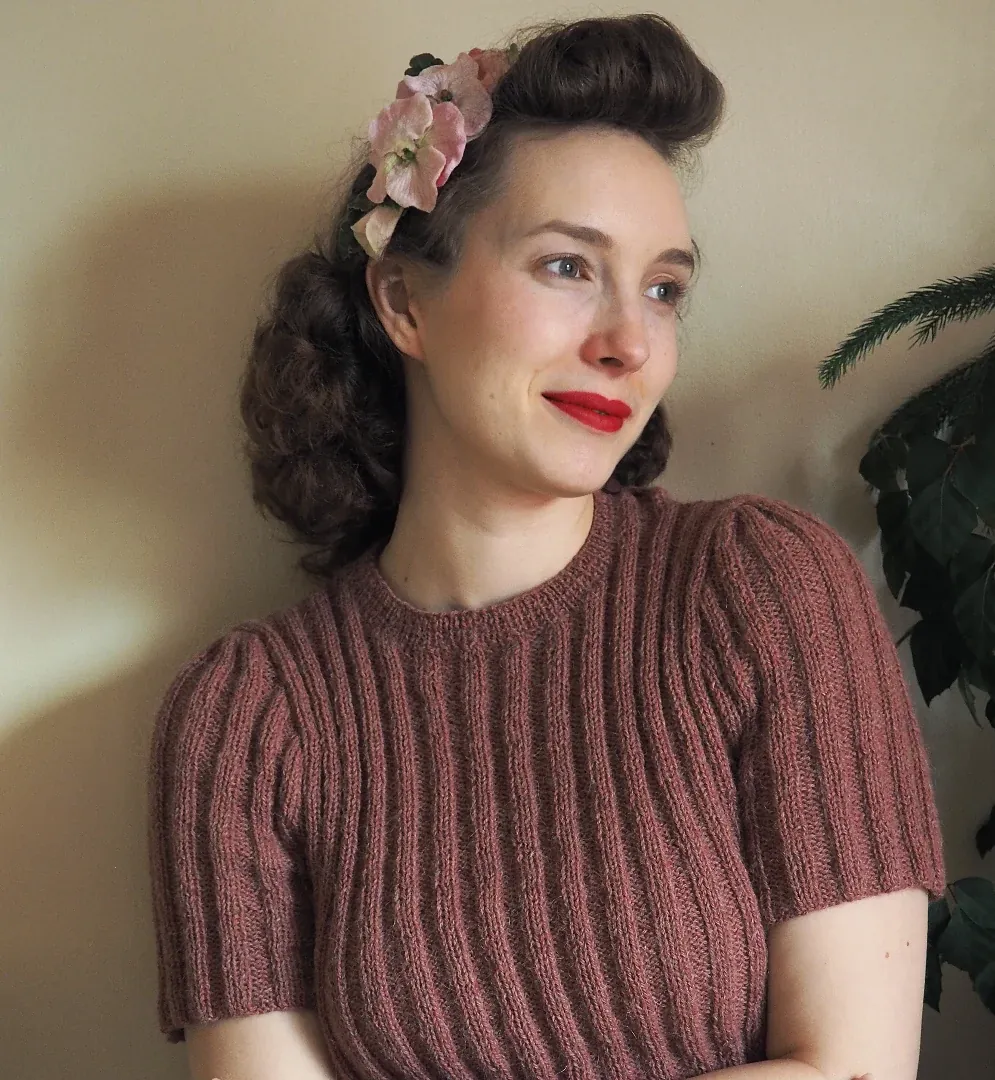
- Victory rolls, brushed sets, pin curls, and sculpted side parts are core shapes associated with 1940s hairstyling.
- Most looks begin with a curl set, then are brushed and pinned into a controlled silhouette rather than left as loose curls.
- Setting lotion, strong pins, and patient cooling time make these vintage shapes easier to build and more durable.
Victory Rolls
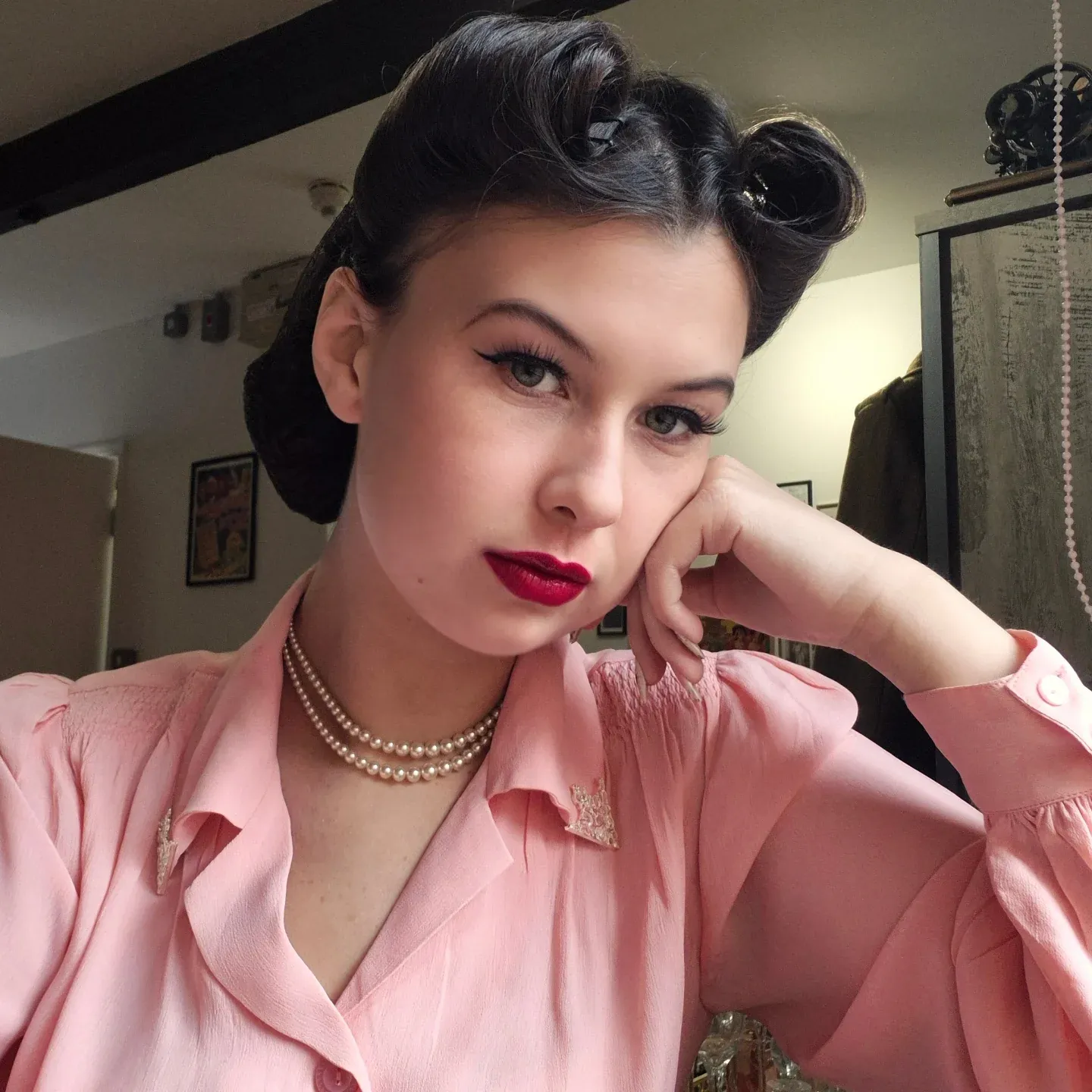
Two front victory rolls create height above the temples while the back stays controlled and close. Start with a firm curl set, then shape each roll around the fingers before pinning from underneath.
Side-Part Pin Curls
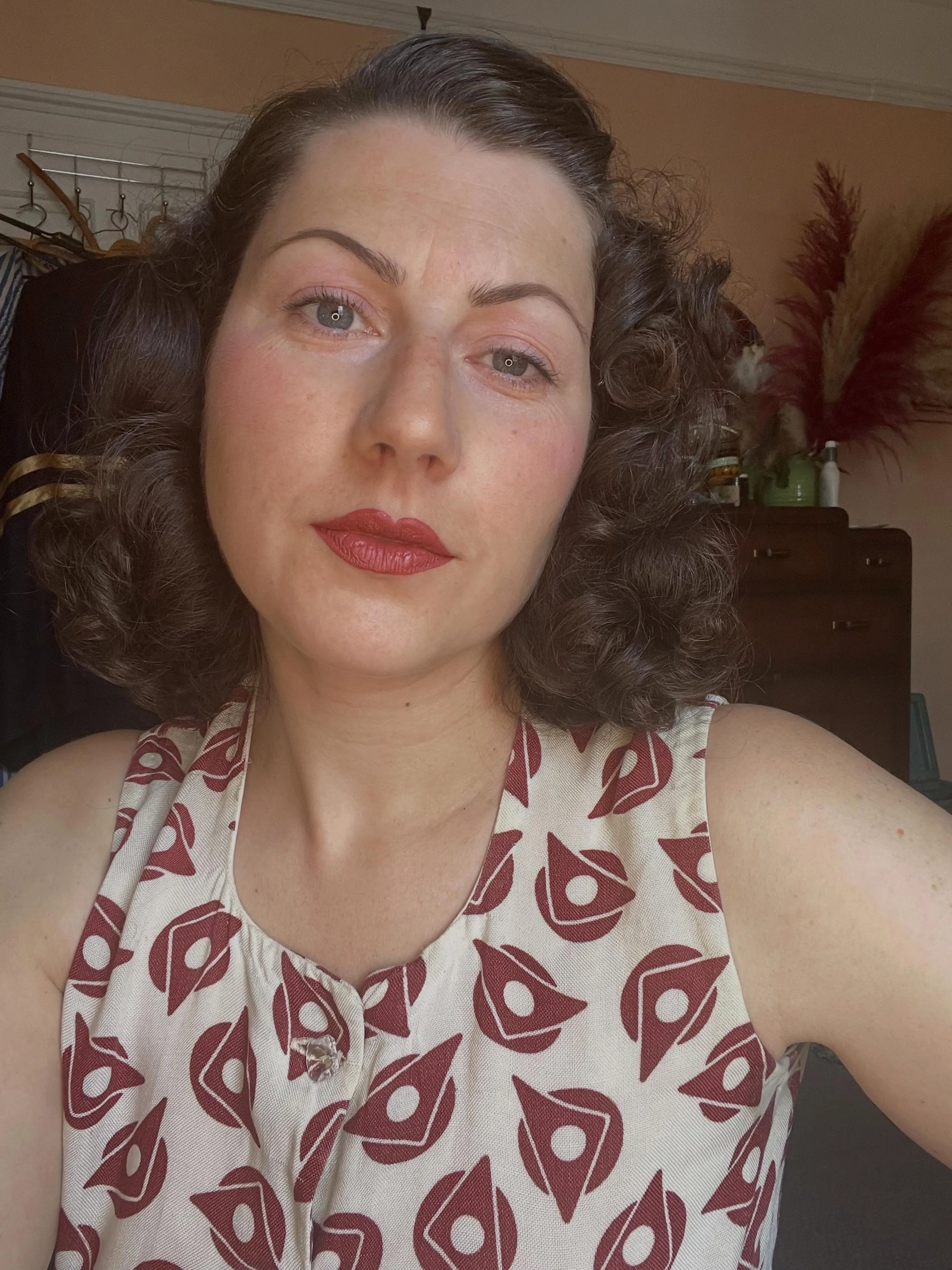
A deep side part directs the set into compact curls around the ears and jaw, which is typical of the period’s controlled silhouette. Brush the curls together rather than leaving them as separate ringlets.
Sculpted Side Curls
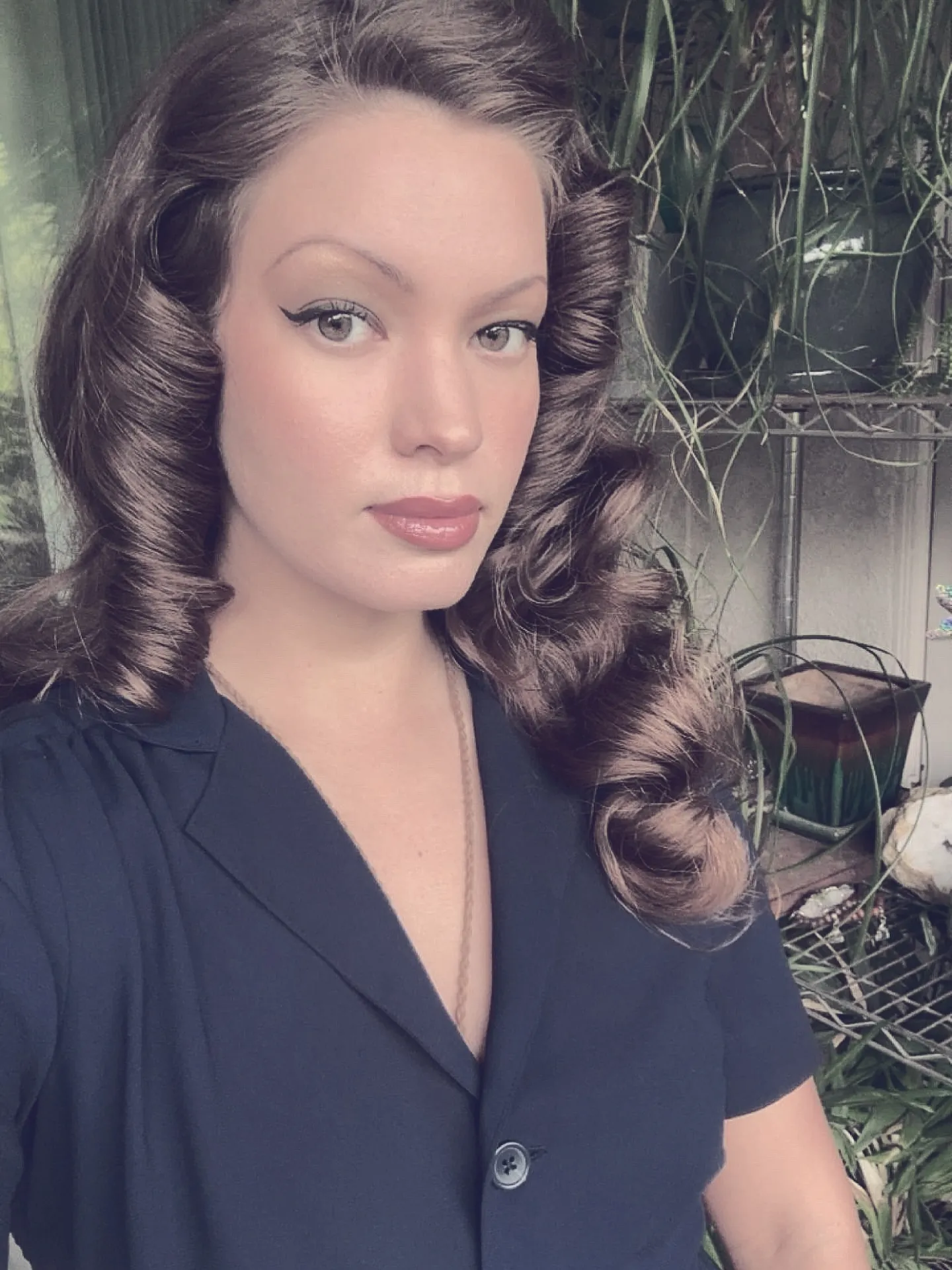
The side sections are set into smooth, sculpted curls that sit close to the face instead of expanding outward. Setting lotion helps the pattern stay neat once the curls are brushed into shape.
Soft Pageboy Waves
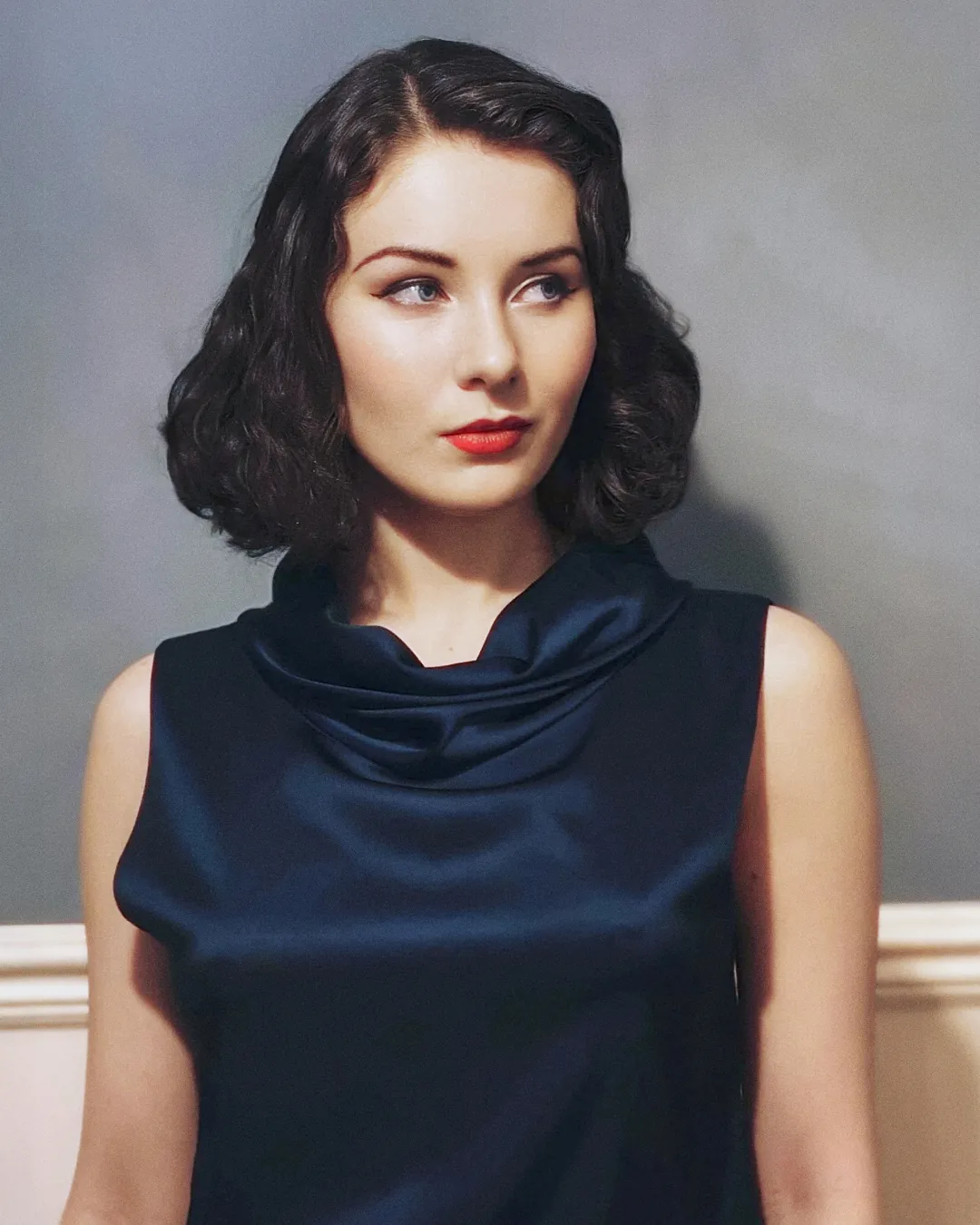
Soft pageboy waves keep the bob rounded at the ends with very little height on top. The key is brushing the set into one continuous curve so the style looks smooth rather than piecey.
Deep Side Waves
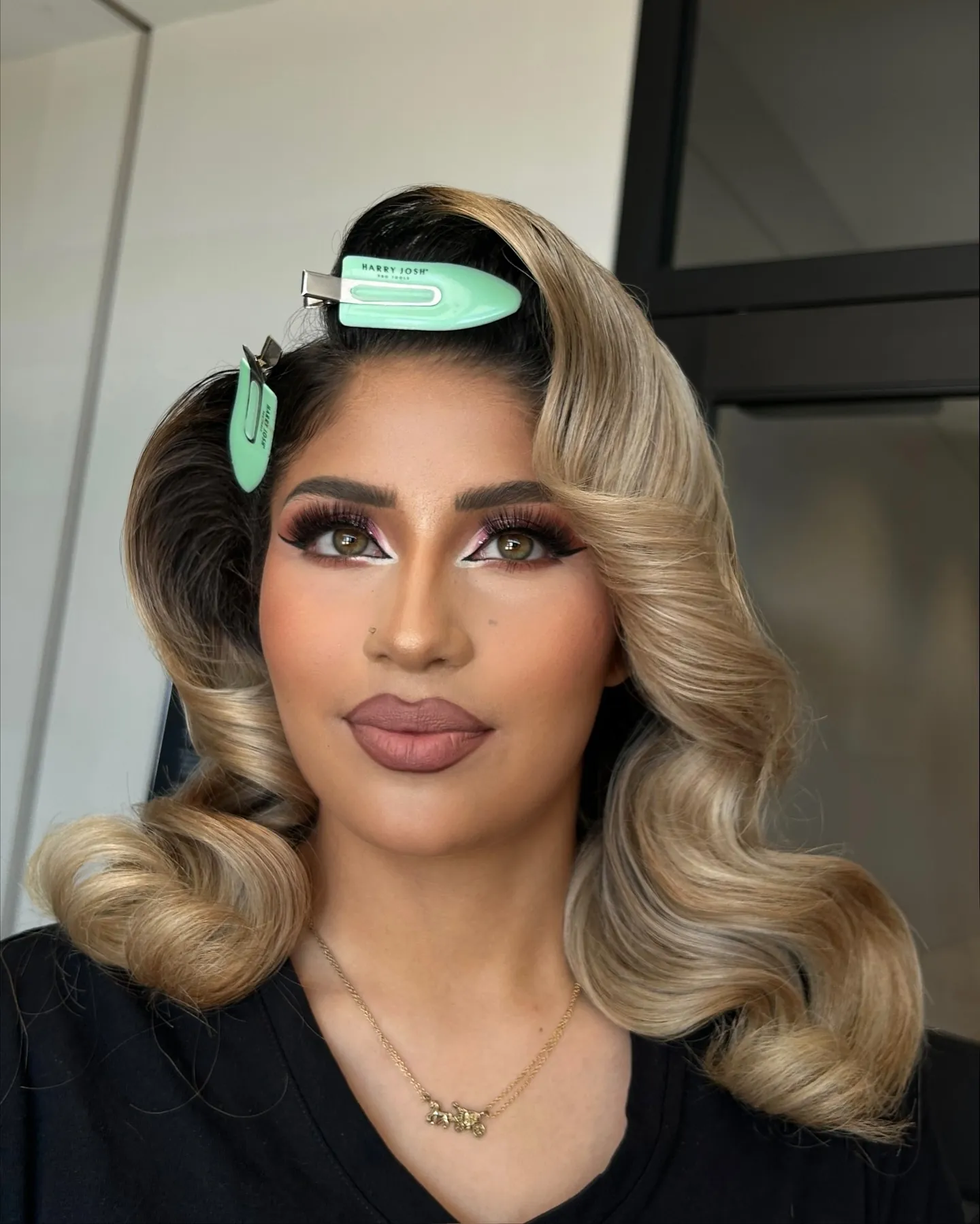
A deep side part and large, glossy waves create a more glamorous 1940s finish without needing an updo. Let the set cool fully before brushing so the wave pattern stays broad and controlled.
Holds better with: Set the hair first and let every curl cool completely before brushing.
Tucked Vintage Bob
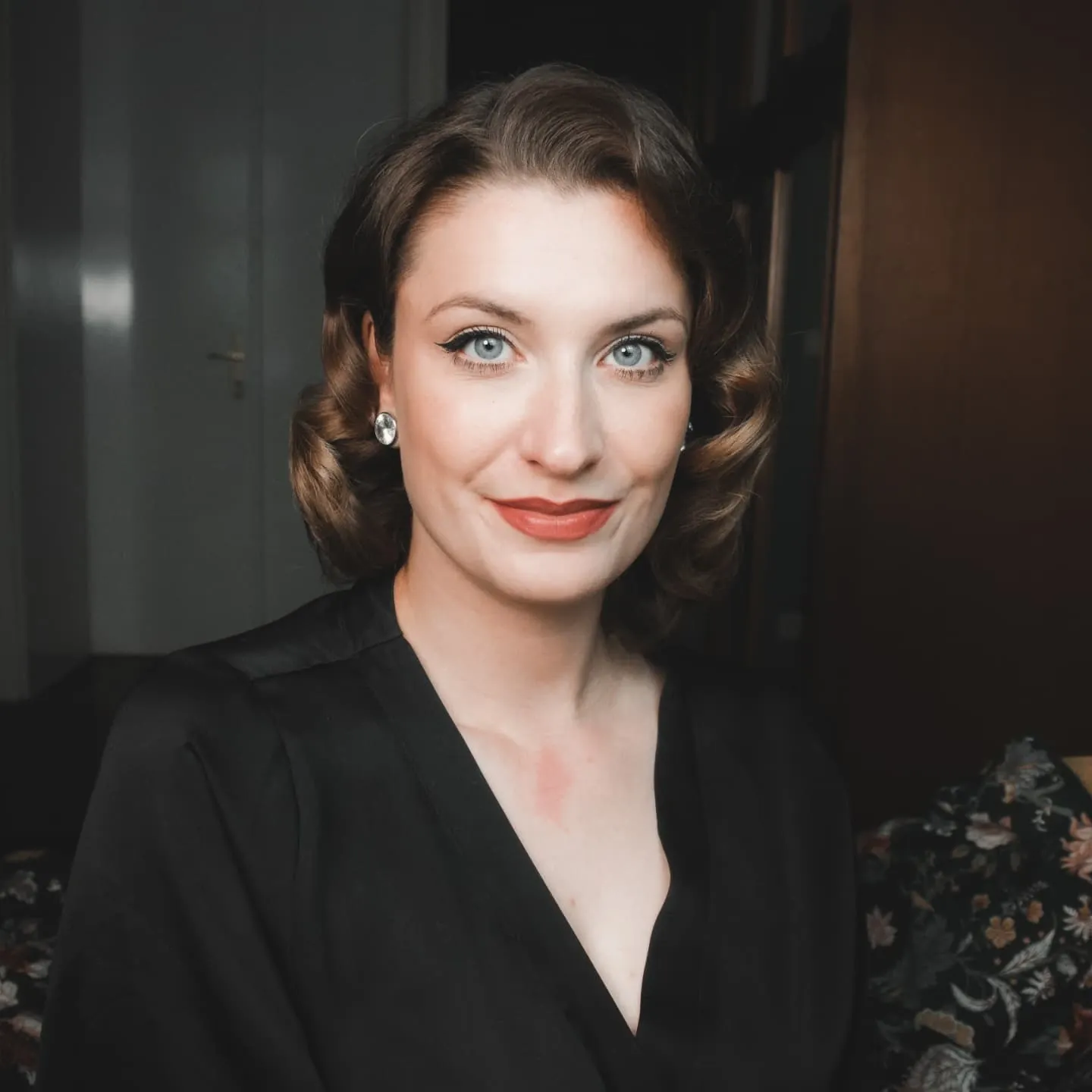
The short bob is tucked and curved under, keeping the neckline neat and the side shape compact. This works well with shorter hair because the set itself creates the period feel without extra pinning.
Rolled Fringe
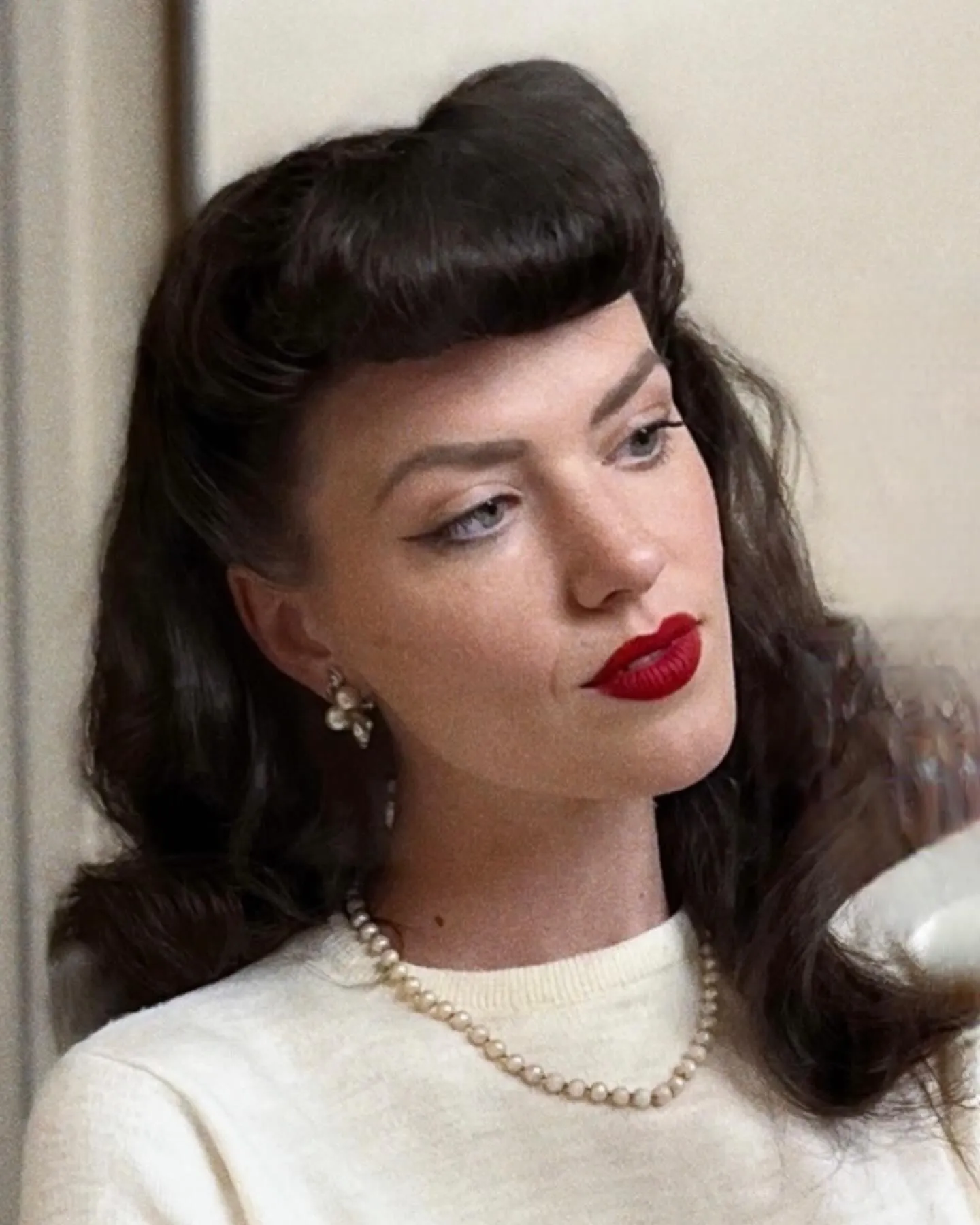
A rolled front fringe creates the height, while the rest of the hair stays softer through the sides. Build the roll over a strong base section so it does not collapse as the day goes on.
Brushed Glamour Waves
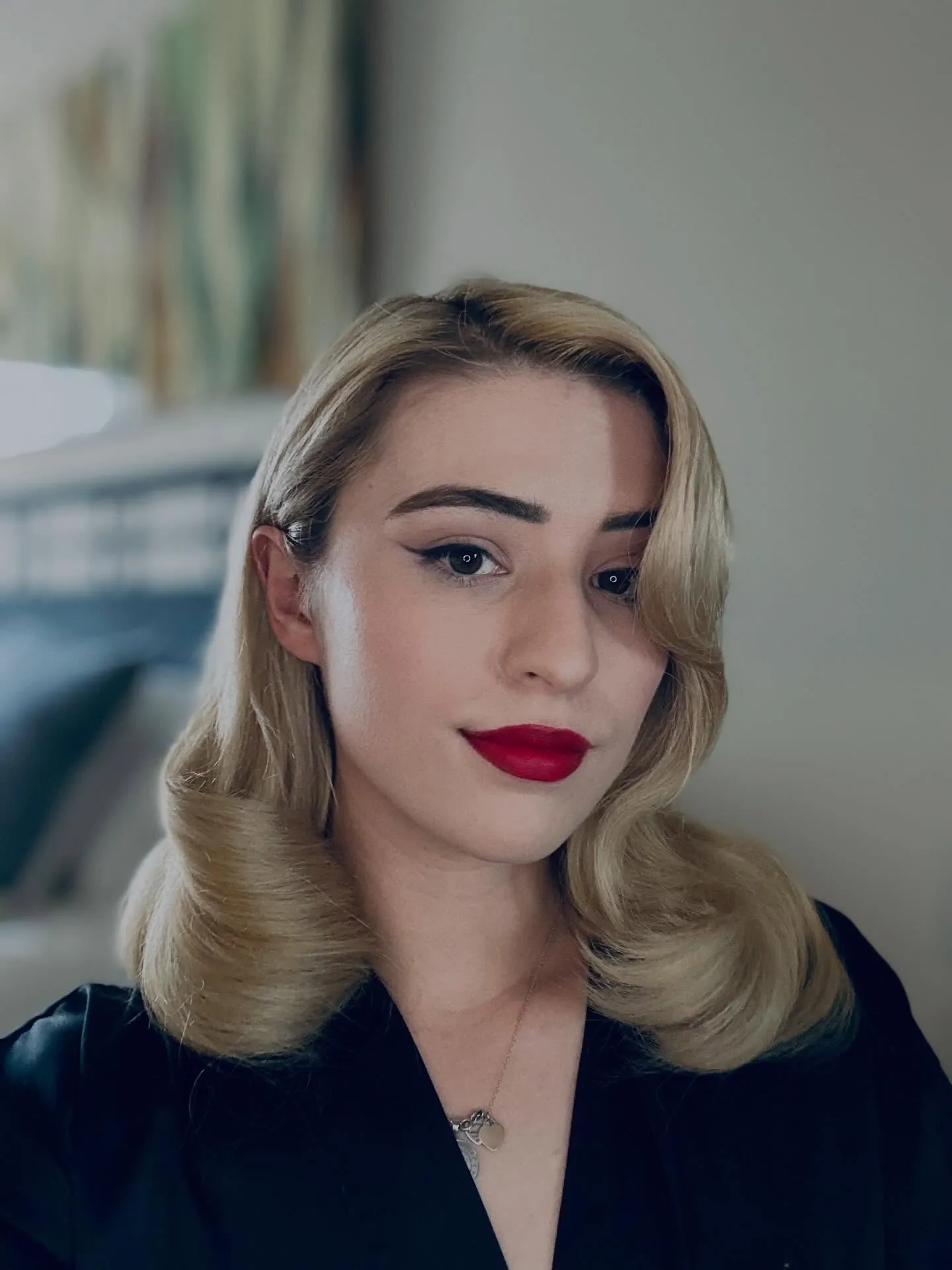
Large brushed waves move in one direction from the side part, giving the shoulder-length hair a smooth 1940s flow. A boar-bristle brush can help merge individual curls into the larger pattern.
Rolled Updo
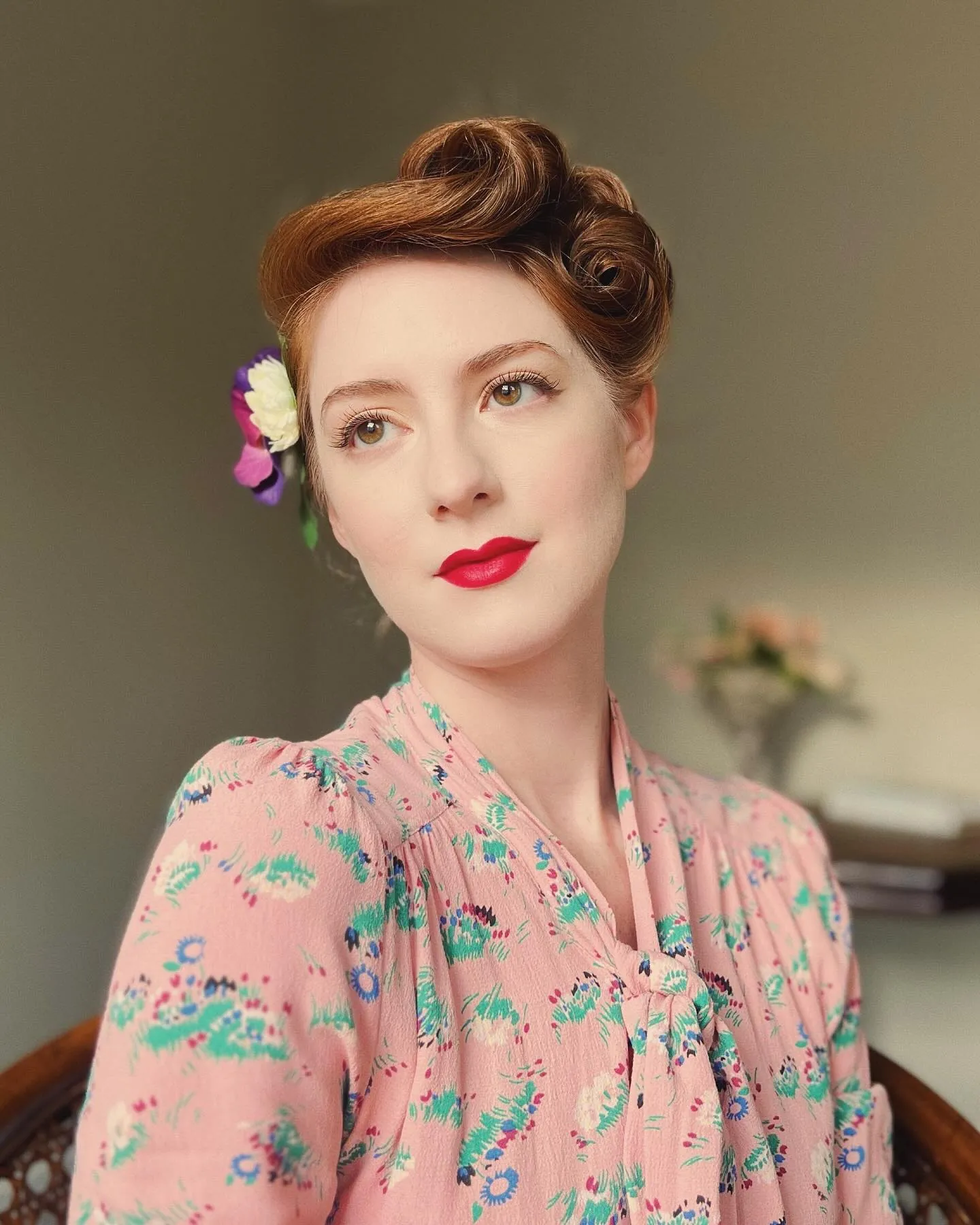
The front is rolled and pinned up while the remaining hair is gathered into a compact vintage updo. Keeping the surface smooth makes the construction look deliberate rather than like a modern messy bun.
Set Pin Curls
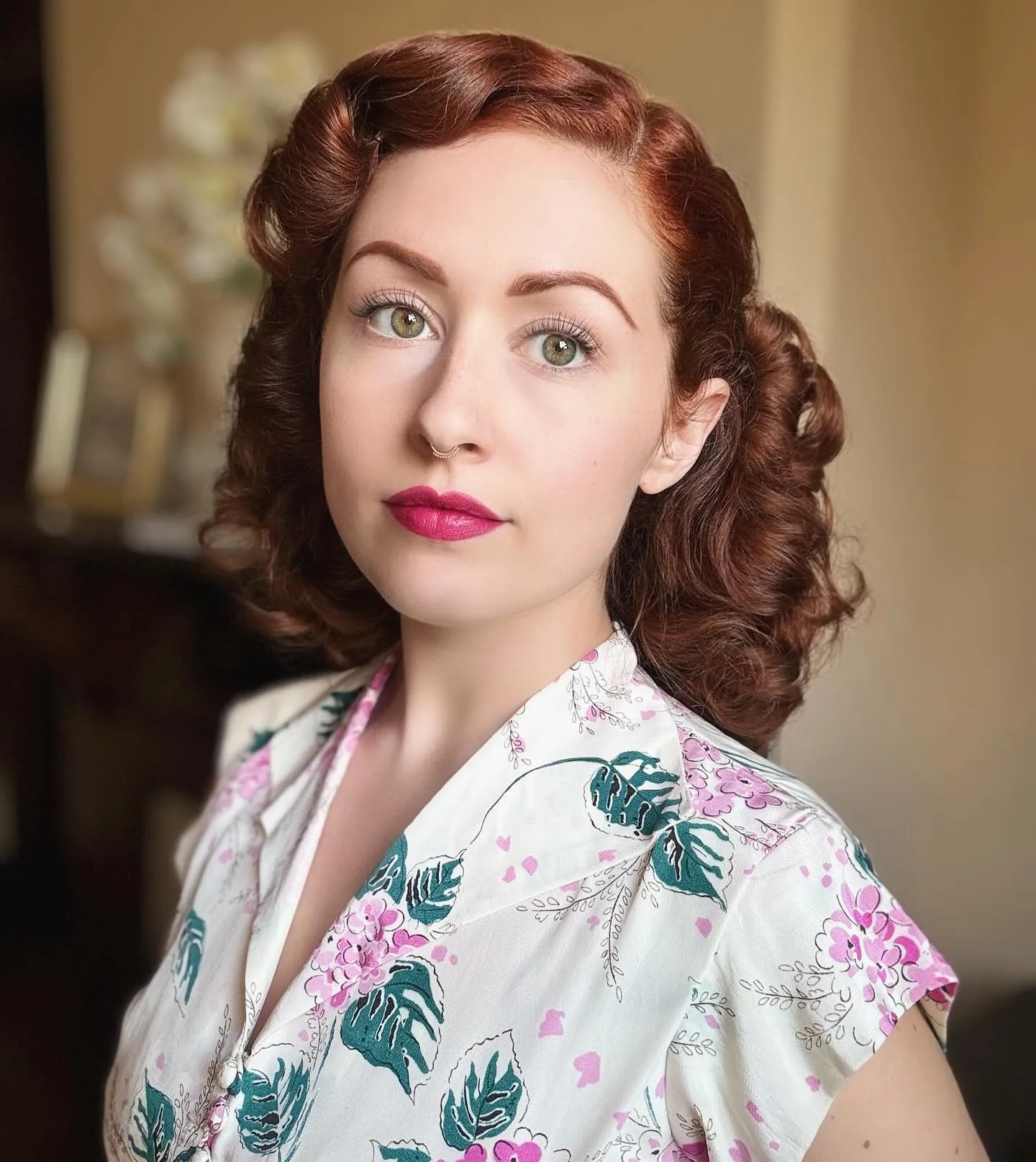
Defined pin curls are arranged close to the head, creating a neat set with visible curl structure. Use small sections and consistent curl direction if you want the finished pattern to look balanced.
How to get it: Use small, consistent pin-curl sections if you want a balanced pattern.
Floral Roll Updo
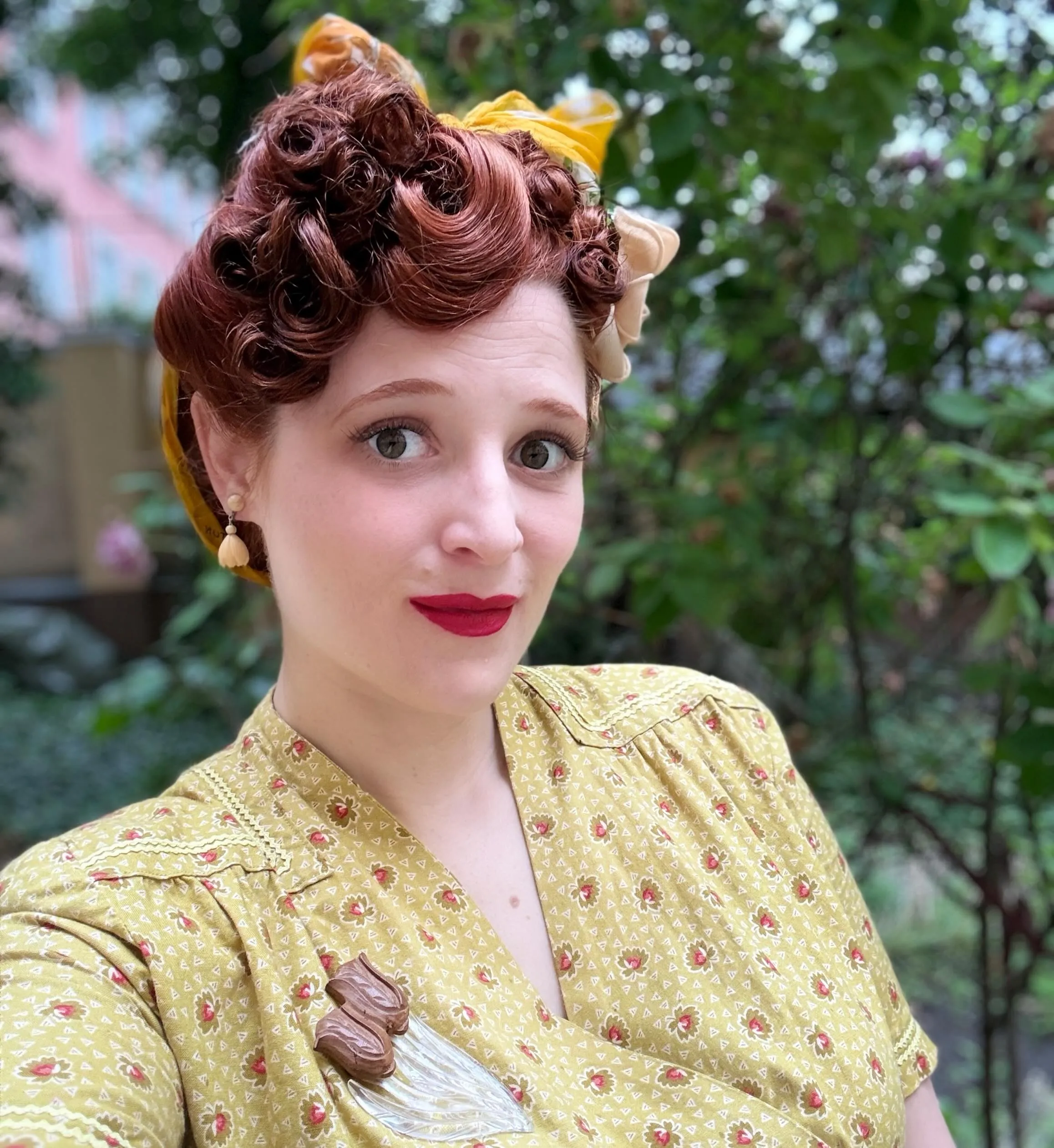
The rolled updo gains extra period detail from the flowers tucked into the curl structure. Place accessories only after the rolls are secure so they decorate the shape instead of holding it together.
Finger-Wave Curls
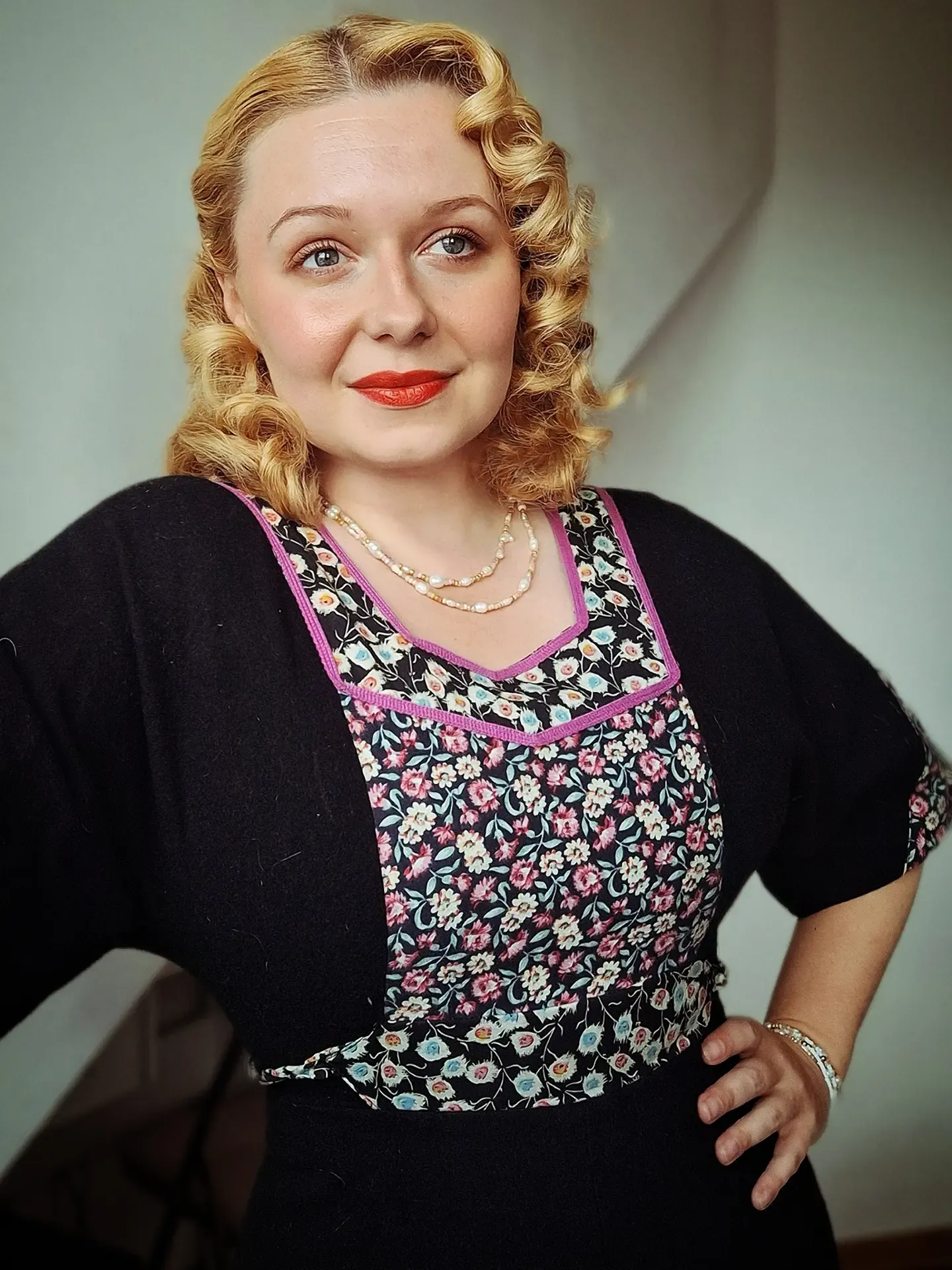
Finger-wave ridges at the front transition into fuller curls through the sides, combining two classic setting techniques. Work the front while damp, then let it dry completely before disturbing the pattern.
Pompadour Side Braid
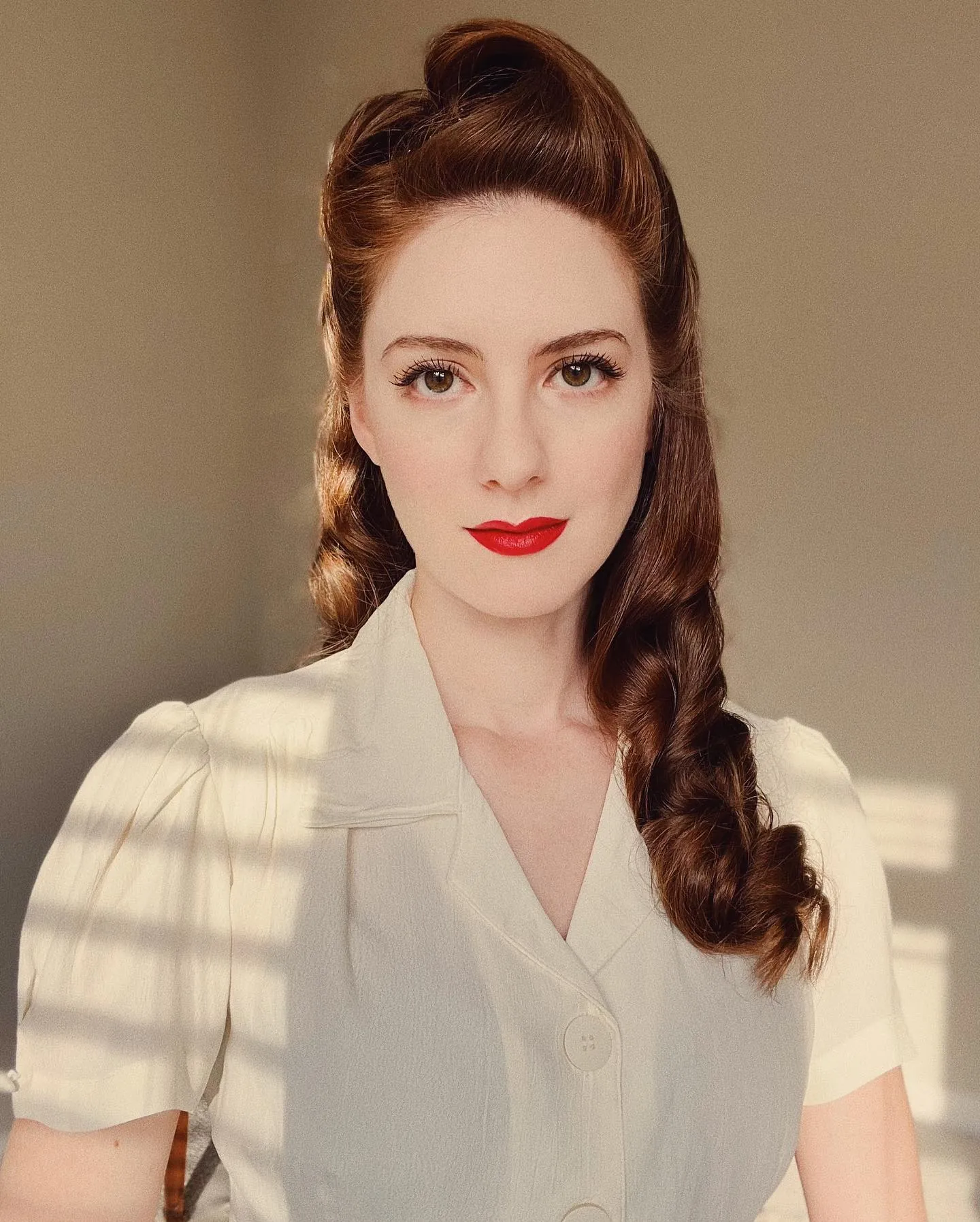
A lifted pompadour at the front balances the long side braid and keeps the style firmly in 1940s territory. Smooth the top section before rolling so the height looks clean rather than fuzzy.
Beret With Set Curls
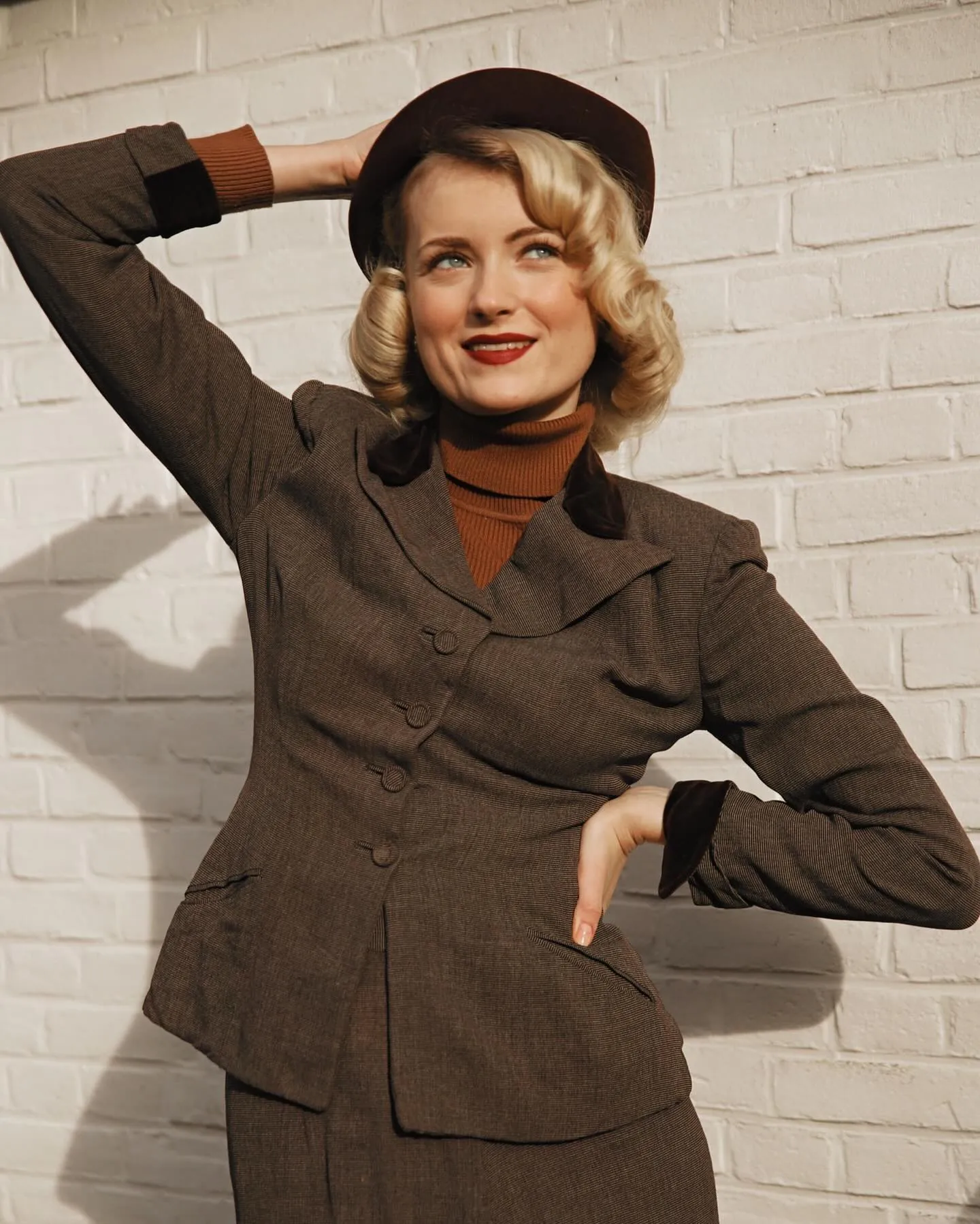
The beret sits over a polished curl set, with the visible hair shaped into soft rolls around the face. Finish the set first, then place the hat so it does not flatten the most important front section.
Brushed Shoulder Waves
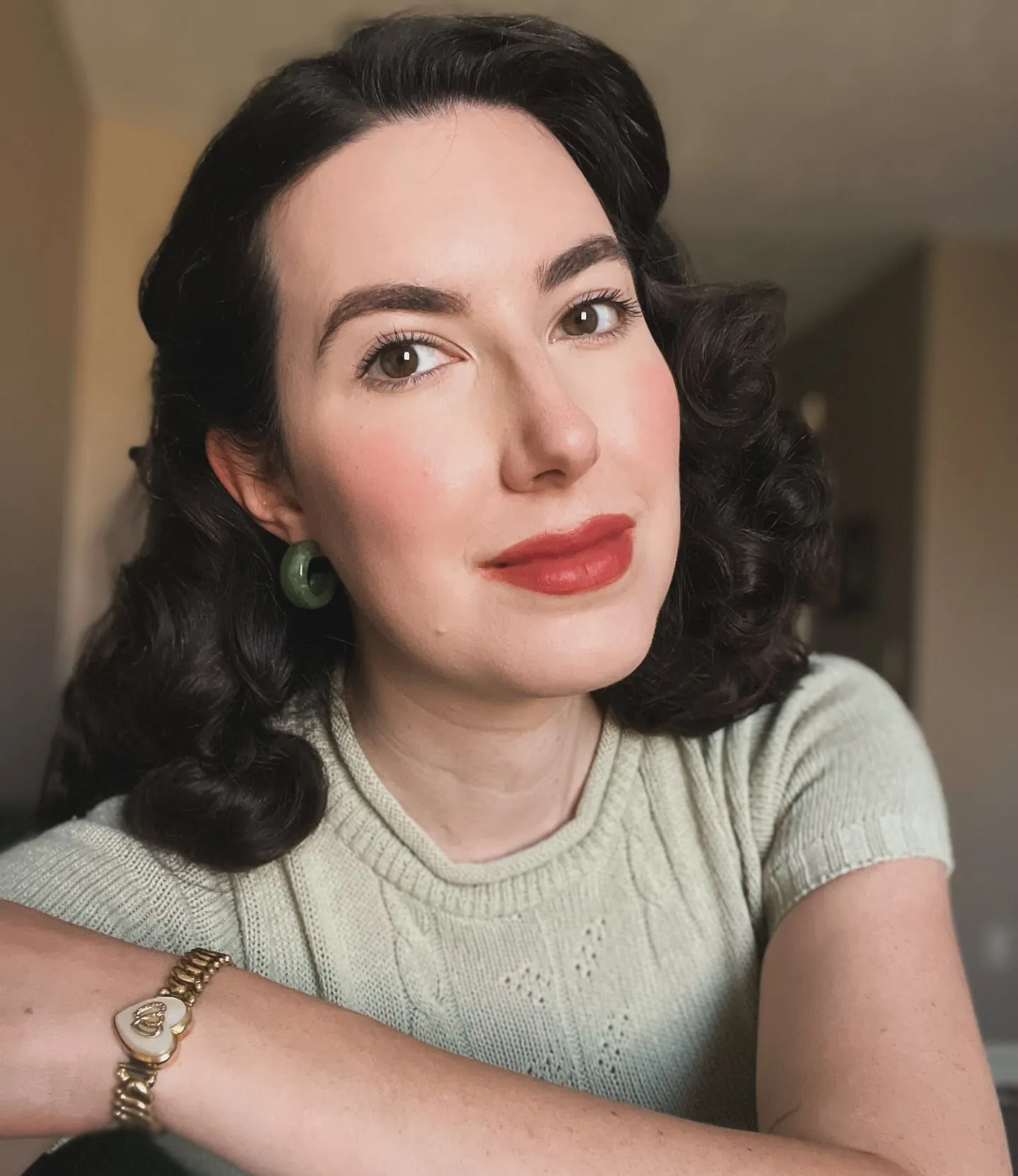
Shoulder-length waves are brushed into broad curves with the ends turned neatly under. This is one of the easier 1940s looks to wear because the set carries the period shape without complicated pinning.
Pro tip: Brush curls together in sections instead of separating them with your fingers.
Short Sculpted Curls
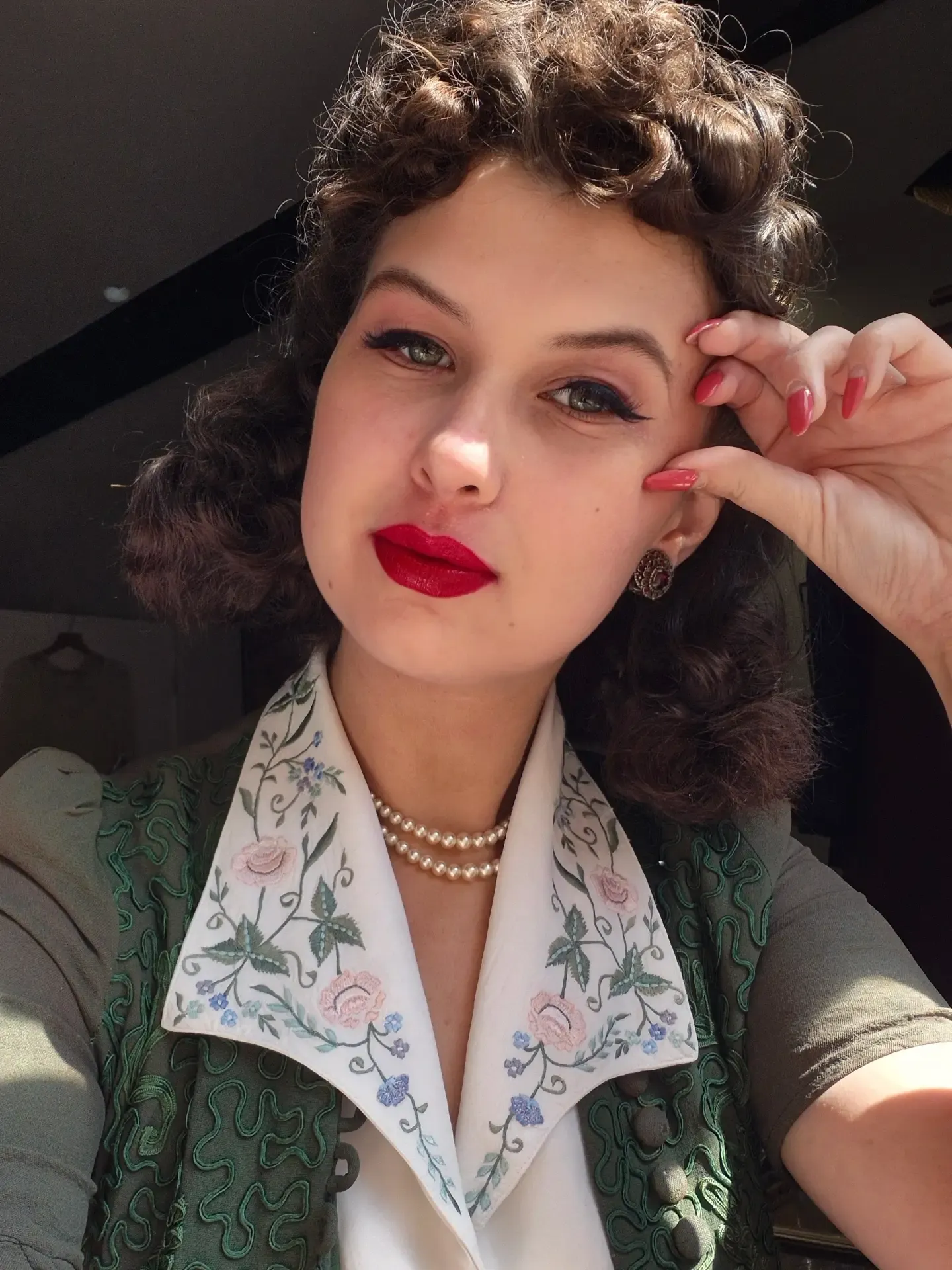
Short sculpted curls sit closely around the face and ears, keeping the silhouette compact. A strong side part helps direct the curls so they read as a set rather than random texture.
Curled Updo
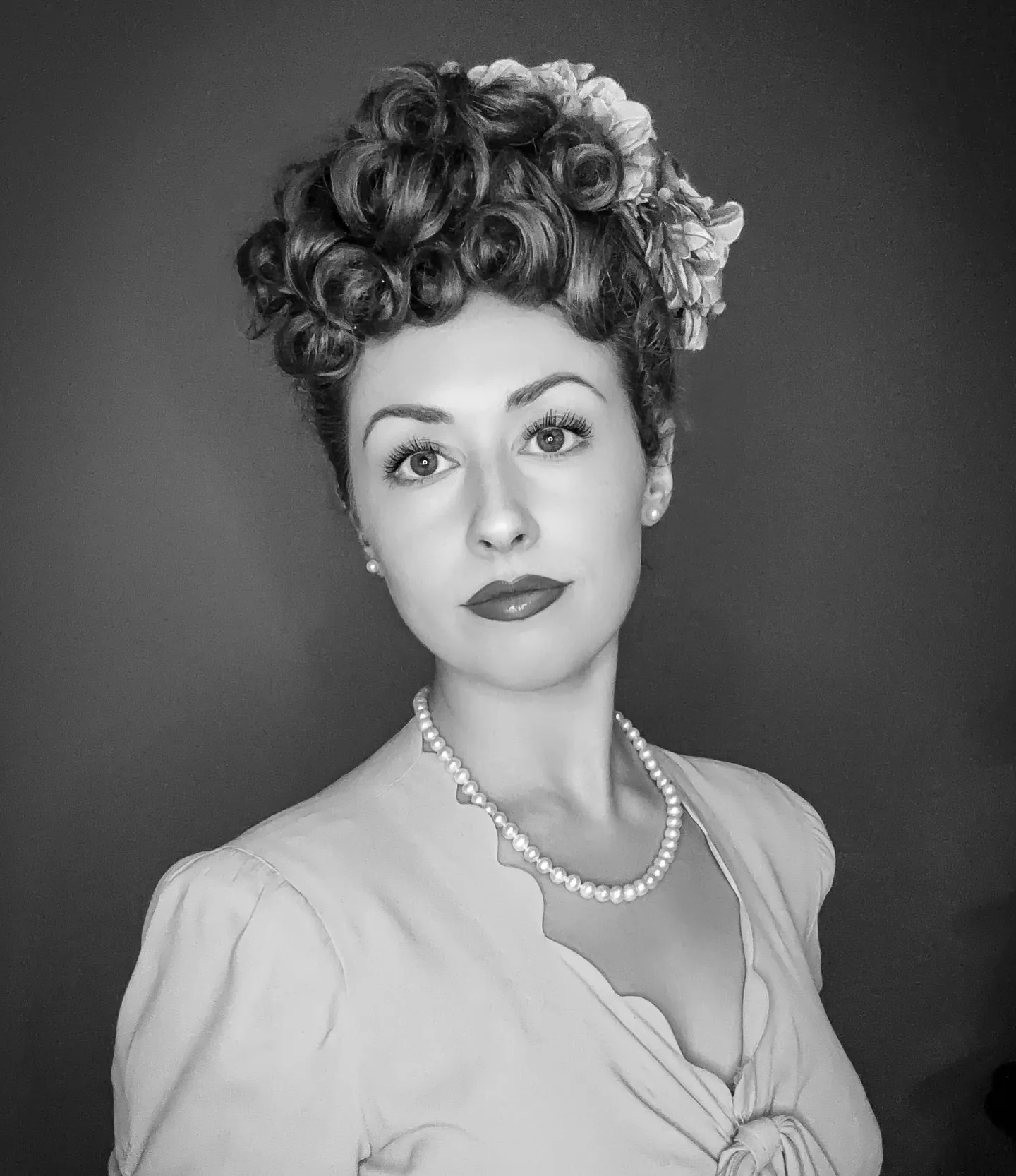
The curls are stacked into a high, compact updo that keeps the neck clear while preserving the soft vintage texture. Pin each curl individually if you want the arrangement to stay defined.
Half-Up Victory Rolls
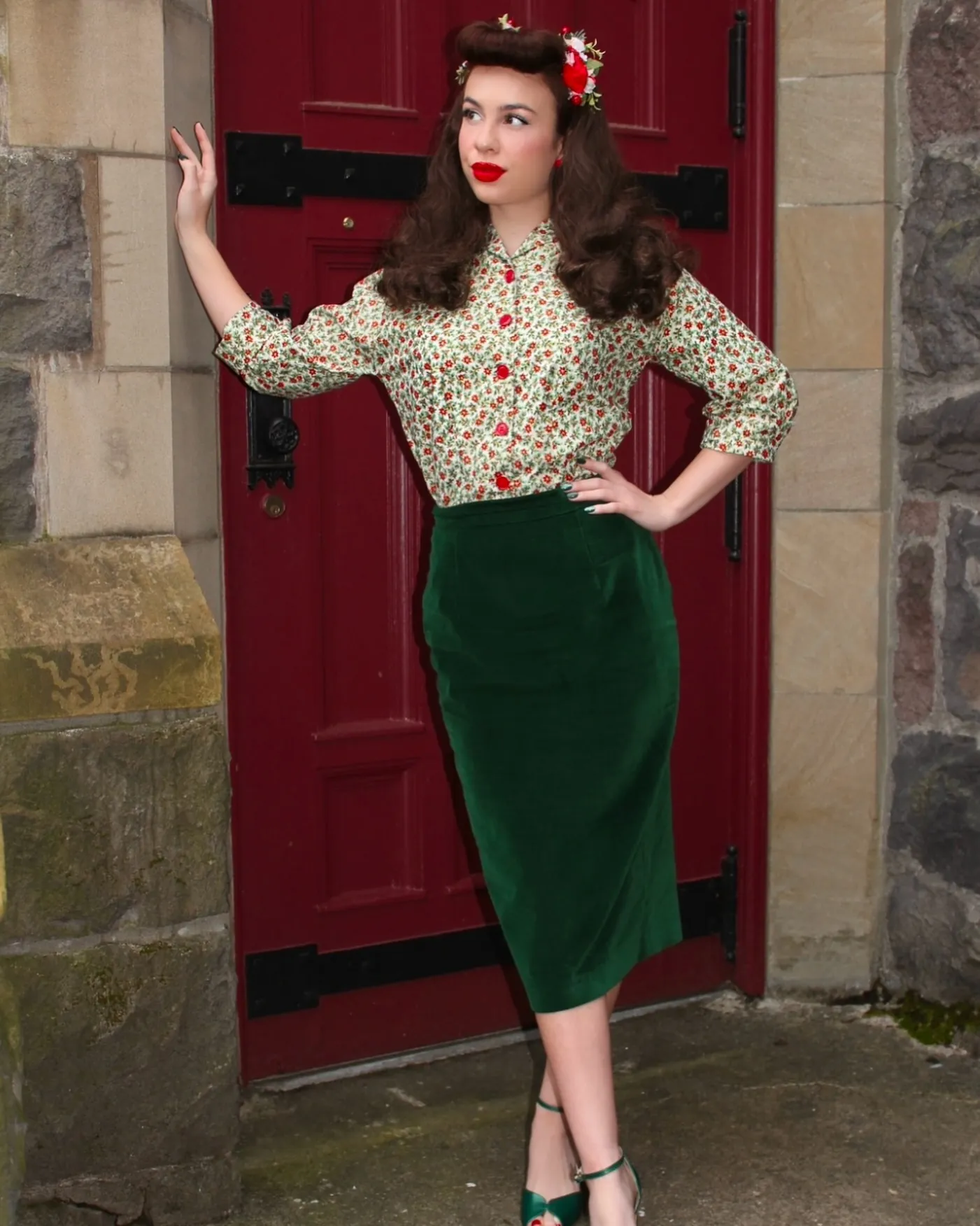
Two lifted front rolls create the 1940s focal point while the remaining length stays half down in soft waves. This gives the period shape without committing to a full updo.
Low Rolled Chignon
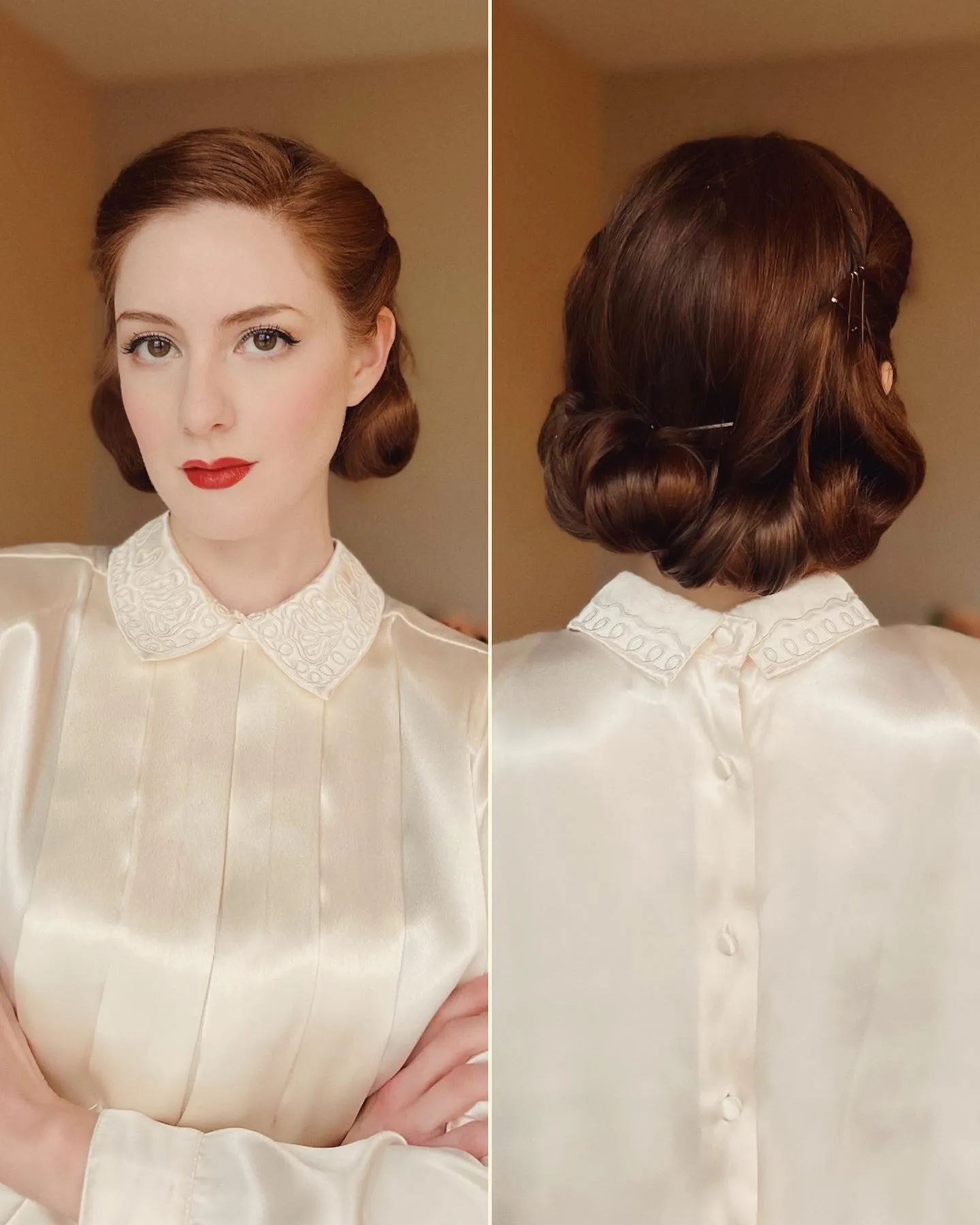
The low rolled chignon keeps the back smooth and tucked, with the volume concentrated at the nape. A clean side part and well-brushed surface make the style look authentic rather than overly modern.
Half-Up Set Waves
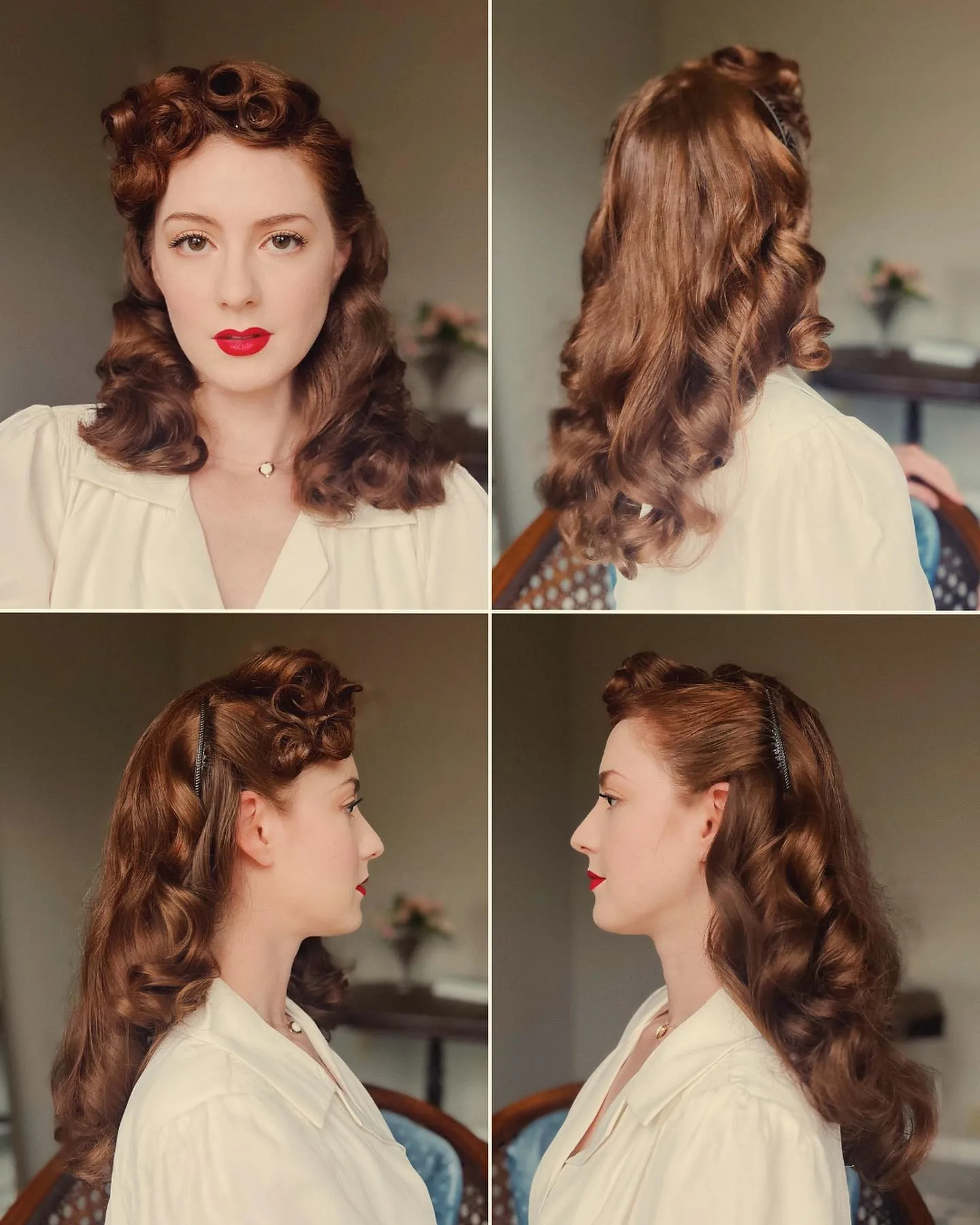
Front rolls lift the hair away from the face while the back remains down in a brushed wave set. Keeping the curls broad and uniform makes the half-up shape feel deliberate and period-appropriate.
Keeps it in place: Cross pins underneath the rolls so the visible surface stays clean.