Inverted Bob Hairstyles: 15 Sleek Ideas for a Bold Dramatic Cut
An inverted bob earns its shape from the back.
Shorter layers lift the crown while longer front pieces keep the cut sleek, soft, or sharply angled.
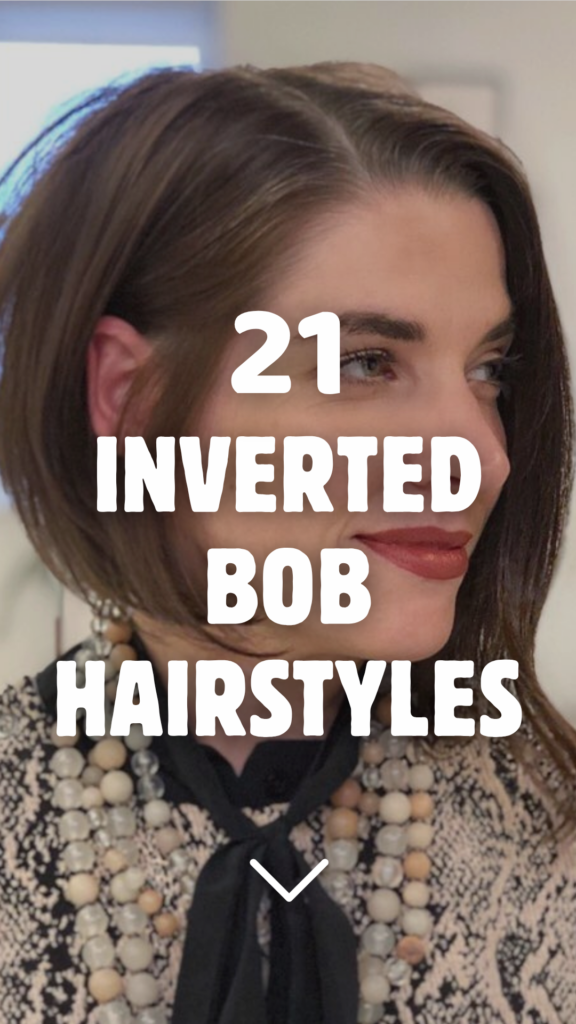
These 15 ideas show how texture, fringe, undercuts, and graduation can change the whole feel of the style.
Sleek Rounded Inverted Bob with a Tapered Nape
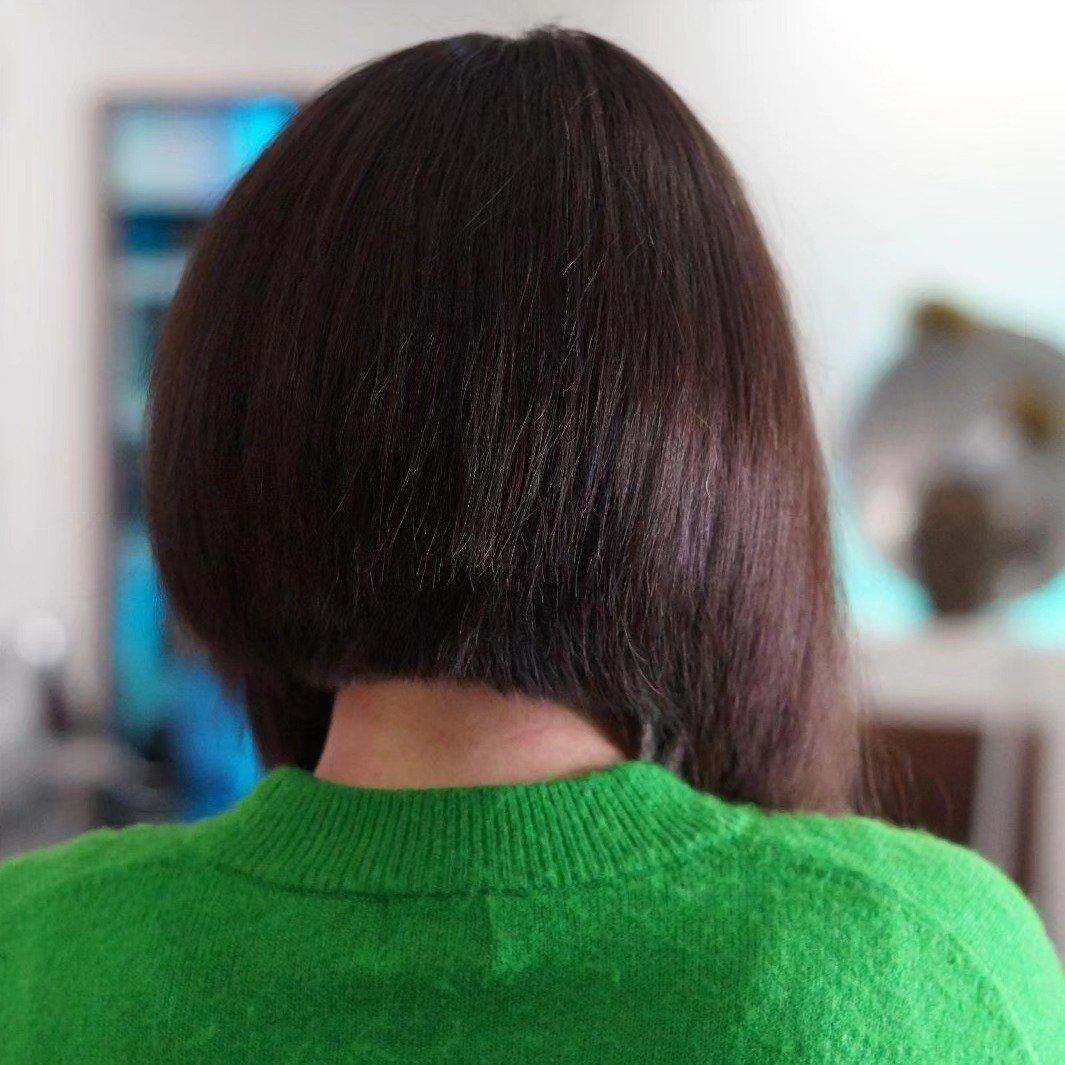
The smooth rounded back gives the cut a strong shape without visible layers on the surface.
A shorter nape lifts the lower edge and allows the front to fall longer beyond the side view.
This style depends on precise graduation, so the shape stays polished even with simple blow-drying.
Best for: Straight medium-density hair that holds a smooth curve.
Keeps it smooth: Use a round brush at the back and direct the top layer downward.
Centre-Parted Inverted Bob with Long Front Pieces
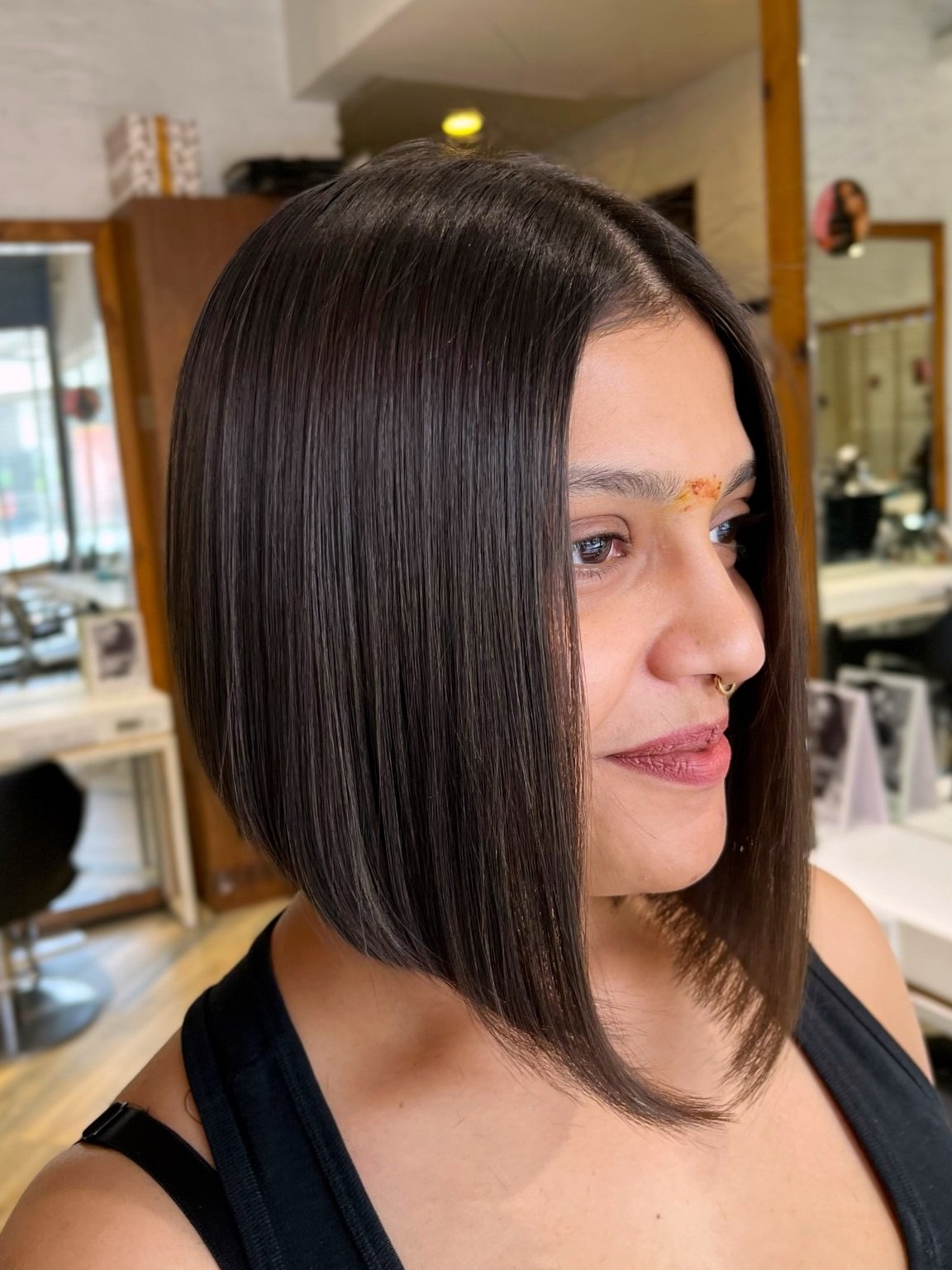
The centre part gives this angled shape a clean, balanced frame around the face.
Long front pieces create a clear diagonal while the shorter back keeps the cut light at the neckline.
Keeping the ends dense makes the angle look sharp rather than thin or feathered.
For that finish: Straighten in narrow sections and curve the ends only slightly inward.
Salon tip: Ask for a strong perimeter with minimal thinning through the front.
Curly Stacked Bob with Full Ringlet Volume
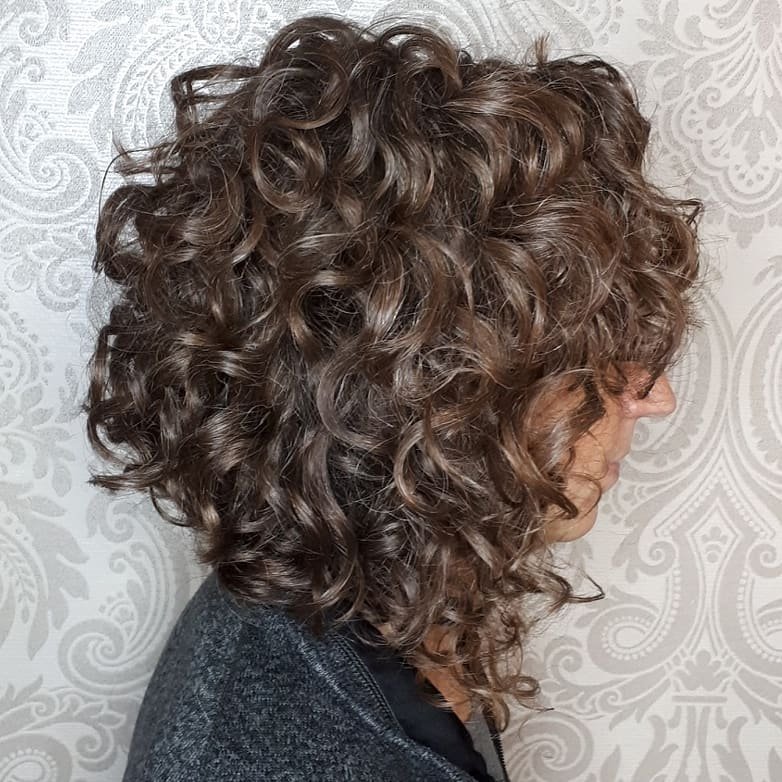
Shorter layers through the back allow the curls to stack upward instead of forming a heavy triangle.
The longer front ringlets preserve softness around the face while keeping the inverted line visible.
This shape works best when the curl pattern is defined but still allowed to expand naturally.
Ask your stylist: To shape the graduation with the curls in their dry position.
For root volume: Clip the crown upright while diffusing on low airflow.
Precision Inverted Bob with a Short Blunt Fringe
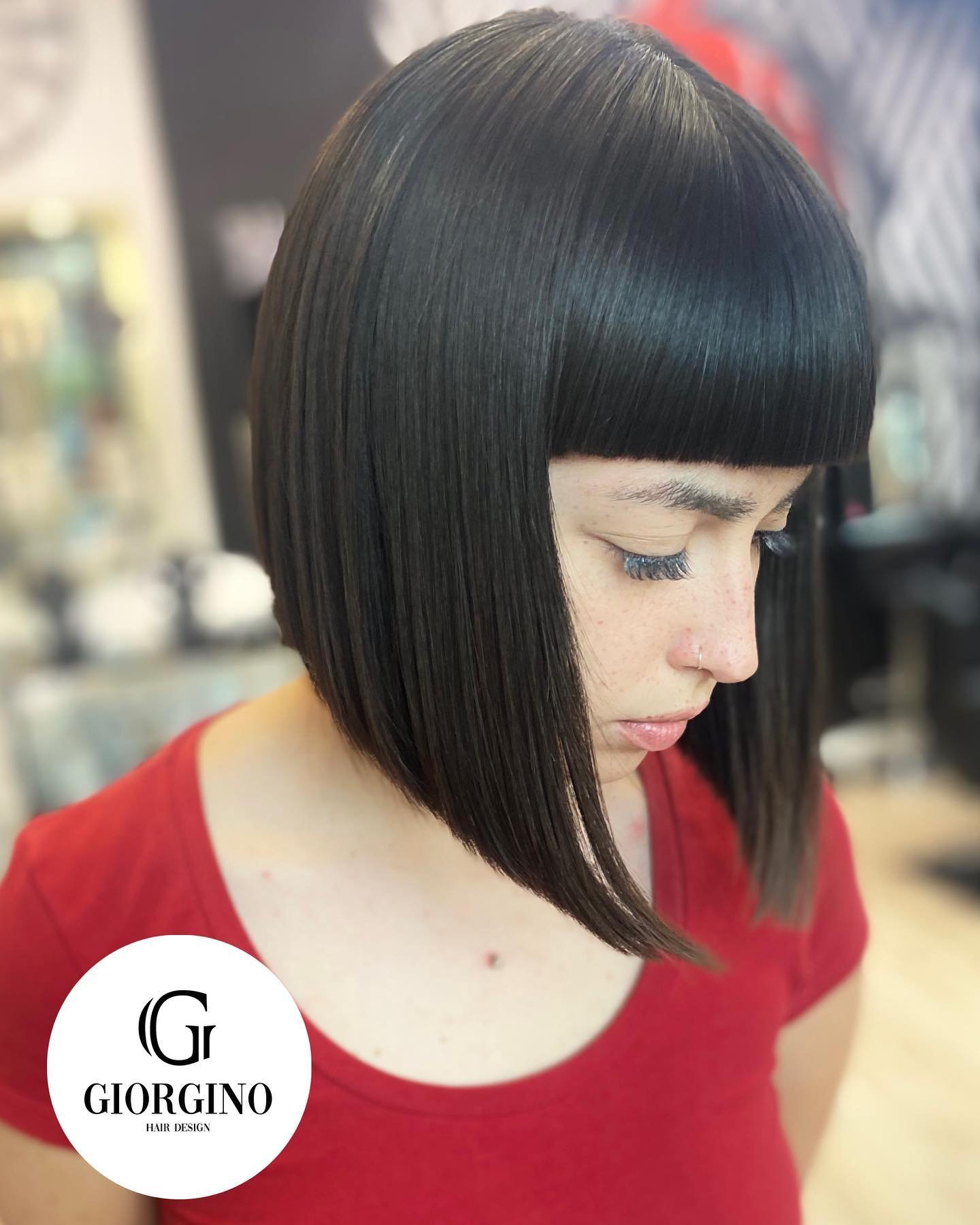
The short fringe creates a strong horizontal line against the steep angle through the sides.
A rounded back keeps the profile smooth while the pointed front pieces extend below the jaw.
This graphic shape needs a sleek surface so every line of the cut remains visible.
Good to know: The fringe and pointed ends will need regular trims to stay precise.
Keeps it in place: Finish with cool air and a light anti-humidity spray.
Stacked Inverted Bob with a Full Fringe
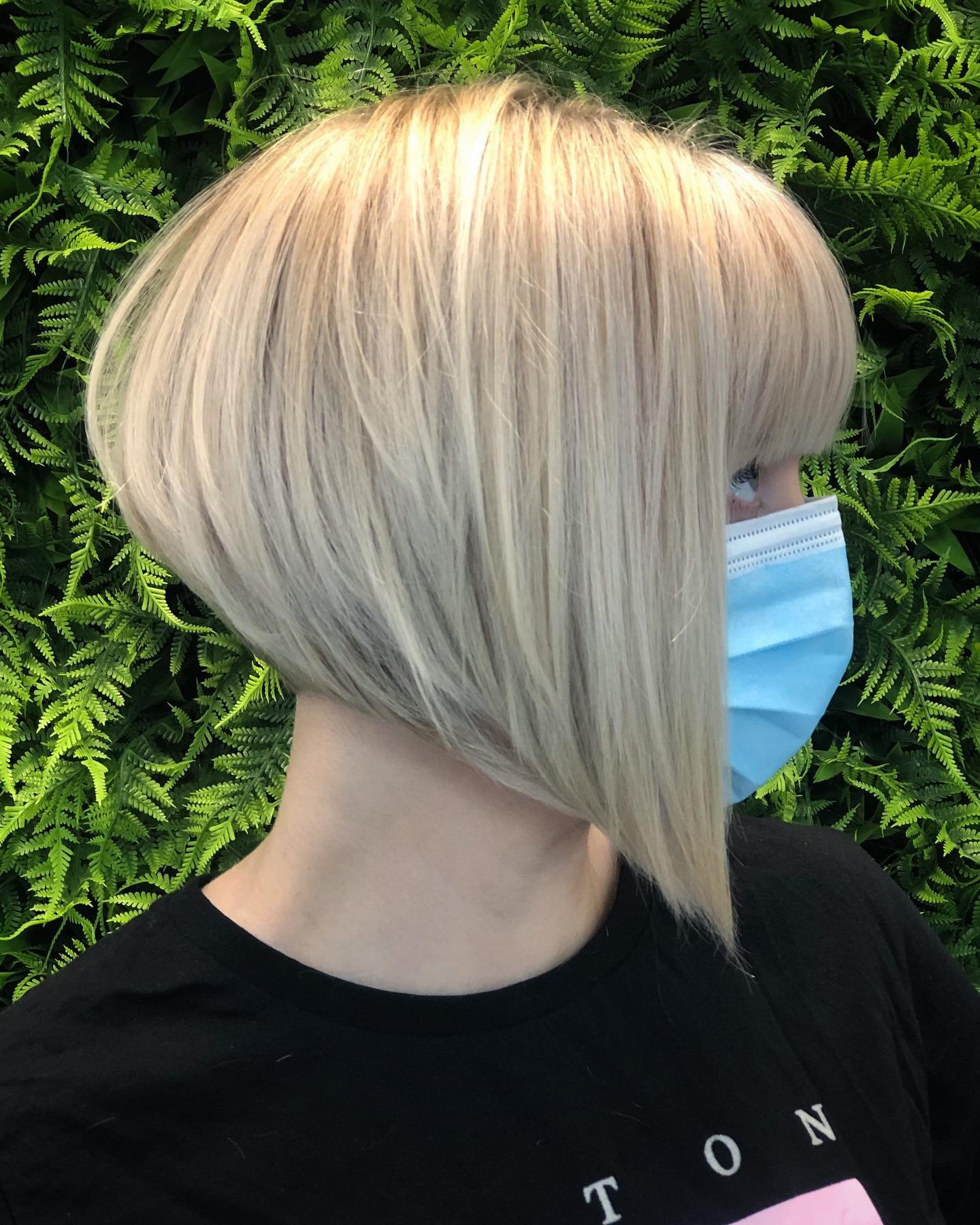
The stacked back creates a rounded lift that contrasts with the long, tapered front section.
A full fringe gives the style structure across the forehead and connects smoothly into the side shape.
Keeping the outer layer long preserves a polished finish over the shorter graduation underneath.
Best for: Straight fine to medium hair that needs fullness through the back.
Quick styling: Dry the back under with a round brush and smooth the front downward.
Tousled Inverted Bob with Choppy Layers
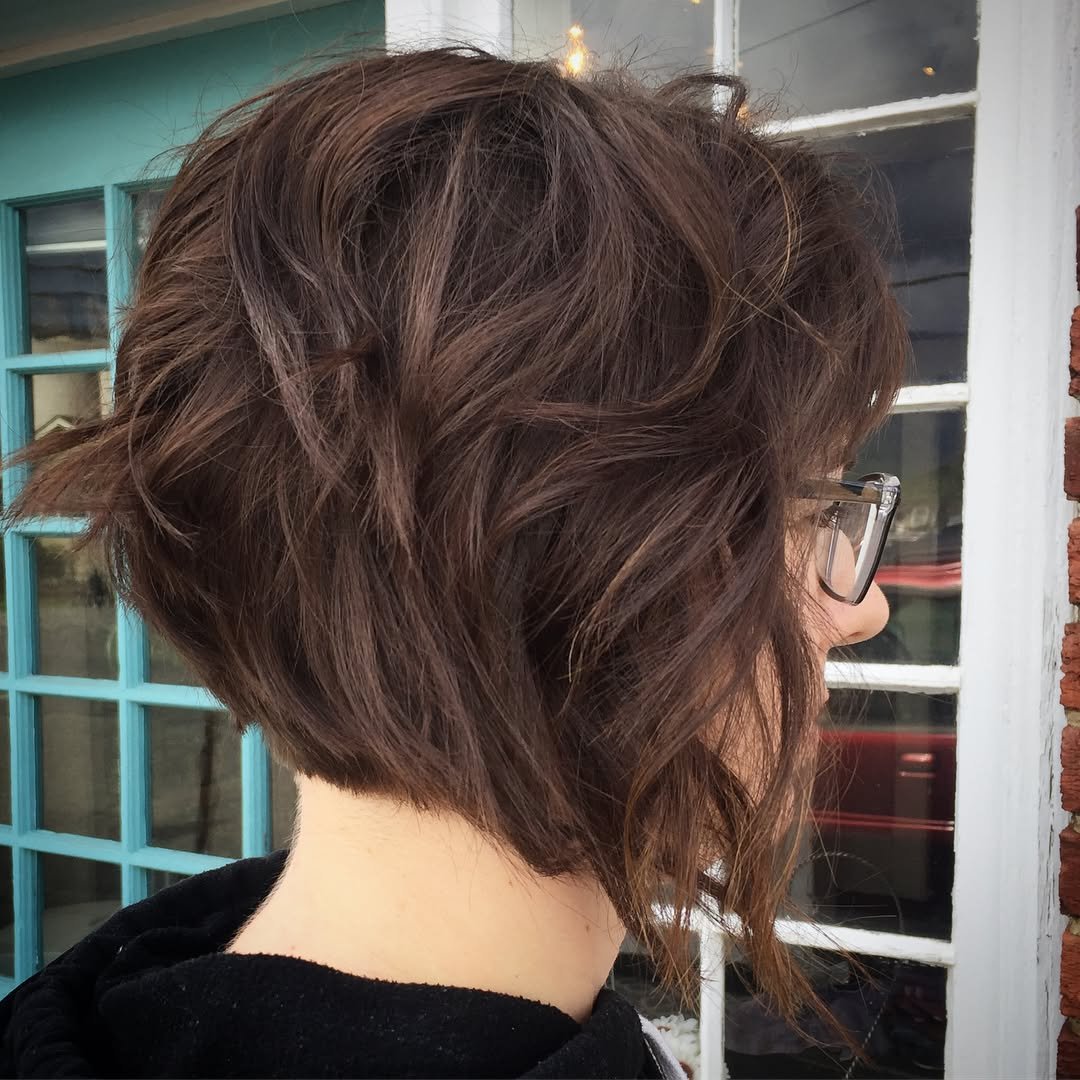
Choppy layers soften the stacked shape and give the back a lighter, more relaxed finish.
The longer pieces beside the face keep the inverted line visible without looking overly precise.
This version benefits from separation and movement, so it does not need a perfectly smooth blow-dry.
Works great if: Your hair has a natural bend or holds loose texture easily.
Holds better with: A dry texture spray worked underneath the top layer.
Rounded Inverted Bob with an Undercut Nape
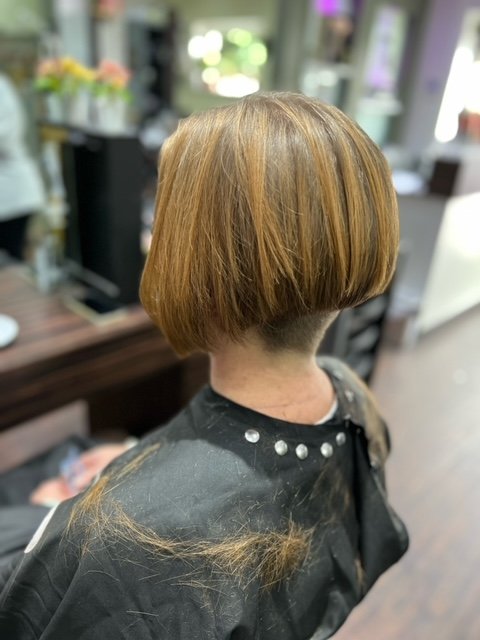
The close nape removes bulk and allows the rounded outer shape to sit neatly above it.
Soft graduation builds fullness through the back without exposing obvious stacked layers.
This structure is especially useful when thick hair tends to feel heavy around the neckline.
Salon tip: Keep the undercut hidden beneath the smooth outer layer.
Easy to maintain: Refresh the nape between full haircut appointments.
Short Side-Parted Inverted Bob with a Tapered Back
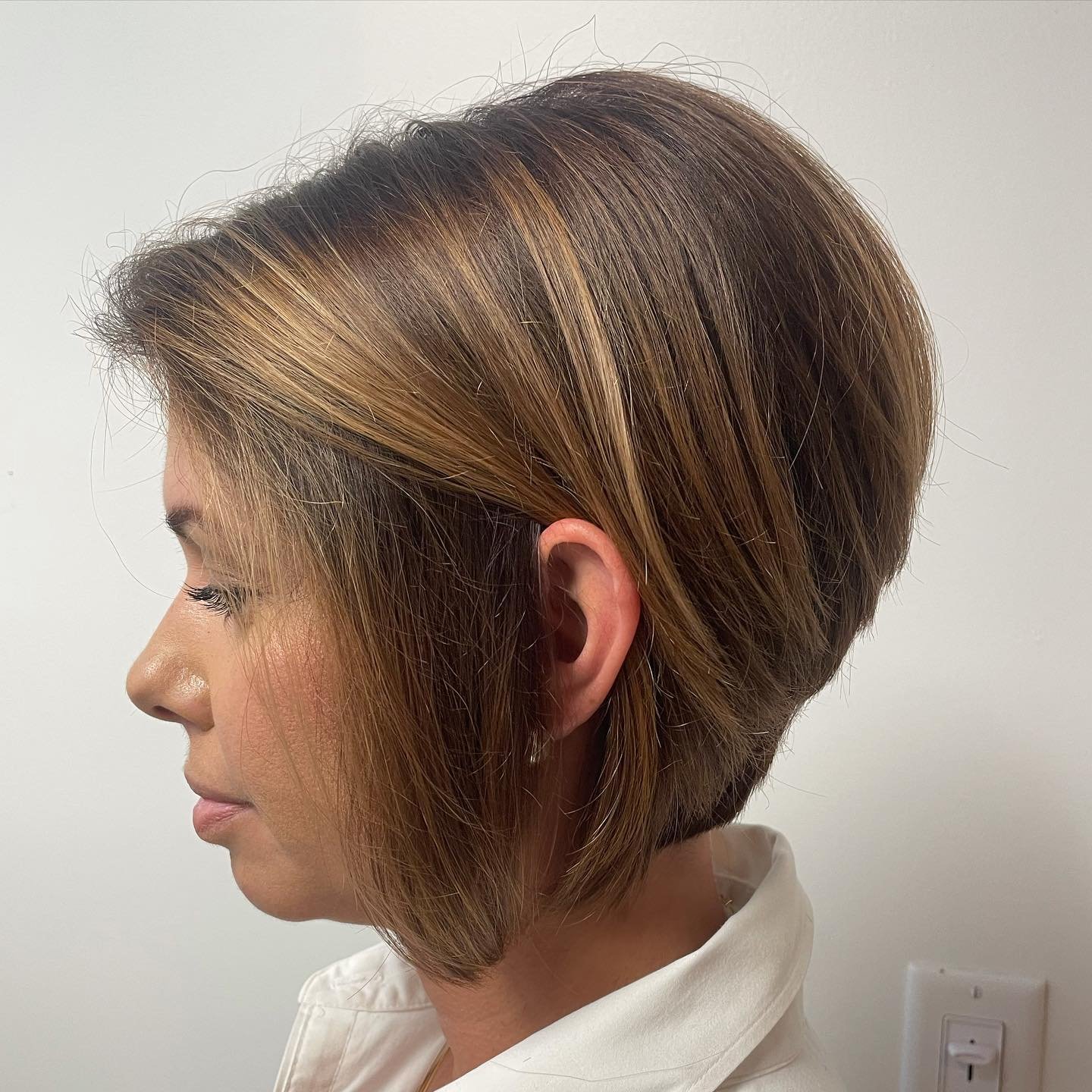
The tapered back keeps the neckline close while the long front section gives the cut a clear angle.
A side part adds lift across the crown and makes the face-framing piece fall naturally forward.
This compact shape feels polished without needing much length or daily curling.
Quick styling: Smooth the back close to the head and direct the front piece towards the jaw.
Comfortable all day: The short nape stays light and clear of the collar.
Rounded Inverted Bob with a Side Undercut
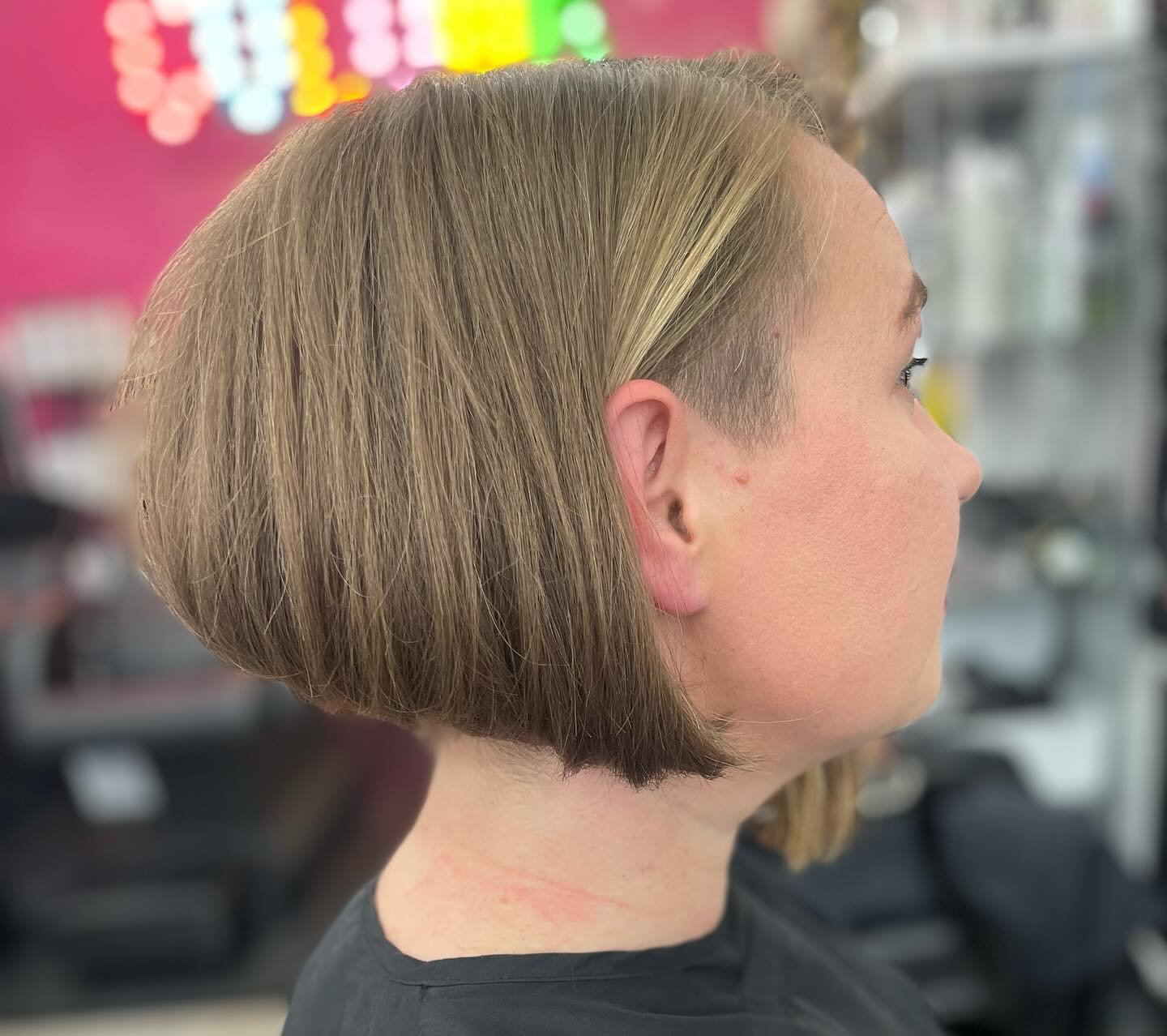
The undercut removes weight around one temple while the longer outer layer keeps the back rounded and full.
Tucking the side reveals the shorter section and gives the classic bob shape a sharper edge.
Worn loose, the undercut can stay mostly hidden beneath the smooth top layer.
Works great if: Thick hair feels bulky around the ears and sides.
Good to know: The short section needs more frequent upkeep than the outer bob.
Classic Side-Parted Inverted Bob with Soft Volume
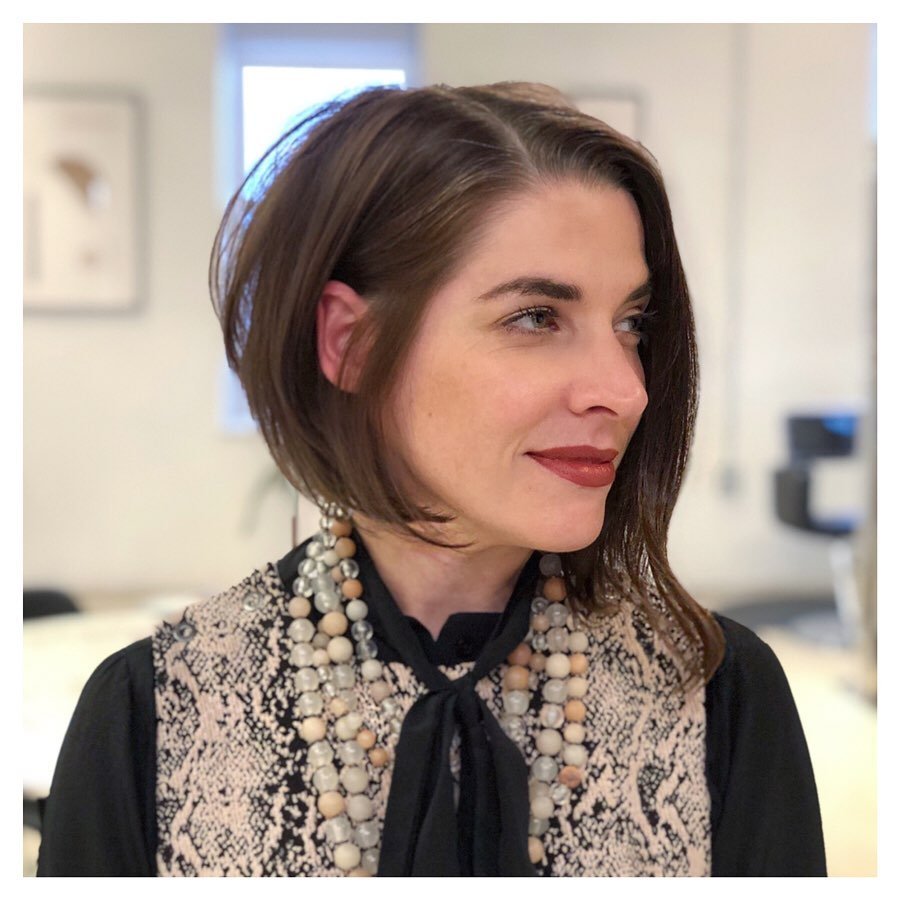
The rounded back adds gentle fullness while the longer front section creates a flattering sweep past the jaw.
A side part keeps the style soft and gives the crown enough lift without visible layering.
This is a wearable version of the inverted bob because the angle feels clear but not extreme.
At home tip: Use a large round brush for movement rather than making the hair completely flat.
For root volume: Dry the fuller side against the part before sweeping it back.
Rounded Inverted Bob with a Micro Fringe
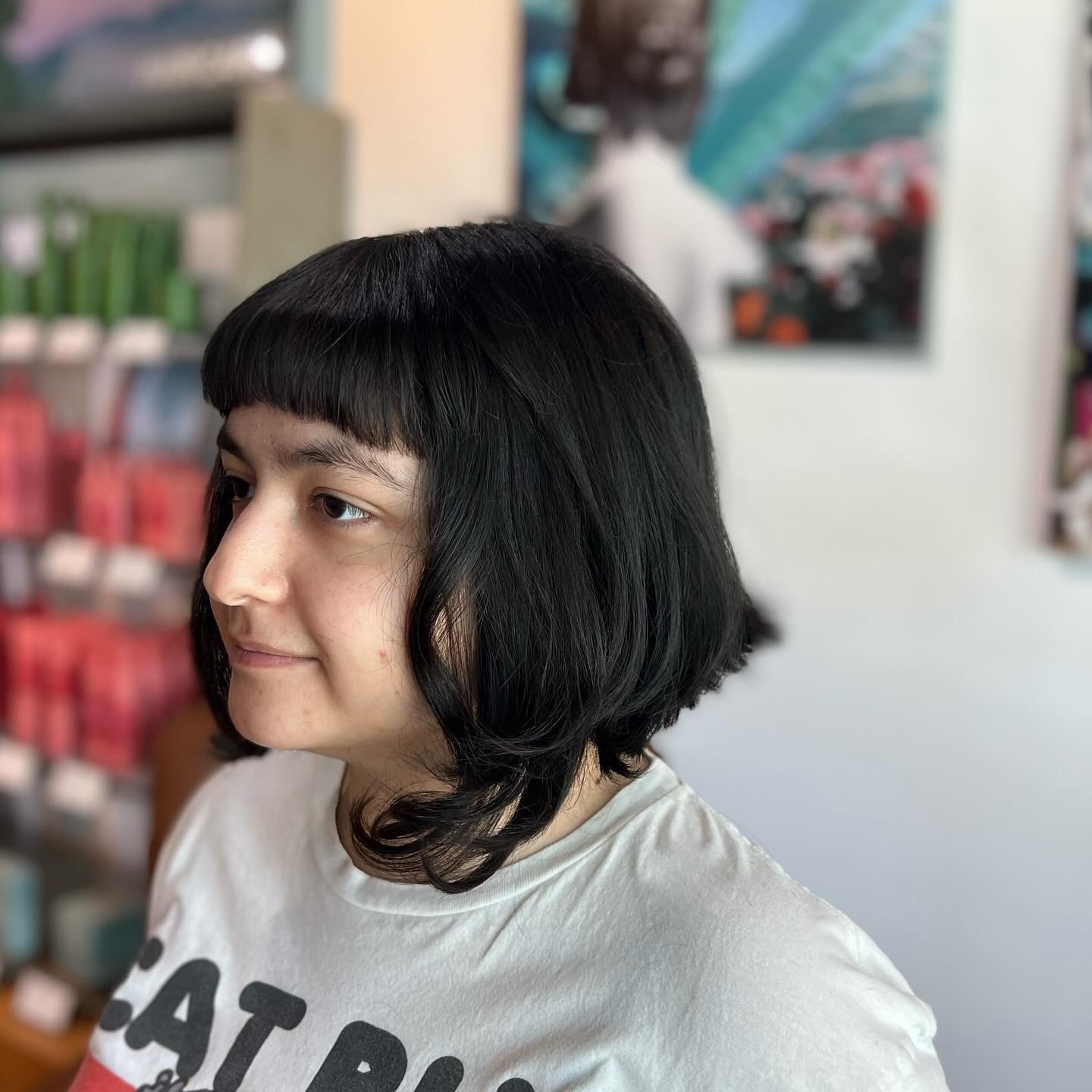
The micro fringe gives the front a compact frame while the lower pieces curve softly around the cheeks.
A rounded back keeps the inverted shape full without creating a sharp or severe angle.
The longer front ends can be turned outward slightly to bring movement into the smooth silhouette.
Ask your stylist: To keep the fringe soft at the edges and the outer shape rounded.
For that finish: Turn selected front ends outward with a small round brush.
Sleek Centre-Parted Inverted Bob
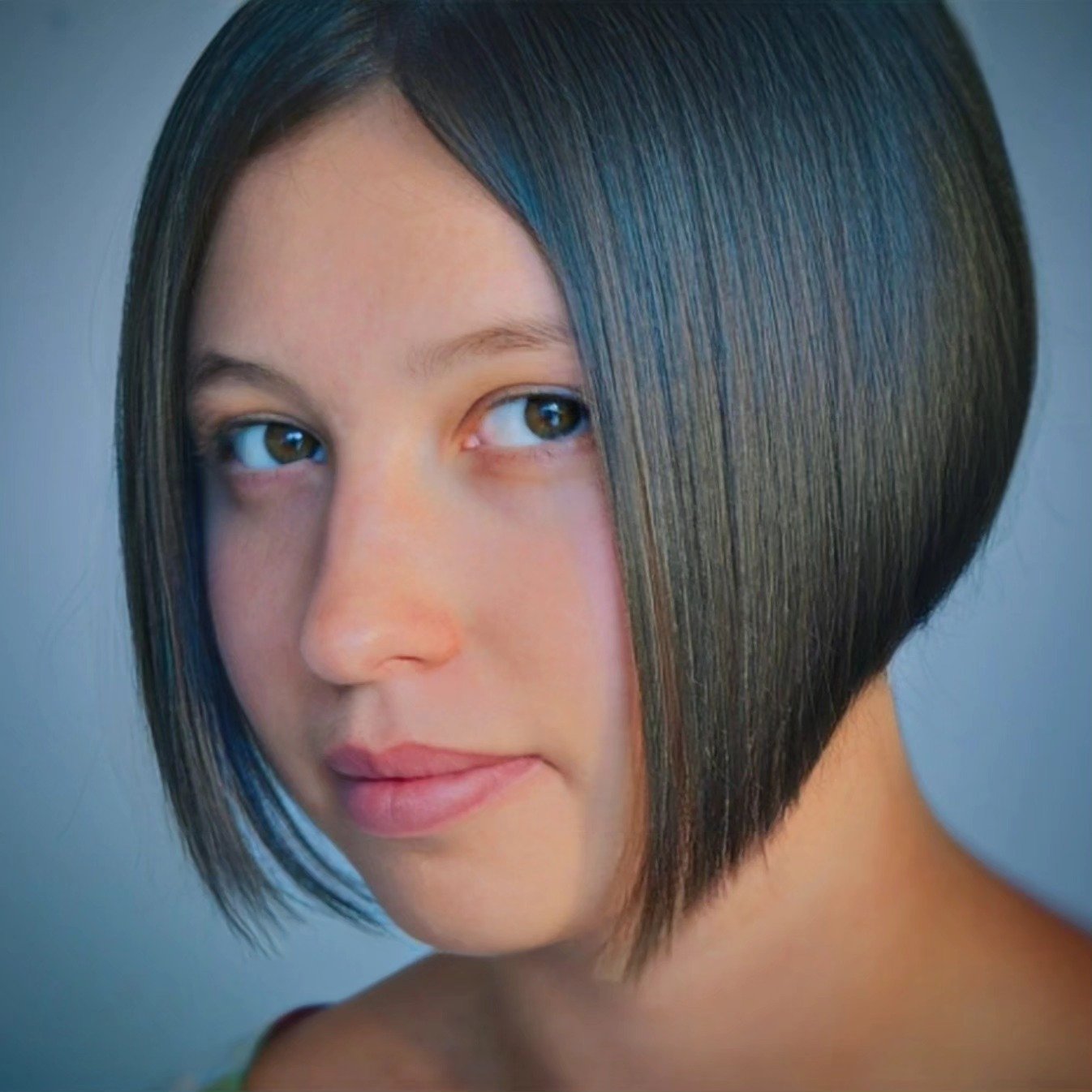
The centre part gives the cut a balanced frame while the shorter back creates a neat rounded profile.
Long front pieces fall straight beside the face and make the angle look clean and deliberate.
A glossy, smooth surface suits this precision shape because it keeps the perimeter easy to see.
Keeps it smooth: Straighten each section once and finish with a lightweight serum.
Salon tip: Preserve a dense front edge instead of feathering the point away.
Geometric Inverted Bob with a Rounded Crown
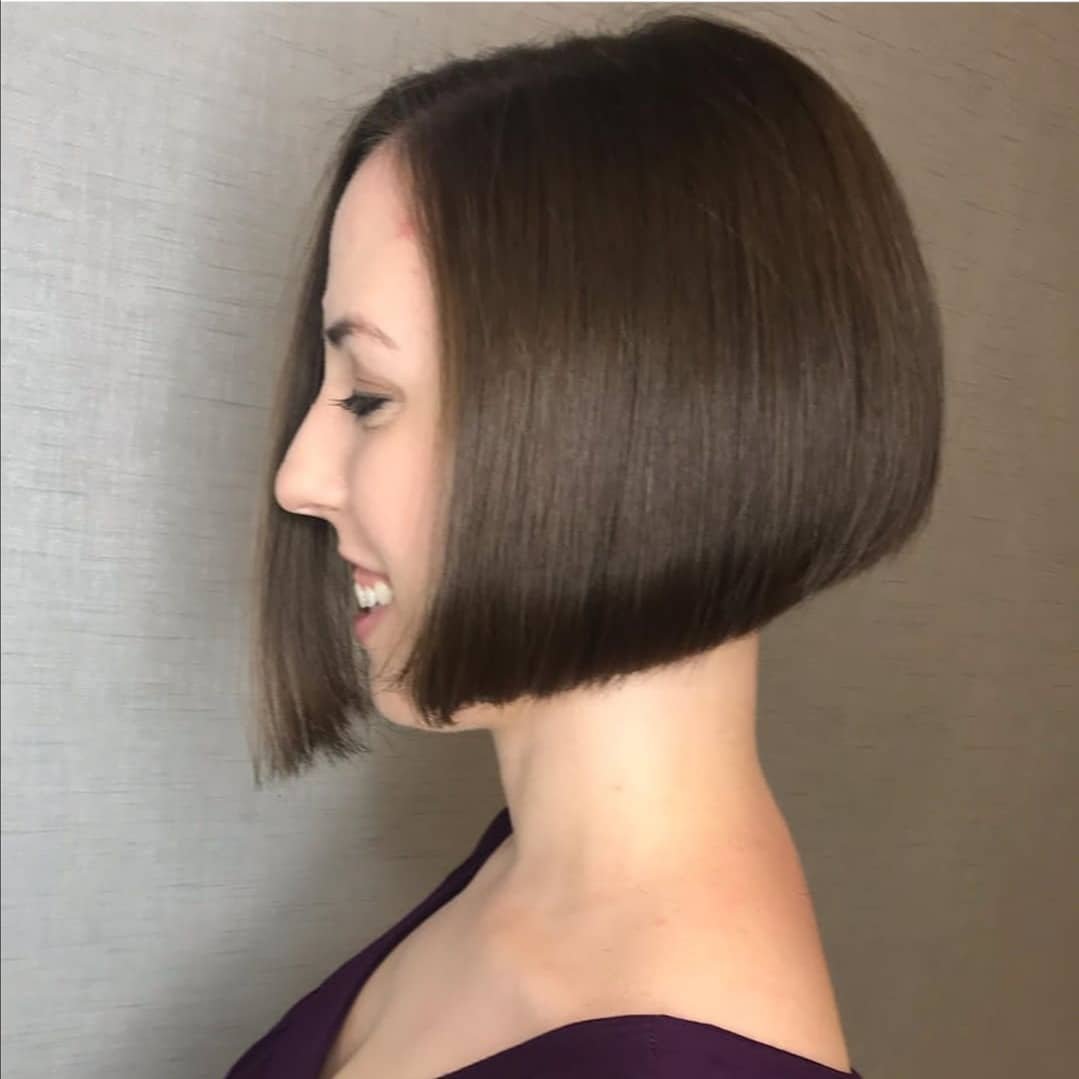
The rounded crown gives the back fullness while the lower edge rises cleanly towards the nape.
A longer front section creates a strong geometric line without needing visible surface layers.
This shape looks best when the hair remains sleek enough to show the exact graduation.
Best for: Straight medium-density hair that responds well to precision cutting.
Keeps it in place: Use a light finishing spray after the shape has cooled.
Long Inverted Bob with a Sharp Front Point
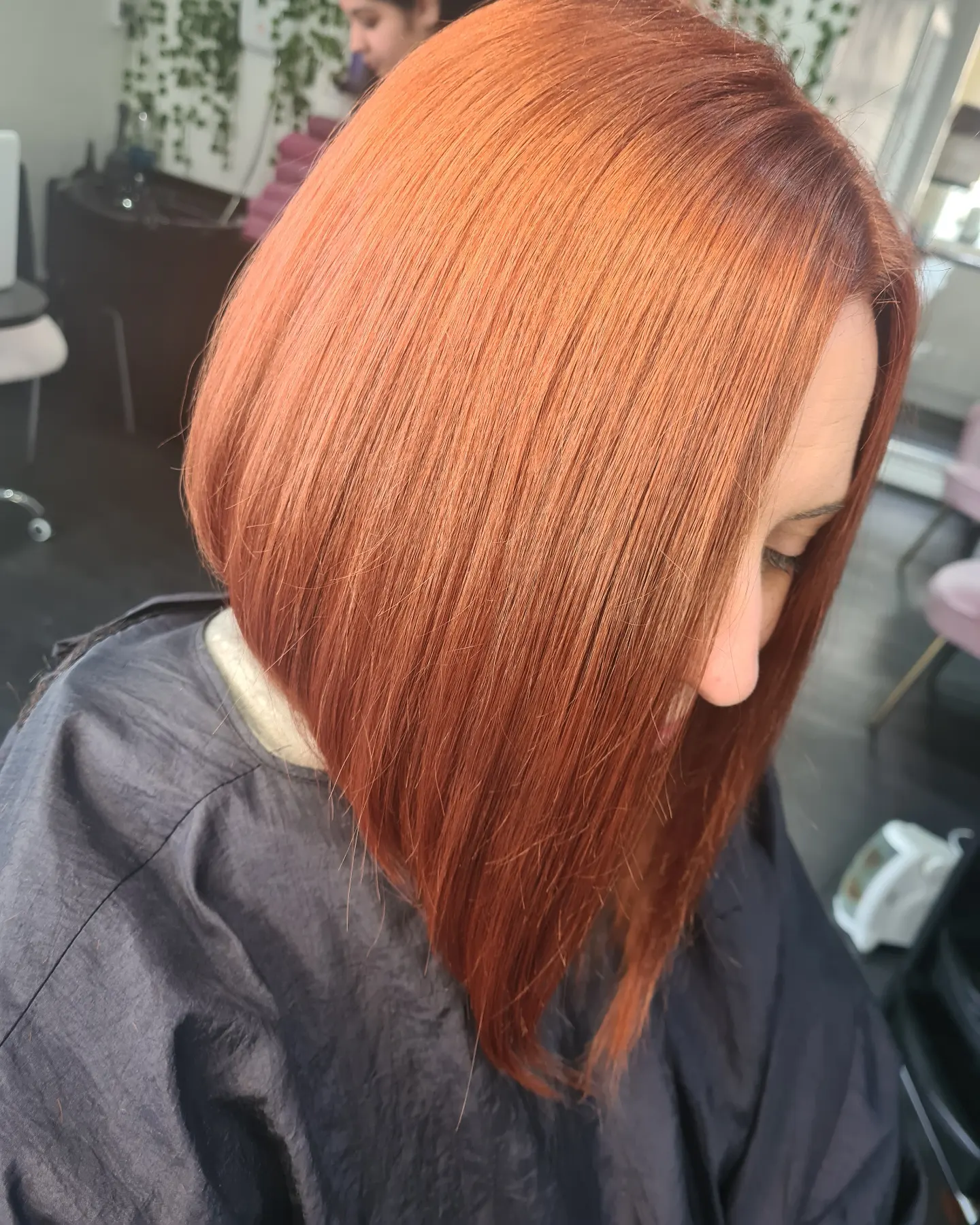
The extended front keeps plenty of length while the shorter back gives the cut its lifted inverted shape.
A smooth surface makes the long diagonal line stand out from crown to point.
Keeping the ends thick is important because excessive texturising can weaken the dramatic front edge.
Ask your stylist: For a solid front point and soft graduation through the back.
For that finish: Use a flat brush and guide the front sections straight towards the chest.
Side-Parted Inverted Bob with a Soft Angled Front
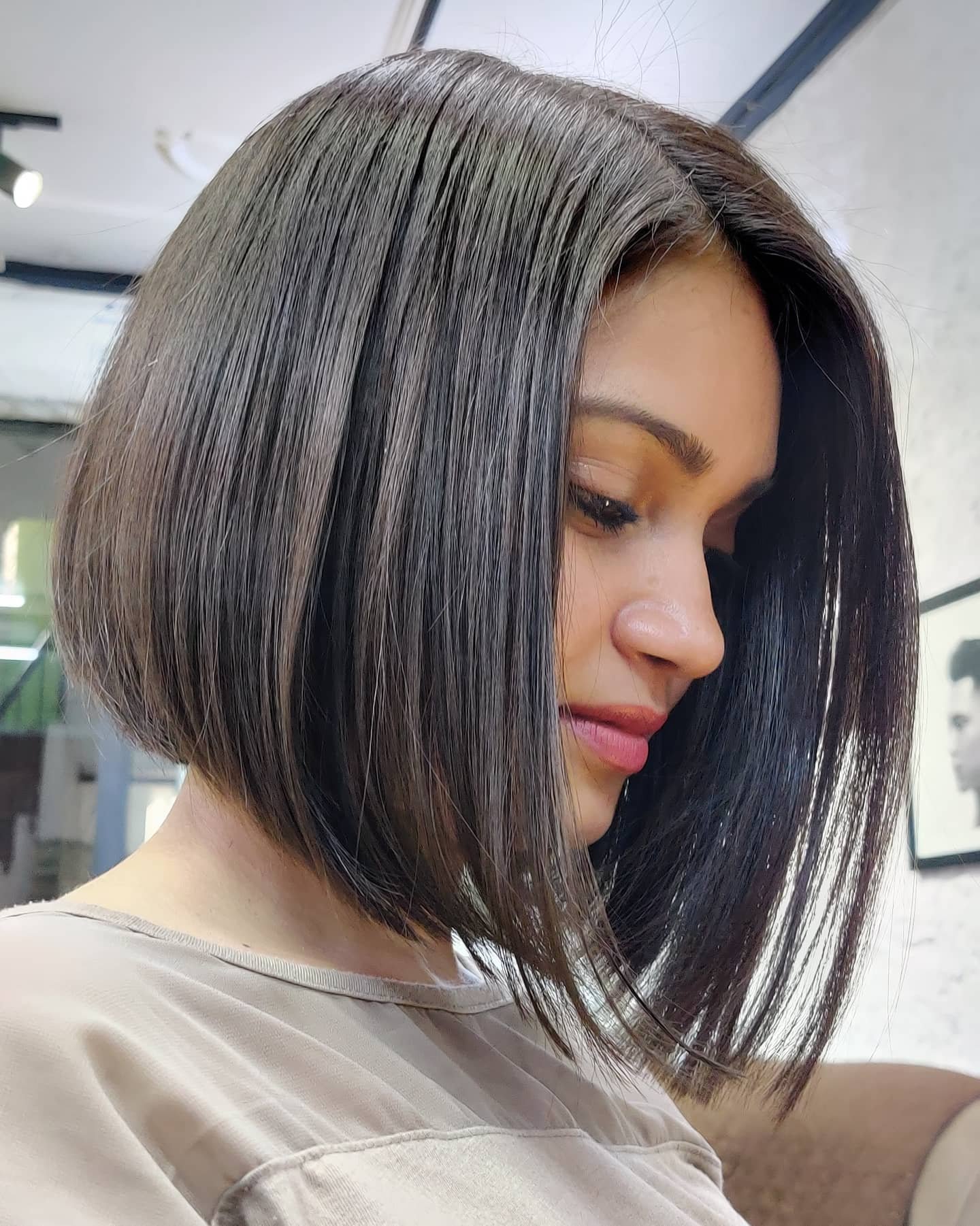
The rounded back gives the cut lift while the longer front creates a softer angle around the jaw.
A side part shifts the weight naturally and keeps the shape from feeling too symmetrical or rigid.
This version works well when you want a polished inverted bob without an extreme pointed finish.
Easy to maintain: The softer angle grows out more gently than a steep precision cut.
At home tip: Blow-dry the back under and keep the front smooth with a paddle brush.