
Shag Hair for Round Face: 19 Gorgeous Ideas
Round faces suit a shag when the layers create lift, length and a little separation around the cheeks.
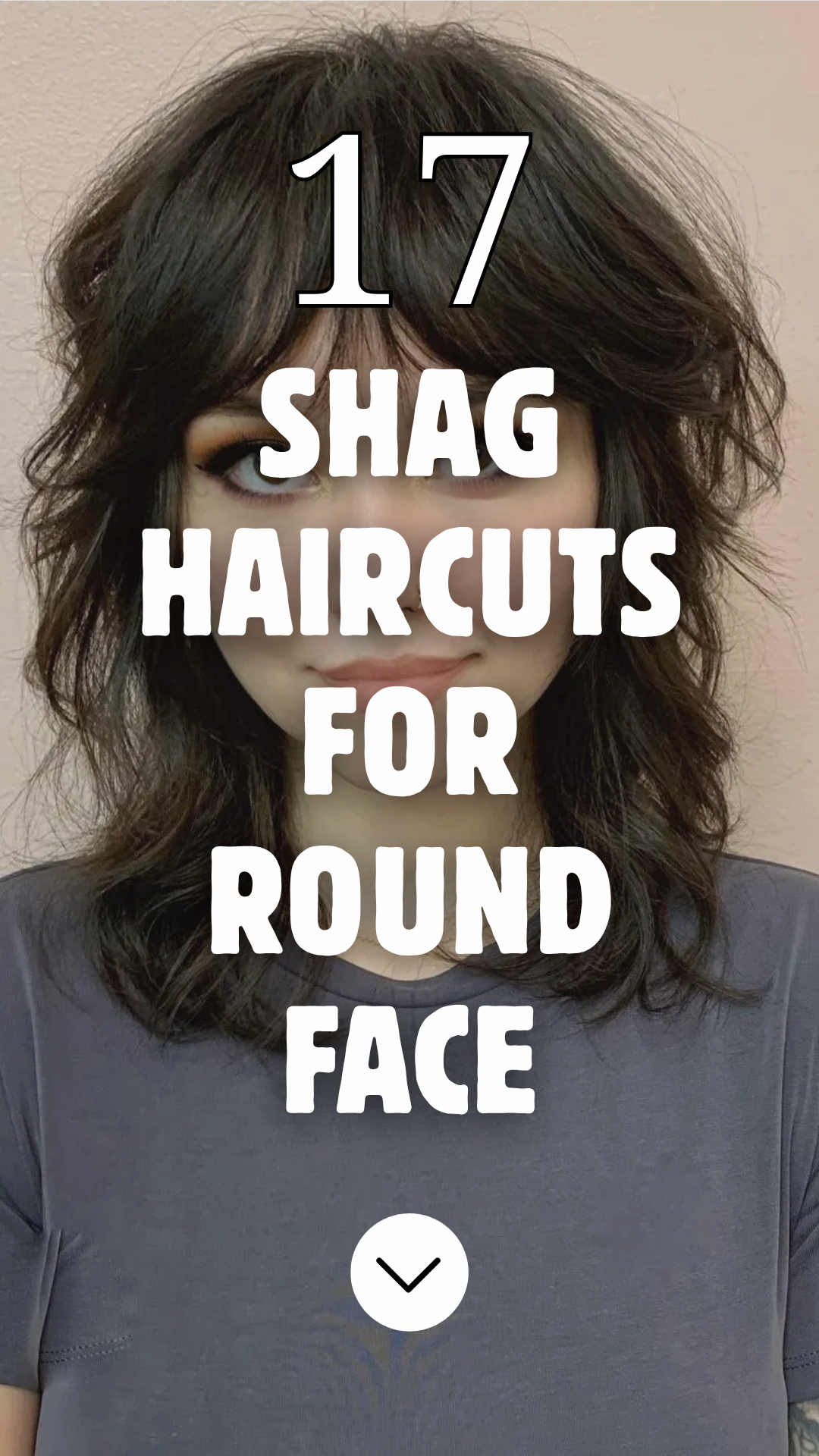
Use these ideas to find the fringe, texture and length that feel most like you.
Long Layered Shag with Split Fringe
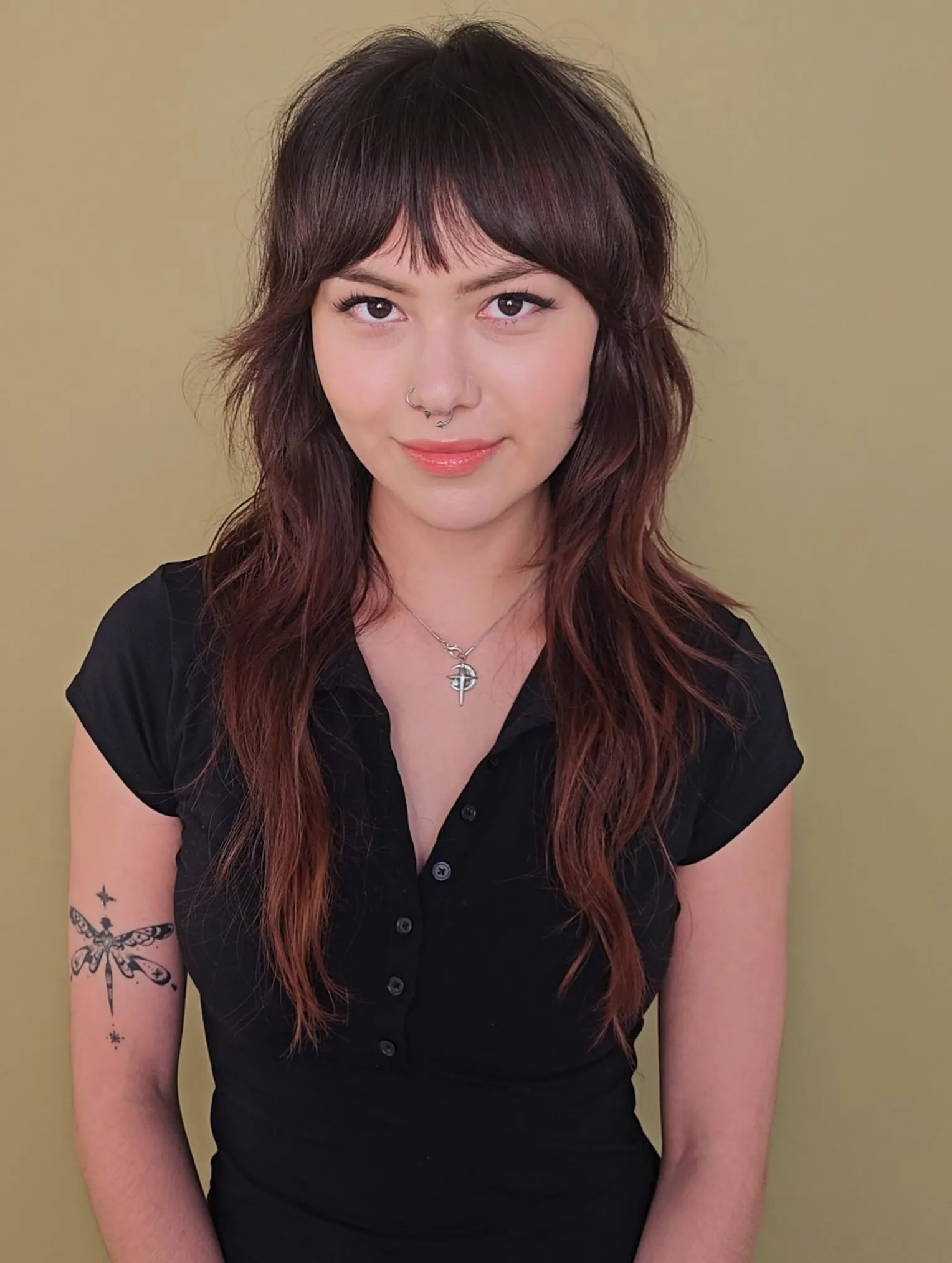
The long outline gives the face a clear vertical line, while the layers stop the length from feeling flat.
A softly split fringe leaves a little forehead visible and draws attention towards the eyes.
Keep the shortest face-framing pieces light so they move past the cheeks rather than sitting heavily beside them.
Best for: Straight to softly wavy medium or thick hair.
Ask your stylist: For long layers with airy pieces beginning around the cheekbones.
Curly Shoulder-Length Shag with Rounded Fringe
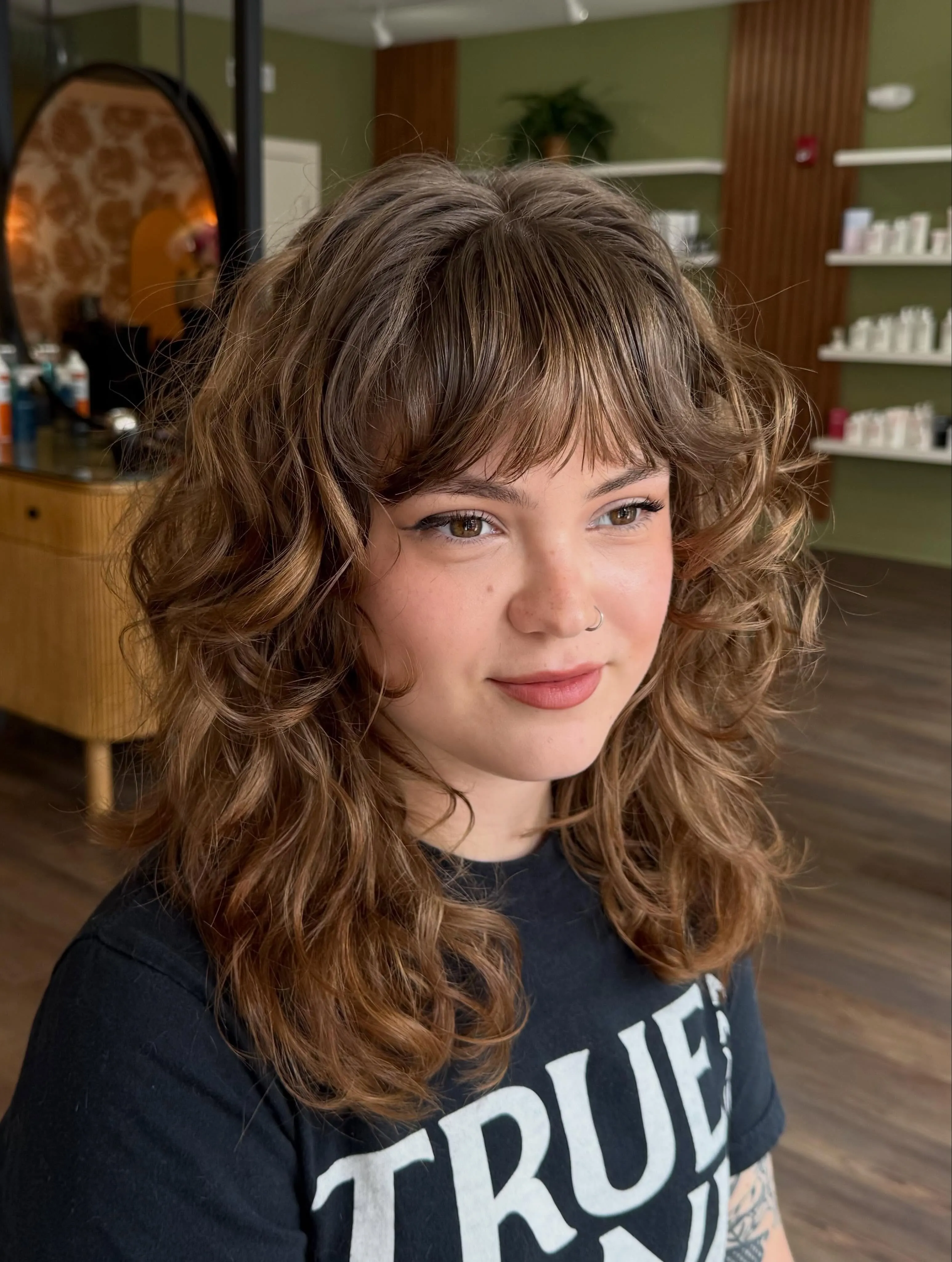
This shape uses curl definition and crown lift to give the cut height without losing softness.
The fringe follows the natural curl pattern, so it feels blended rather than separate from the rest of the hair.
Length around and below the shoulders helps balance the fuller texture through the sides.
Discover Box
Explore more hairstyle, haircut & hair color ideas on Empire Hairstyle:
For root volume: Diffuse with your head tilted slightly forward, then lift the roots once dry.
Good to know: A curl-by-curl fringe usually sits more predictably than a blunt wet cut.
Short Wolf Shag with Piecey Fringe
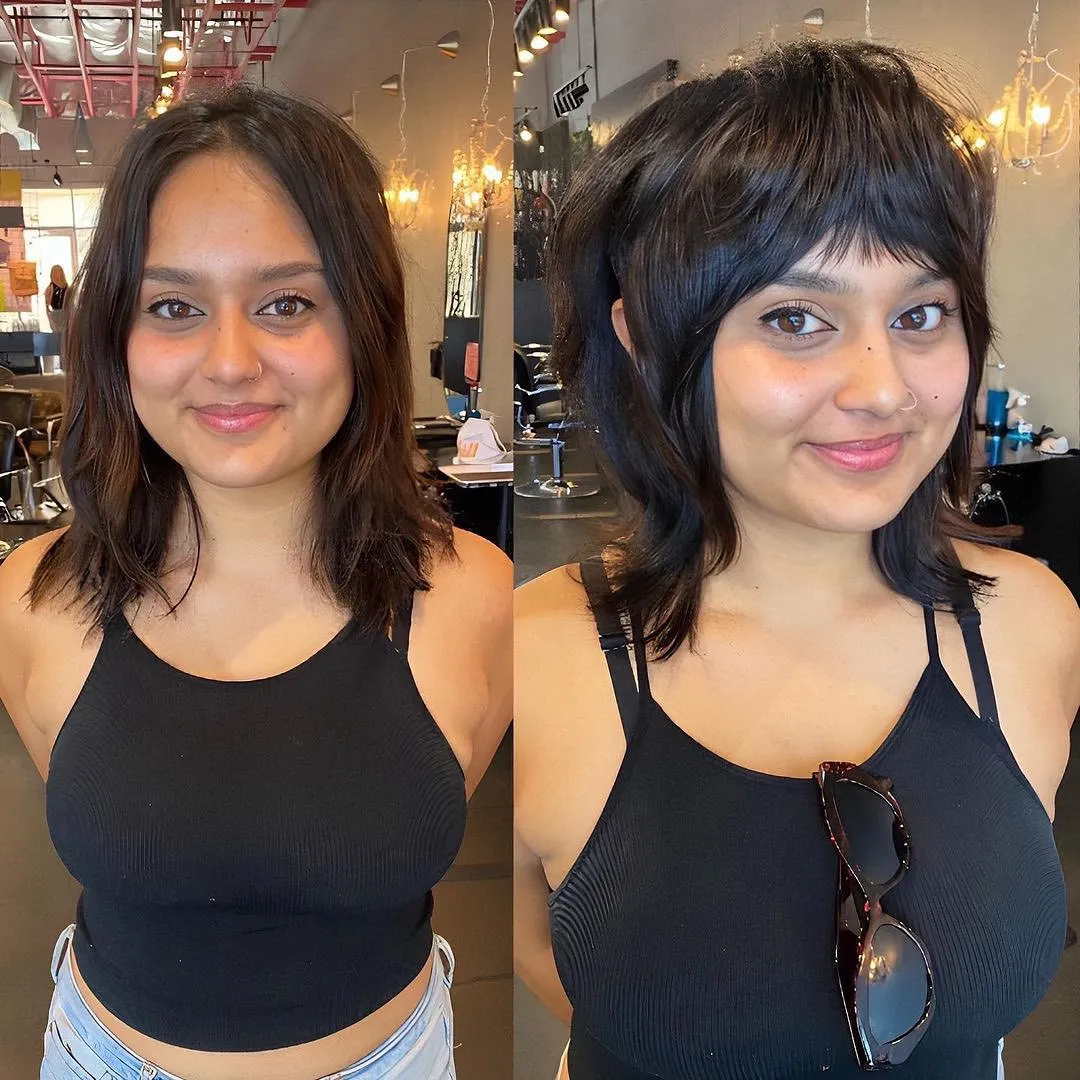
The transformation adds lift through the crown and breaks up the solid shoulder-length outline.
Piecey fringe keeps the forehead from looking completely covered, while the longer nape pieces pull the shape downwards.
The flipped ends also create movement away from the widest part of the face.
Works great if: You want a shorter cut without losing all the length around your neck.
Salon tip: Ask for soft internal layering so the top stays light rather than bulky.
Straight Shag with Full Fringe
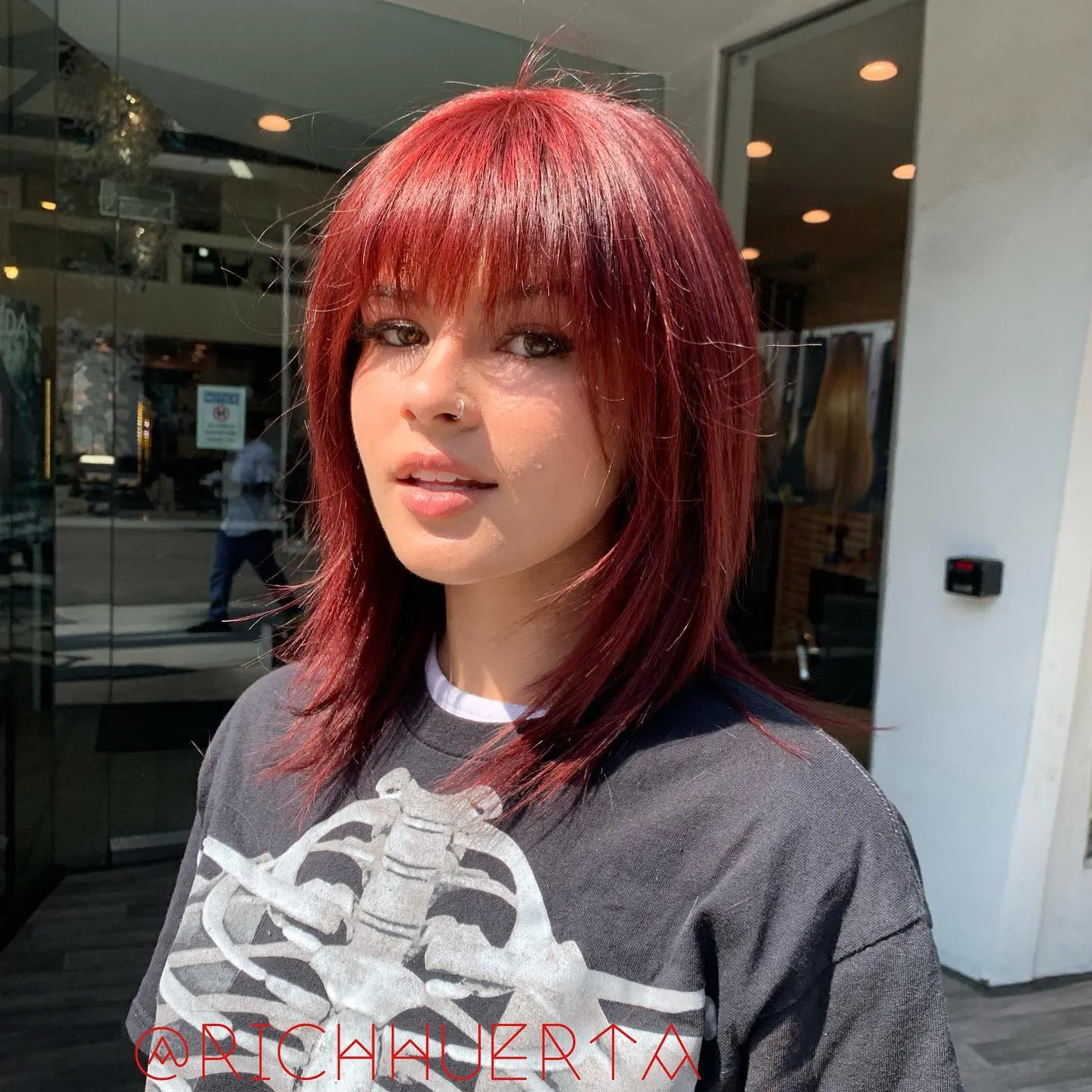
A full fringe gives this shag a strong frame, but the feathered side layers keep the outline from looking too square.
The longest pieces fall below the shoulders, which adds length beside a round face.
A smooth finish shows the cut clearly, while lightly flicked ends stop it from feeling too controlled.
Best for: Straight hair that holds a soft bend at the ends.
Keeps it smooth: Use a small amount of light serum from the mid-lengths down.
Shoulder-Length Shag with Curtain Fringe
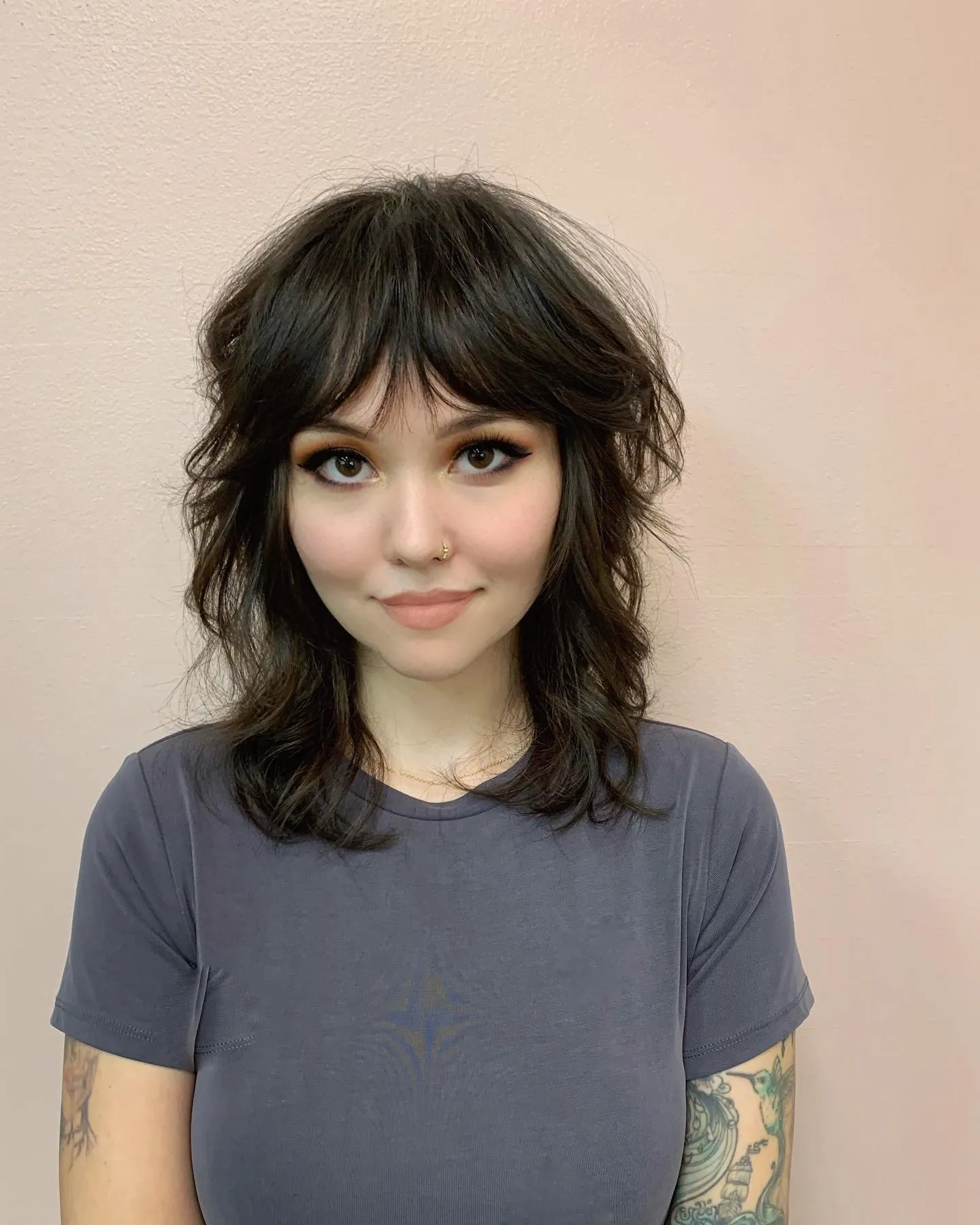
The curtain fringe opens through the centre and creates two slim lines beside the face.
Loose layers around the jaw and shoulders give the cut texture without building too much width at cheek level.
This is an easy middle ground when you want a noticeable shag that still feels soft and wearable.
Quick styling: Twist the fringe away from the face while drying it.
Best for: Medium-density hair with a slight natural wave.
Extra-Long Shag with Wispy Curtain Fringe
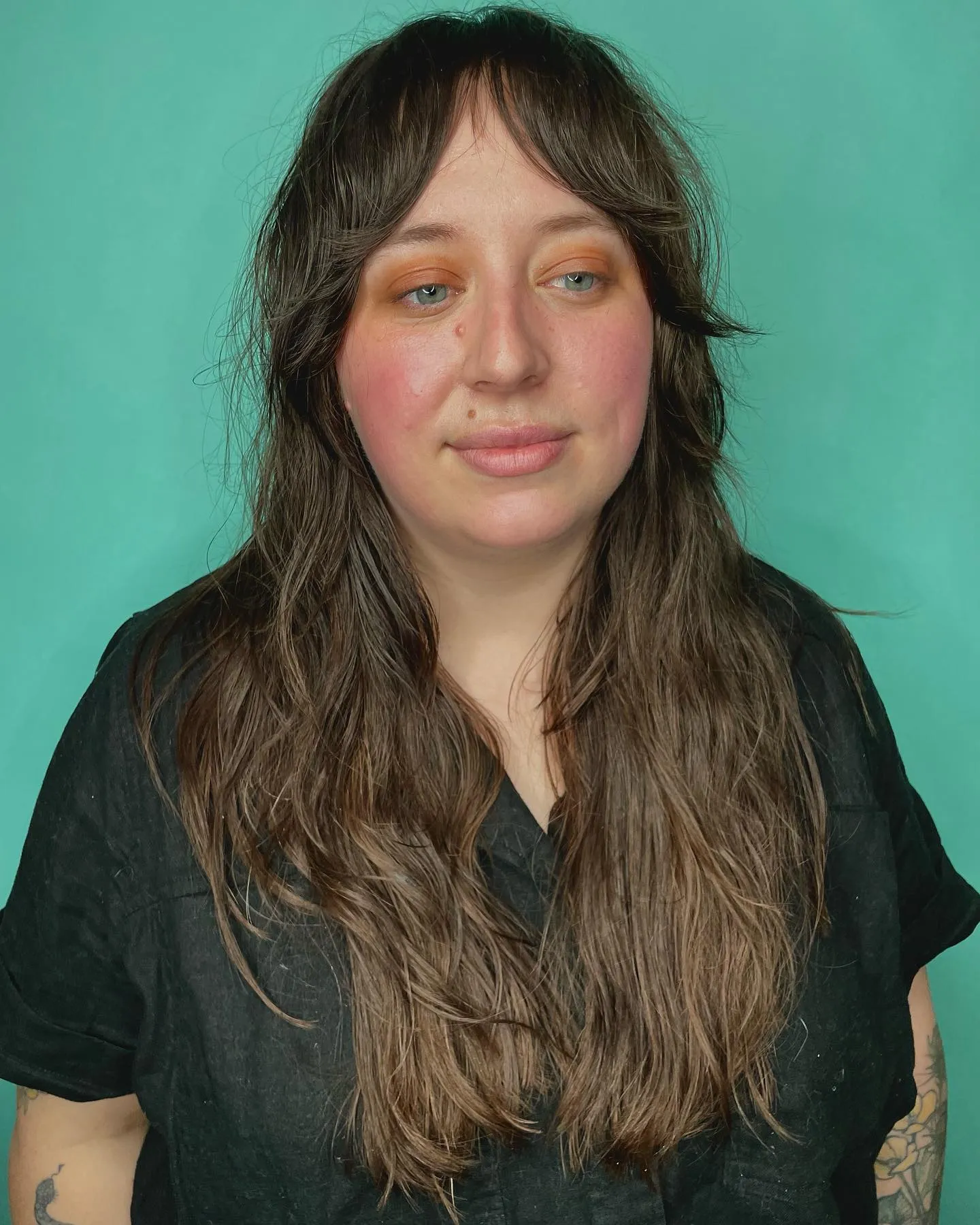
The long length keeps this shag subtle and gives the face an elongated frame.
Wispy curtain pieces soften the forehead without forming a heavy horizontal line.
Long, uneven layers add movement through the lower half while leaving enough weight for the hair to fall neatly.
Works great if: You want shaggy movement but are not ready for a dramatic chop.
At home tip: Scrunch a light foam into damp lengths and let the ends dry naturally.
Soft Black Shag with Airy Fringe
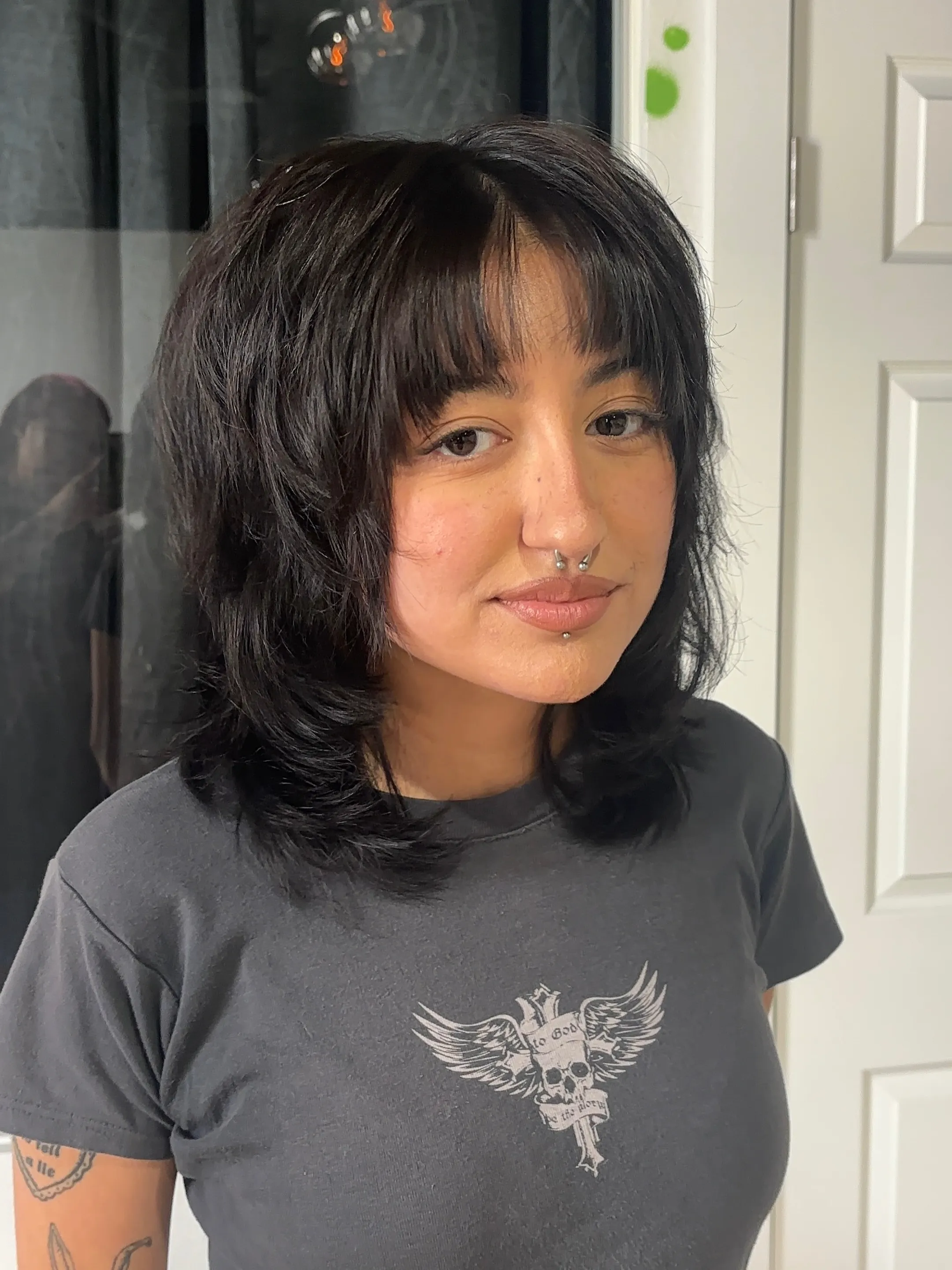
The fringe is light enough to show through, which keeps the front of the cut open and relaxed.
Shorter layers curve around the cheekbones, then flick outward as they reach the shoulders.
That change in direction gives the face definition without creating a rounded helmet shape.
For that finish: Use a round brush only on the fringe and ends, not through the whole cut.
Easy to maintain: The loose shape can grow out without a sharp line appearing.
Short Mullet Shag with Micro Fringe
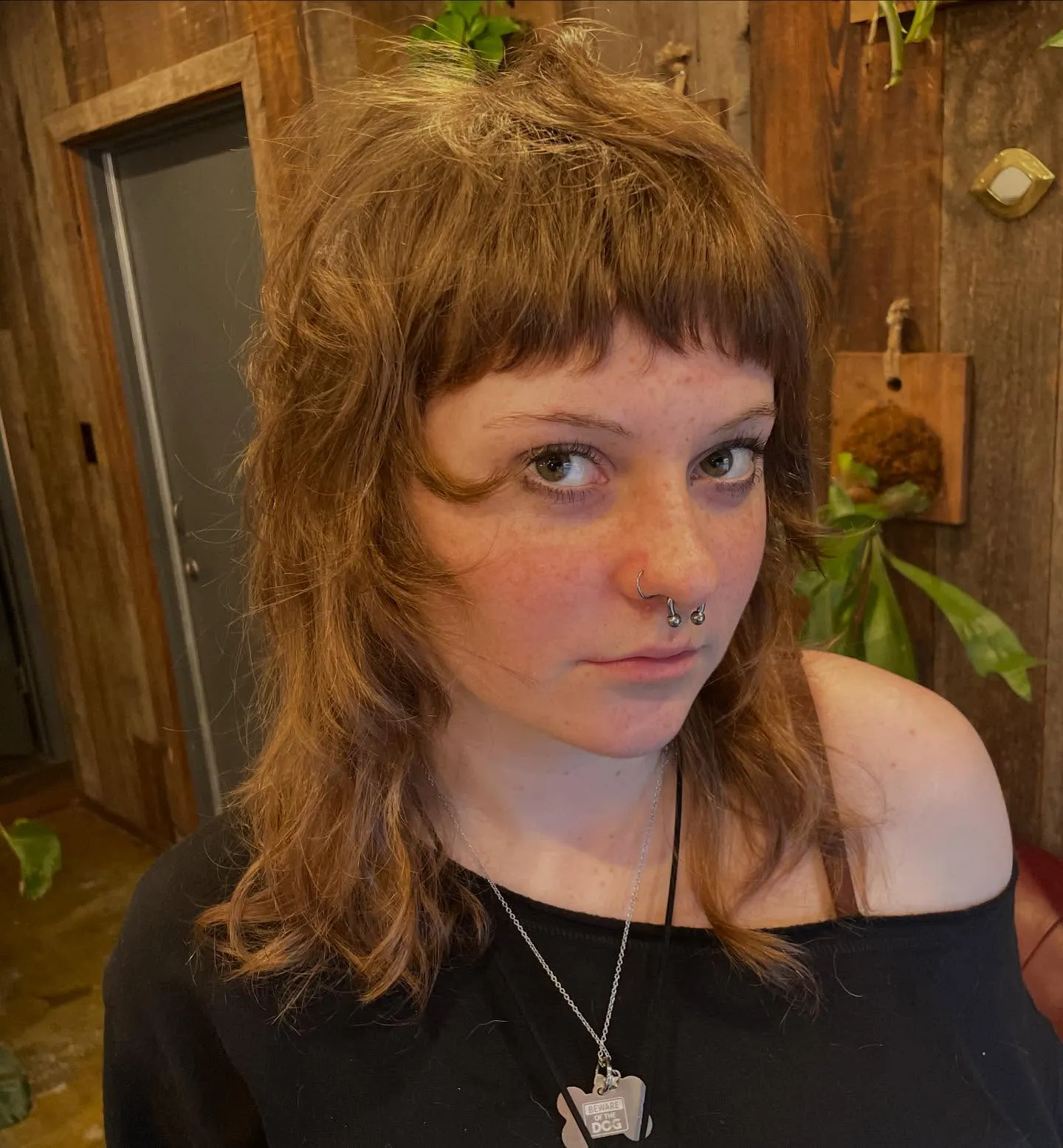
This cut places most of the lift at the crown and keeps the sides close, which can give a round face more length.
The tiny fringe makes the forehead visible, while the extended nape creates a narrow, vertical finish.
Choppy texture is the point here, so the shape works better slightly undone than perfectly smooth.
Best for: Anyone comfortable with a bold, high-contrast shag shape.
Holds better with: A dry texture paste pinched into the crown and ends.
Curly Shag Bob with Rounded Fringe
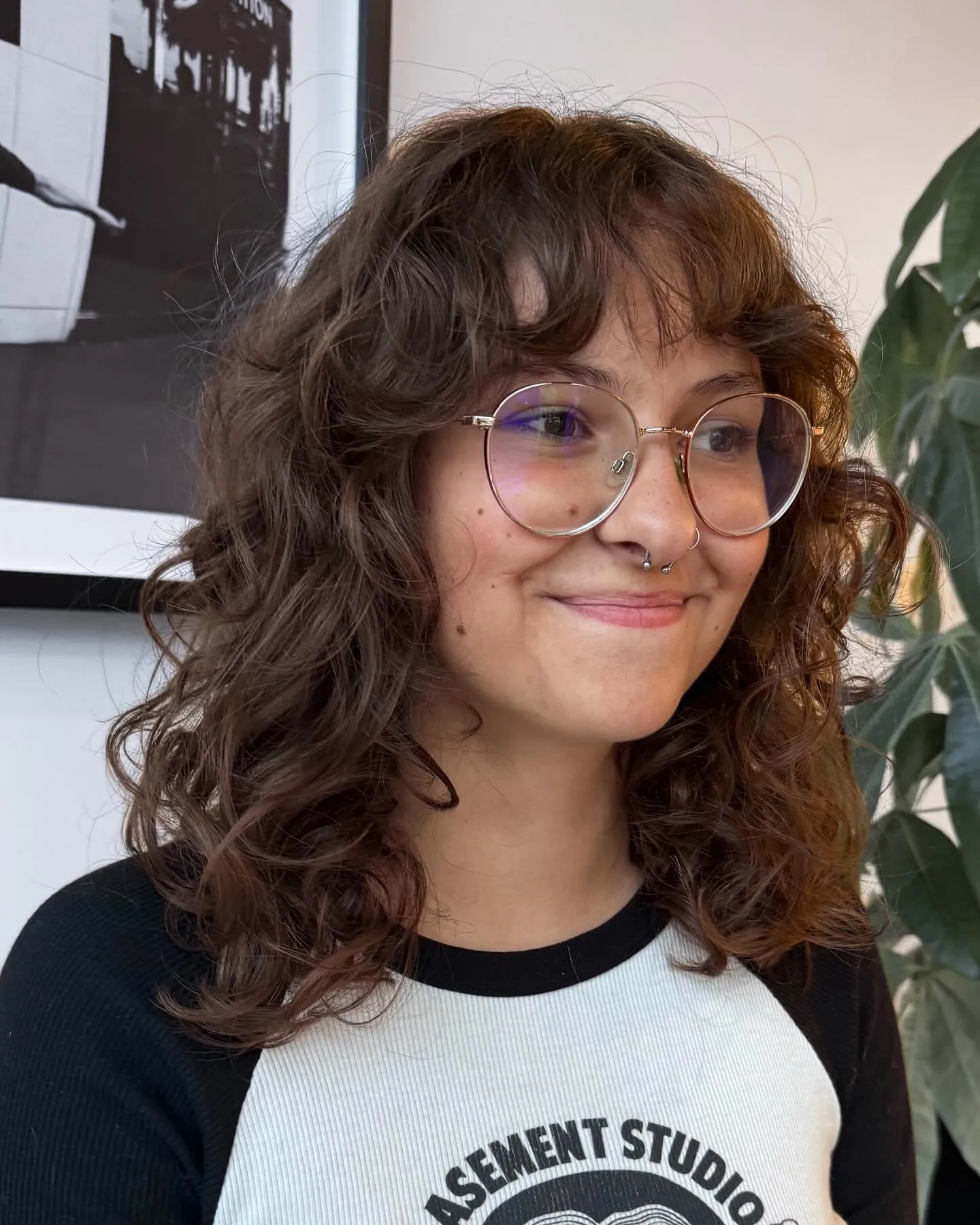
The curls form a rounded silhouette, but the layered ends keep the shape open and bouncy rather than dense.
A soft fringe joins the side curls, so there is no hard line cutting across the forehead.
Keeping the lower curls around shoulder level gives the style enough length to balance the volume.
Fighting frizz: Apply curl cream on soaking-wet hair and avoid separating the curls until dry.
Ask your stylist: To remove weight inside the shape without thinning the visible ends.
Long Shag Transformation with Full Fringe
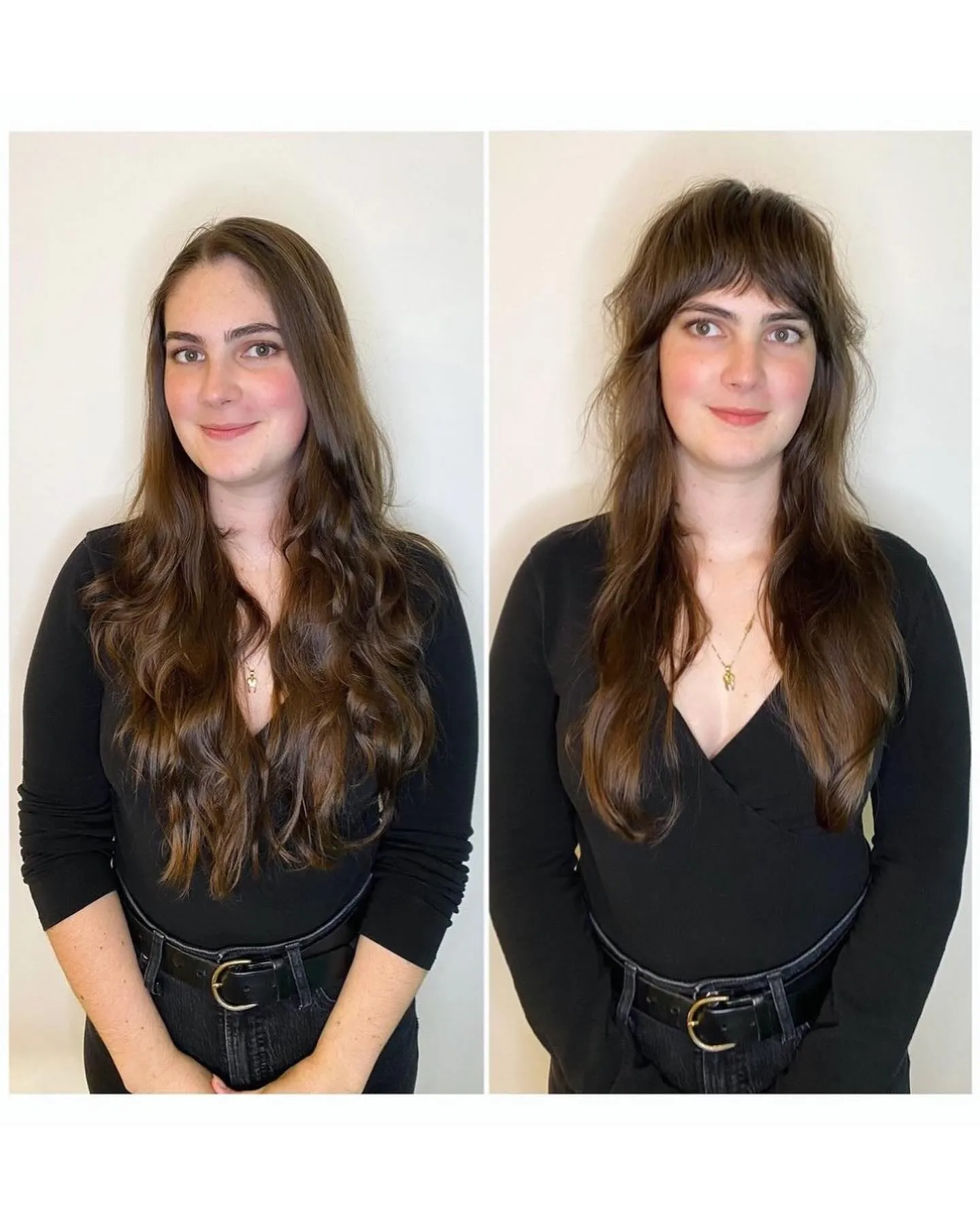
This before-and-after shows how a fringe and shorter crown layers can change long hair without sacrificing its overall length.
The new shape adds height around the top and movement beside the temples instead of leaving all the weight at the bottom.
Long front pieces continue below the shoulders, which keeps the face frame balanced.
Good to know: This type of transformation still needs regular fringe trims.
How to get it: Ask for a long shag with a full, broken fringe and layers through the crown.
Long Curly Shag with Full Fringe
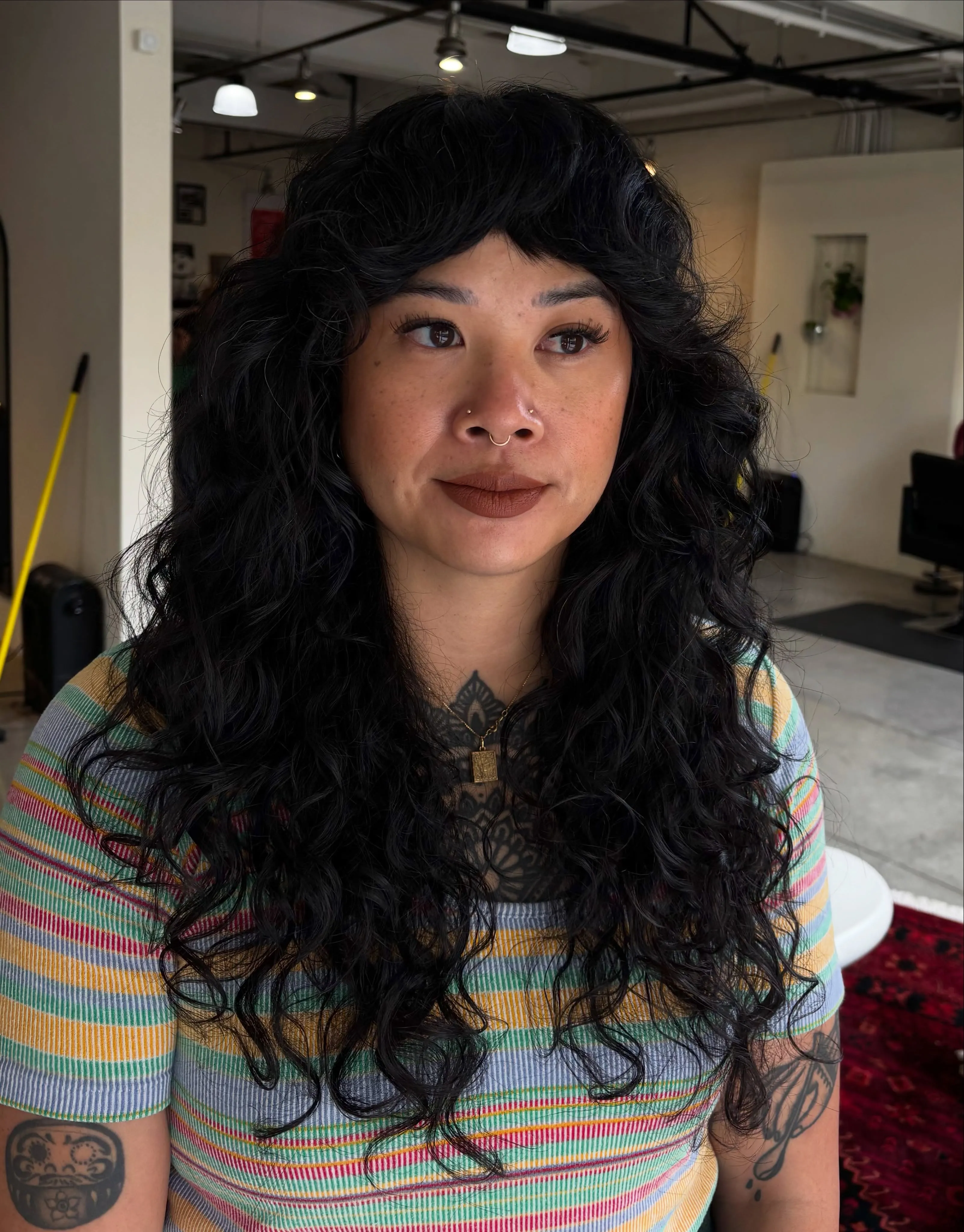
High layers let the curls rise at the crown, while the long lower section keeps a strong downward line.
The full curly fringe blends into the sides, giving the shape continuity around the face.
This cut needs enough layering to release the curls, but not so much that all the volume gathers at cheek level.
Best for: Naturally curly hair with medium to high density.
For root volume: Clip the roots upright while the hair air-dries or diffuses.
Sleek Long Shag with Blunt Fringe
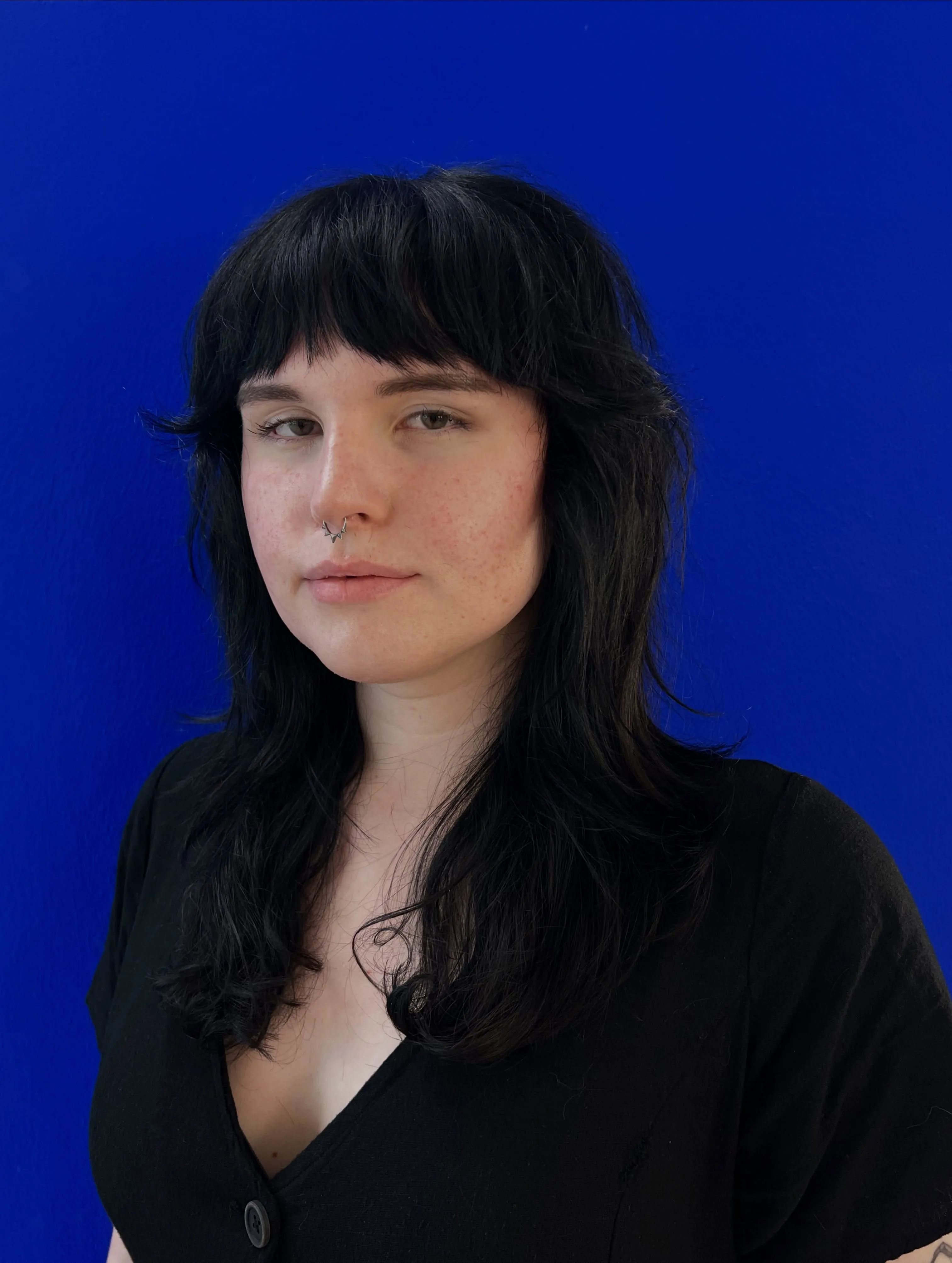
The blunt fringe gives this style a graphic finish, while the longer side layers prevent it from feeling too compact.
Hair stays fairly close through the cheeks and begins to flick outward lower down.
That placement is useful when you prefer a smooth shag with less volume around the widest part of the face.
For that finish: Smooth the lengths with a paddle brush, then bend only the ends.
Style note: Keep the fringe slightly separated so it does not look too heavy.
Silver Wavy Shag with Straight Fringe

Soft waves give this longer shag body, while the straight fringe creates a neat focal point around the eyes.
The layers sit below the cheeks and continue past the shoulders, so the overall outline still feels lengthening.
This is a useful example of a shag that feels playful without relying on extreme choppiness.
Best for: Fine to medium hair that benefits from soft, visible movement.
Keeps it smooth: Use a moisturising leave-in through the pale or colour-treated ends.
Natural Curly Shag with Centre Part
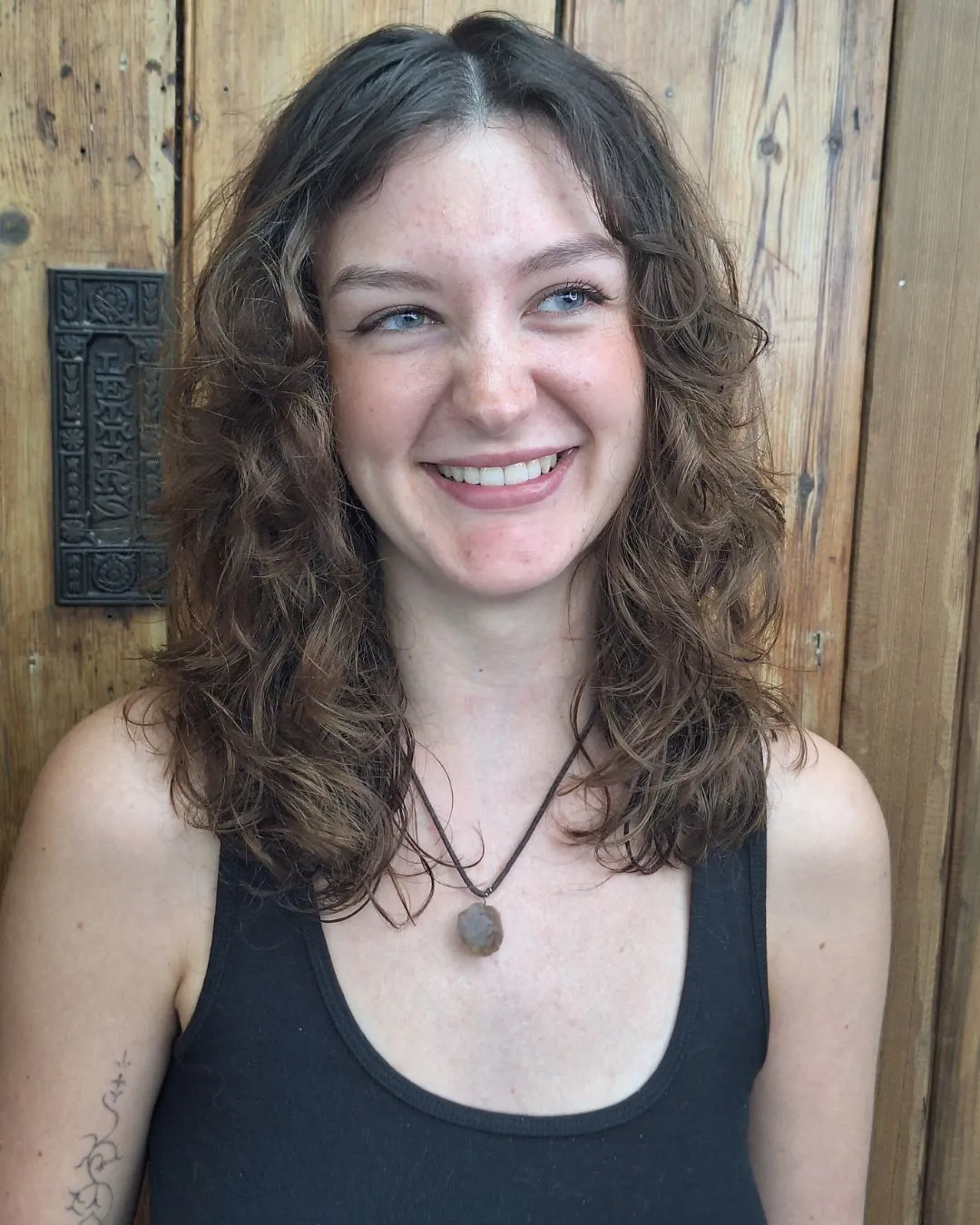
A centre part creates a clear vertical opening and lets the curls frame both sides evenly.
The layers begin high enough to encourage bounce, but the longest curls still reach the shoulders.
Without a fringe, the style feels open around the forehead and is easy to shift into a side part.
Works great if: You prefer to keep curls away from your eyes.
Heat free: Finger-coil a few front pieces and leave the rest to form naturally.
Long Wavy Shag with Wispy Fringe
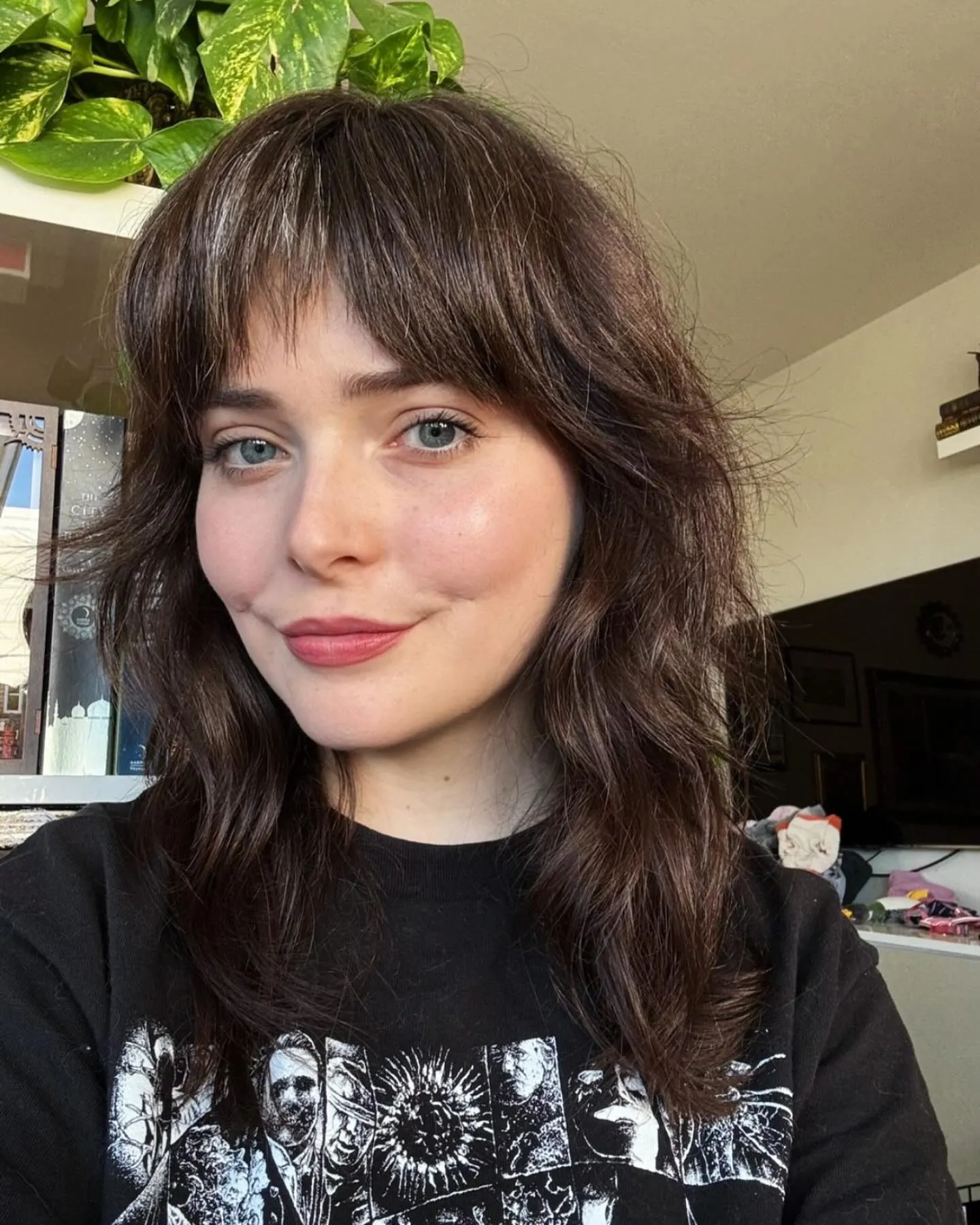
The wispy fringe is narrow and broken, so it softens the forehead without closing the face in.
Long waves fall past the shoulders and create movement lower than the cheekbones.
The face-framing layers are subtle, making this a practical option for someone who likes polished hair with a shag influence.
Quick styling: Wrap the front layers away from the face with a large brush.
Best for: Long, medium-density hair with natural bend.
Curly Shag Styled in a Loose Updo
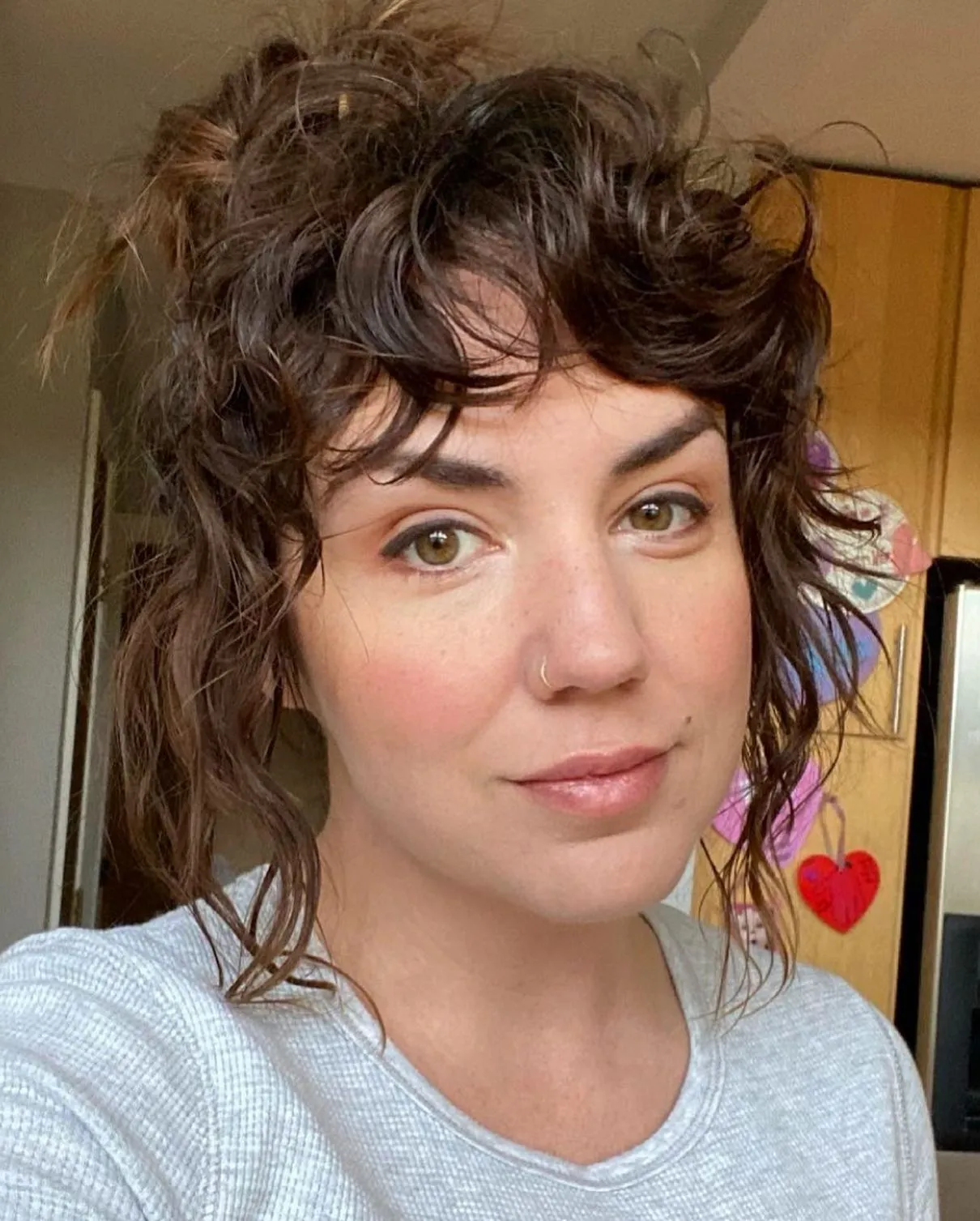
This loose updo shows how well short shag layers work when the rest of the hair is pinned back.
The broken fringe adds height and texture, while the longer tendrils create slim lines beside the cheeks.
Leaving the finish imperfect makes the shorter pieces look intentional rather than difficult to secure.
Morning hack: Pin up second-day curls and refresh only the fringe and loose pieces.
Keeps it in place: Use flexible hairspray rather than a stiff finishing spray.
Polished Long Shag with Curtain Layers
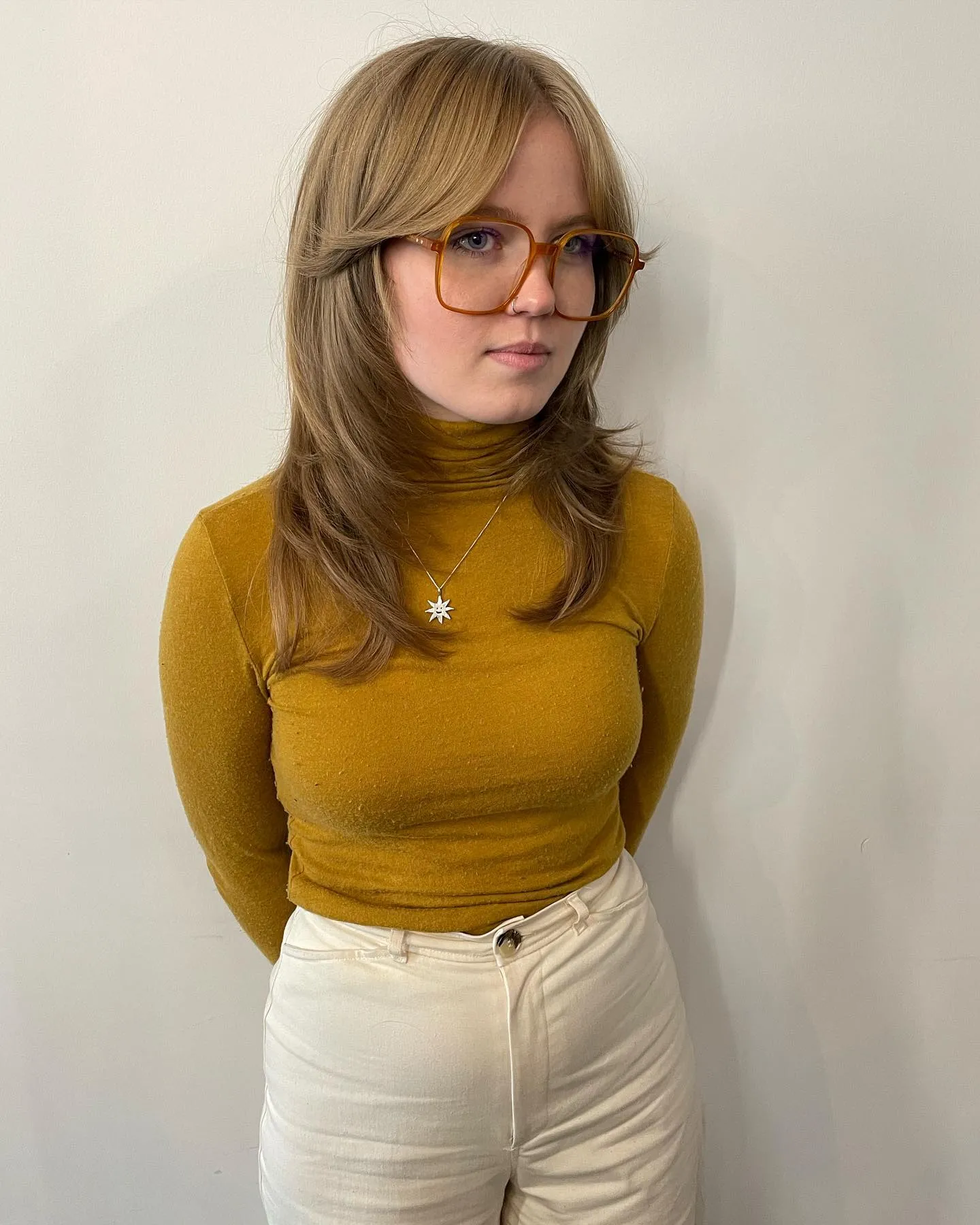
This cut keeps the surface smooth while using long curtain layers to shape the front.
The shortest pieces sit below the cheekbones, then sweep into the longer lengths.
It is a flattering route into a shag when you prefer clean styling and do not want a full fringe.
Best for: Straight or blow-dried hair that holds a curved finish.
Ask your stylist: For connected face-framing layers rather than short, disconnected pieces.
Long Layered Shag with Soft Full Fringe
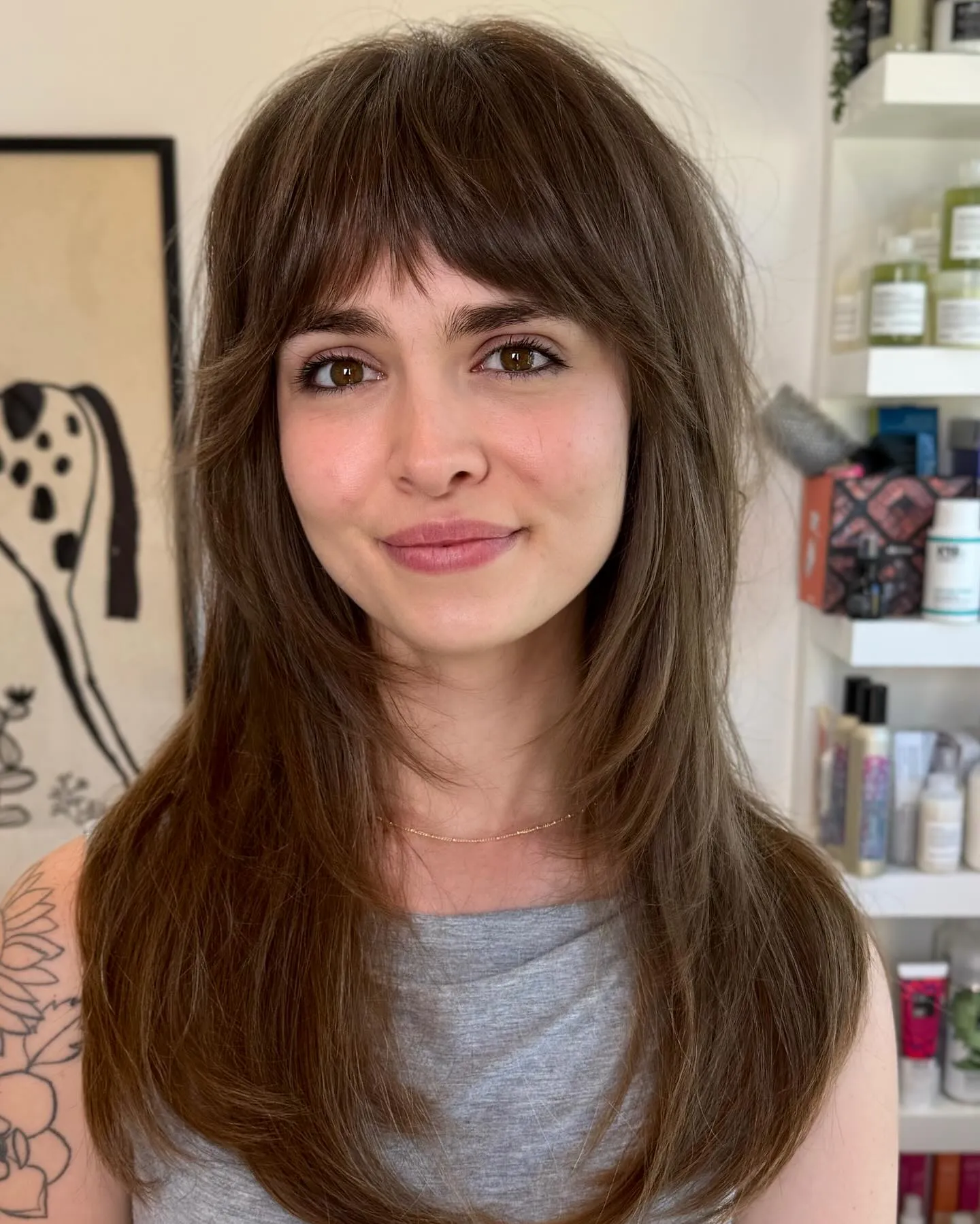
The soft full fringe sits lightly across the forehead and blends into longer pieces at the temples.
Layers through the front add movement, while the smooth lower length keeps the outline slim.
This shape feels balanced because the volume stays controlled beside the cheeks and the ends continue well below them.
Easy to maintain: Blow-dry the fringe first, then leave the longer layers smooth or softly bent.
Salon tip: Ask for a fringe that is slightly longer towards the outer corners.
Choppy Shag Mullet with Baby Fringe
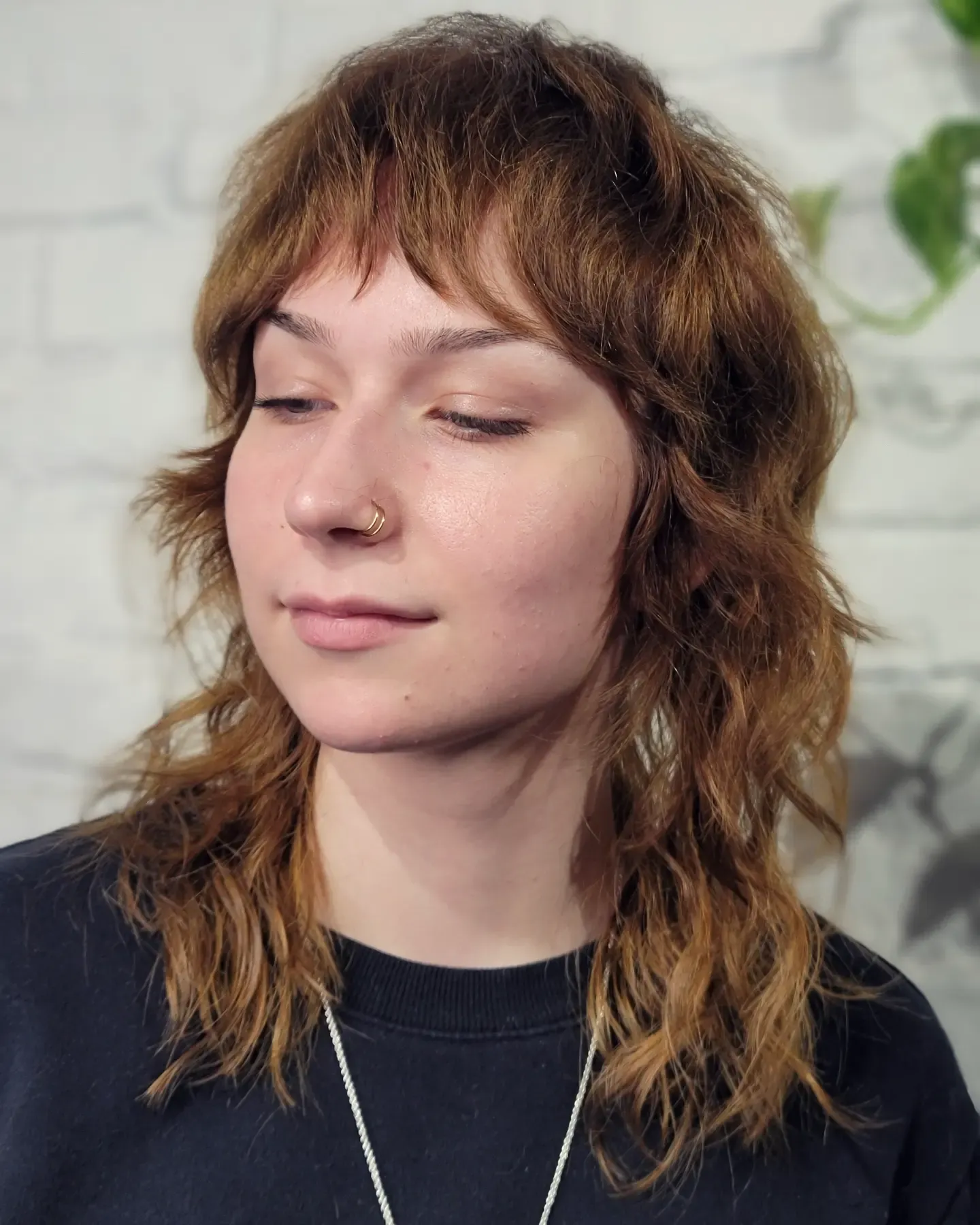
The short baby fringe and lifted crown make this shag feel open and vertically focused.
Choppy side pieces stay close around the face before extending into longer, textured ends at the nape.
The uneven finish suits natural wave and gives the cut character without needing a polished blow-dry.
Best for: Wavy hair and anyone drawn to an expressive mullet-inspired shape.
Holds better with: A small amount of matte paste worked into dry ends.