
Creamy Latte Hair Color: 18 Whimsical Ideas
This neutral blend sits neatly between warm blonde and soft brunette.
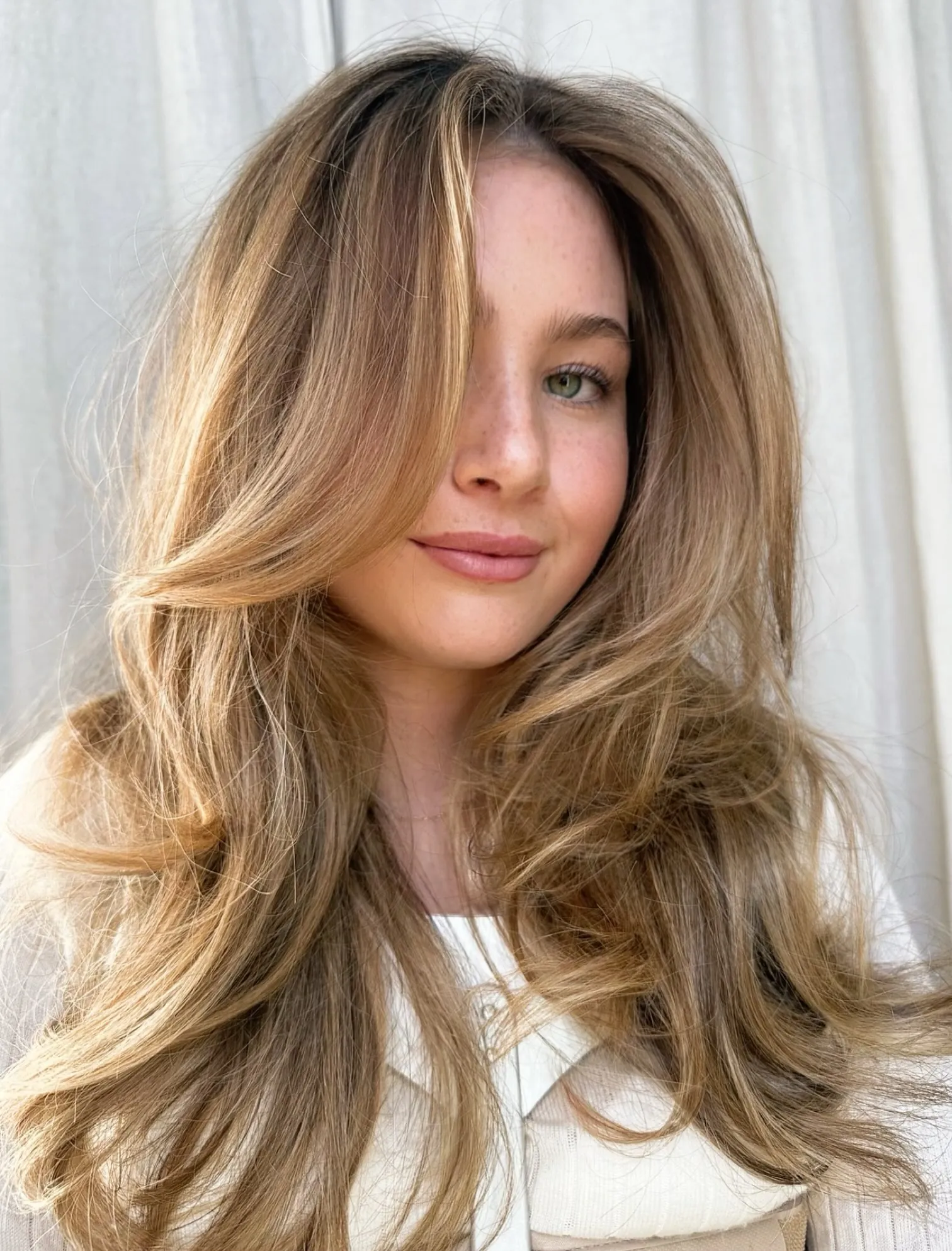
- Creamy latte hair colour usually combines a softly neutral brunette base with lighter beige-blonde ribbons rather than one flat all-over shade.
- Balayage and face-framing highlights help create a gradual transition, so the colour can grow out more softly than bright root-to-tip blonde.
- The finish looks best when the hair stays glossy and hydrated, because dry ends can make neutral tones appear dull or brassy.
Soft Rooted Waves
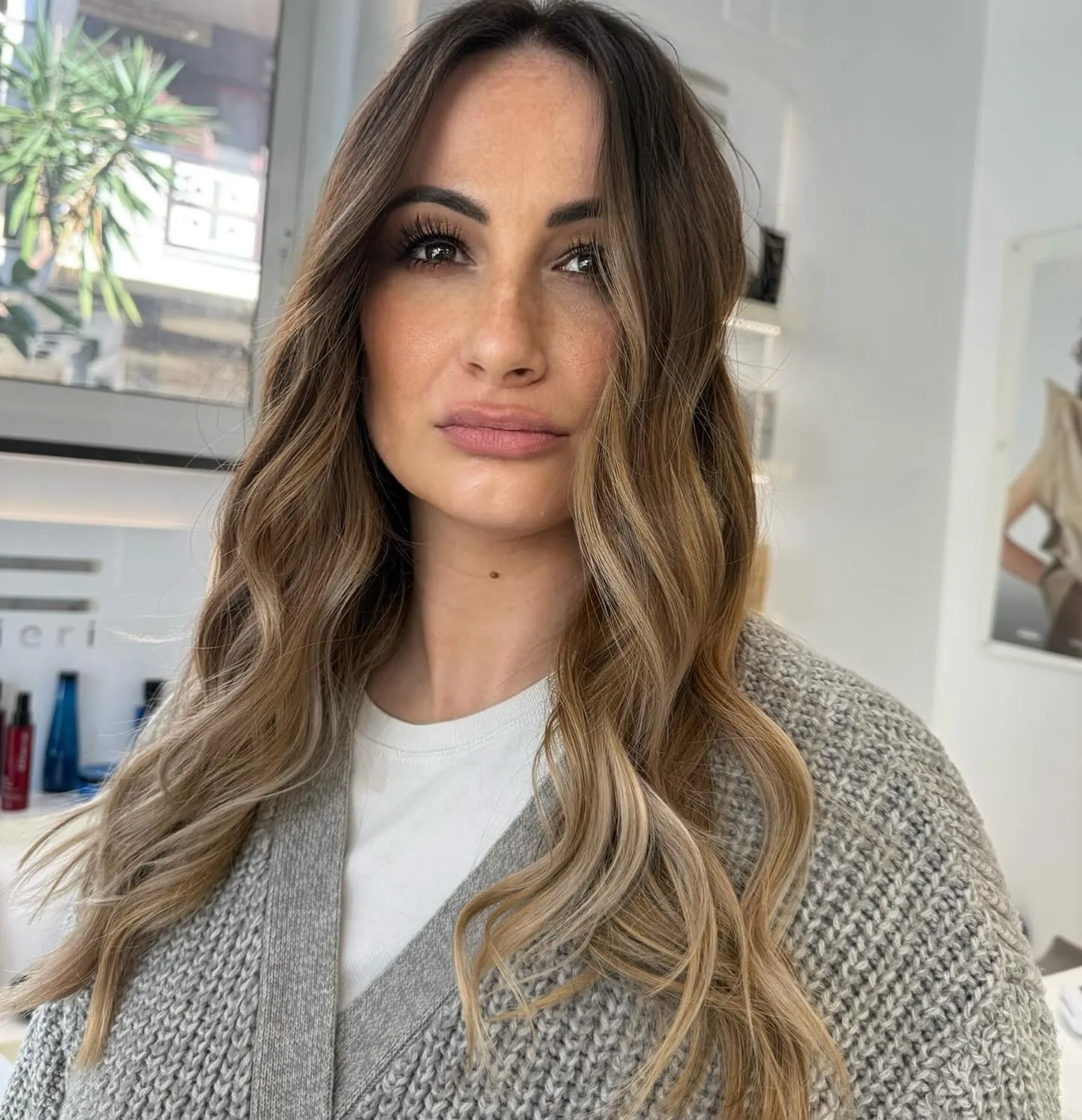
A deeper centre part and soft ribbons through the lengths keep this neutral blend grounded. The lighter pieces begin away from the scalp, making regrowth less obvious than a full blonde service.
Salon tip: Ask for soft root depth with fine balayage through the mid-lengths.
Glossy Dimensional Waves
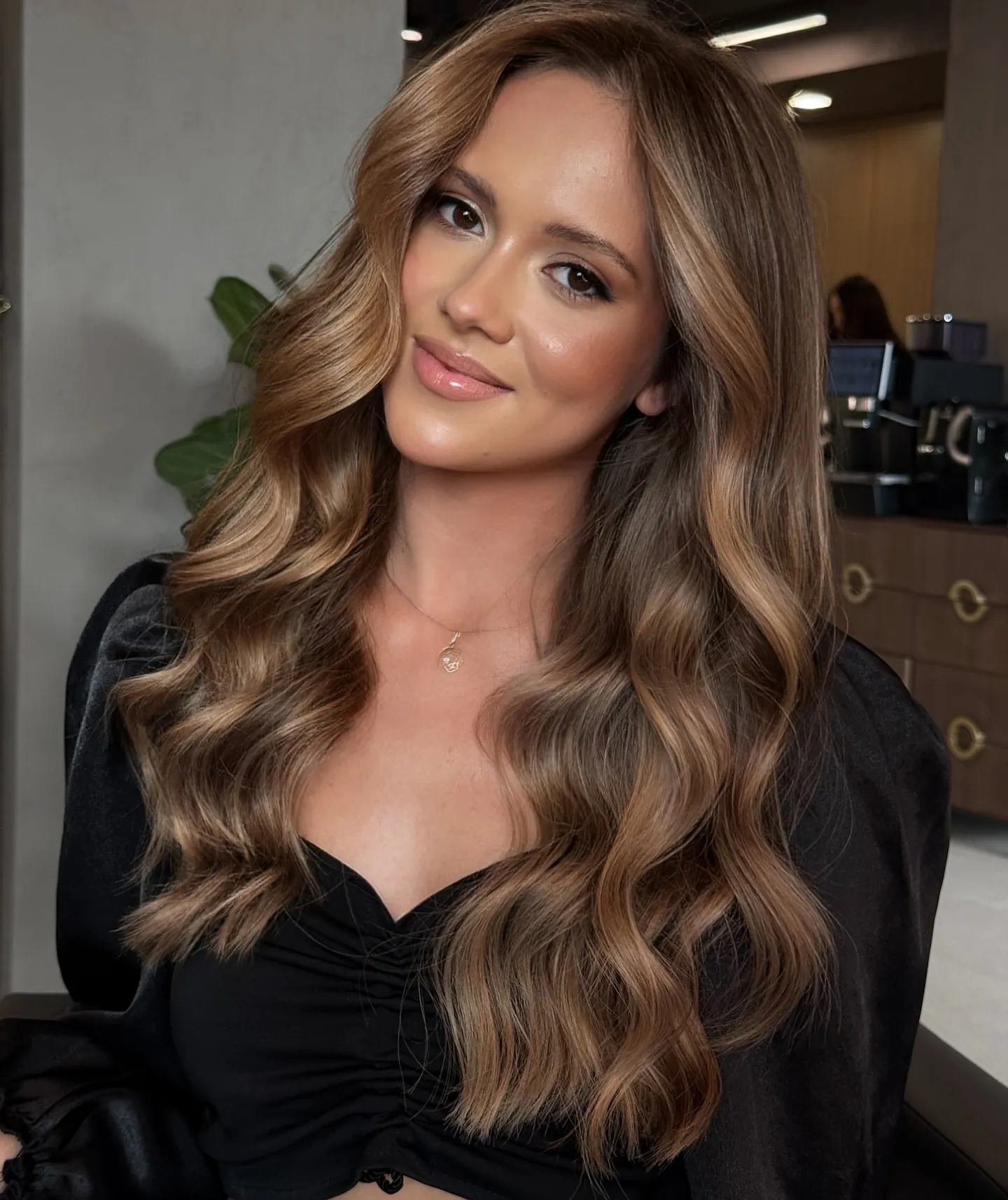
The darker lowlights stop the lighter sections from blending into one flat shade. Large waves are useful here because they show the light-and-dark placement through every turn.
Face Framing Balayage
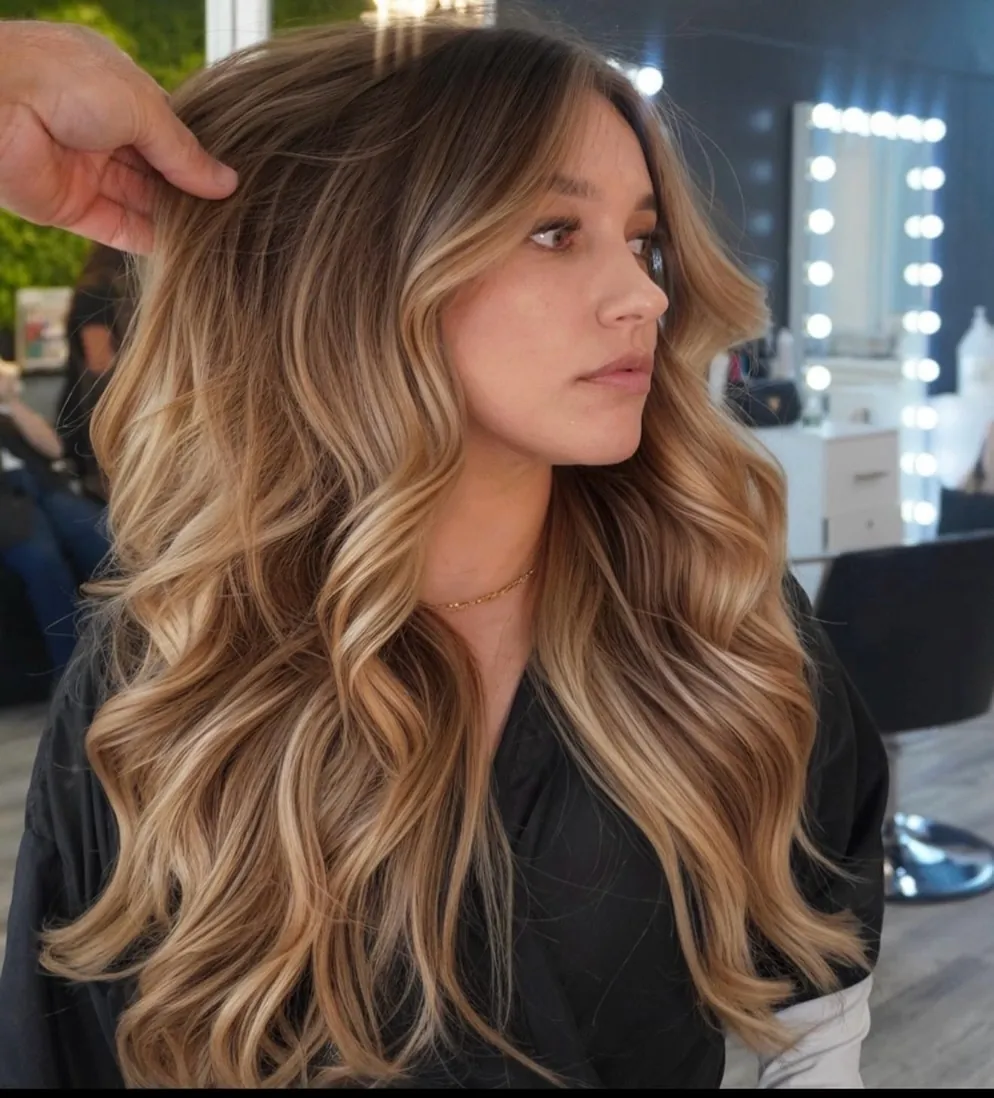
Brighter pieces around the face lift the overall colour without taking the whole head very light. This placement suits anyone who wants noticeable brightness with a softer grow-out.
Long Beige Layers
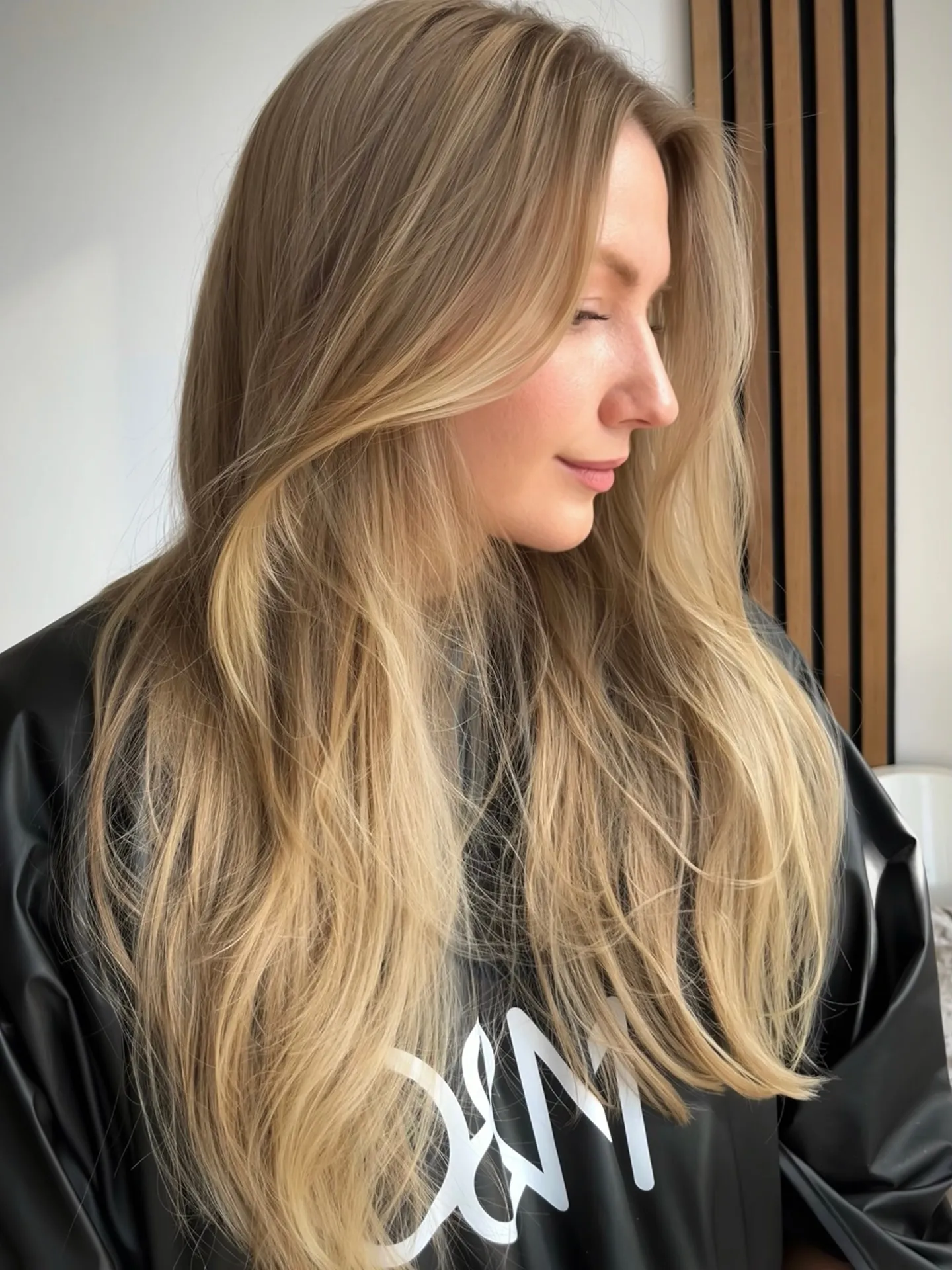
A subtle darker root keeps these long pale layers from looking washed out. The feathered ends also make the colour feel lighter because each layer catches a slightly different tone.
Cool Neutral Waves
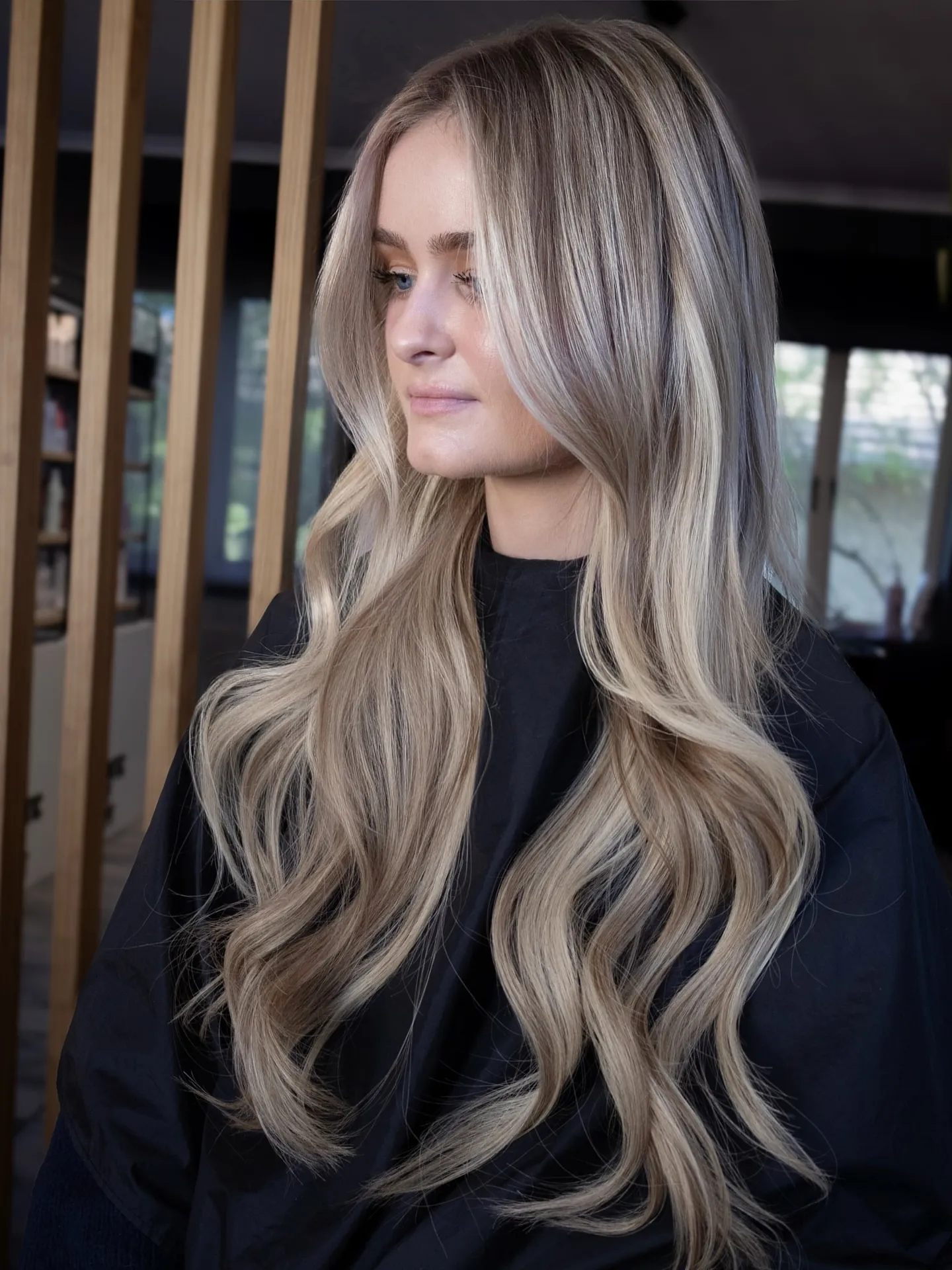
This version leans cooler, with a muted root and pale ribbons through the lengths. It is useful if very golden blonde tends to look too warm against the skin.
Bright Framed Layers
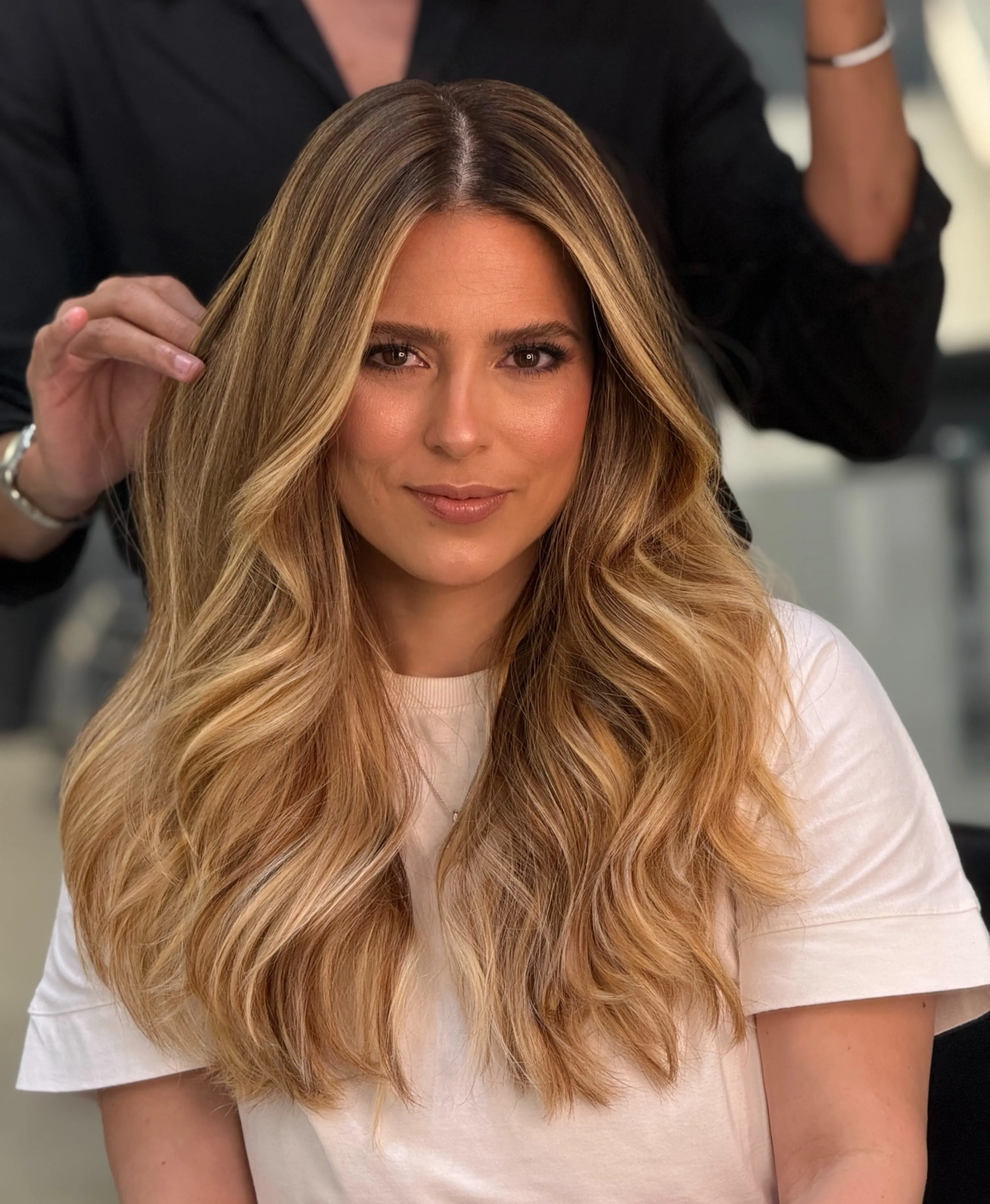
The front is kept lighter while the inner layers hold more depth, creating a strong but wearable frame. A smooth blowout makes the tonal contrast especially clear.
For that finish: Use heat protectant before a round-brush blowout to keep the ends glossy.
Smoky Brown Layers
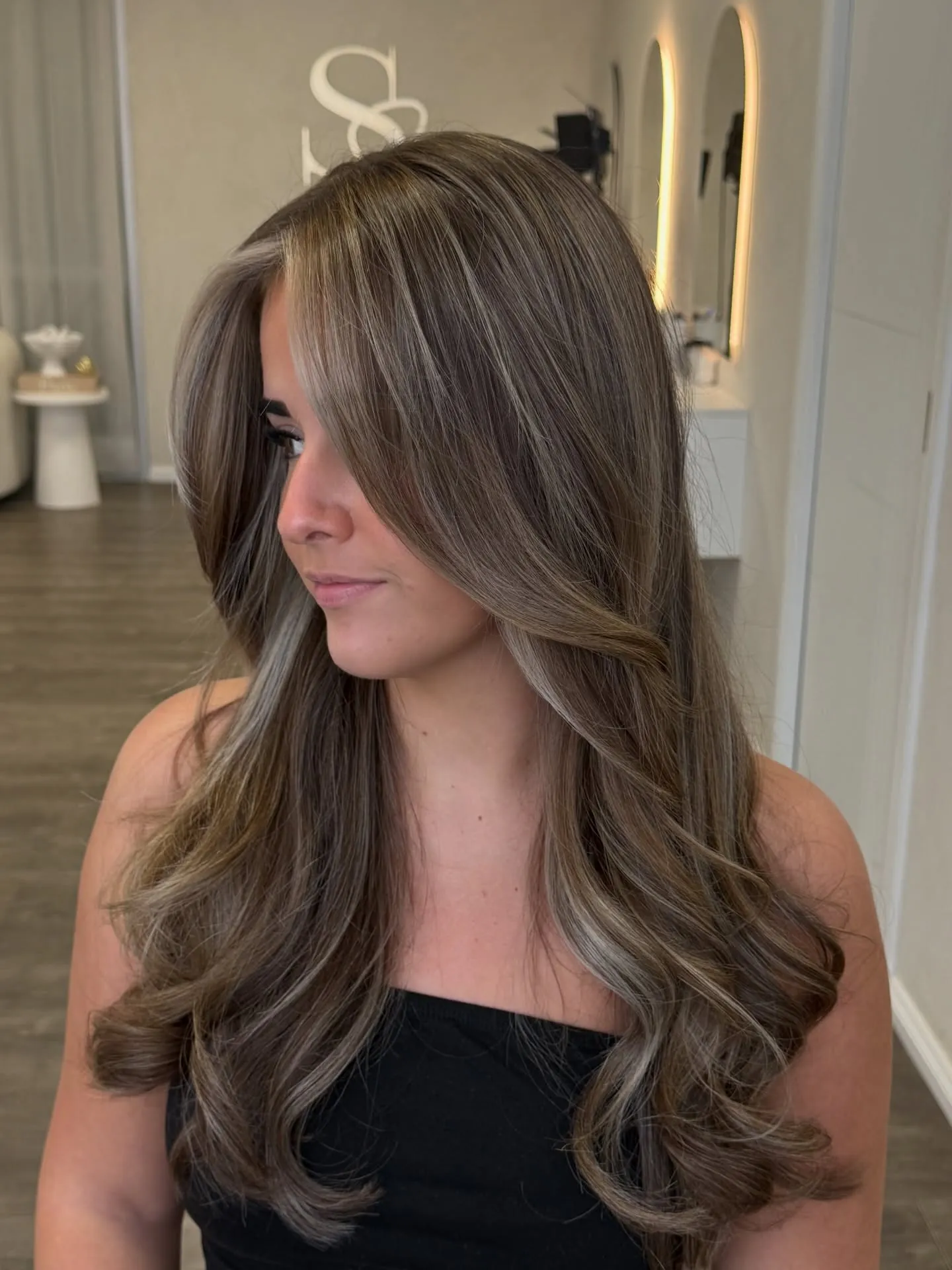
The muted brunette base gives this latte-inspired colour a softer, lower-contrast feel. Lightened ends add movement without creating a stripe at the root.
Layered Neutral Lob
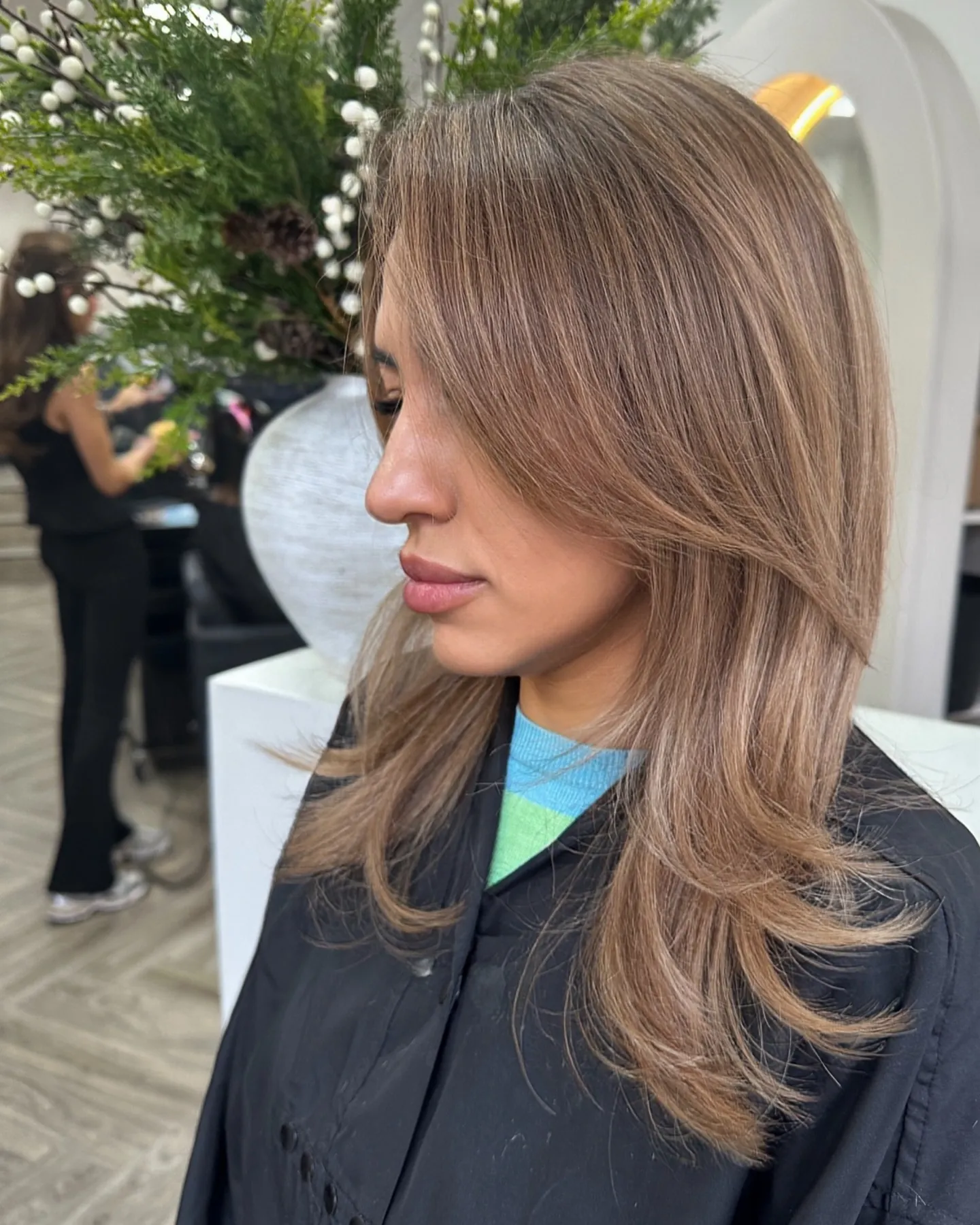
A shoulder-skimming layered cut keeps the colour easy to see without relying on very long hair. The fine highlights around the front brighten the shape while the interior stays natural.
Golden Neutral Waves
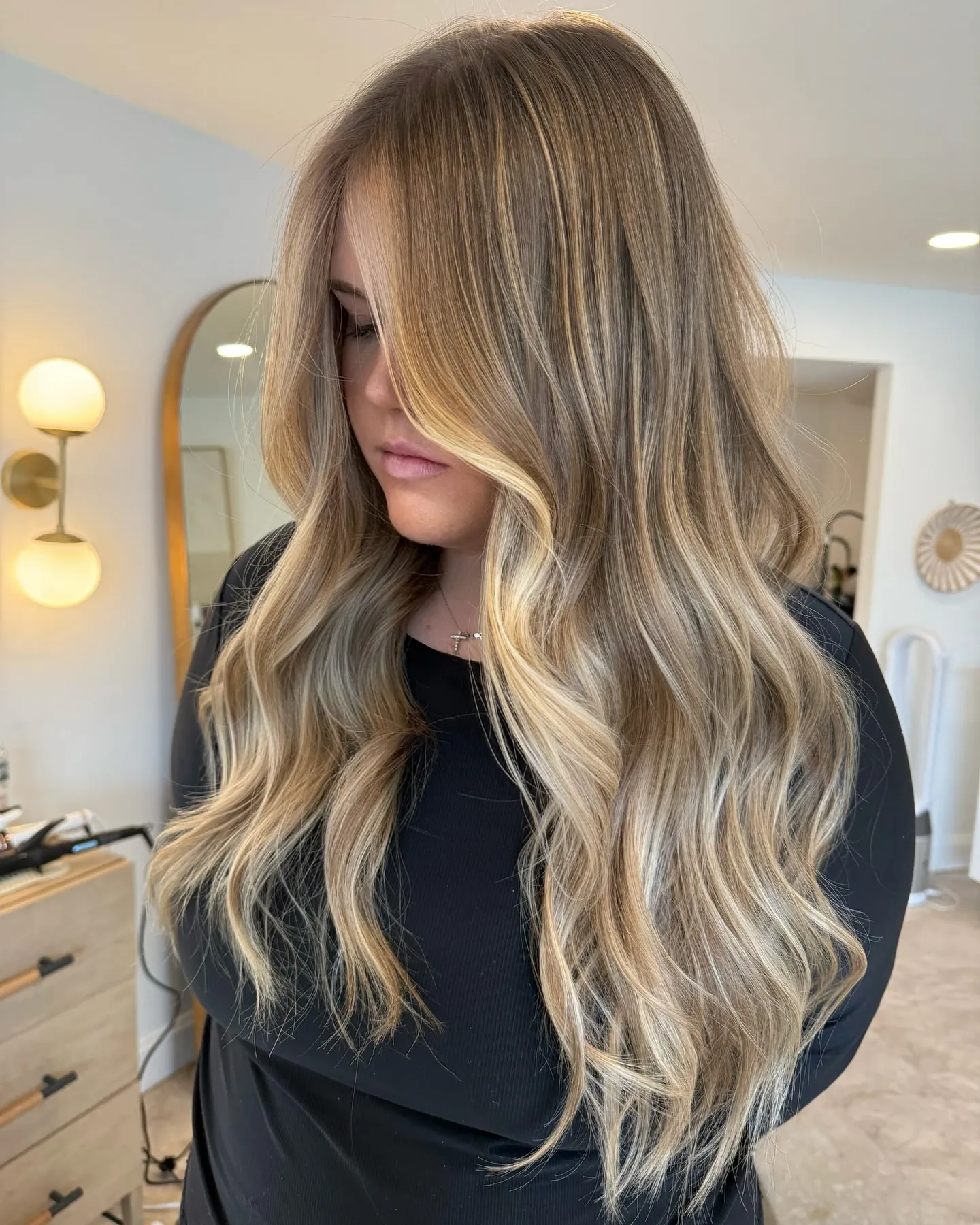
The warmer ribbons make the overall colour feel sunlit, while the shadowed root keeps it balanced. Loose waves help the brighter front sections blend into the mid-lengths.
Voluminous Beige Layers
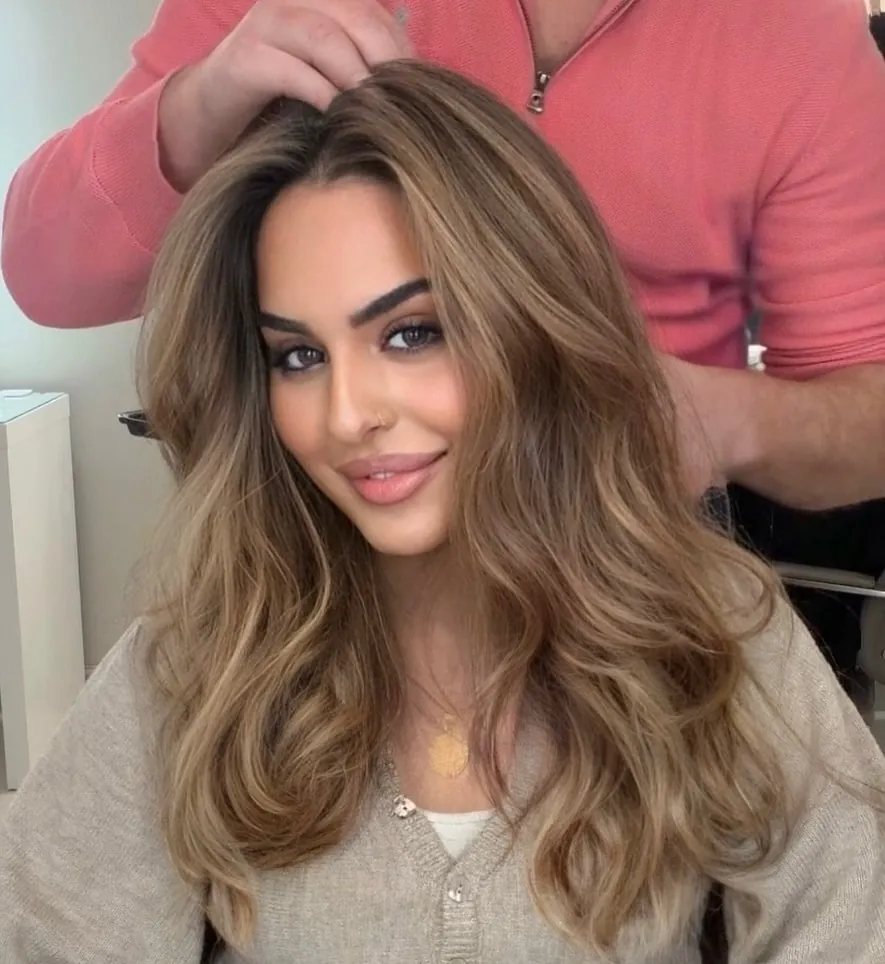
A full blowout creates separation between the neutral blonde ribbons and darker base. The colour works particularly well with long layers because the movement prevents any single tone from dominating.
For root volume: Direct the front layers away from the face while blow-drying.
Soft Highlighted Layers
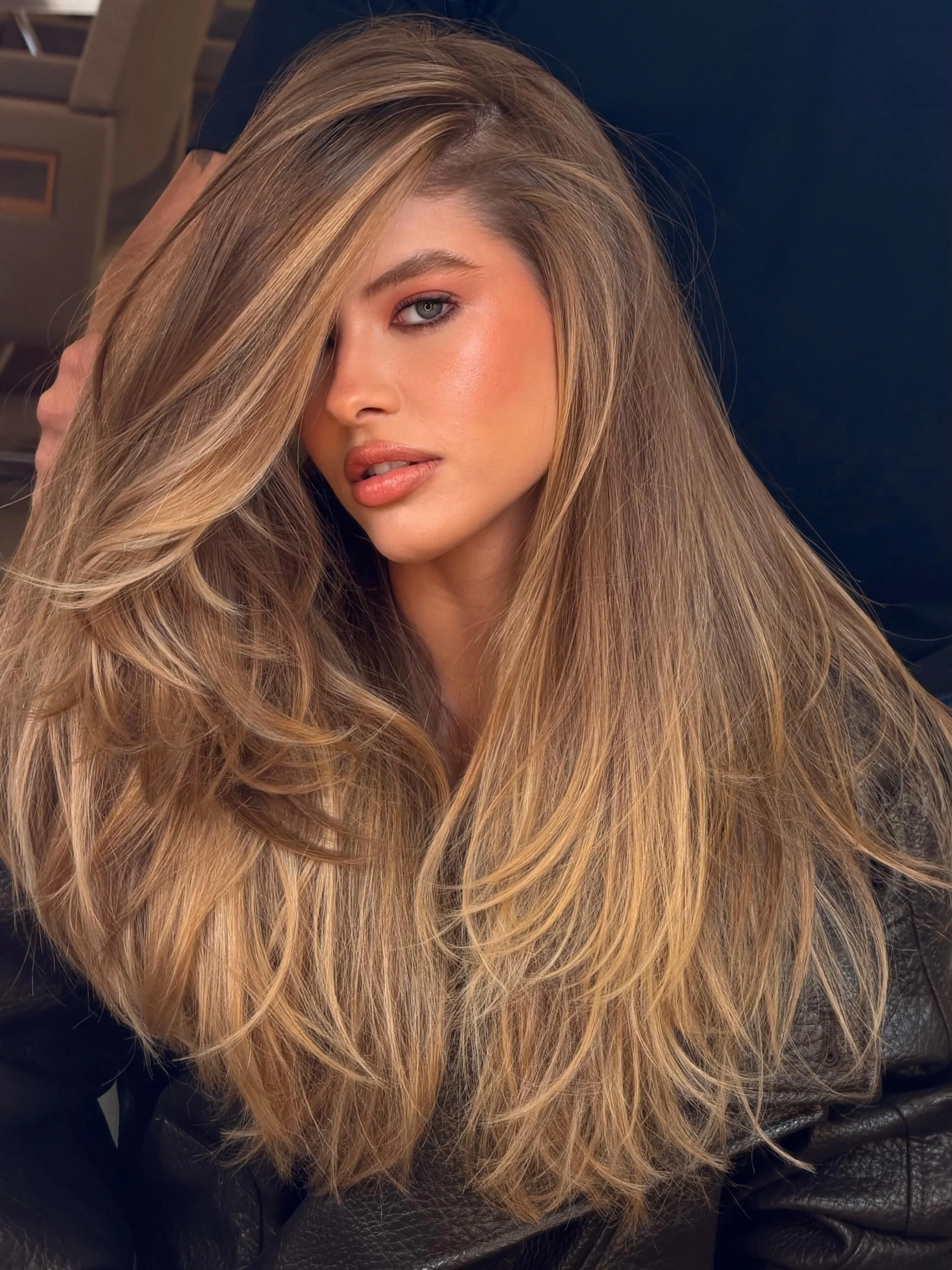
Fine, blended highlights create brightness without obvious streaks. This kind of placement is a practical choice if someone wants a neutral brunette-to-blonde transition rather than a bold contrast.
Wavy Neutral Lob
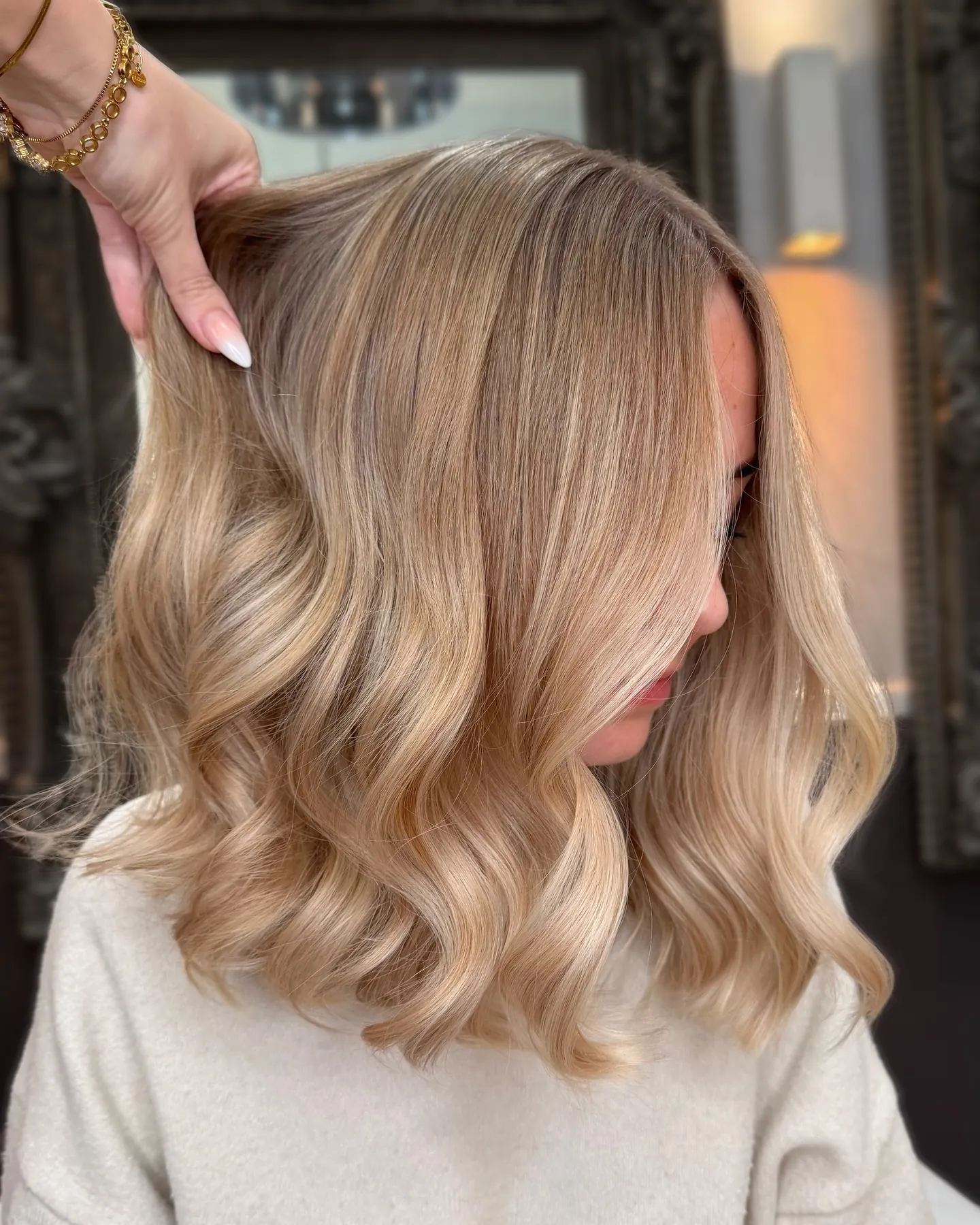
The shoulder length keeps this colour compact and easy to maintain, while soft waves expose the lighter pieces around the ends. It is a good option for medium-density hair.
Bright Money Piece
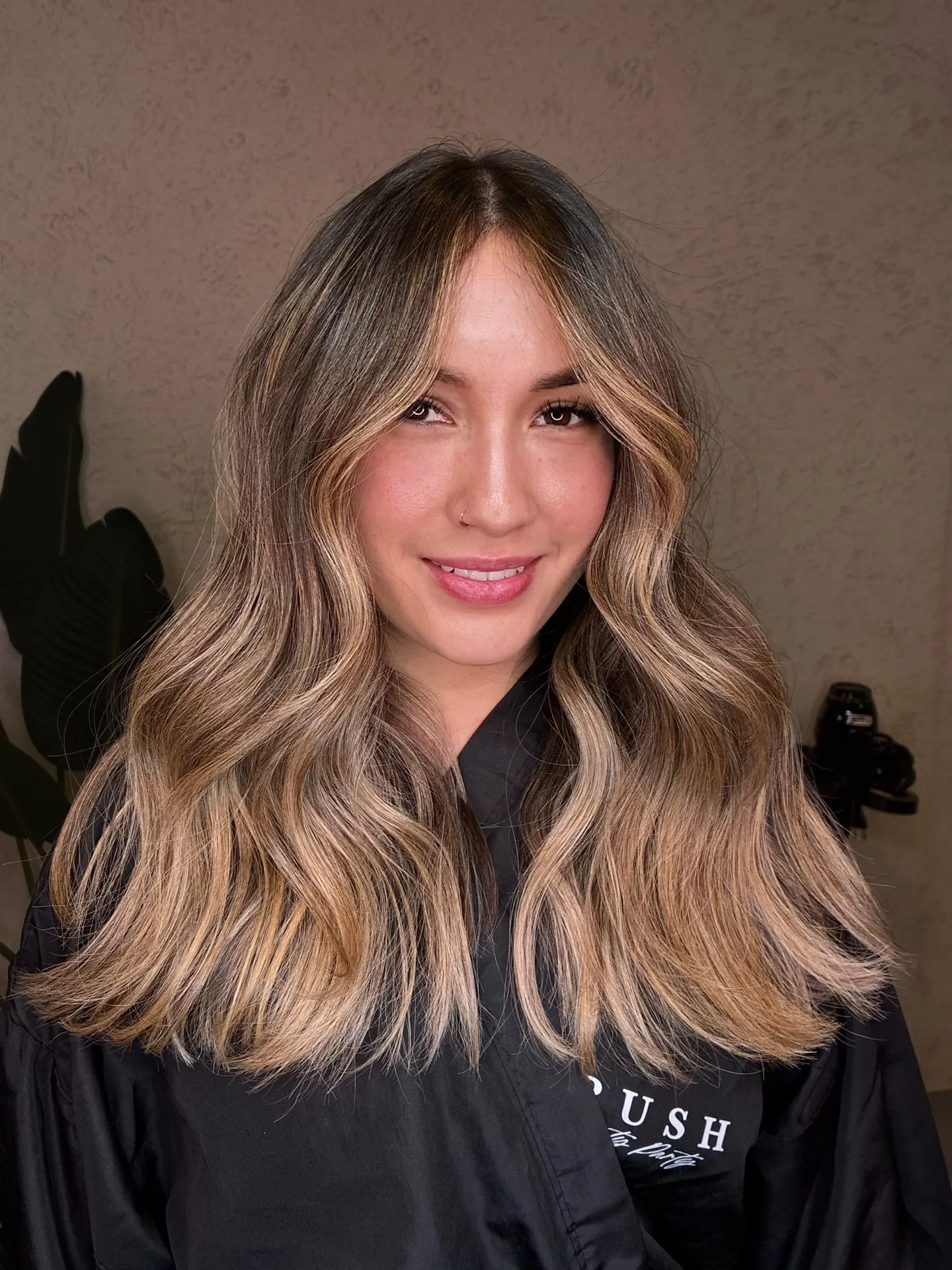
A brighter money piece gives the front a noticeable lift while the rest remains softly blended. Keeping the contrast strongest near the face makes the colour feel fresher without a full-lightening appointment.
Ribboned Long Waves
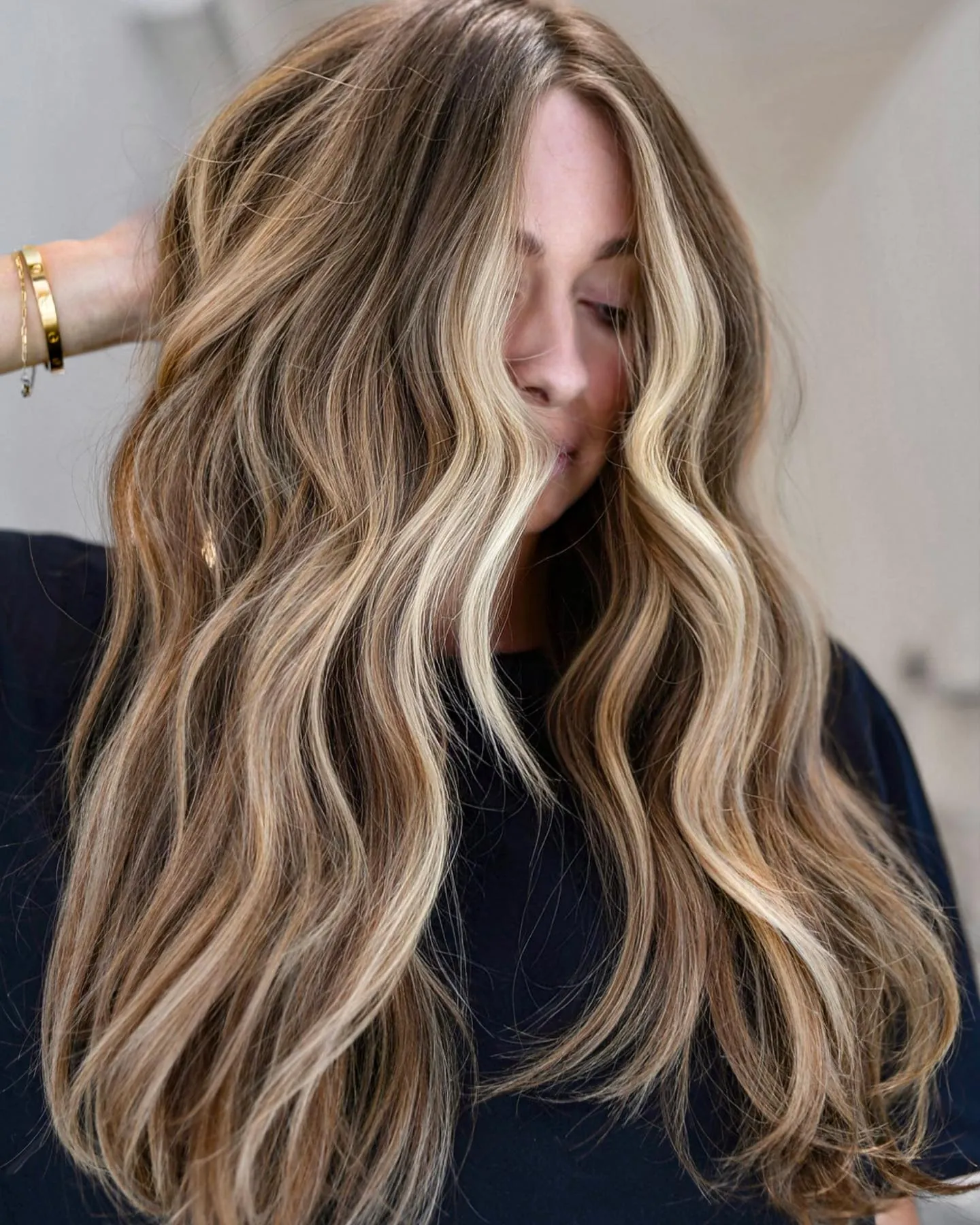
Broader ribbons create a more visible pattern through the dark base. This works best when the highlights are softened near the root so the colour still grows out naturally.
Pale Layered Blonde
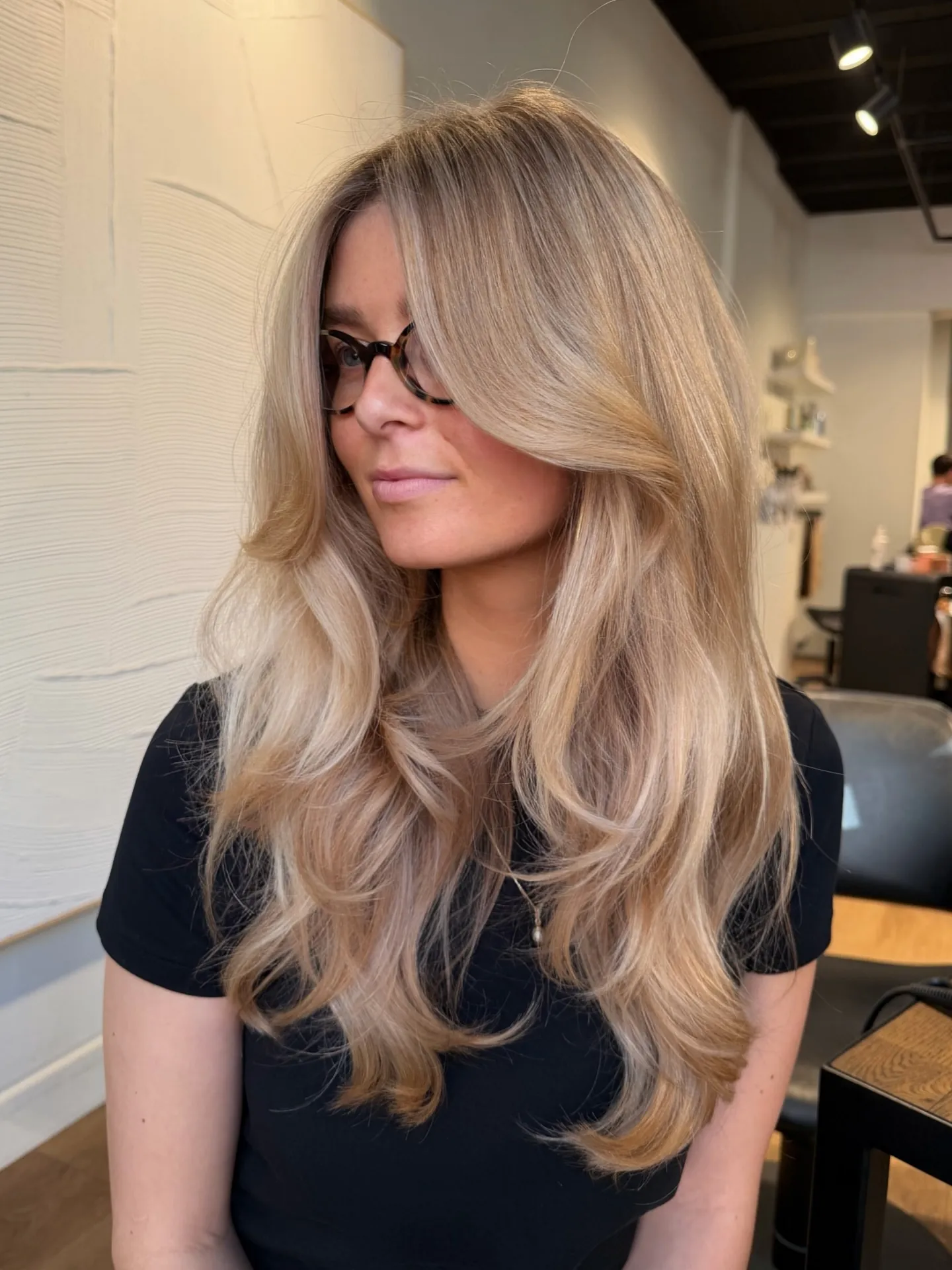
The root shadow adds enough depth to keep the pale blonde from looking flat. Soft curtain pieces around the face make the overall tone feel lighter and more diffused.
Good to know: A root shadow can reduce the contrast of regrowth between lightening appointments.
Airy Long Layers
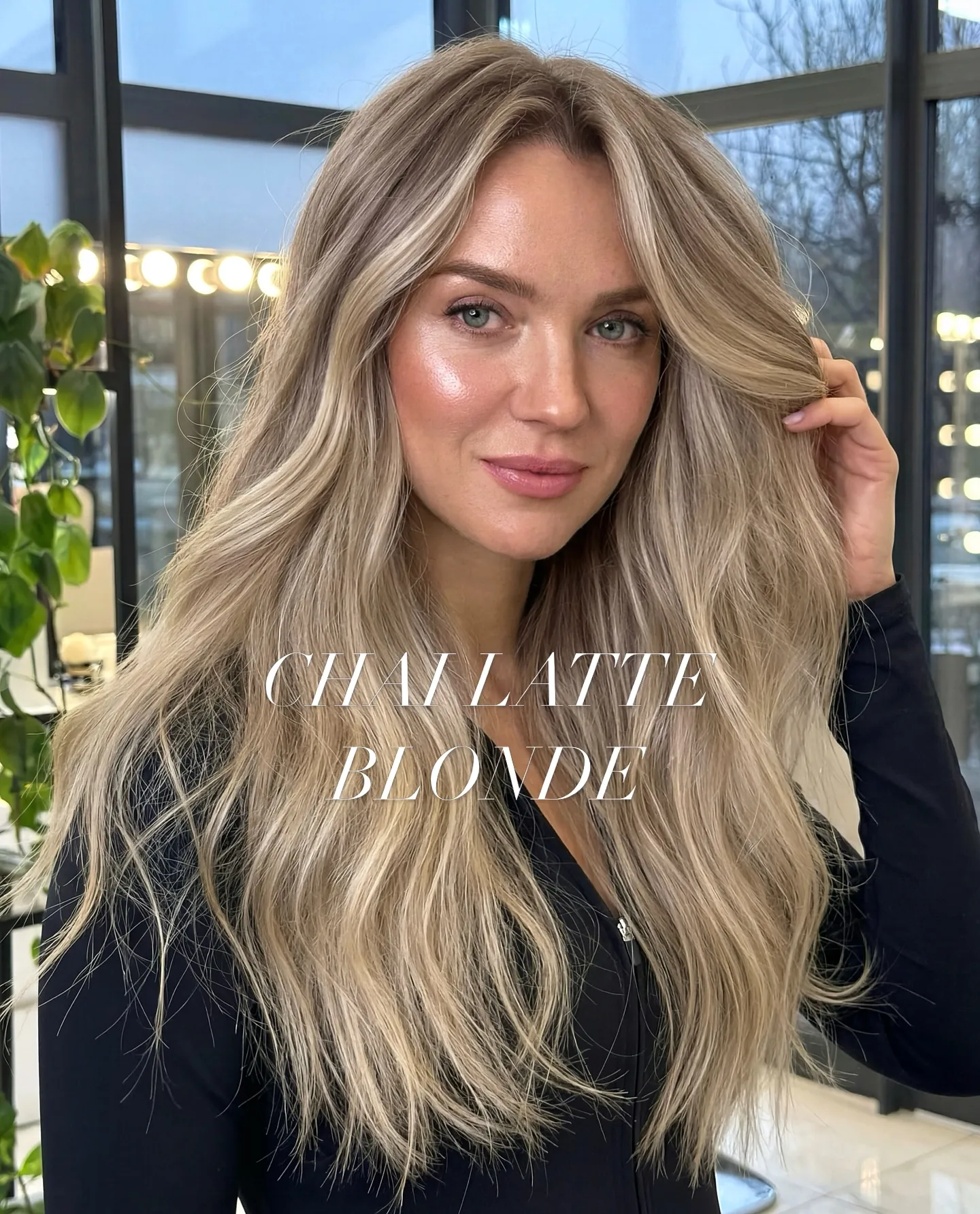
The fine, airy layers keep this bright neutral colour from feeling heavy. A mix of lighter surface pieces and deeper underneath sections gives the length more dimension.
Rounded Neutral Blowout
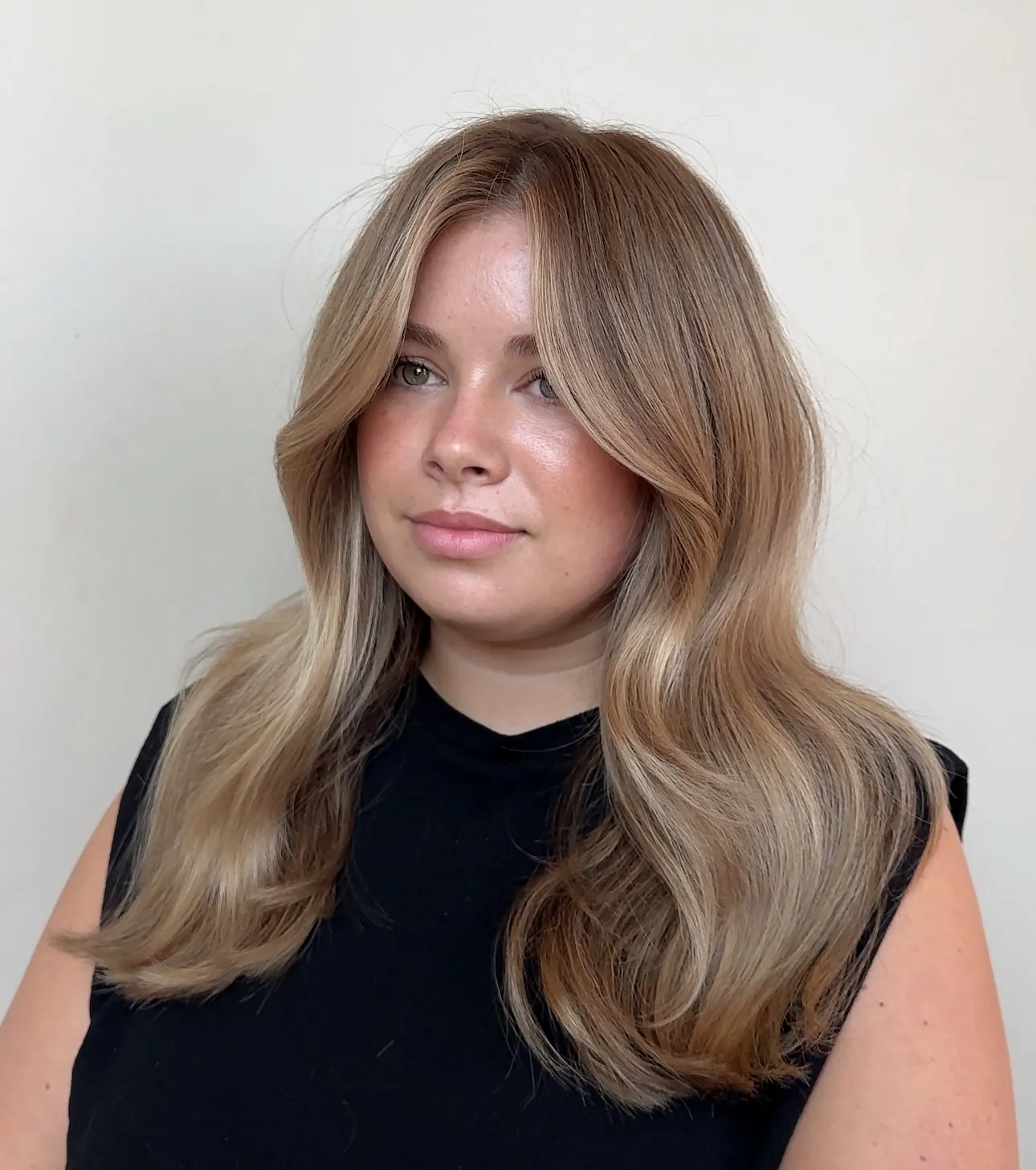
The rounded ends and curtain-style front pieces create a polished shape that shows the colour gradient clearly. This cut is especially useful if long balayage ends have started to feel thin.
Straight Dimensional Lengths
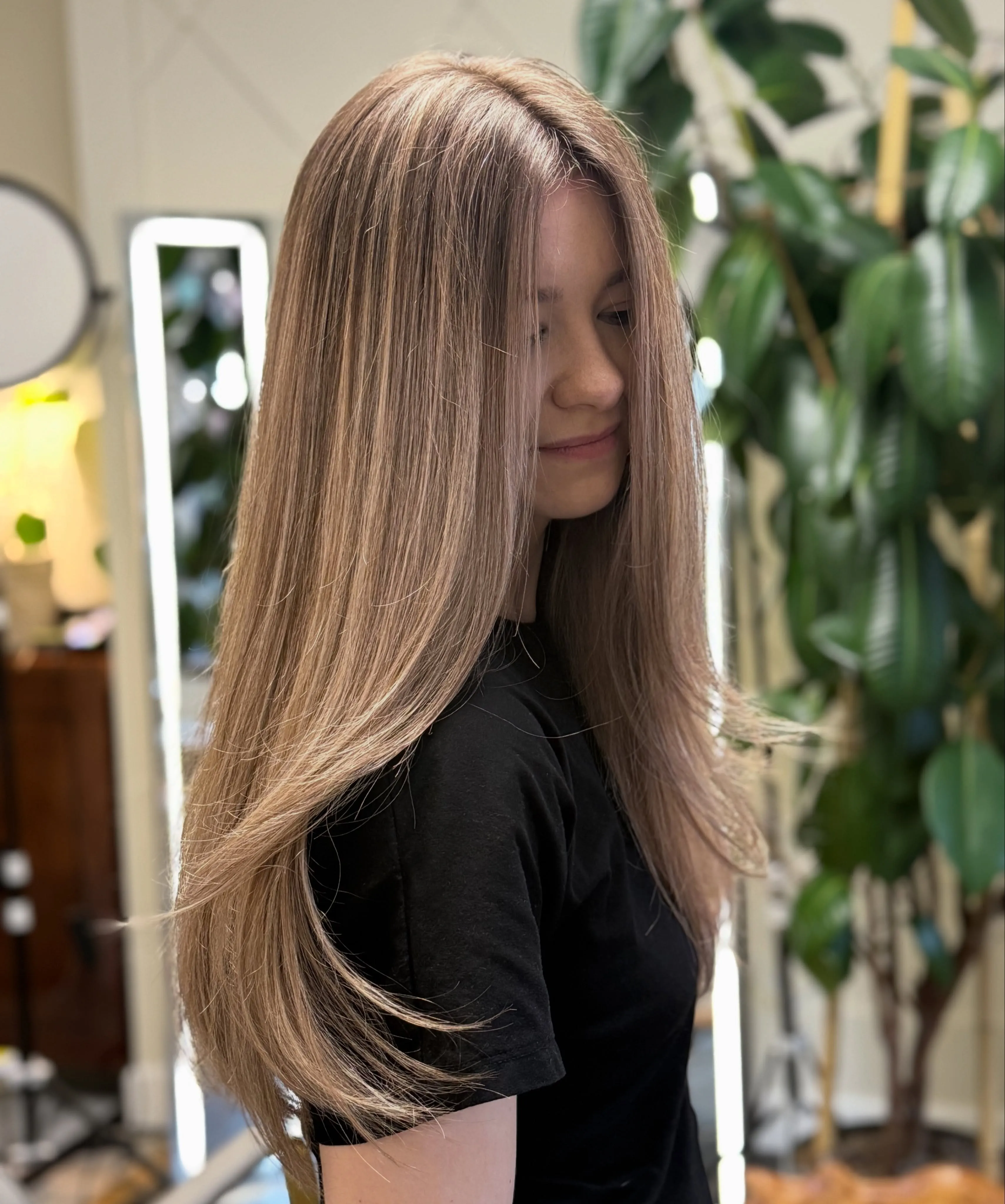
Straight styling reveals how evenly the lighter pieces are distributed from root to end. Fine highlights keep the look blended rather than stripy, which suits a more understated version of the trend.