
Most people spend their lives preparing for a future they assume will arrive. They work harder, save more money, postpone family vacations, and promise themselves that happiness will come once everything falls into place. Unfortunately, life does not always follow the schedule people carefully create.
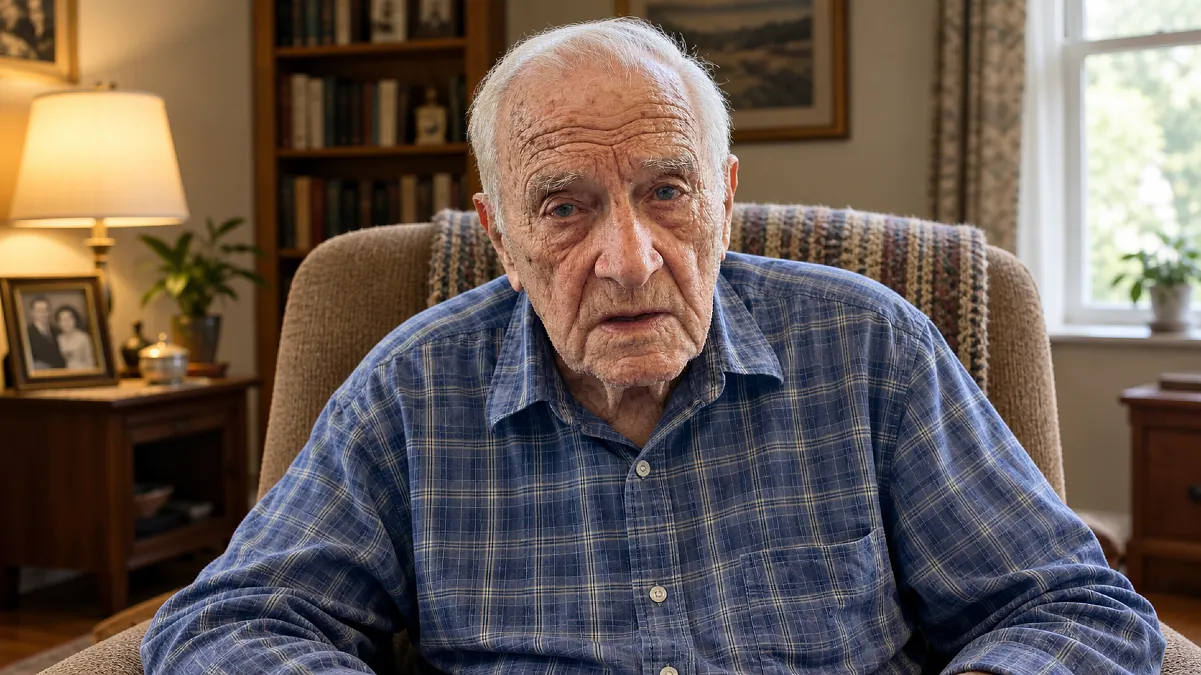
At 92, Frank has outlived his wife, many of his closest friends, and nearly everyone who once competed with him. He has experienced professional success, financial comfort, heartbreaking losses, and regrets that money cannot erase.
After more than 60 years of chasing the wrong things, he has discovered several truths about life that he wishes someone had explained when he was younger.
At 92, Frank Finally Understands What Really Matters

Frank lives in a modest room with a bed, a chair, and a photograph of his late wife, Eleanor. His back hurts, his eyesight has weakened, and ordinary activities require more effort than they once did.
Yet his understanding of life has become clearer with age. The possessions, professional titles, and social recognition that once occupied his thoughts have gradually lost their importance.
During his younger years, Frank believed that success meant constantly moving forward. Every achievement was supposed to lead to something bigger, and every sacrifice was justified by the promise of a better future.
But at 92, he sees life differently. The biggest tragedy is not growing old or eventually dying. It is reaching the end and realizing that too much time was spent waiting to enjoy life.
His memories are filled with moments he cannot recover. Some involve missed opportunities, while others involve people he loved but failed to appreciate enough.
Frank believes younger people often make one dangerous assumption. They behave as though the years ahead belong to them, even though nobody knows how many years remain.
The Story of Jack Changed How Frank Saw His Future

In 1968, Frank had a close friend named Jack who appeared to have everything a successful man could want. Jack was intelligent, wealthy, ambitious, and respected by people around him.
One evening, the two friends were celebrating a major business deal. Jack leaned back in his chair, enjoyed a Cuban cigar, and explained the future he had carefully planned.
He intended to work intensely for five more years until he reached a financial target. After that, he would slow down, take his wife Mary to Italy, learn how to paint, and begin enjoying the rewards of his hard work.
Jack believed his plan was sensible because he had already accomplished so much. He was only 42, and five additional years seemed like a small sacrifice for decades of freedom afterward.
Three days later, Jack suffered a massive heart attack outside his office building. He collapsed on the sidewalk and died before he could begin any of the experiences he had promised himself.
Frank attended his funeral and struggled to understand how quickly everything had changed. His friend had spent years preparing for a life he never got the opportunity to experience.
A week later, Frank visited Jack’s office to help clear his belongings. The calendar remained filled with appointments, and important messages continued arriving.
According to Frank’s account, Jack’s company replaced him within two weeks. Business continued, but Jack’s carefully planned future disappeared with him.
This experience left Frank with a painful realization. A person can spend an entire lifetime getting ready to live without ever reaching the moment when living supposedly begins.
The Dangerous Habit of Postponing Happiness

Frank noticed that Jack’s mistake was not unusual. Most people postpone something meaningful because they believe a more convenient moment will eventually arrive.
Parents promise to take their children traveling when work becomes less demanding. Couples postpone special experiences until the mortgage is paid, while older adults sometimes delay hobbies until retirement.
The problem is that one responsibility often replaces another. The children grow older, health changes, unexpected expenses appear, and the ideal moment remains somewhere in the future.
Consider how these promises can quietly shape an entire life.
| Common promise | What can change | Better approach |
|---|---|---|
| Travel after retirement | Health or mobility | Take affordable trips earlier |
| Spend time with family later | Children grow up | Make regular family plans |
| Start a hobby someday | Energy and interests | Begin with small steps |
| Reconnect after things settle | Friendships weaken | Reach out this week |
| Enjoy money after reaching a target | Financial goals keep growing | Budget for enjoyment now |
The lesson is not to abandon responsibility or spend money carelessly. It is to avoid placing every meaningful experience behind another financial or professional milestone.
Frank eventually realized that happiness often comes from making better use of ordinary days. Waiting for a perfect future can mean overlooking a perfectly worthwhile present.
Why Frank Stopped Caring About Expensive Possessions

During his successful business years, Frank owned a large house, expensive cars, and more belongings than he could comfortably use. He believed those possessions proved that his hard work had been worthwhile.
He spent considerable time earning money to buy things that impressed other people. Each new purchase provided temporary satisfaction, followed by another desire for something better.
Now, at 92, most of those possessions are gone. His smaller room contains fewer luxuries, but he no longer misses the constant pressure of maintaining an impressive lifestyle.
The photograph of Eleanor beside his chair has greater emotional value than the cars and expensive furniture he once admired. It reminds him of a relationship that cannot be replaced through another purchase.
Frank has attended enough funerals to understand that material possessions do not accompany people after death. Family members may preserve meaningful keepsakes, but many ordinary belongings eventually get donated, sold, or discarded.
He does not believe money is worthless. Financial stability can provide security, healthcare, comfortable housing, and opportunities to enjoy life.
His regret is that he sometimes confused having more with living better. The pursuit of possessions demanded time and attention that could have supported experiences he would remember for decades.
The Hidden Price of Trying to Impress Everyone

Frank eventually recognized that some purchases had little to do with personal enjoyment. They were made because neighbors, colleagues, or business associates expected successful people to own certain things.
An expensive vehicle communicated professional achievement. A larger home suggested higher social standing, even when the family did not need the additional space.
This pressure can continue into retirement. Some retirees feel uncomfortable downsizing, driving an older vehicle, or choosing affordable activities because they worry about appearing less successful.
Yet maintaining appearances can consume resources that might otherwise support genuine priorities. The following examples show how recurring lifestyle expenses can accumulate.
| Monthly expense | Annual cost | Five-year total |
|---|---|---|
| $100 | $1,200 | $6,000 |
| $250 | $3,000 | $15,000 |
| $500 | $6,000 | $30,000 |
| $750 | $9,000 | $45,000 |
These are simple illustrations assuming unchanged spending, with no inflation or investment returns included.
Frank’s experience suggests that financial freedom is not always about earning more. Sometimes it comes from no longer feeling obligated to impress people whose opinions have little lasting importance.
The Career Award That Became His Biggest Regret

In 1979, Frank received a businessman of the year award in his city. The ceremony took place at a formal banquet attended by influential business leaders.
He walked onto the stage, accepted his award, and listened as people applauded his accomplishments. For a brief moment, he believed he had achieved something that would define his legacy.
Later that evening, he returned home holding the trophy. The house was dark, Eleanor was asleep, and his children had already gone to bed.
Frank sat alone at the kitchen table and studied the award. The excitement faded as he remembered everything he had sacrificed to receive it.
He had missed his son’s sporting events because business meetings seemed more urgent. He had also disappointed Eleanor by missing their anniversary dinner to complete a merger.
Those decisions had appeared reasonable when he made them. He believed that working harder would eventually create a better life for everyone.
Decades later, Frank no longer knows exactly where the trophy is stored. However, he still remembers Eleanor’s disappointment and the family gatherings he missed.
That difference troubles him more than any professional failure. Recognition from colleagues eventually faded, but memories of disappointing people he loved remained.
Your Career Matters, but It Cannot Replace Your Family
Frank does not believe ambitious people should stop working hard. A career can provide dignity, intellectual satisfaction, financial independence, and opportunities to help others.
However, he learned that work becomes dangerous when it starts consuming every available hour. There is always another meeting to attend, another target to reach, and another problem that appears urgent.
The difficulty is recognizing when additional work is necessary and when it has become an automatic habit. Many successful people become so accustomed to being busy that rest begins to feel uncomfortable.
Consider how much time additional working hours represent over a year.
| Extra weekly hours | Annual hours over 48 weeks | Equivalent 8-hour days |
|---|---|---|
| 5 | 240 | 30 |
| 10 | 480 | 60 |
| 15 | 720 | 90 |
| 20 | 960 | 120 |
These numbers do not account for the financial benefits of working additional hours. They simply illustrate how large the time commitment becomes when overtime turns into a regular pattern.
Frank’s regret was not building a business. It was failing to recognize when professional ambition had begun taking more from his family than it was giving them.
The Ordinary Memories Frank Wishes He Could Experience Again

When Frank spends quiet afternoons remembering his life, he rarely thinks about business deals. His mind returns to moments that seemed unimportant when they first happened.
He remembers Sunday mornings with Eleanor when neither had anywhere urgent to be. He remembers his daughter’s laughter when she was three and the comfort of hearing his family moving around the house.
One particular memory involves helping a stranger push a car out of a snowbank. The act brought him no money or recognition, yet it remains meaningful decades later.
These memories reveal something Frank never understood during his busiest years. The experiences that leave the deepest emotional impressions are not always expensive or impressive.
Sometimes they involve simply being available when another person needs attention. A conversation at the kitchen table can become more valuable than an elaborate evening planned around appearances.
Frank wishes he had understood this before Eleanor died. He would have spent less time worrying about business problems and more time appreciating her presence.
Losing Eleanor Taught Him What Money Cannot Replace

Eleanor had been part of Frank’s life for so long that he once struggled to picture a future without her. Like many couples, they built routines around ordinary responsibilities and familiar habits.
When she was alive, Frank sometimes allowed work to interrupt their time together. He assumed there would always be another dinner, another Sunday morning, and another opportunity to make up for his absence.
After losing her, those ordinary moments became the experiences he missed most. The quiet house reminded him how much comfort he had taken from simply knowing she was nearby.
Frank came to understand that relationships are strengthened through repeated acts of attention. Grand gestures can be meaningful, but daily kindness and reliability often matter just as much.
He wishes he had listened more carefully when Eleanor spoke about her day. He also wishes he had recognized that being physically present is different from giving someone full attention.
For Frank, love was not something that could be stored away and enjoyed at a convenient time. It required care while the other person was still there to receive it.
Why Getting Older Changed His Opinion of Other People

During his younger years, Frank spent considerable energy trying to earn approval. He wanted people to respect his intelligence, admire his success, and believe he was always in control.
That desire sometimes prevented him from making decisions that might have brought happiness. He avoided situations where he could appear inexperienced, unsuccessful, or foolish.
As he grew older, his concern about public judgment gradually weakened. He began noticing that other people were usually occupied with their own ambitions and problems.
The criticism he once feared rarely had the lasting importance he imagined. Even people who strongly disagreed with his choices eventually returned to their own lives.
Frank now believes that excessive concern about reputation can prevent people from pursuing meaningful experiences. Someone might avoid taking a class at 65 because they fear being the oldest beginner.
Another person might postpone starting a small business after retirement because friends consider the idea unrealistic. Others remain in unhappy routines because changing would invite uncomfortable questions.
Frank’s advice is to consider useful criticism without allowing every outside opinion to control personal decisions. A person’s remaining years are too valuable to spend entirely meeting expectations set by others.
One Day, Every Ordinary Experience Happens for the Last Time

Frank believes one of the most powerful ways to appreciate life is remembering that familiar experiences do not last forever. Every routine has a final occasion, even when people do not recognize it.
There will be a last time a parent carries a young child. There will be a final ordinary conversation with certain friends, and eventually a last morning spent beside someone deeply loved.
These moments are rarely announced in advance. They happen quietly among thousands of experiences that feel almost identical at the time.
Frank does not think people should live in constant fear of losing everything. Instead, he believes this awareness can encourage greater attention to the present.
A morning cup of coffee deserves more appreciation when it is not treated as something completely guaranteed. A familiar family dinner becomes more meaningful when everyone puts aside distractions and enjoys the conversation.
This perspective also changes how people handle minor disagreements. Winning an argument may feel important today, but preserving a loving relationship can matter far more over time.
The Friendships People Forget to Maintain
After reaching his 90s, Frank has lost many of the people who knew him during his younger years. Former colleagues, childhood friends, and longtime neighbors have gradually disappeared from his daily life.
Their absence has made him appreciate the friendships that remain. He understands that meaningful relationships need more than occasional promises to reconnect.
During working life, it can be easy to rely on professional contact for social interaction. Retirement sometimes reveals how many relationships were connected primarily to the workplace.
Frank believes people should build friendships that exist independently of their careers. Shared interests, community activities, and regular conversations can help maintain social connection as circumstances change.
He also recognizes that friendships require effort from both people. Waiting for someone else to call can allow years to pass without meaningful contact.
A simple invitation for coffee or a short telephone conversation may reopen a connection that has become distant. Not every relationship can be restored, but worthwhile friendships often deserve an honest attempt.
Forgiveness Can Remove Years of Unnecessary Emotional Weight

Frank has lived long enough to outlast people he once considered enemies. Arguments that occupied enormous amounts of emotional energy eventually lost their meaning.
He now regrets allowing certain disagreements to influence his happiness for years. Some conflicts involved misunderstandings, while others grew because neither person wanted to apologize first.
With age, Frank realized that carrying anger requires repeated attention. Old grievances can remain emotionally exhausting even when the original disagreement no longer affects daily life.
His understanding of forgiveness does not mean people must tolerate mistreatment. Healthy boundaries remain important, especially when a relationship involves repeated harm.
Sometimes forgiveness means acknowledging what happened without allowing resentment to dominate the future. Other times, it involves making a sincere apology or rebuilding a relationship that matters.
Frank believes people should carefully consider which conflicts are worth carrying into their later years. The need to prove someone wrong may become far less important than protecting emotional well-being.
How Much Money Is Actually Enough?

Frank spent years believing each financial achievement would finally make him feel secure. Whenever he reached a target, another possibility appeared that seemed worth pursuing.
This pattern is familiar to people who save diligently. A larger retirement account can provide real protection, but it may also become difficult to recognize when additional wealth is no longer worth major personal sacrifices.
There is no universal financial amount that makes everyone comfortable. Housing costs, healthcare needs, debt, family responsibilities, and expected retirement length all affect the calculation.
Still, Frank believes the question deserves serious attention. Earning more money may improve life, but the improvement becomes less meaningful when the process consistently removes everything that makes life enjoyable.
Someone considering another demanding promotion might compare the increased income with the time required. A retiree thinking about working additional years might consider whether extra savings are worth delaying important experiences.
The right decision will differ from person to person. Frank’s lesson is simply that money should serve a clear purpose rather than becoming an endless competition.
The Quiet Regret of Always Being Too Busy

One of Frank’s most difficult realizations is how often he told people he was too busy. He used those words when declining invitations, missing family events, or postponing personal interests.
At the time, his schedule genuinely felt overwhelming. Business obligations demanded attention, and professional success created even more responsibilities.
Looking back, however, he recognizes that some commitments were choices rather than unavoidable duties. He frequently gave work first priority without considering the long-term consequences.
He believes many people make the same mistake with modern distractions. They may have limited free time, yet spend significant portions of it scrolling through social media or following events that bring little lasting satisfaction.
Frank does not suggest that every free moment must become productive. Rest, entertainment, and quiet relaxation can all be worthwhile.
His concern is that people sometimes lose hours without consciously choosing how to spend them. A life can become crowded with activities while remaining surprisingly empty of memorable experiences.
The Small Changes That Could Prevent Bigger Regrets
Frank’s advice does not require dramatic changes or expensive adventures. Many of the choices he now values involve giving greater attention to people and experiences already within reach.
For someone approaching retirement, the first step might be reviewing the balance between working, saving, and enjoying life. For an older retiree, it might mean renewing friendships or pursuing a neglected interest.
| Life priority | Action to consider | Potential benefit |
|---|---|---|
| Family | Schedule regular visits or calls | Stronger connections |
| Health | Make time for appropriate activity | Supports daily independence |
| Money | Set aside an affordable enjoyment budget | Reduces endless postponement |
| Friendships | Contact someone each week | Maintains social ties |
| Personal growth | Try a new skill or hobby | Creates purpose and interest |
| Emotional well-being | Address unresolved conflicts safely | Reduces avoidable stress |
These actions are intentionally modest because lasting change rarely requires completely rebuilding a person’s schedule. Consistent attention often matters more than occasional grand gestures.
Frank believes the important step is making meaningful activities part of normal life. The future should not receive every opportunity while the present receives whatever time remains.