
Layered Haircuts for Thin Hair: 15 Fuller-Looking Ideas That Deliver
Layered haircuts can give thin hair movement and shape, but the placement of each layer matters more than the number of layers.
These styles range from long butterfly cuts and soft shags to graduated bobs, airy fringes, and shorter textured shapes.
Use the visible length, fringe, perimeter, and styling details in each idea to find a cut that adds body without sacrificing density.
Long Butterfly Layers with Curtain Fringe
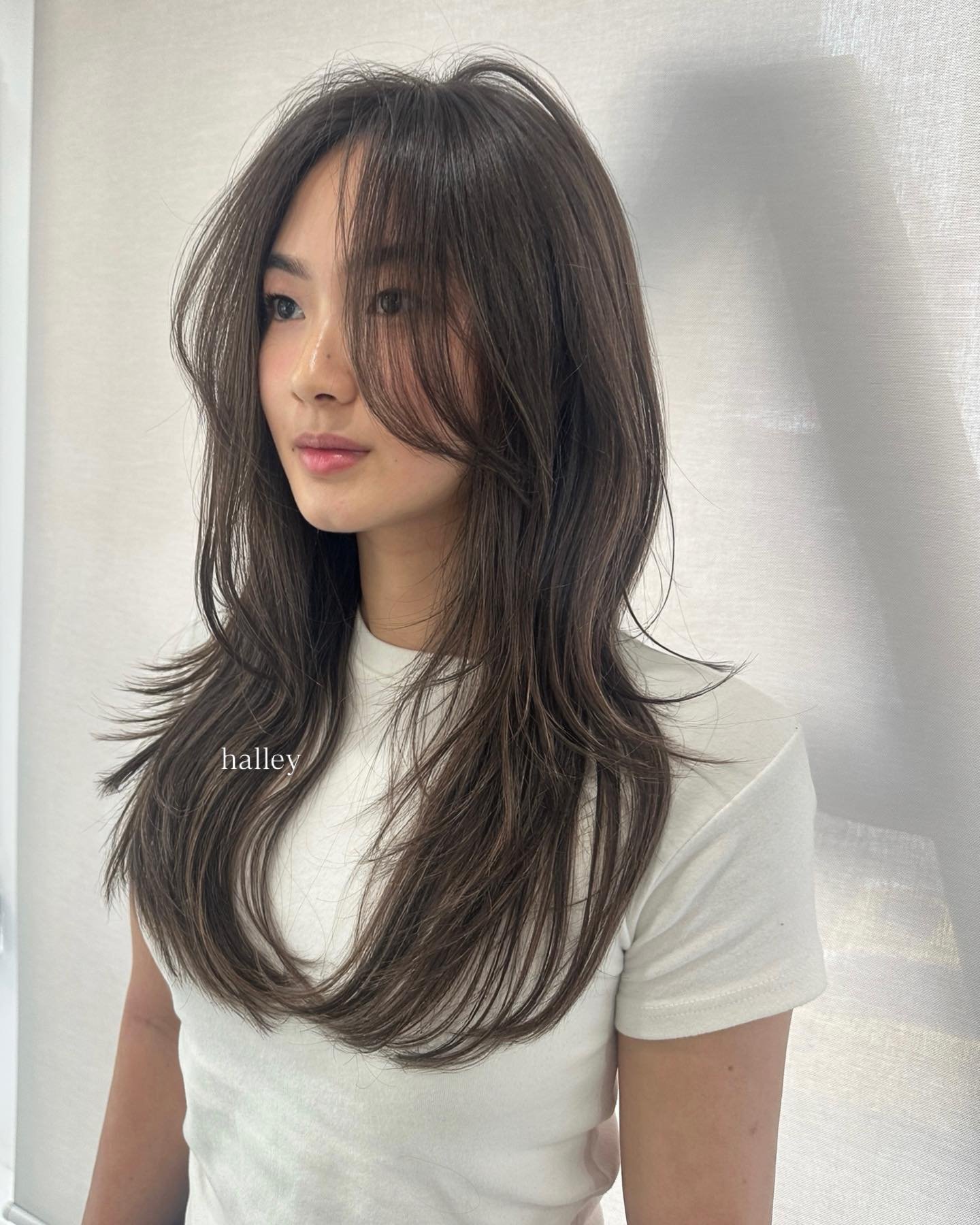
Long butterfly layers give thin hair movement while keeping the lower outline looking full.
The curtain fringe opens around the cheekbones, and the shorter front pieces blend gradually into the longer lengths.
Feathered ends create lift without removing too much density from the bottom.
Best for: Straight to softly wavy thin hair that needs shape around the face.
Ask your stylist: Keep the internal layers light and preserve a solid-looking perimeter through the longest section.
Long Shag with a Short Blunt Fringe
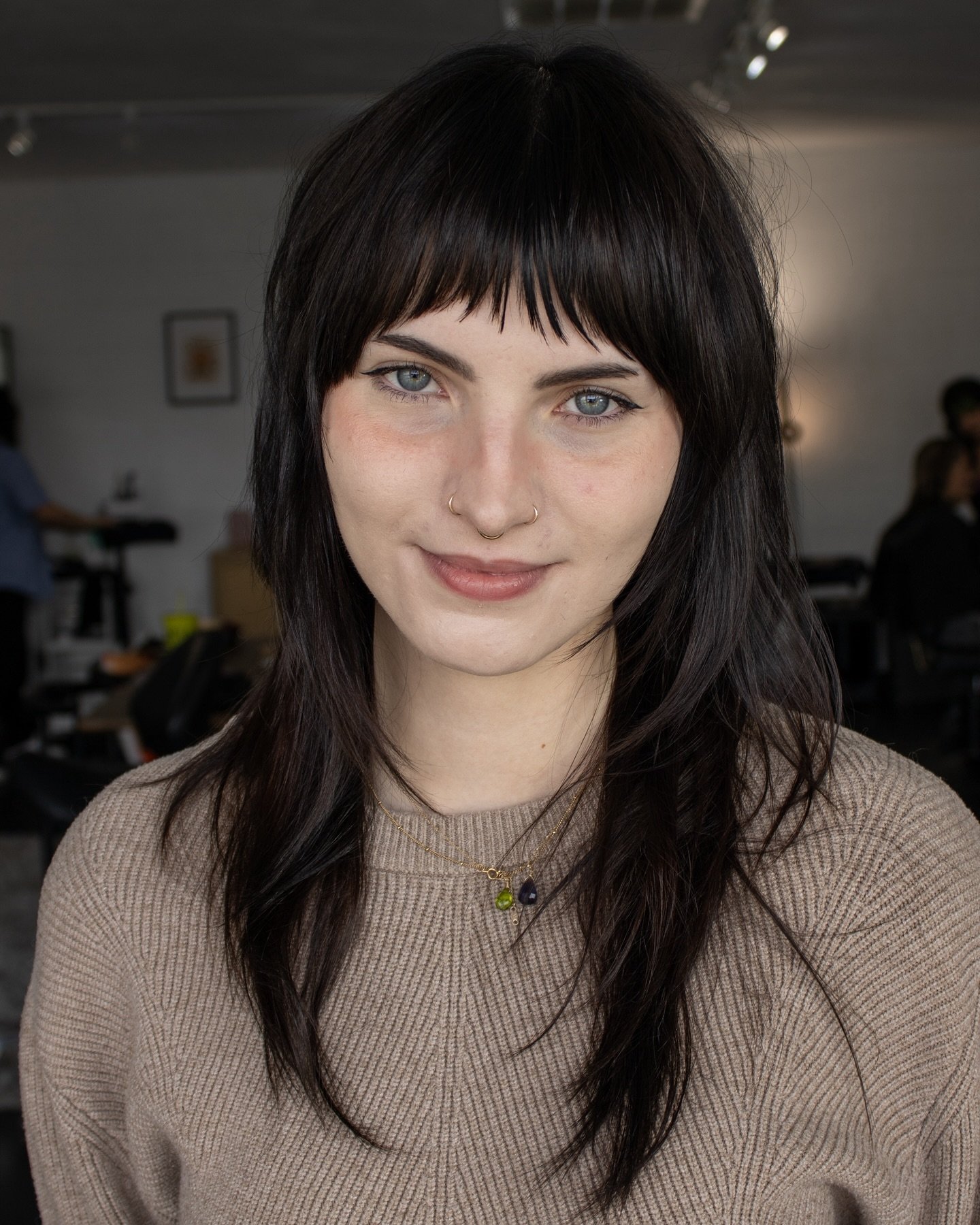
A short blunt fringe gives this long shag a clear focal point while the softer layers add movement through the sides.
The longest sections remain fairly dense, which helps fine hair avoid a stringy finish.
Light texturising around the cheekbones keeps the shape relaxed rather than flat.
Works well if: You want a noticeable fringe without shortening the rest of your hair.
Styling tip: Dry the fringe first and use a small amount of texture spray only through the mid-lengths.
Medium Shag with Wispy Fringe
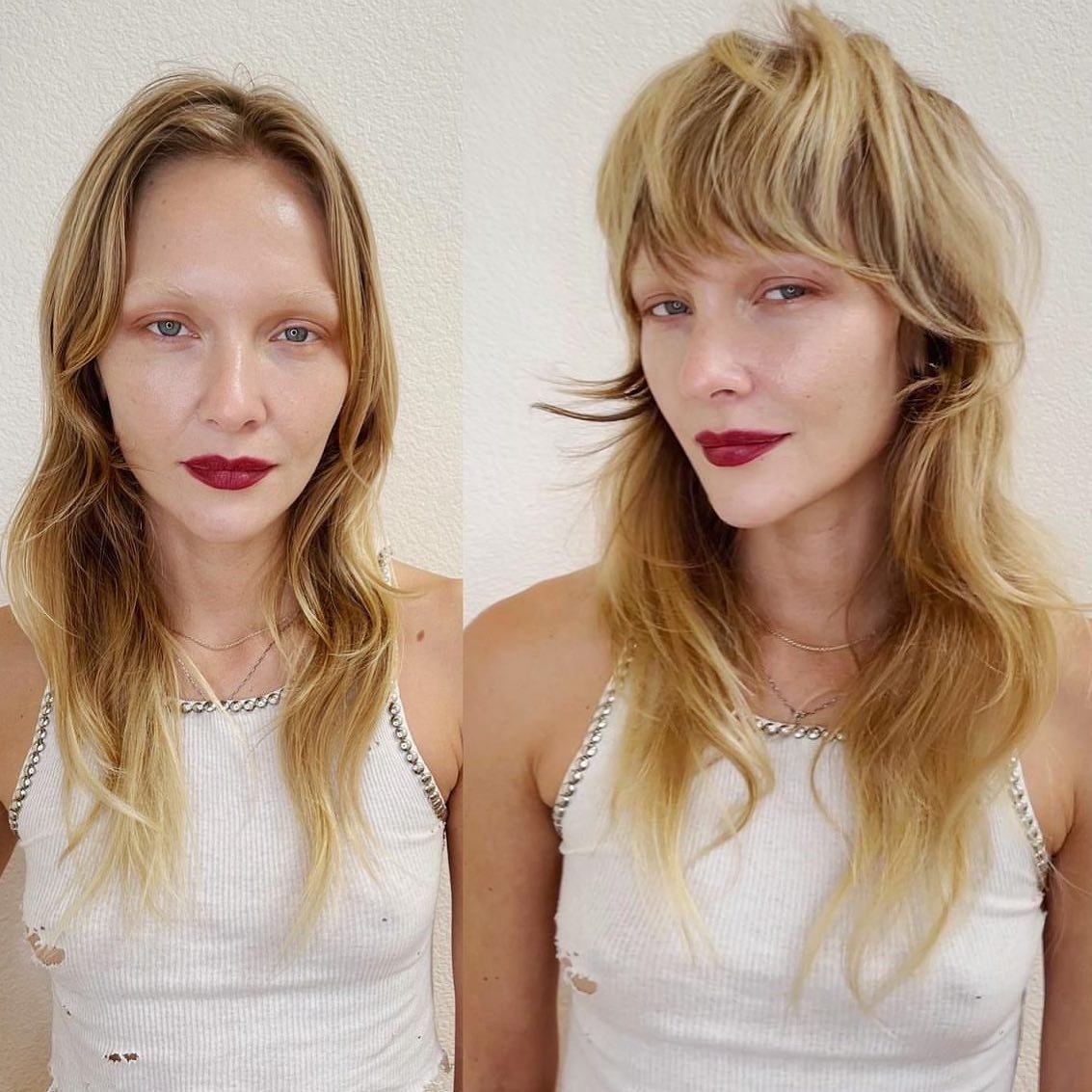
This transformation replaces long, narrow ends with a fuller medium-length shape.
Wispy fringe and cheekbone layers draw attention upward, while the flicked ends make the hair appear more active.
The final length sits where the hair still has enough density to form a visible outline.
Best for: Thin hair that looks sparse or tired when worn very long.
Salon tip: Ask for soft graduation and a fringe that can separate naturally rather than a heavily thinned finish.
Long Straight Layers with Airy Fringe

This cut keeps most of the length intact and introduces gentle layers through the lower half.
The airy fringe softens the forehead without creating a heavy block of hair at the front.
Tapered ends reduce stiffness while still leaving the overall silhouette long and smooth.
Works well if: Your hair is naturally straight and you prefer a low-volume, polished finish.
Keep it fuller: Avoid excessive razor cutting through the bottom few centimetres.
Long Curved Layers with Curtain Bangs
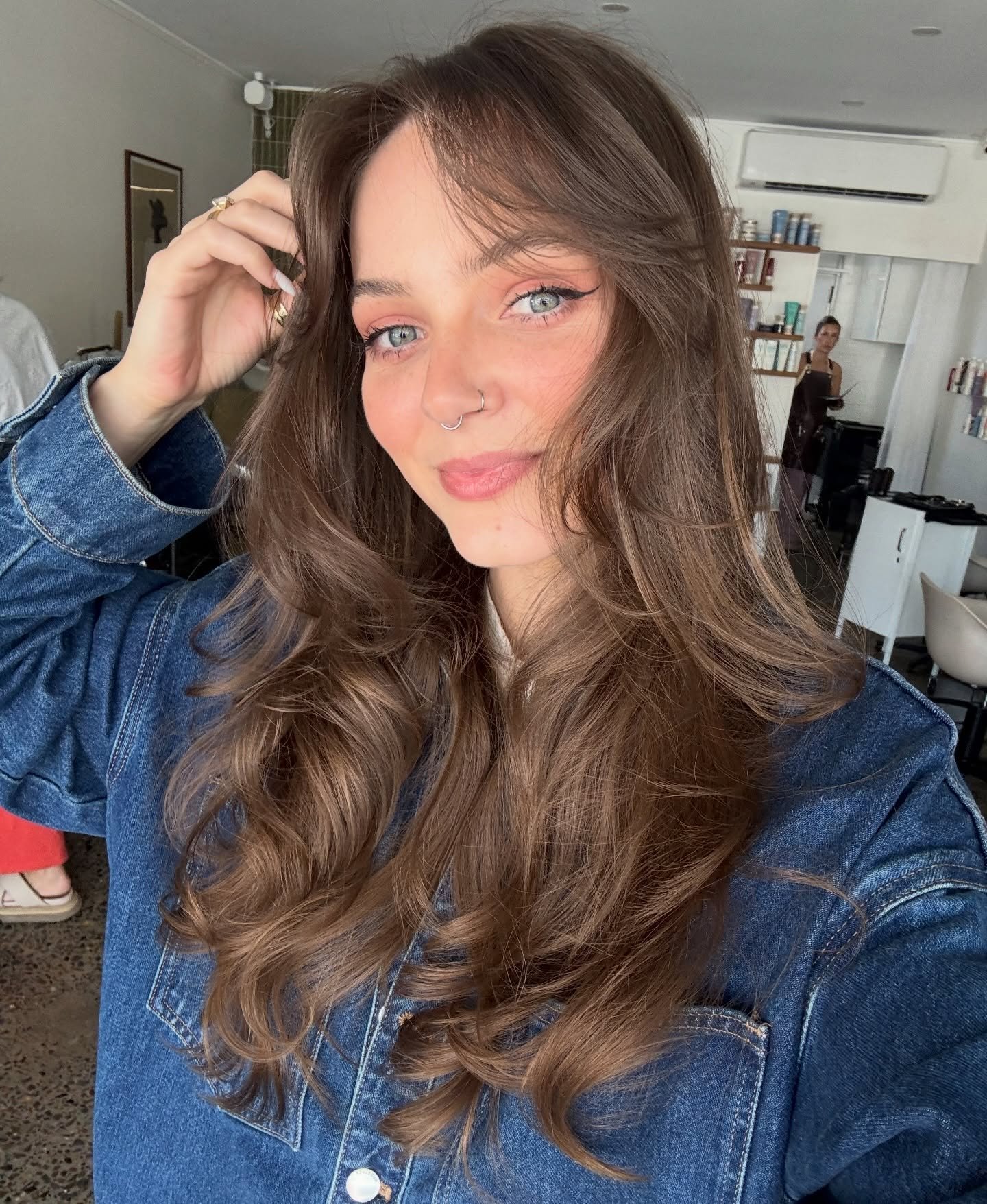
Large curved layers create width around the shoulders and give fine hair a fuller visual shape.
The curtain bangs join the face-framing sections, so the front does not appear disconnected from the length.
Smooth bends rather than tight curls keep the style soft and make the layers easy to see.
Best for: Long thin hair that holds a blow-dry or heated set.
For that finish: Use a large round brush and allow each curved section to cool before brushing it out.
Centre-Parted Butterfly Cut with Curled Ends
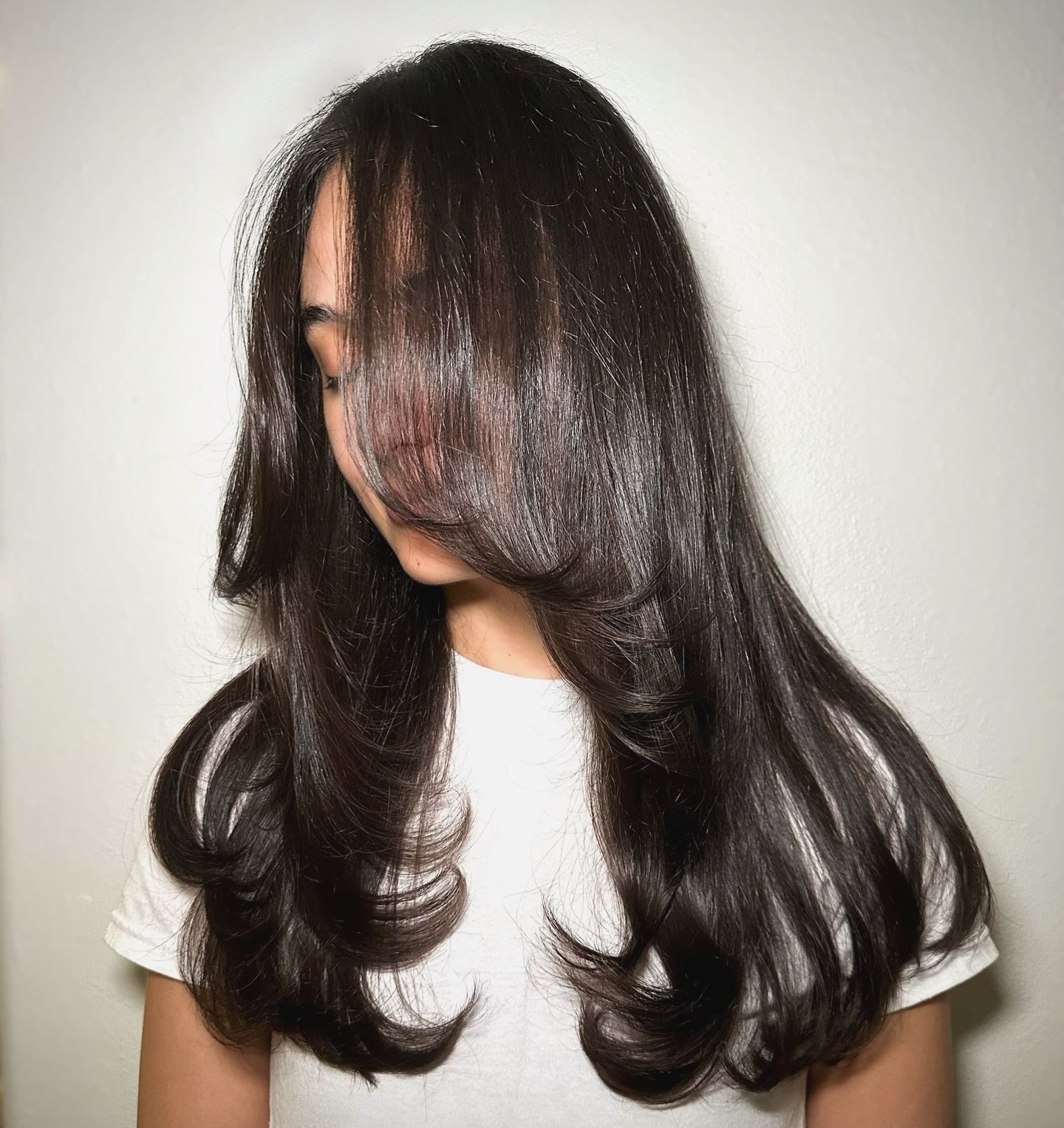
The centre part gives this long layered cut an even, balanced frame around the face.
Shorter pieces begin near the chin and flow into curled lower sections, creating movement without making the crown look over-layered.
The rounded ends help the length appear thicker than sharply tapered tips.
Works well if: You want visible layers while keeping a long and substantial-looking baseline.
Volume tip: Direct the front layers away from the face and curl the ends in larger sections.
Shoulder-Length Shag with Soft Curtain Fringe
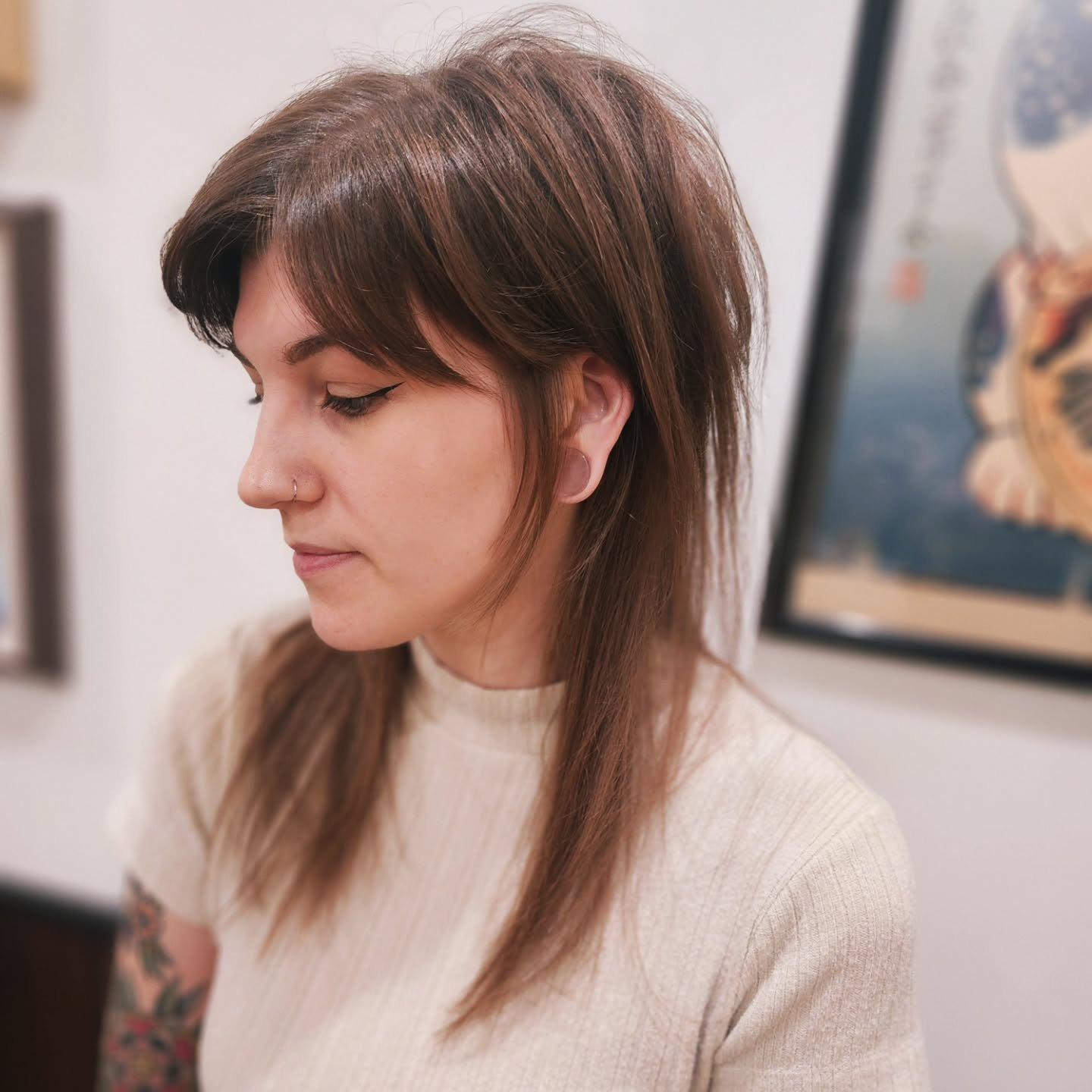
This shoulder-length shag uses gentle crown and face-framing layers rather than extreme choppiness.
The soft curtain fringe creates lift at the front and blends into the sides without taking too much hair away from the perimeter.
A slightly undone finish gives fine strands more separation and body.
Best for: Straight or lightly wavy hair that falls flat around the crown.
At-home tip: Mist texture spray underneath the top layers and lift them with your fingers instead of over-brushing.
Platinum Layered Lob with Sweeping Fringe
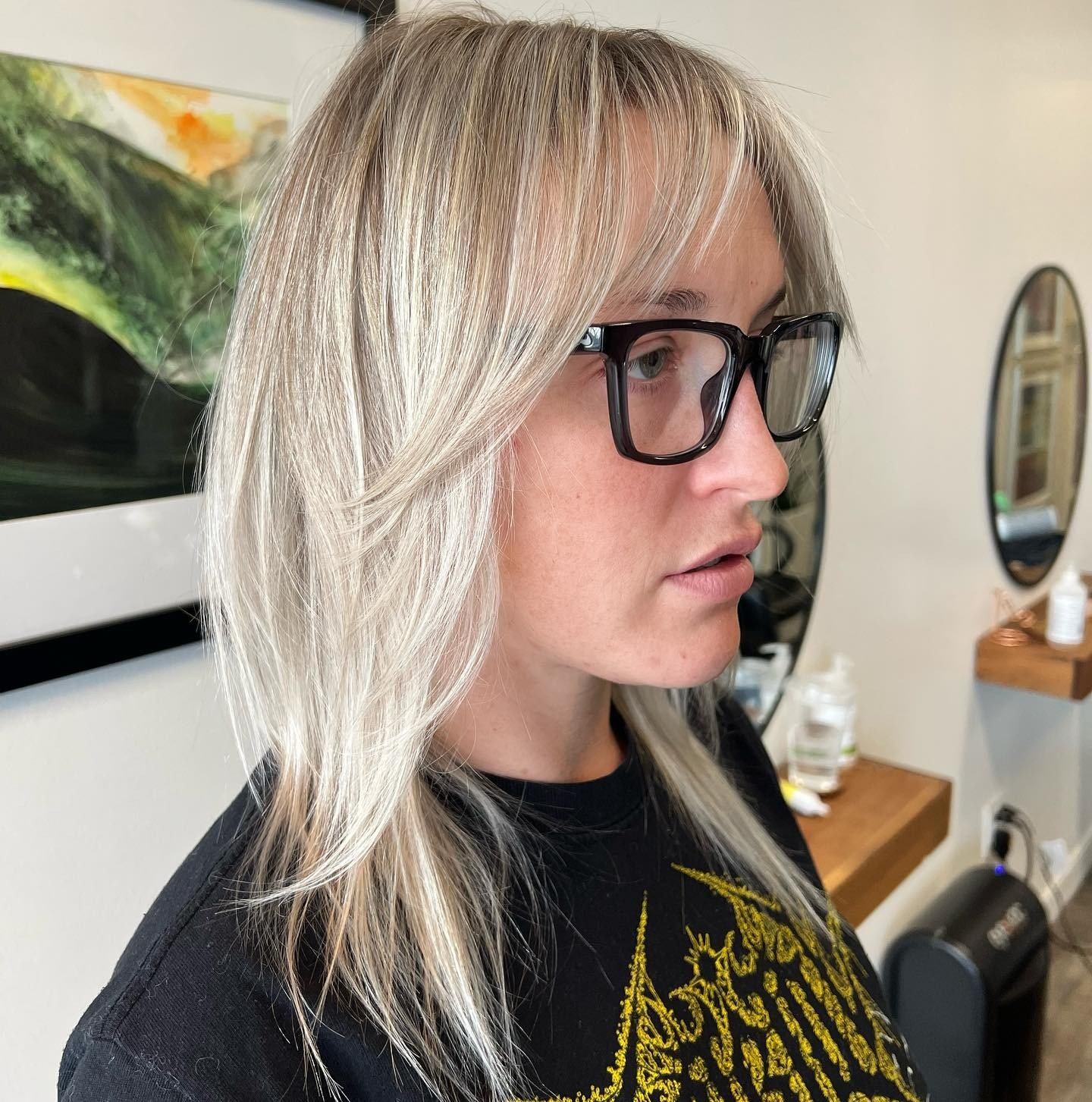
This longer bob keeps the back compact while the sweeping fringe and front layers create a light, elongated shape.
Feathered ends add movement around the shoulders without leaving the lower section visibly thin.
The off-centre direction also gives the roots a useful amount of lift.
Works well if: You want a shorter shape that still offers enough length to tuck behind the ears.
Ask your stylist: Keep the crown layers subtle and place most of the movement around the face and ends.
Long Copper Shag with Bottleneck Fringe
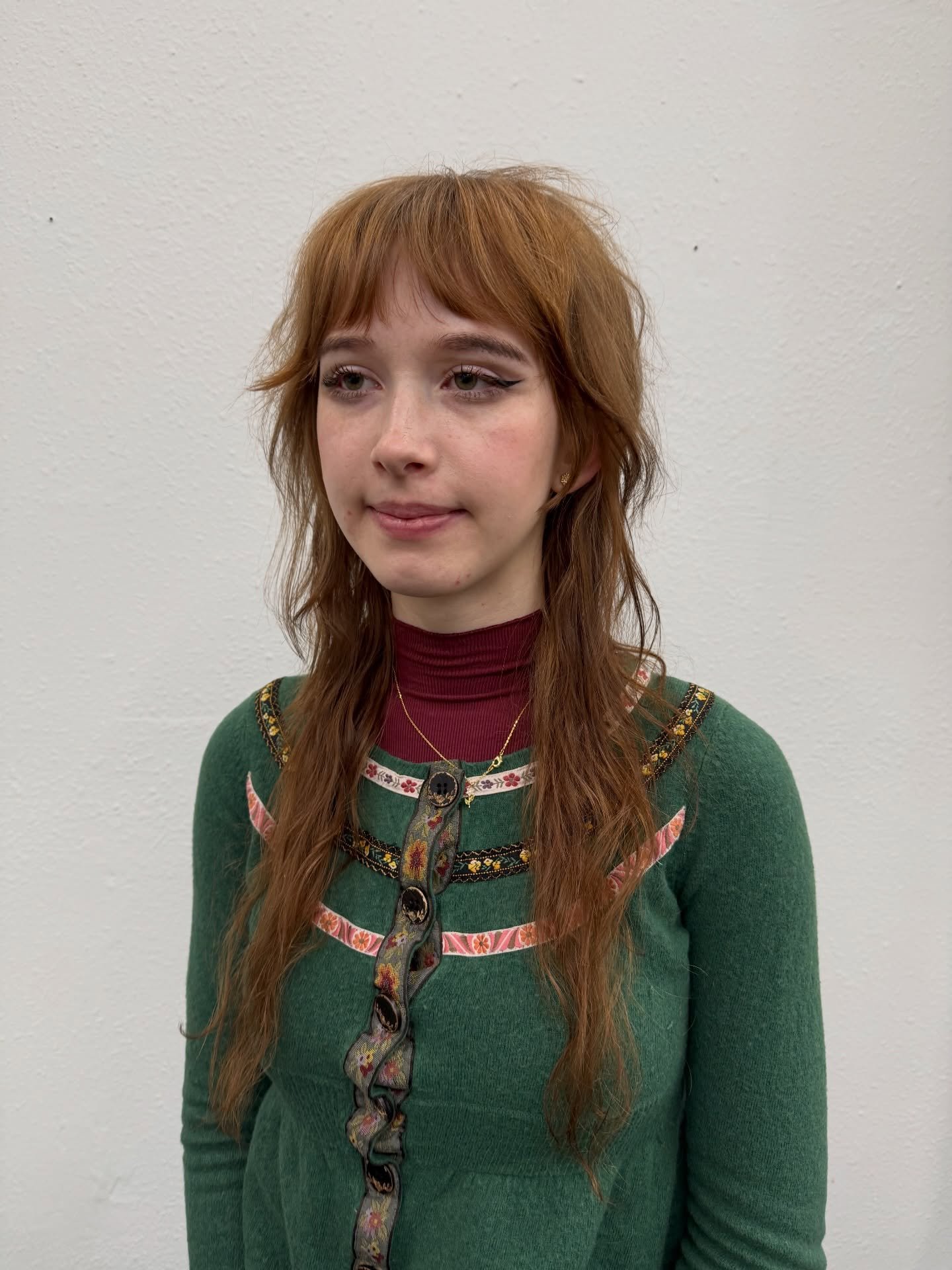
A bottleneck fringe starts shorter through the centre and lengthens gradually towards the cheekbones.
The long shag layers break up the sides, helping fine hair gain movement without relying on heavy root volume.
Keeping the lower pieces narrow but not overly thinned preserves enough density through the ends.
Best for: Long fine hair with a natural bend or a lightly tousled texture.
Fringe tip: Blow-dry the centre forward and direct the longer edges away from the face.
Rounded Layered Bob Transformation
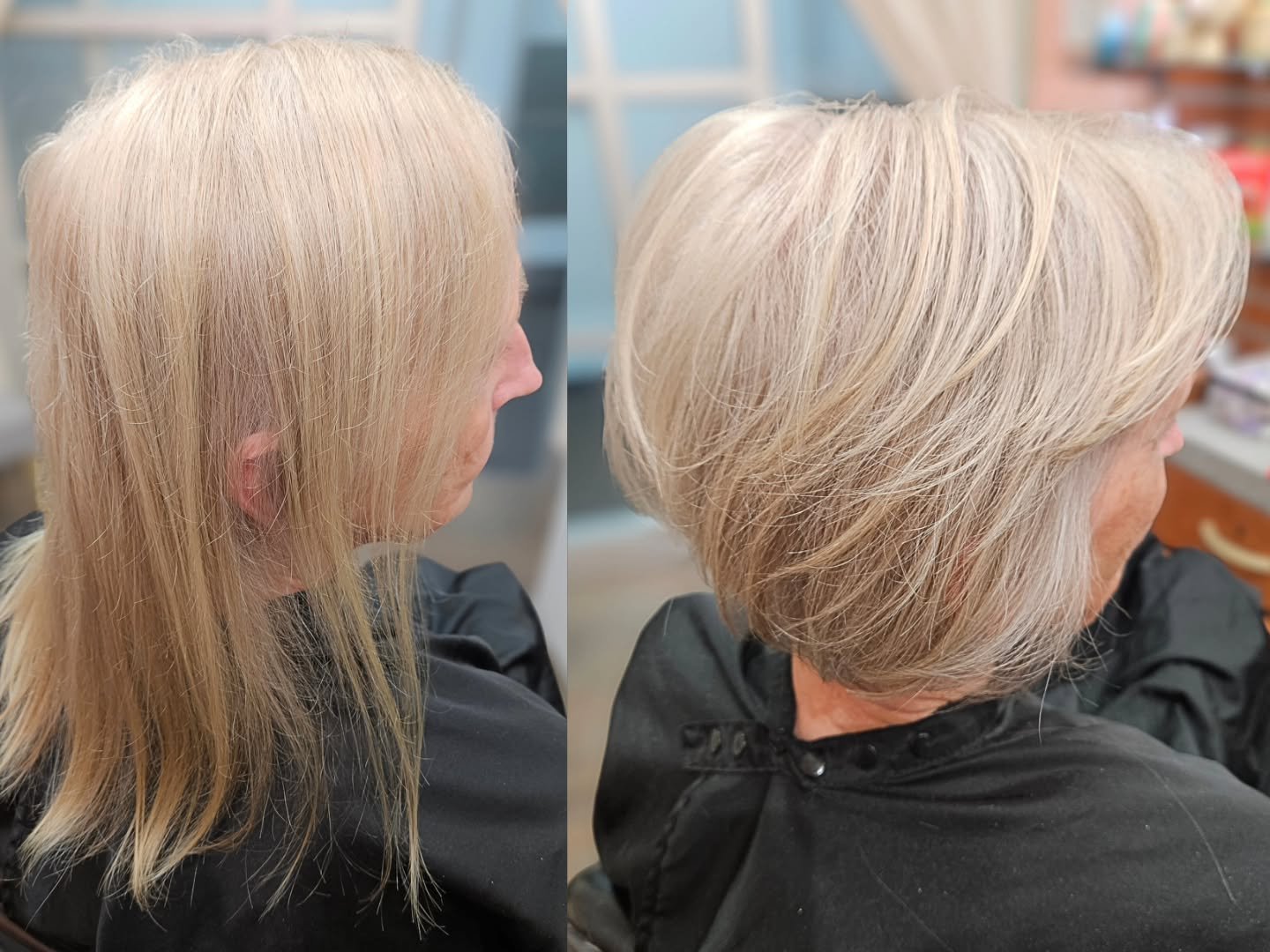
This before-and-after cut shows how removing excess length can make thin hair look noticeably denser.
The rounded back and graduated layers build a fuller outline, while the longer front keeps the shape soft.
Shorter layering around the crown adds lift without exposing too much scalp.
Best for: Fine hair that has lost shape through the ends and needs a stronger silhouette.
Salon tip: Ask for controlled graduation at the back with enough surface length to cover the internal layers.
Peach Graduated Bob with a Side Fringe
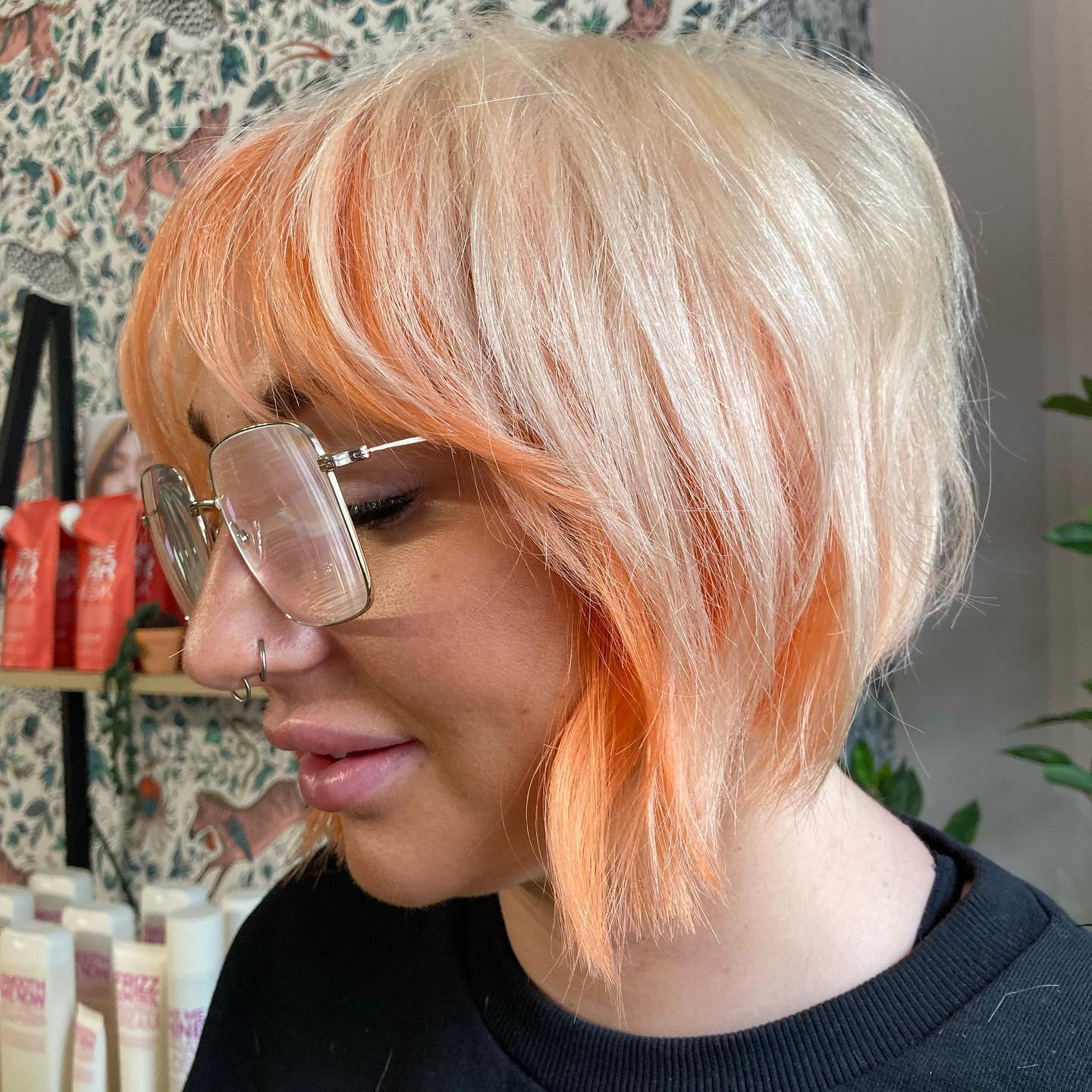
A graduated back creates a rounded profile and helps fine hair appear fuller through the crown.
The long side fringe keeps the front soft, while the tapered nape prevents the short cut from looking bulky.
The uneven front length adds movement and makes the shape feel less formal.
Works well if: You want a short cut with visible structure and a flexible fringe.
Easy styling: Use a small round brush at the crown and smooth the fringe diagonally across the forehead.
Choppy Mullet Shag with Micro Fringe

This compact shag keeps the fringe and crown short while leaving textured length through the nape.
Choppy sections create separation, which can make fine hair look more dimensional than one smooth layer.
The close sides prevent the silhouette from becoming too wide or wispy.
Best for: Fine hair with enough natural texture to hold a piecey finish.
Product tip: Work a small amount of lightweight paste into selected ends rather than coating the whole cut.
Wavy Chin-Length Bob with Side Layers
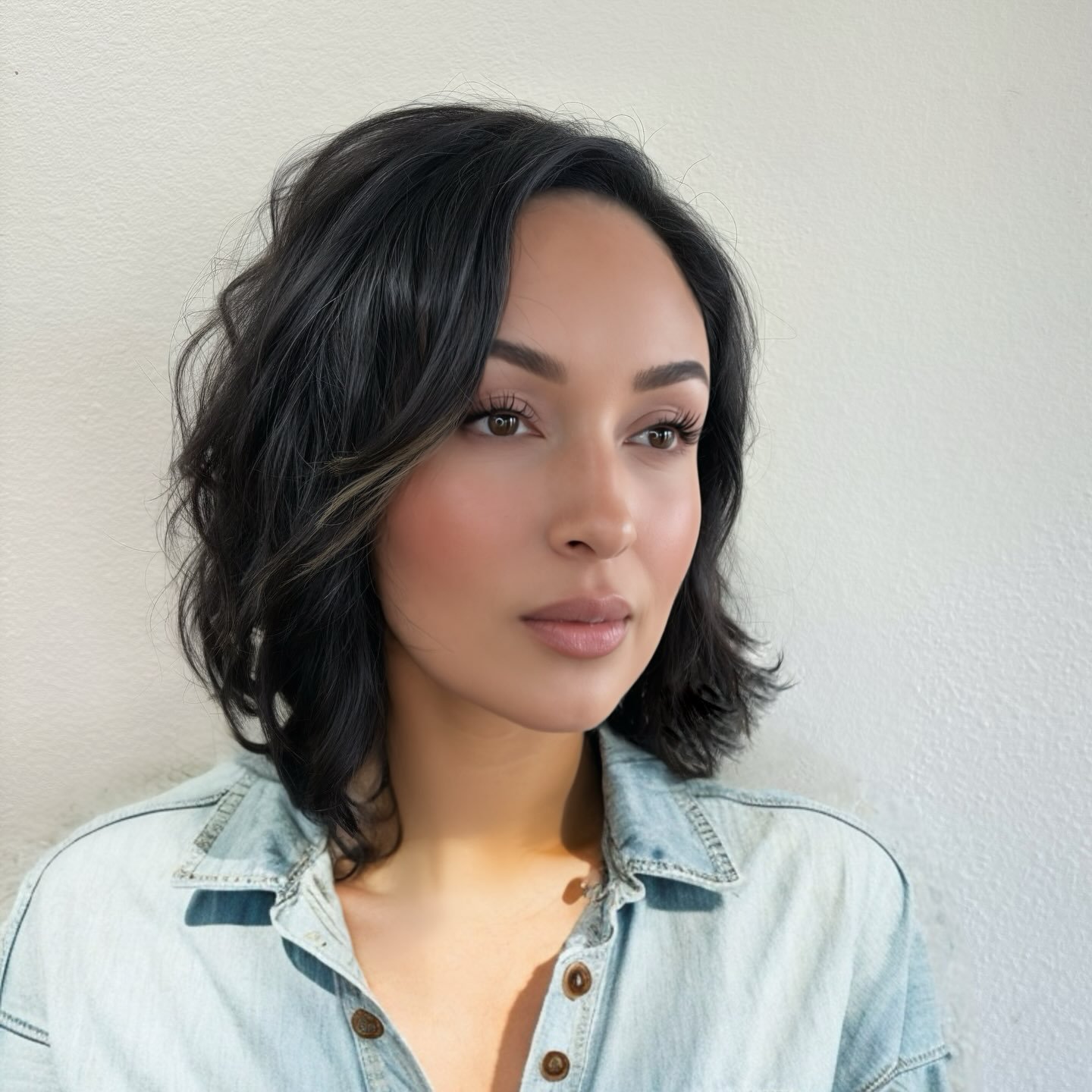
The deep side part creates instant root lift and gives this chin-length bob an asymmetrical flow.
Soft layers allow the waves to sit separately, helping the hair appear wider and more substantial around the jaw.
The ends remain gently rounded, so the bob still has a clear and healthy-looking perimeter.
Works well if: Your thin hair has natural waves or responds easily to a curling tong.
For that finish: Curl only a few broad sections and leave the ends slightly straighter for a modern shape.
Voluminous Layered Bob with Swept Fringe
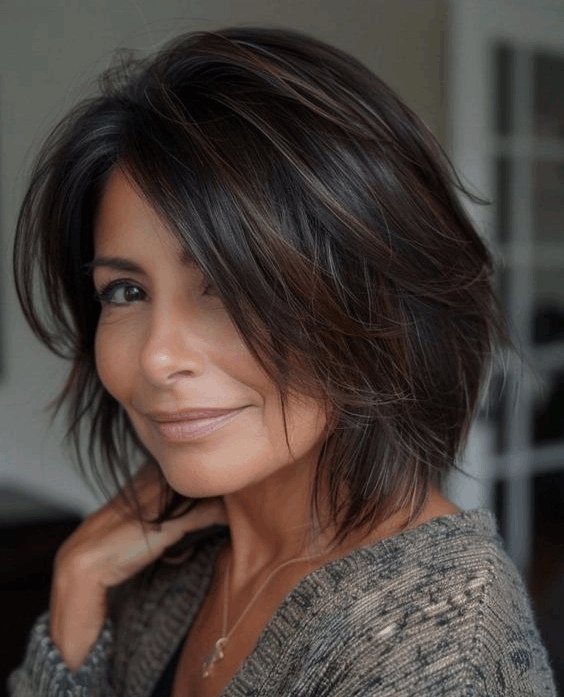
This layered bob builds height through the crown and creates a broad, rounded frame around the cheekbones.
The swept fringe blends into the side layers, avoiding a separate heavy section across the forehead.
Keeping the nape shorter helps the upper layers hold their lift throughout the day.
Best for: Fine hair that benefits from a structured blow-dry and crown volume.
Root lift: Dry the crown in the opposite direction first, then place it back with a flexible hairspray.
Shoulder-Length Wolf Cut with Split Fringe
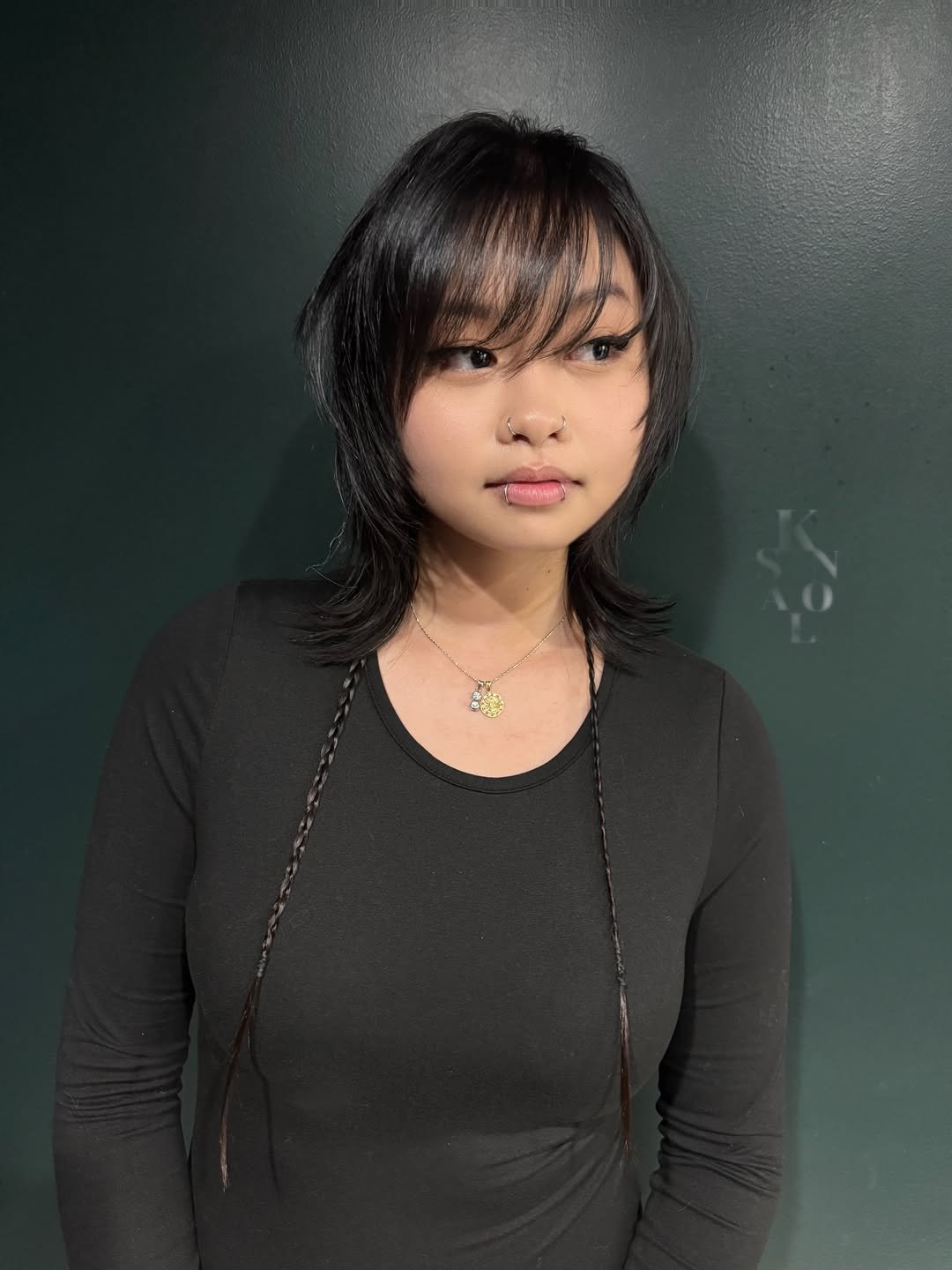
This wolf cut combines a short layered crown with longer, tapered sections through the sides and back.
The split fringe opens the face, while the cheek-length pieces create shape without using a dense full fringe.
The controlled lower length keeps the style wearable and stops fine hair from looking overly shredded.
Works well if: You like a shaggy outline but still want enough length to frame the shoulders.
Ask your stylist: Keep the shortest crown layer long enough to blend and avoid removing too much weight from the perimeter.