Square Bob Haircuts: 20 Ideas
Square bobs keep the outline sharp without feeling severe.

KEY TAKEAWAYS
- A square bob relies on a blunt perimeter and controlled shape, so the ends read clean rather than heavily layered.
- The cut can sit anywhere from jaw to collarbone length, with straight, wavy, curly, or fringed variations keeping the outline intentional.
- Regular trims help preserve the strong baseline, while light internal shaping can remove bulk without softening the square silhouette.
Blunt Jaw Bob
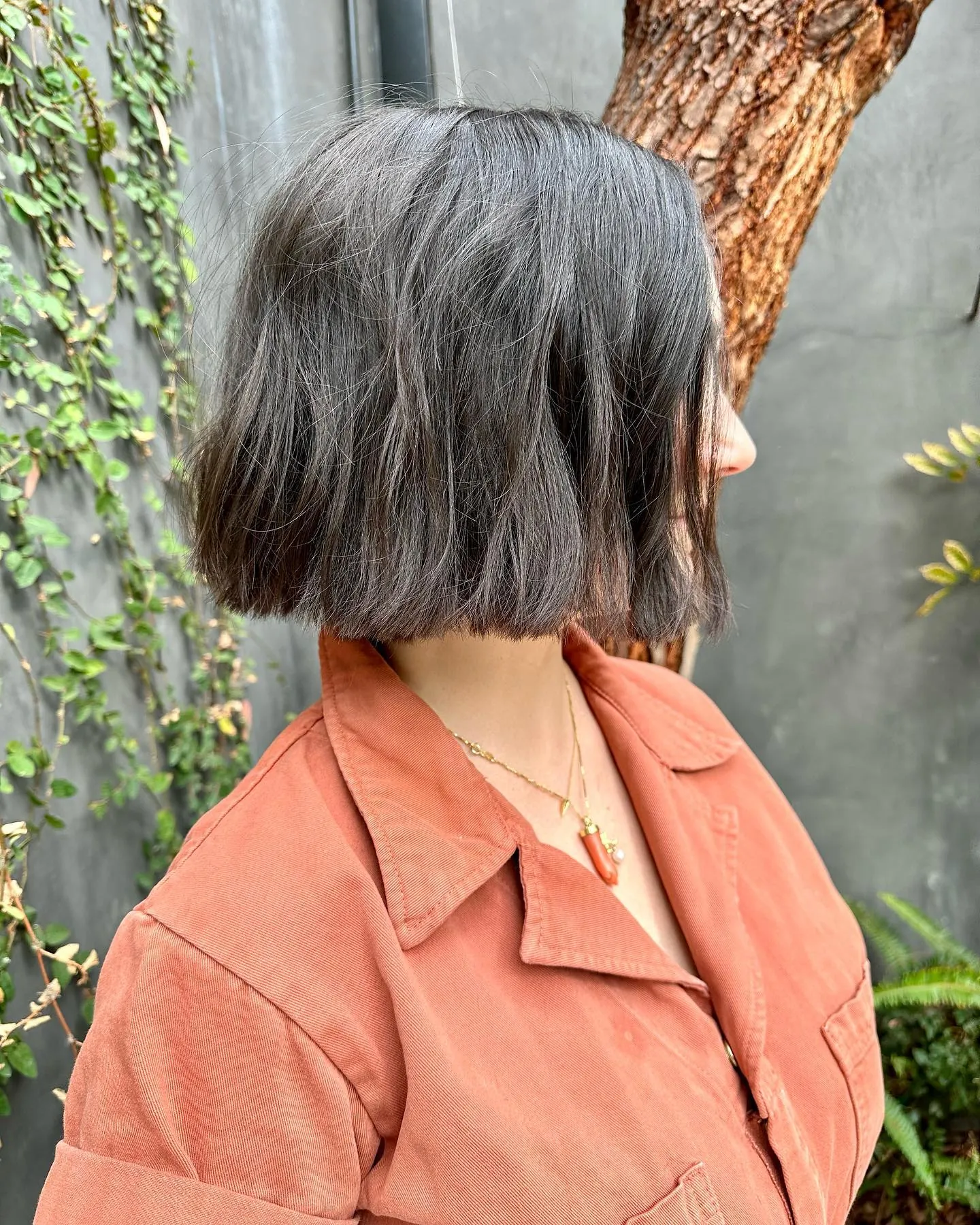
A blunt jaw-length baseline gives this bob the boxy edge that defines a square cut, while the slight bend through the surface keeps it from looking rigid. It suits straight to softly wavy hair that holds a clean perimeter.
Long Blunt Bob
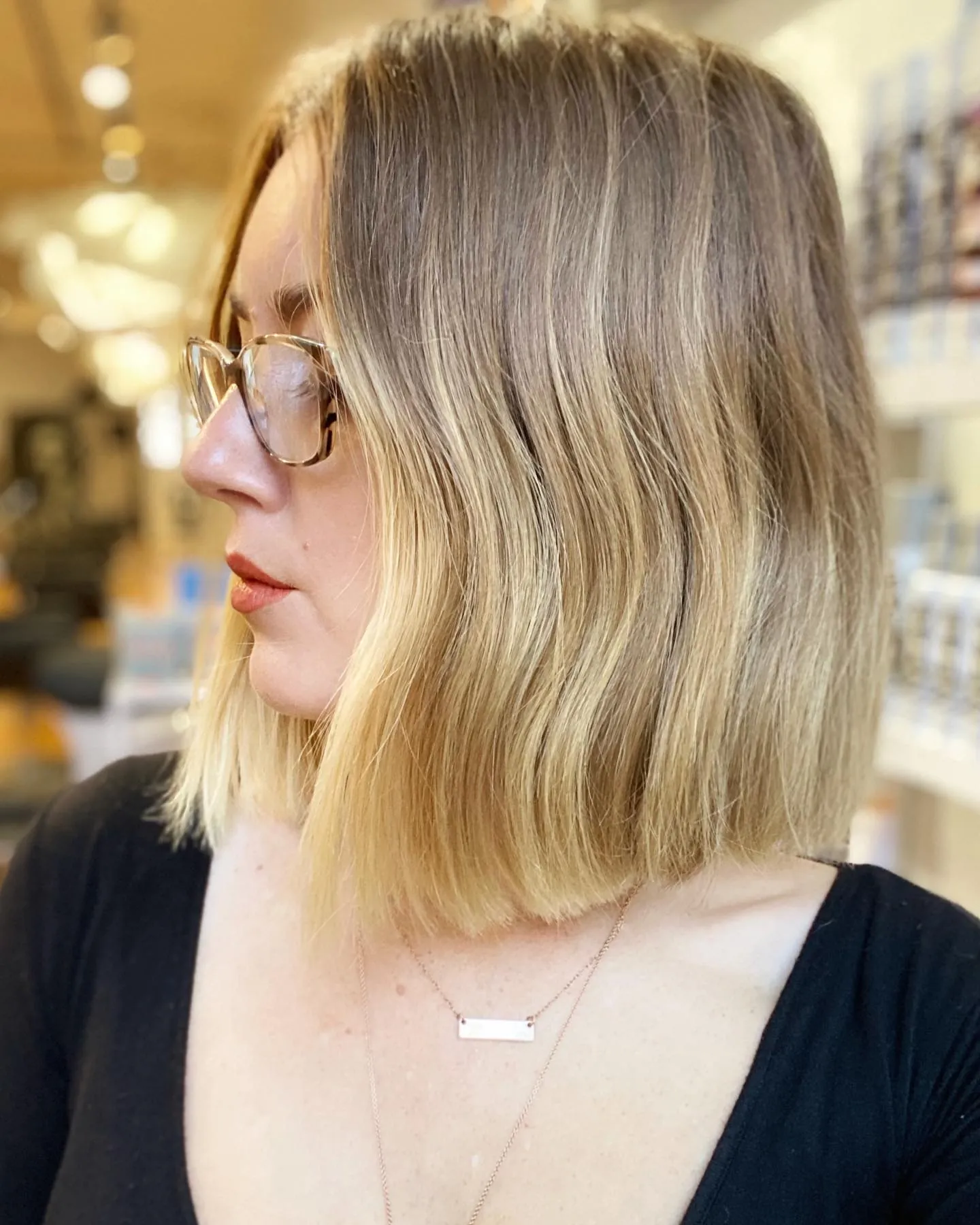
Keeping the ends at one length makes this longer bob feel structured even with a soft natural bend. The extra length works well for anyone who wants the square outline without committing to a chin-skimming cut.
Curly Square Bob
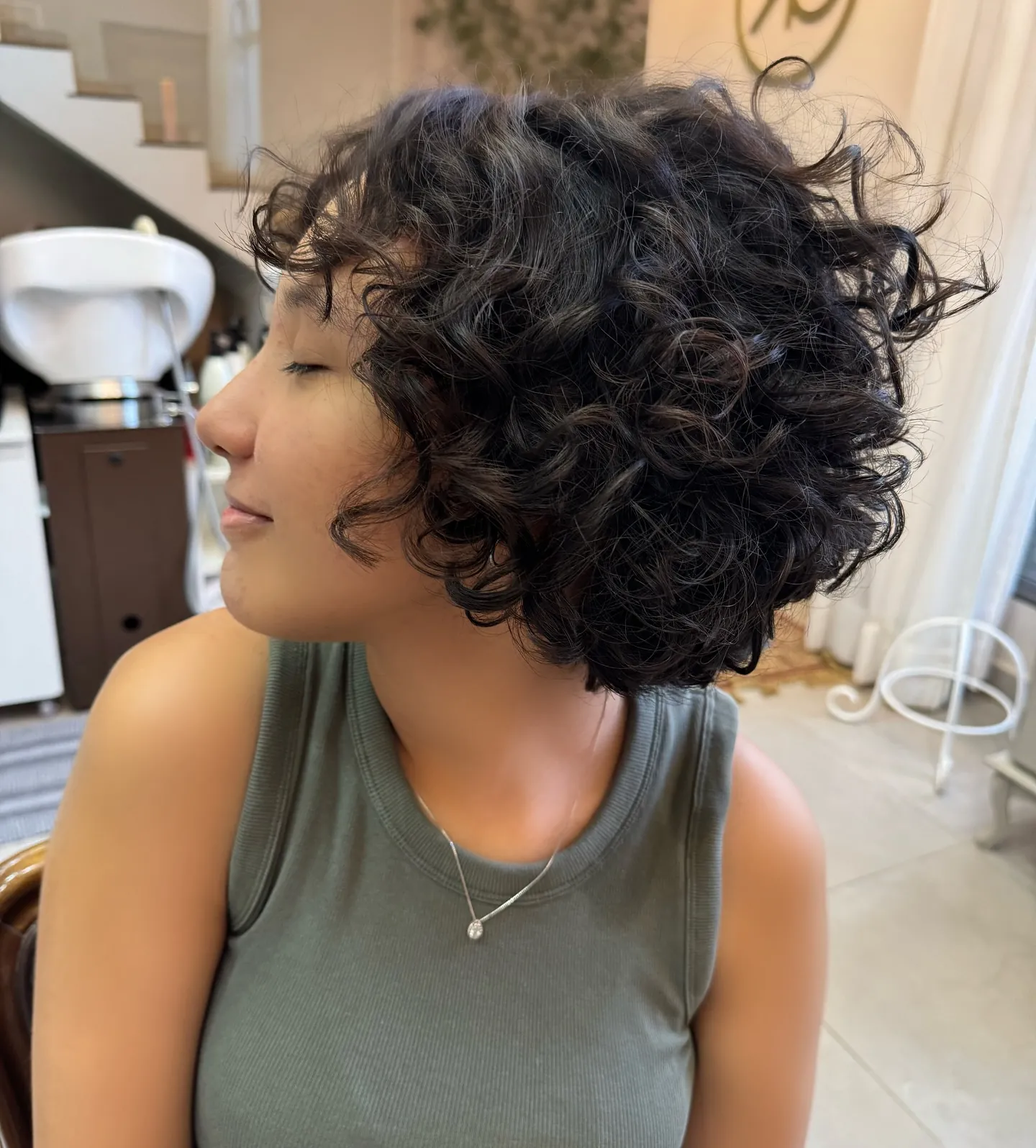
Dense curls can still carry a square bob when the perimeter is kept compact and the width sits around the jaw. Ask for curl-by-curl shaping so the corners stay defined without creating a heavy triangular finish.
Best for: Naturally curly hair with enough density to hold a compact shape.
Soft Wavy Bob
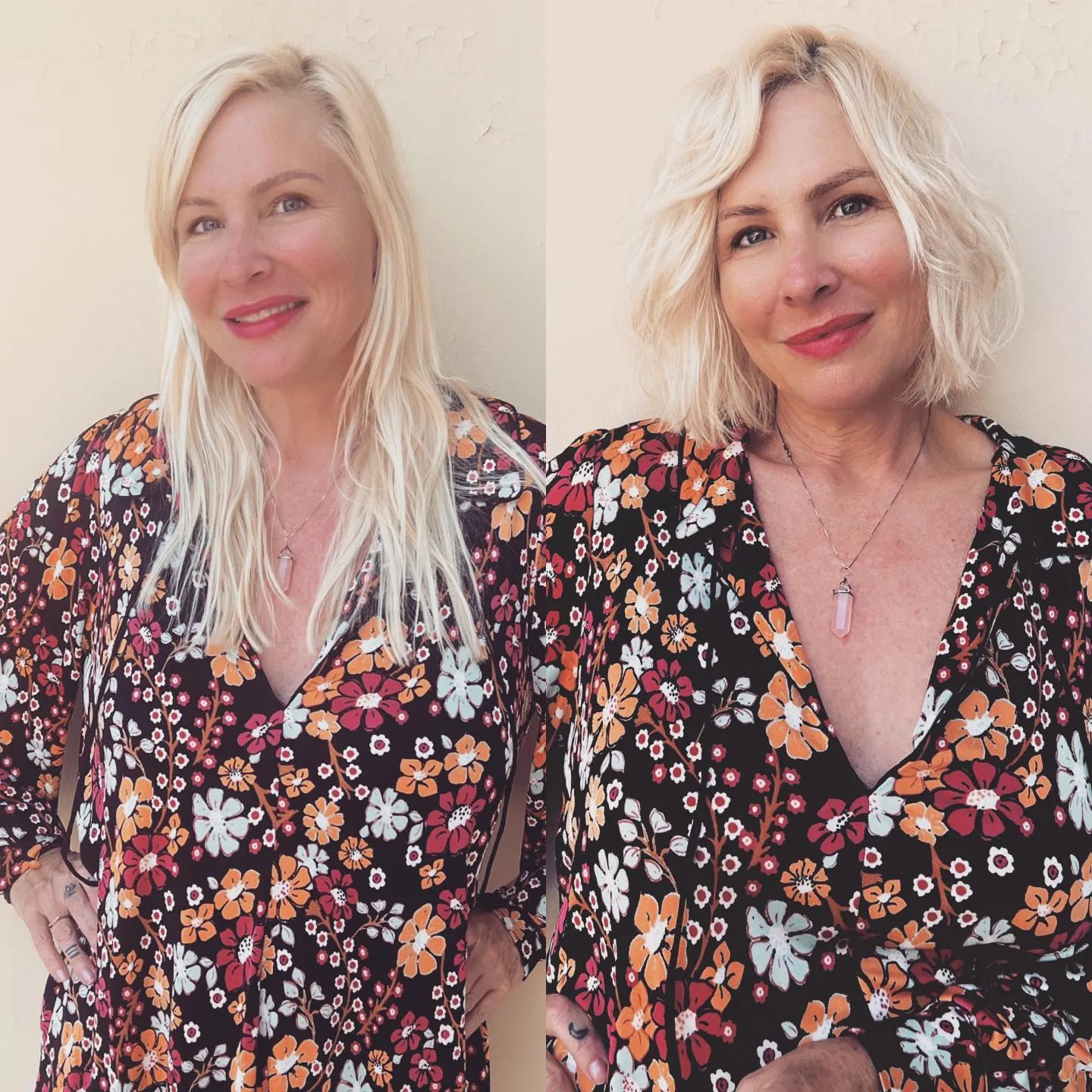
Loose waves soften the straight baseline, which makes a square bob easier to wear if a pin-straight finish feels too severe. Keeping the ends blunt underneath the movement stops the cut from losing its graphic shape.
Shoulder-Length Bob
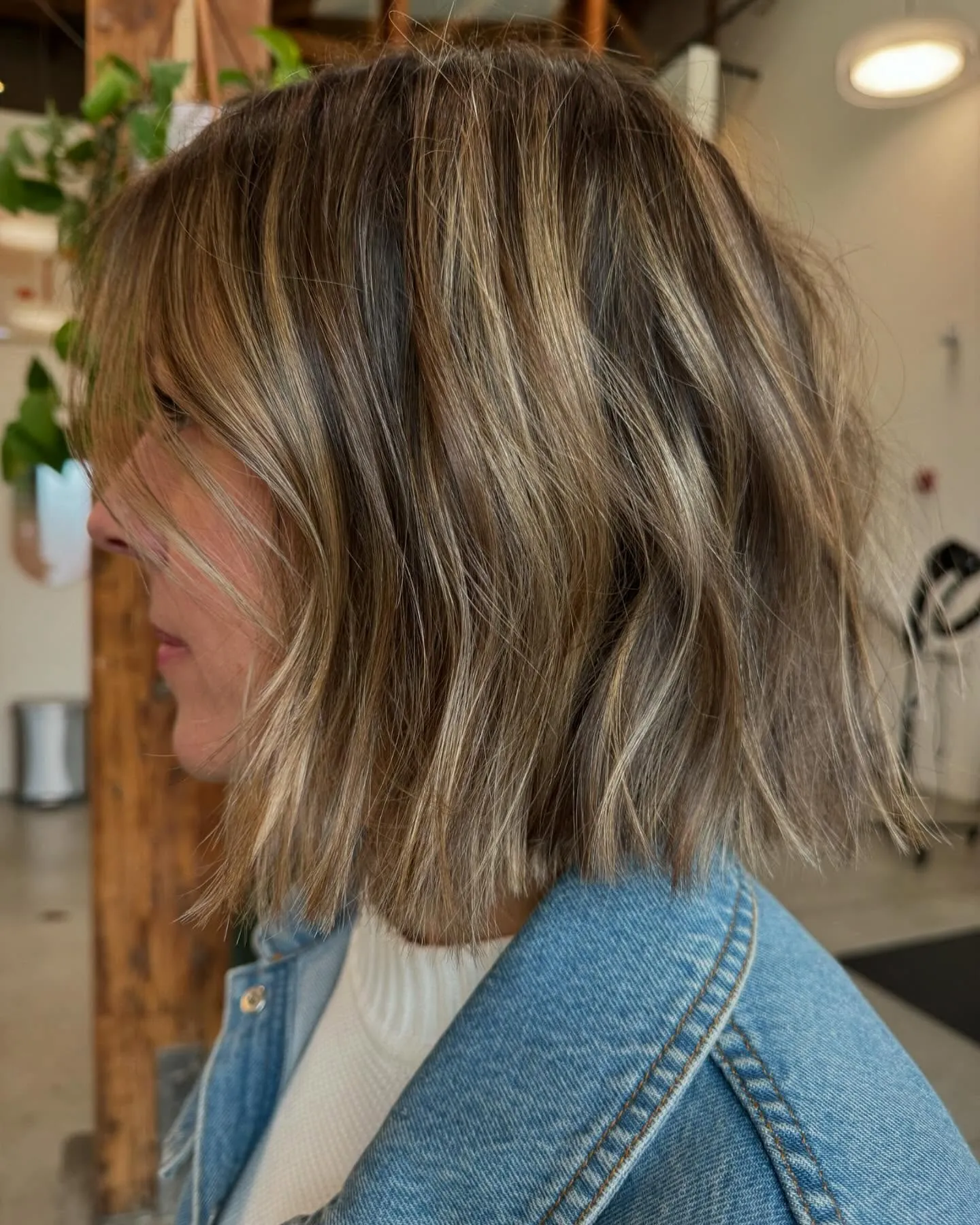
A shoulder-skimming length gives the square bob more flexibility while the blunt ends still provide a clear horizontal line. It is a practical option for thicker hair because the extra length helps the shape sit down rather than puff out.
Long Fringe Bob
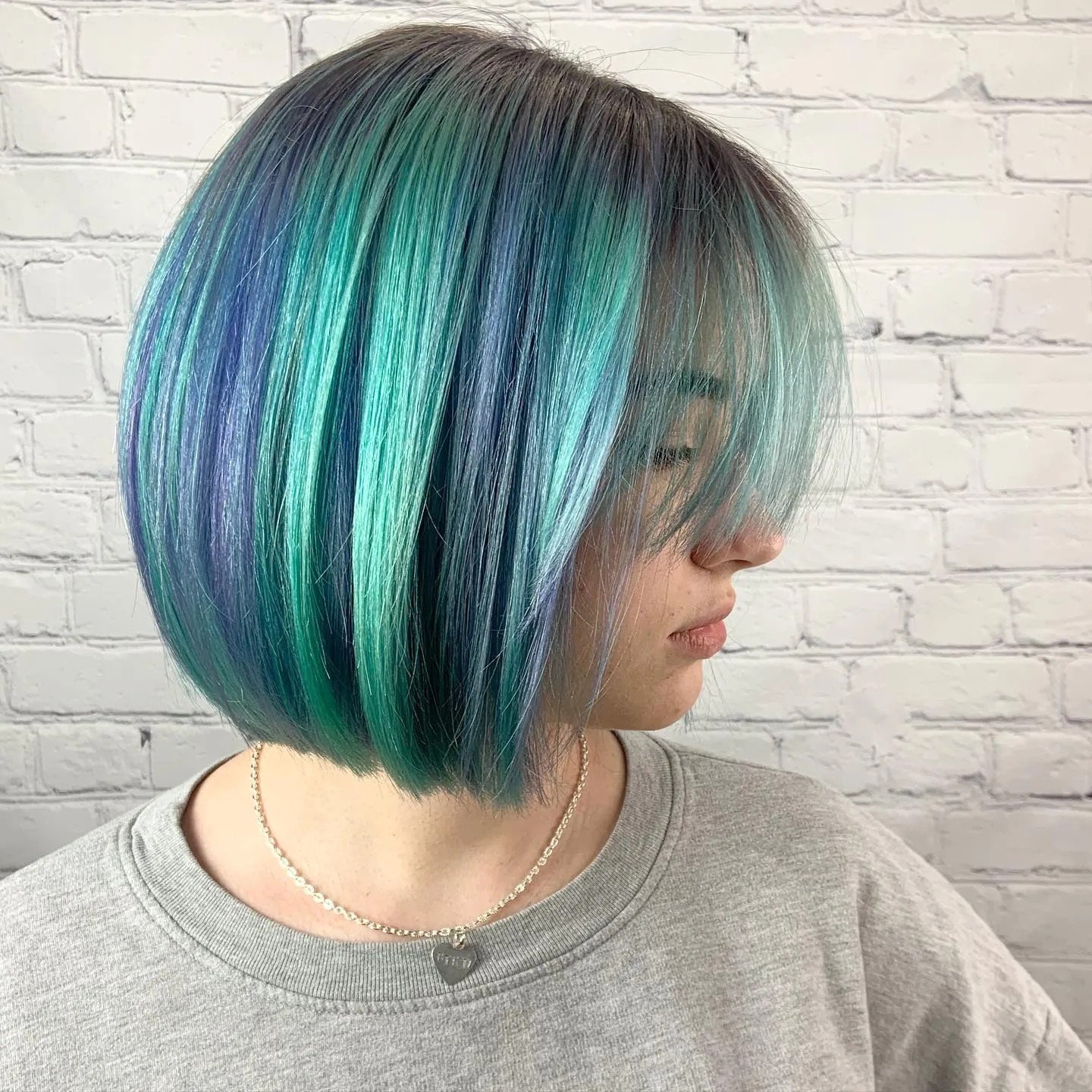
A long sweeping fringe breaks up the solid bob outline at the front, while the blunt jaw-length ends keep the square structure intact. This works especially well when you want movement around the face without layering through the perimeter.
Blunt Fringe Bob
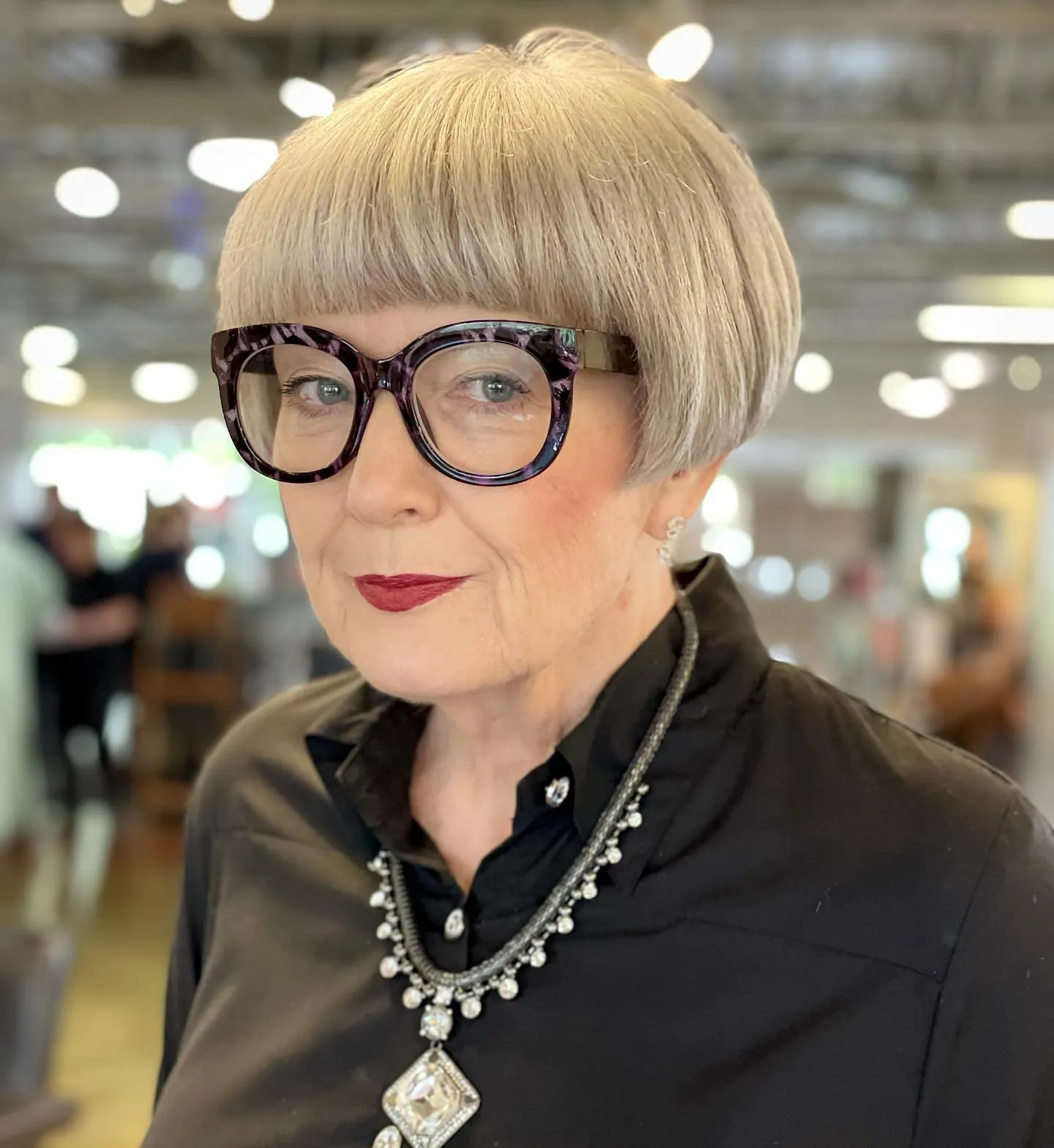
A full blunt fringe mirrors the strong line at the bottom of the bob, creating a deliberate geometric finish. This shape suits straight hair particularly well because a smooth texture makes both horizontal lines look cleaner.
For that finish: Direct the fringe straight down while blow-drying, then lightly bevel the bob ends.
Textured Center Bob
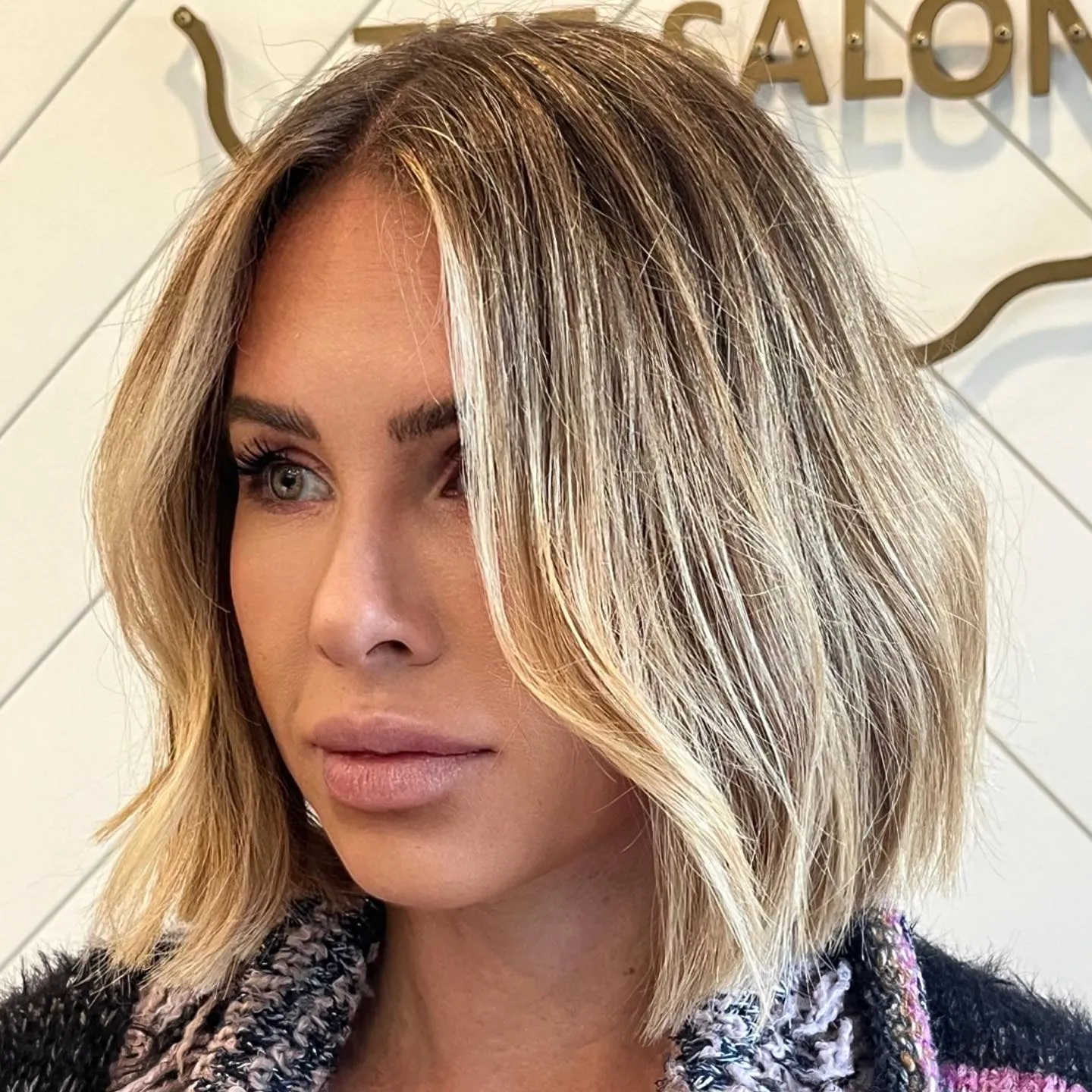
A center part gives this textured bob symmetry, while loose bends stop the one-length outline from feeling too formal. It is a useful way to wear a square bob on medium-density hair without losing softness around the face.
Sleek Chin Bob
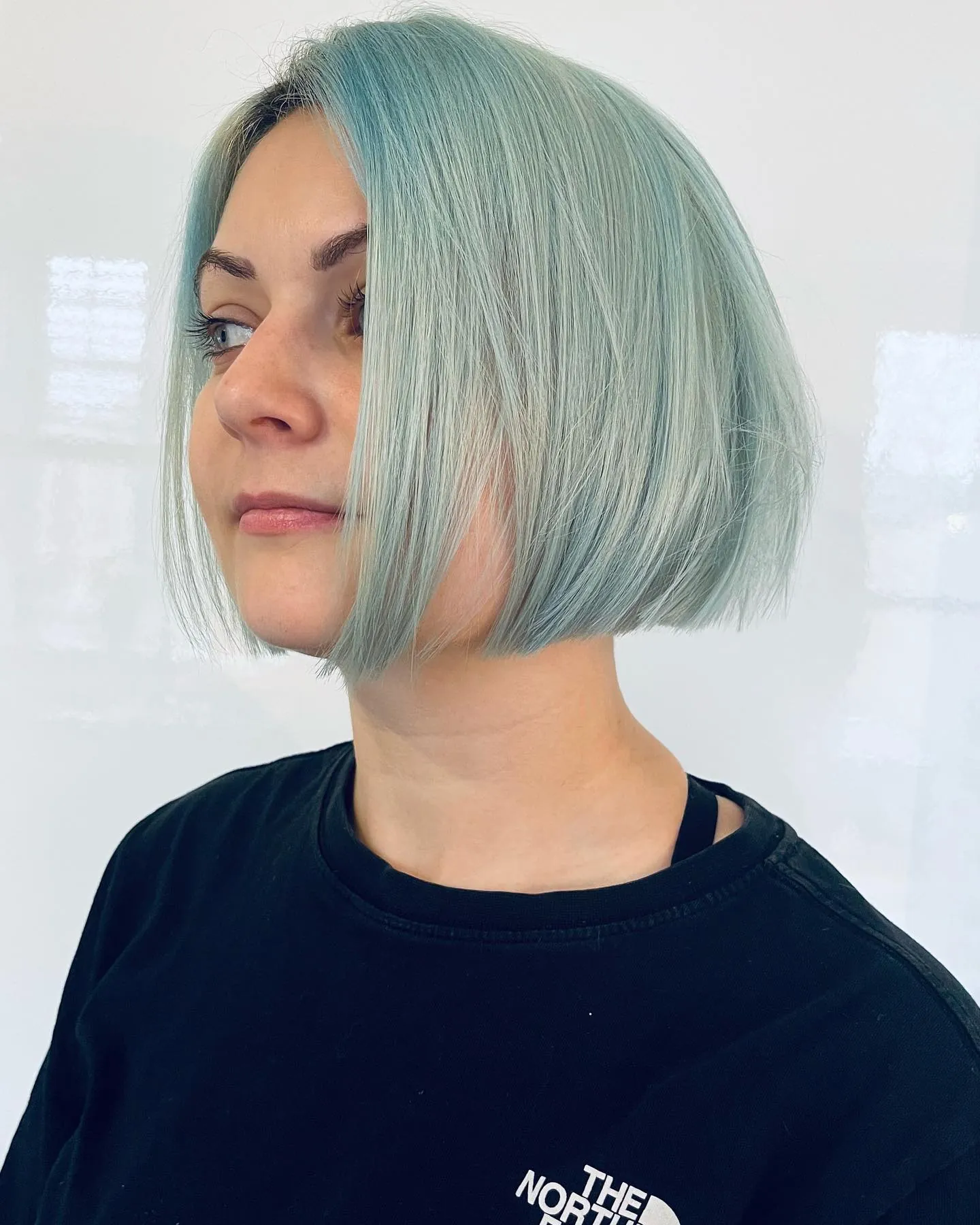
A clean chin-length line makes the square shape obvious, especially when the hair is worn smooth and close to the head. The slightly tucked-under ends sharpen the jaw area without adding extra layers or bulk.
Center-Part Blunt Bob
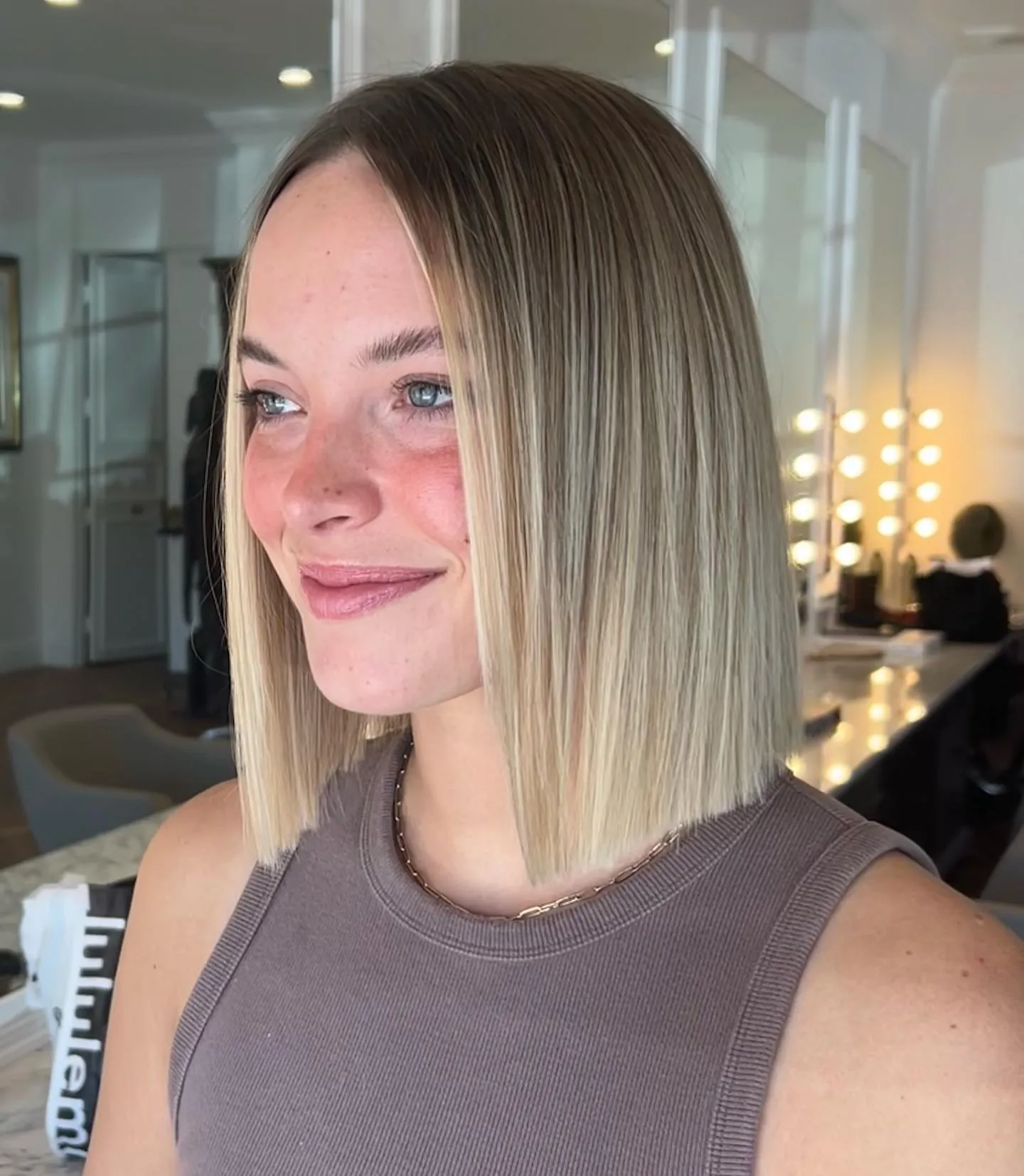
The precise center part reinforces the balanced, square outline of this blunt bob. Keeping the lengths sleek and nearly one level makes the shape feel clean, while the longer front pieces give the cut enough room to move.
Tousled Layered Bob
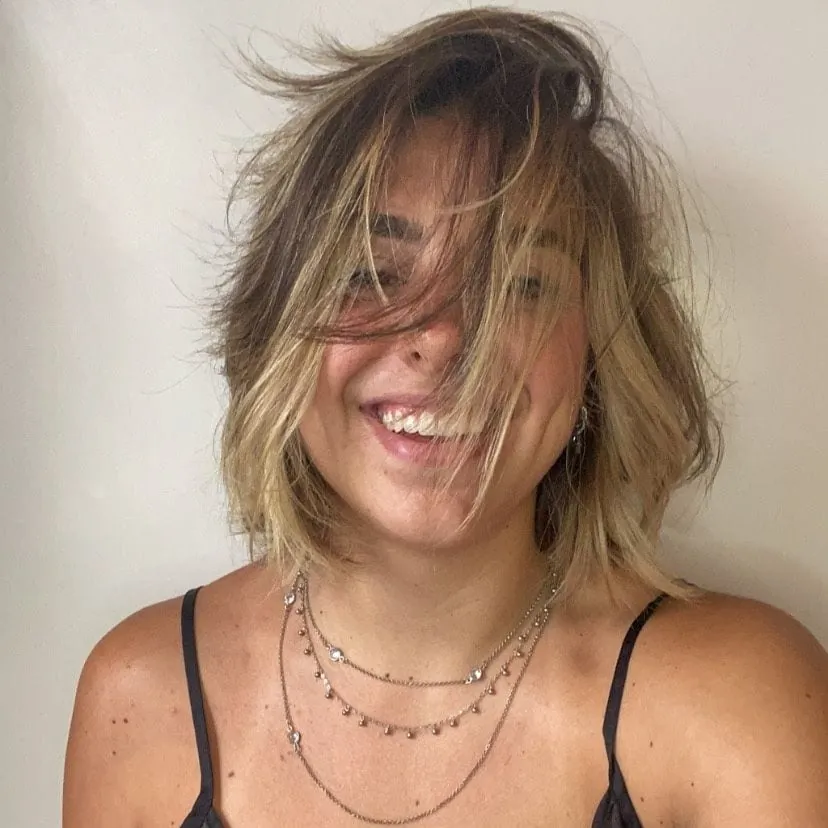
A tousled finish shows that a square bob does not have to sit perfectly flat. Light surface layers and a choppy texture can add lift, as long as the bottom edge stays weighty enough to keep the overall shape grounded.
Wavy Fringe Bob
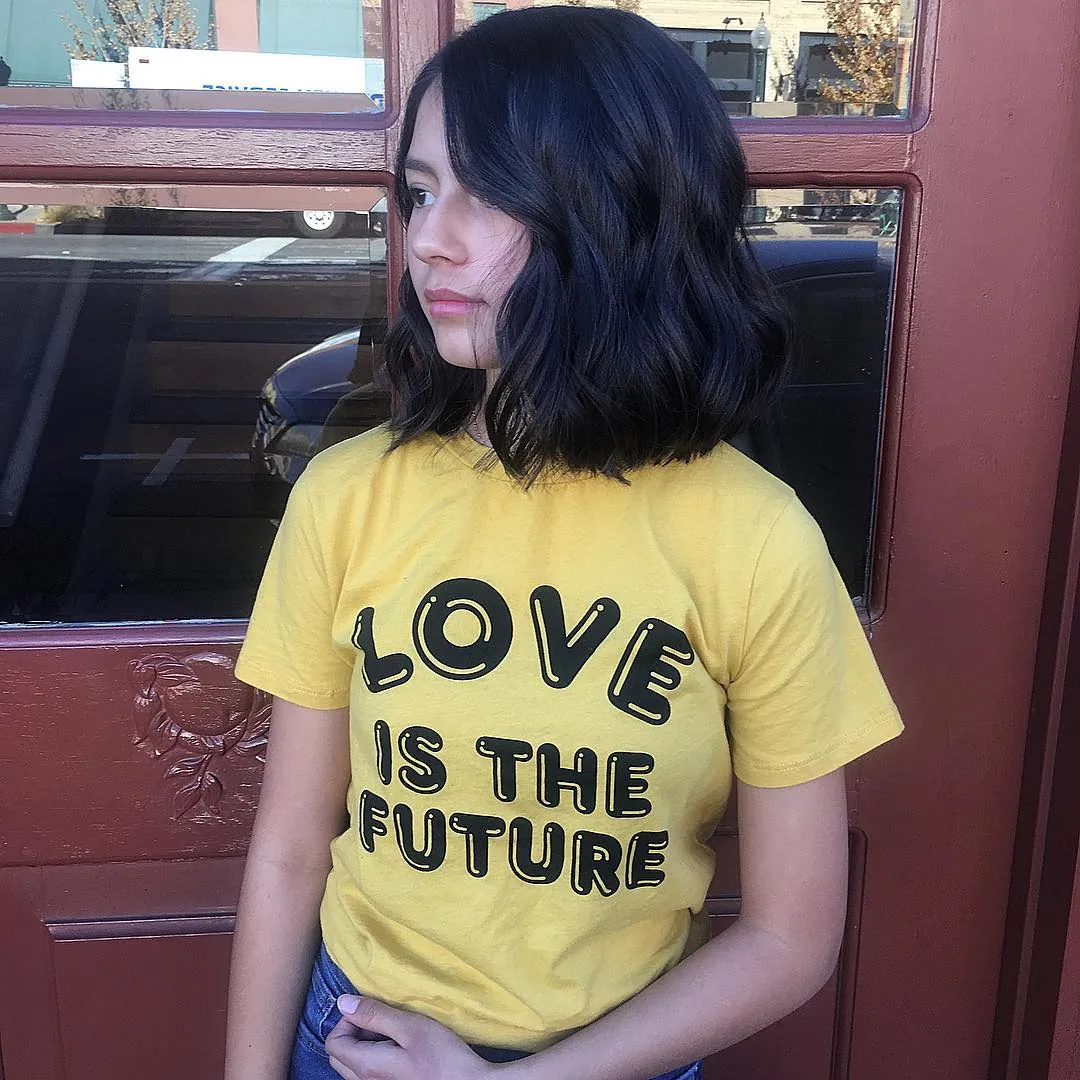
Soft waves add width through the middle of the cut, while the long fringe keeps the front from looking too blocky. A blunt lower edge is what keeps this relaxed version connected to the square bob shape.
Micro Fringe Bob

A short fringe exposes more forehead and puts the focus on the compact bob line beneath it. The slightly kicked ends make the cut feel playful, but the jaw-level perimeter still gives it a clear structured base.
Sleek Center Bob
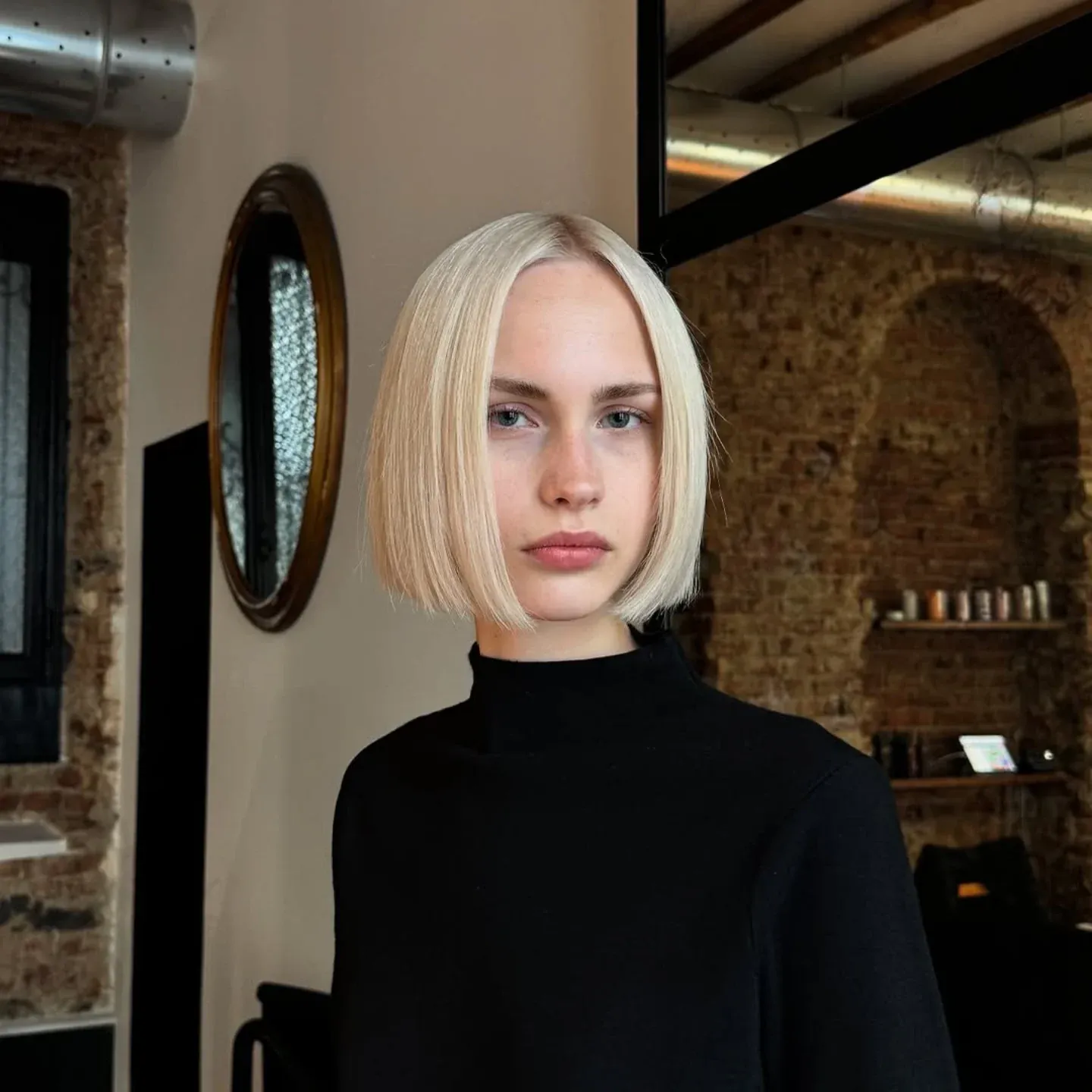
A glassy center-part finish makes every line of this square bob visible, from the straight sides to the even chin-length baseline. It works best when the cut itself is precise, because smooth styling leaves very little room to hide uneven ends.
Salon tip: Ask for the perimeter to be checked dry so the baseline sits even in its finished position.
Side-Part Bob
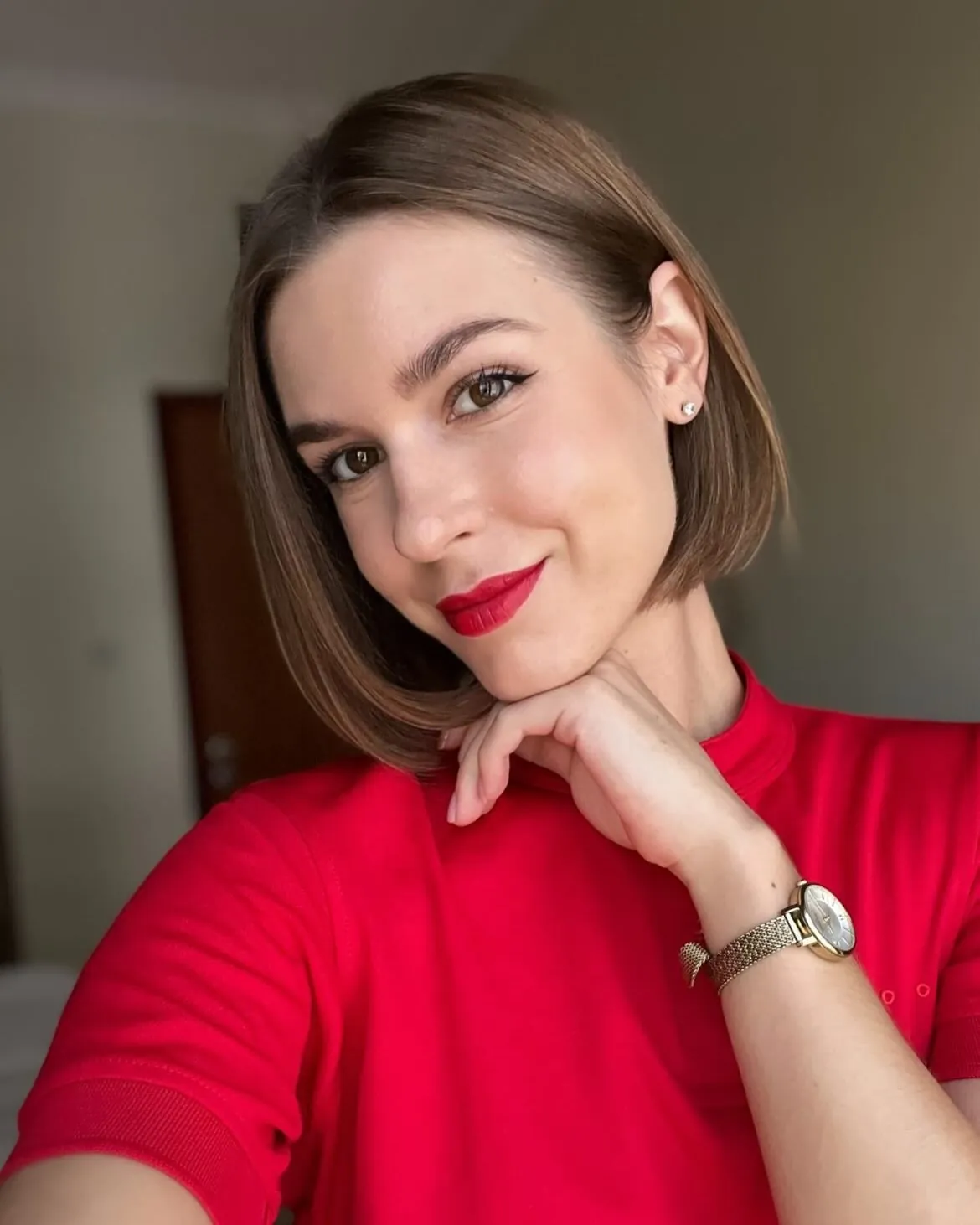
A deep side part shifts the weight without changing the bob’s strong, one-length perimeter. Tucking one side behind the ear also opens the face and makes the blunt line look less heavy.
Loose Wave Bob
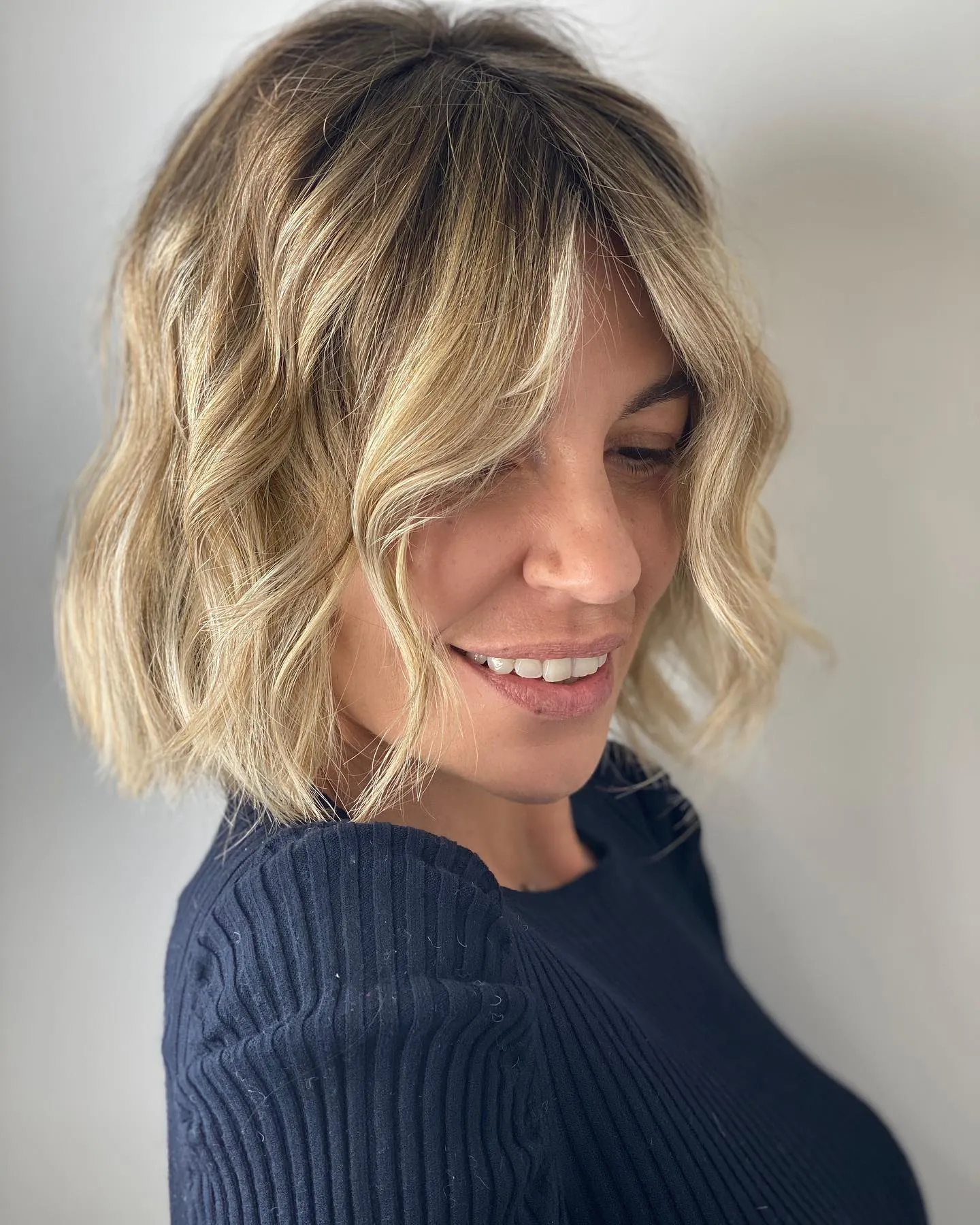
Loose bends give this blunt bob movement through the mid-lengths while the ends stay visibly solid. That contrast is useful for fine to medium hair that needs some body but still wants the square cut’s clean baseline.
Short Fringe Bob
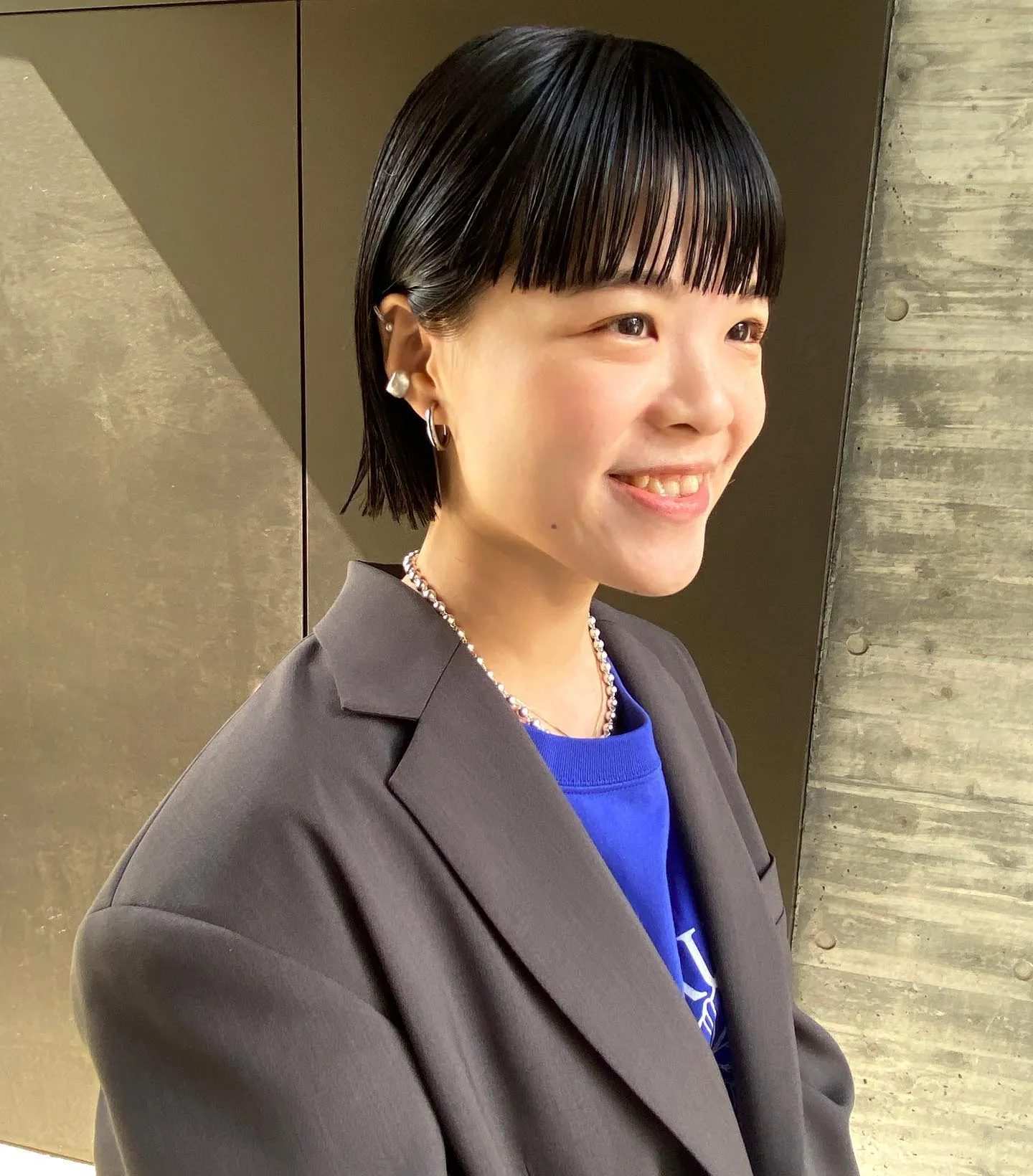
This shorter bob uses a crisp fringe and compact sides to create a neat geometric frame around the face. Tucking the sides behind the ears keeps the silhouette narrow while the blunt fringe maintains the graphic feel.
Wispy Fringe Bob
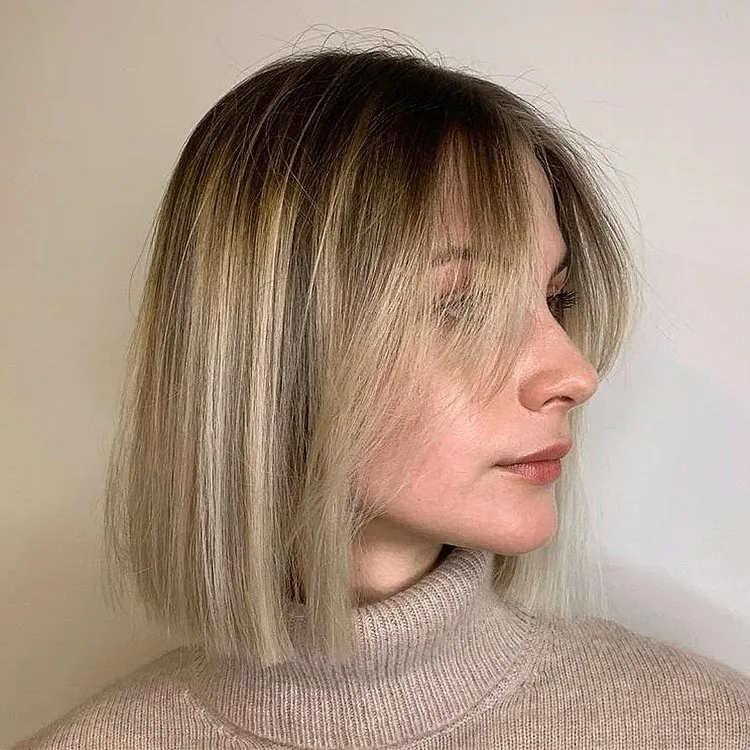
A wispy fringe softens the front without disturbing the stronger line through the ends. It is a good compromise for someone who likes the structure of a square bob but wants lighter movement around the eyes and cheekbones.
Ask your stylist: Keep the fringe airy and separate from the perimeter so the bob still reads as one length.
Tucked Blunt Bob
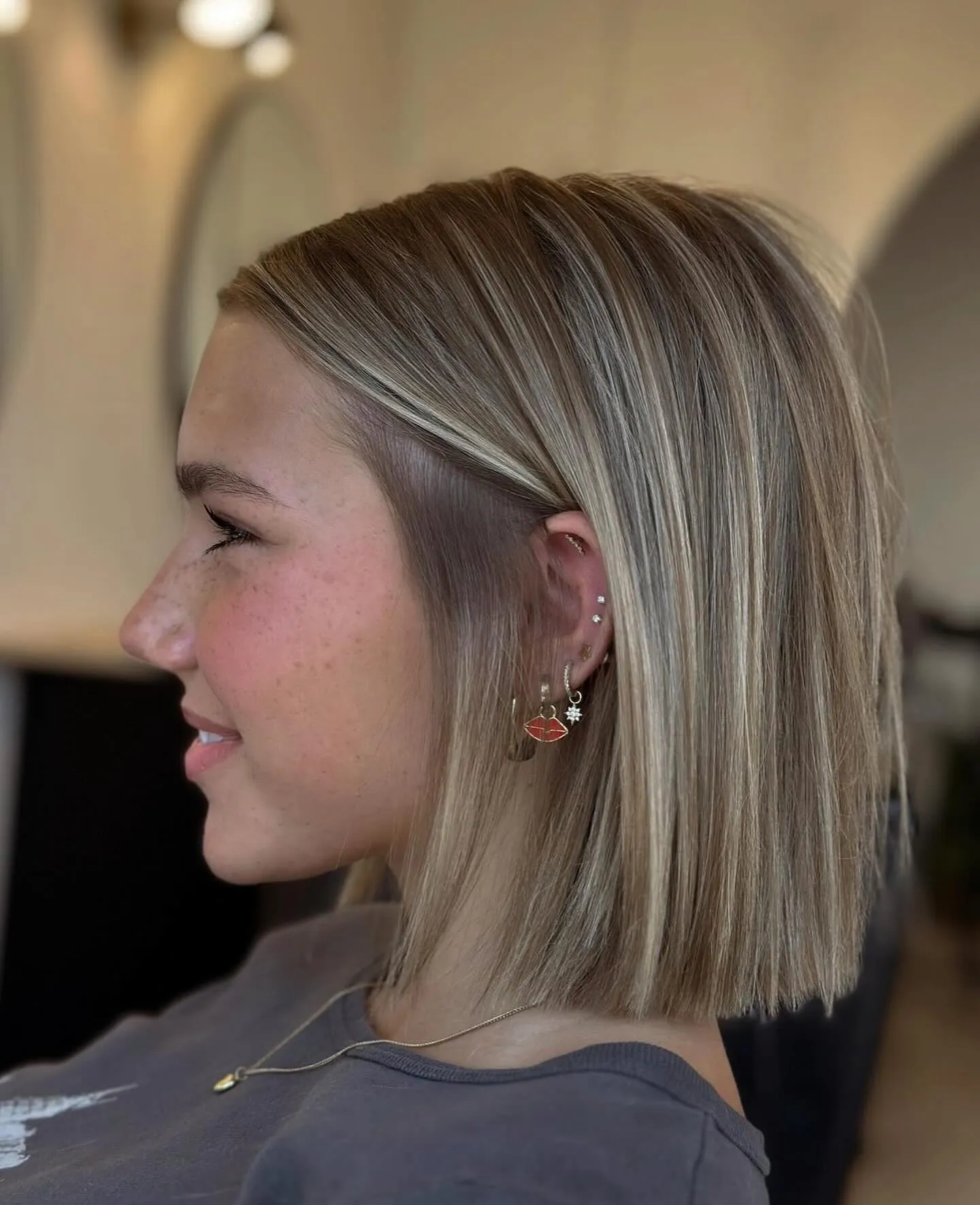
Tucking the front section behind the ear exposes the blunt baseline and makes the cut’s squared-off shape easy to see. The longer, collarbone-skimming length gives straight hair enough weight to fall cleanly without heavy styling.
Silver Square Bob
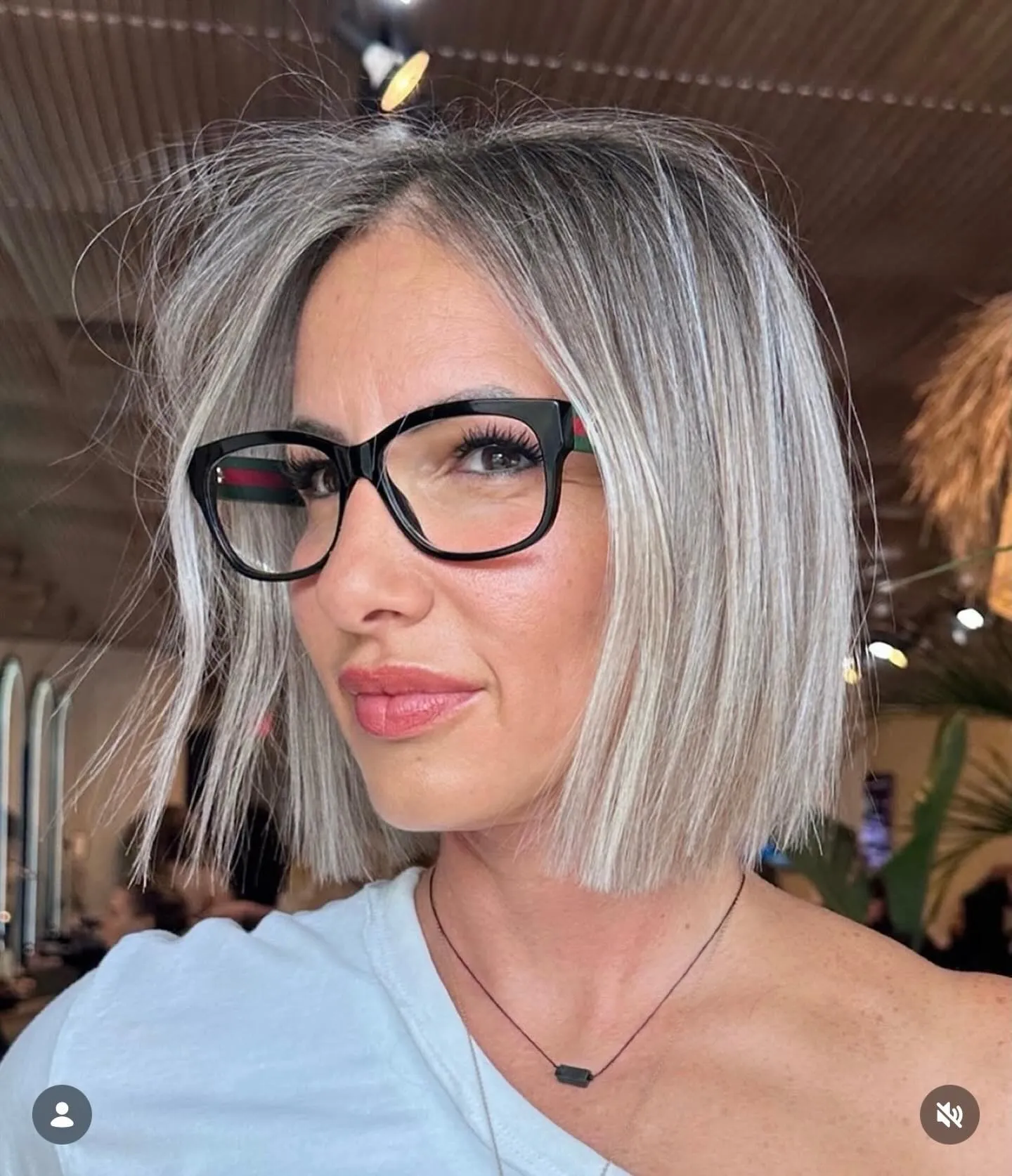
Natural silver texture works well with a square bob when the ends are kept dense and even. The blunt shoulder-level line gives the hair a strong outline, while a soft side part prevents the finish from feeling overly severe.