
Chunky Layered Haircuts: 18 Versatile Ideas
Chunky layers make movement easier to see and style.
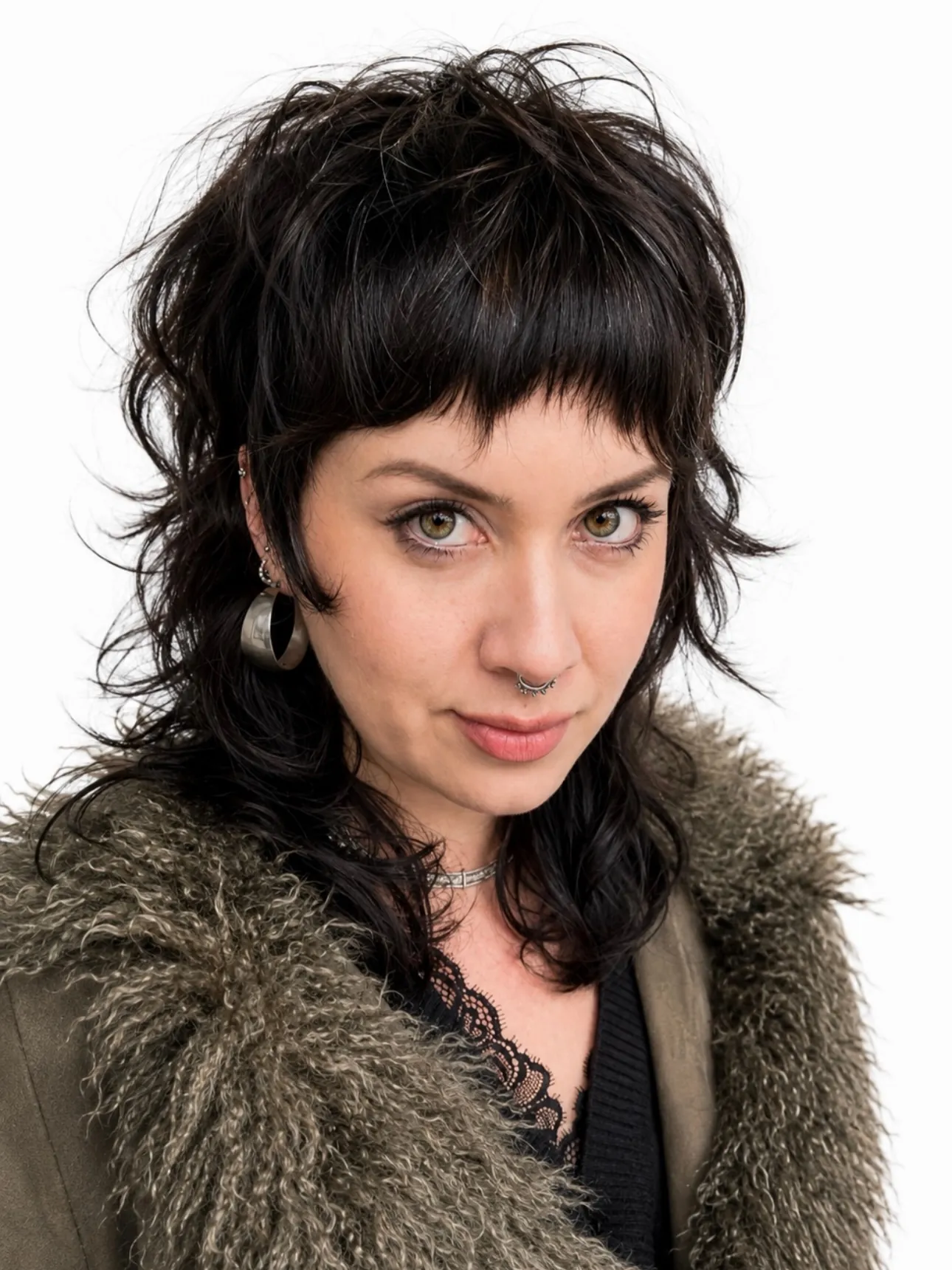
- Chunky layers use clear length changes to create movement while keeping enough weight through the ends.
- Face-framing pieces, fringe, and flipped ends can make the layering read more strongly without requiring a short overall cut.
- Round-brush styling or loose waves help separate the layers so the cut does not collapse into one heavy shape.
Long Shag Layers

The shorter crown pieces break up the long lengths while the full fringe keeps the shag feeling intentional around the face. Let the natural bend stay loose rather than brushing everything into one smooth shape.
Feathered Midi Layers
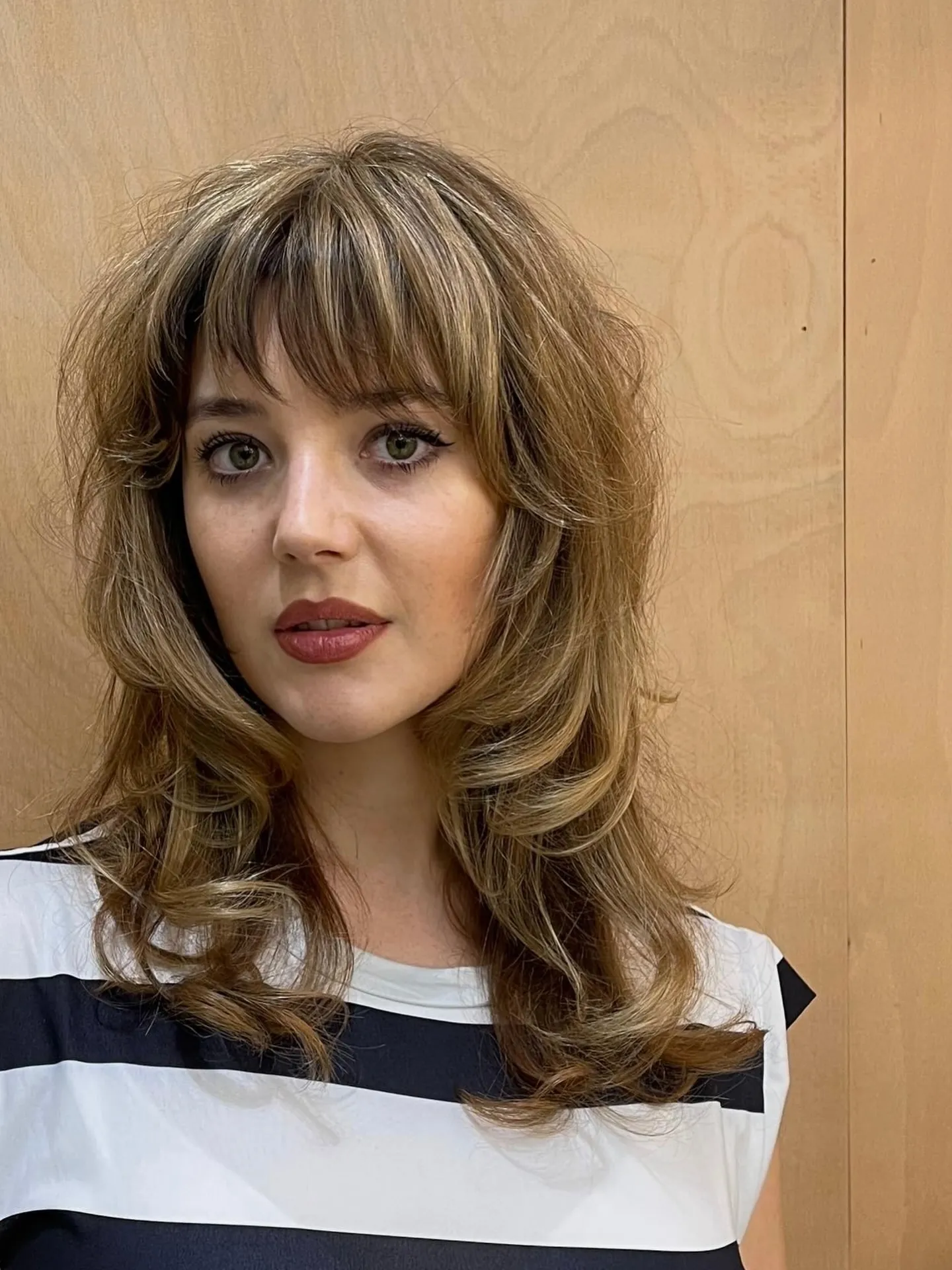
Feathered layers start high enough to create lift through the sides, then taper into a fuller shoulder-length perimeter. A large round brush will show the separation without making the ends look thin.
Wavy Shoulder Layers
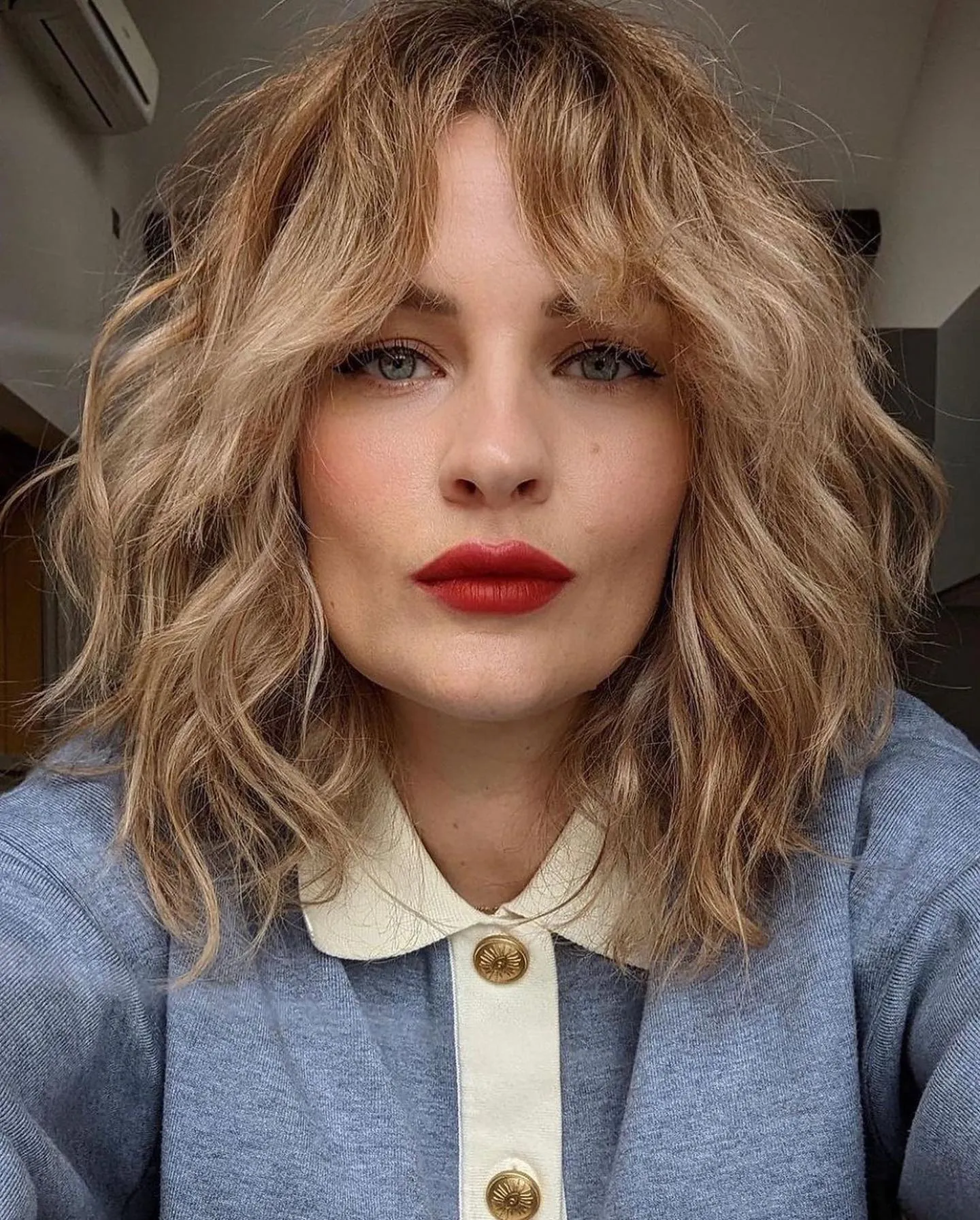
Soft waves make the chunky shoulder layers easy to see because each bend lands at a different length. This works well for medium-density hair that needs movement but still looks better with a substantial bottom line.
Short Shag Cut
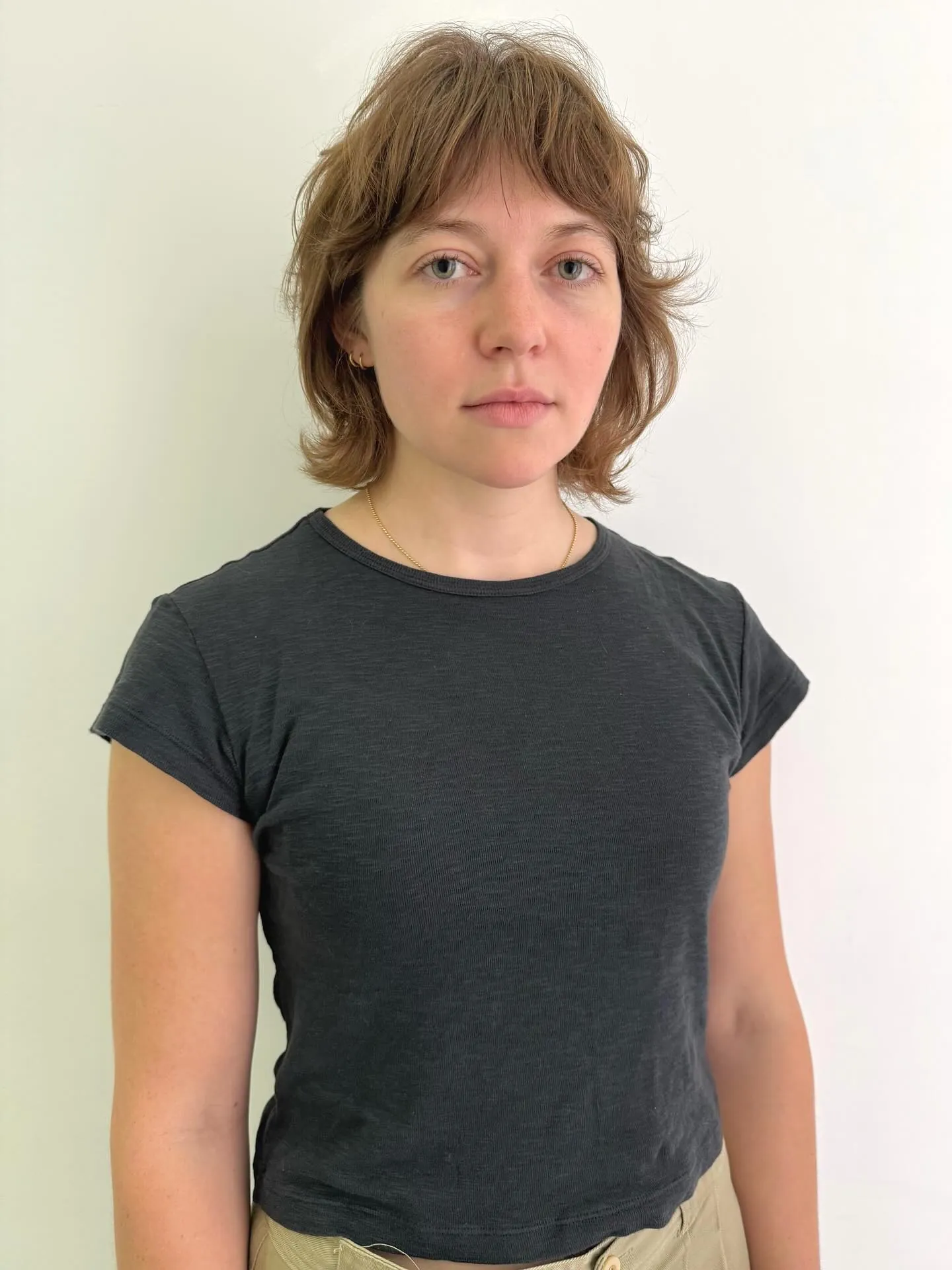
The short shag keeps most of its volume around the ears and crown, which gives the cut shape without needing much length. A small amount of texture cream is enough to keep the flipped pieces separated.
Rounded Shag Layers

A rounded fringe and curved side layers give this shag a fuller outline instead of a wispy one. That makes it a useful option for straight to softly wavy hair that benefits from visible structure.
Best for: Medium to thick hair that can hold visible separation between the layers.
Wispy Mullet Layers
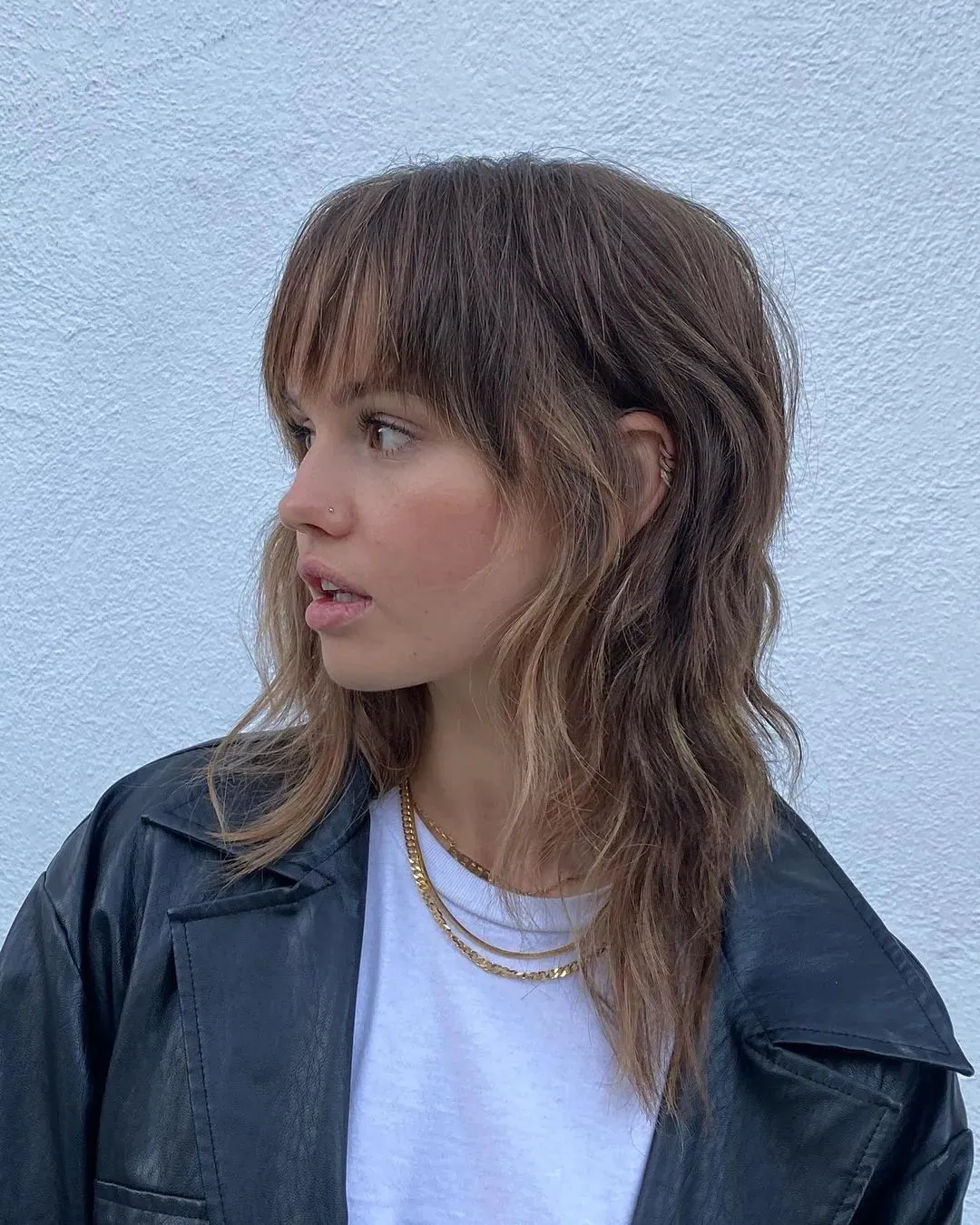
The short crown and longer back create a soft mullet outline, while the wispy fringe stops the front from feeling heavy. Air-drying will keep the separation more relaxed than a polished blowout.
Soft Shag Layers
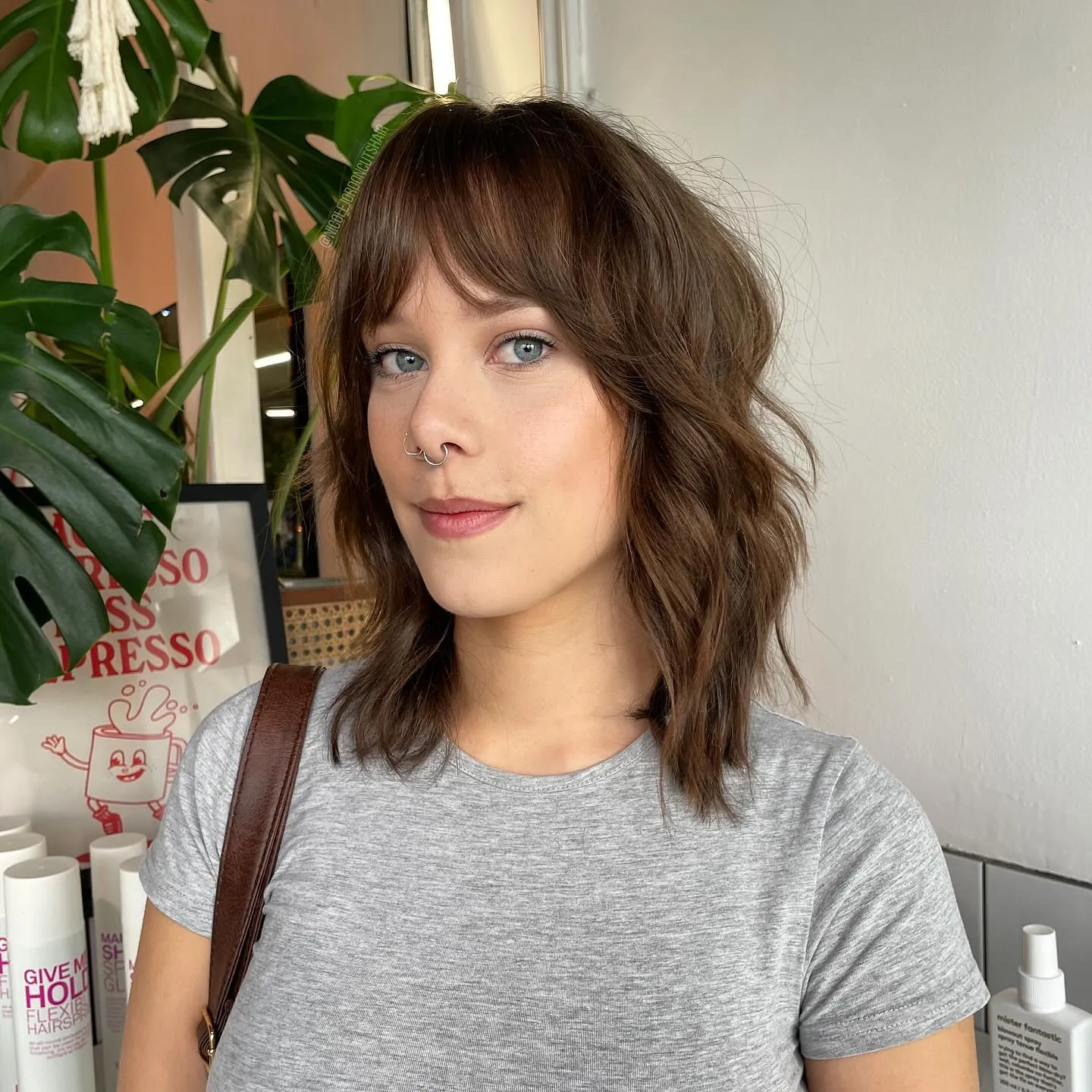
The layer changes are noticeable without being extreme, so the shoulder-length shag keeps an easy, wearable shape. Loose bends around the cheek and jaw help the shorter sections sit away from the face.
Choppy Platinum Shag

Choppy pale layers create strong separation from the fringe through the ends, making the shag look deliberately piecey. Keep styling product light so the fine tips do not clump together.
Long Feathered Layers
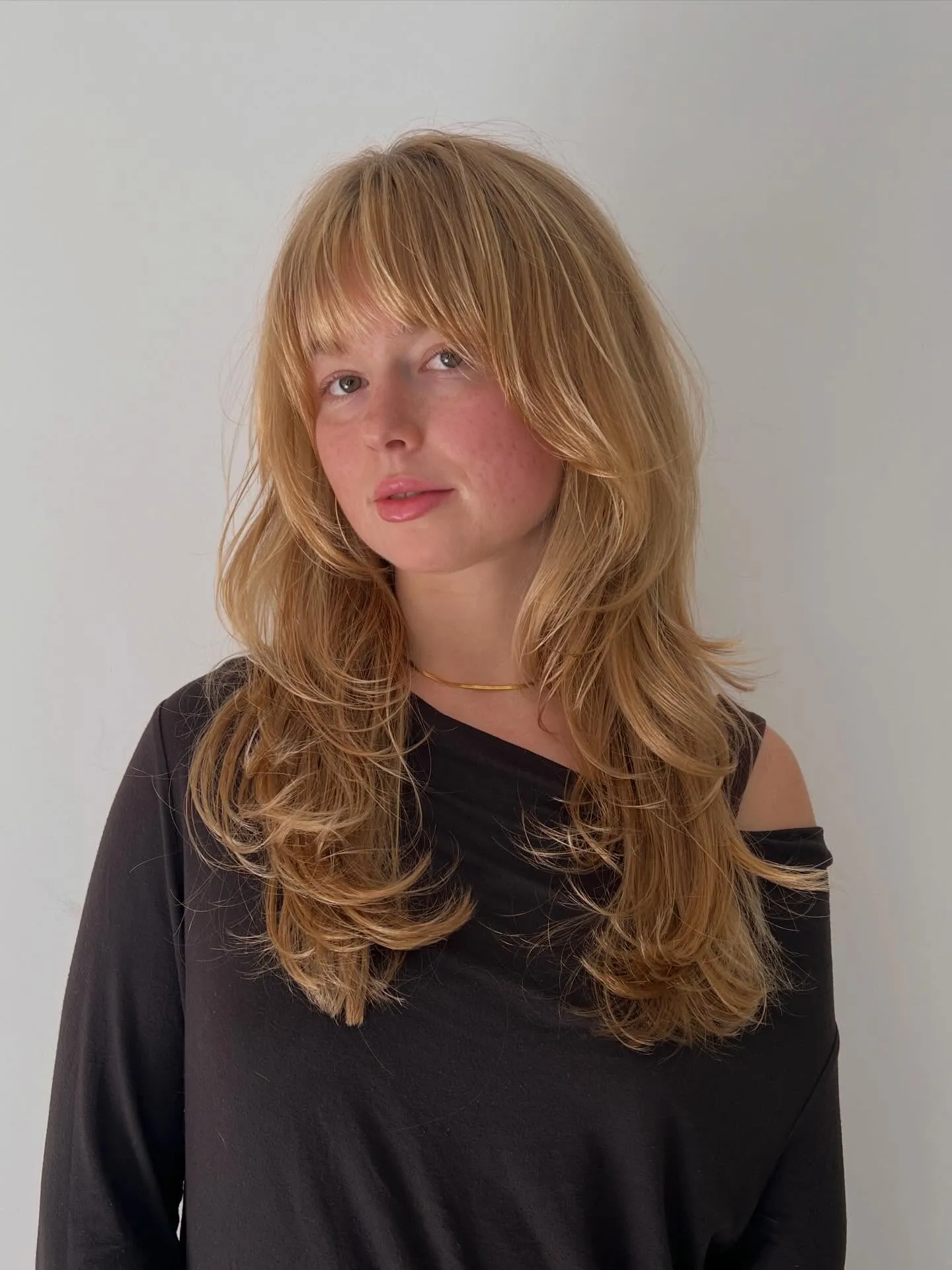
Long feathered sections turn away from the face and keep plenty of weight through the bottom. This is a good way to get visible layering on long hair without sacrificing the overall length.
Two-Tone Shag

The darker crown and lighter lower pieces make the shag’s uneven lengths even easier to read. The short fringe and broken-up ends suit a deliberately undone finish rather than a smooth, rounded blowout.
For root volume: Lift only the crown with a round brush so the lower lengths stay full.
Flipped Feathered Layers
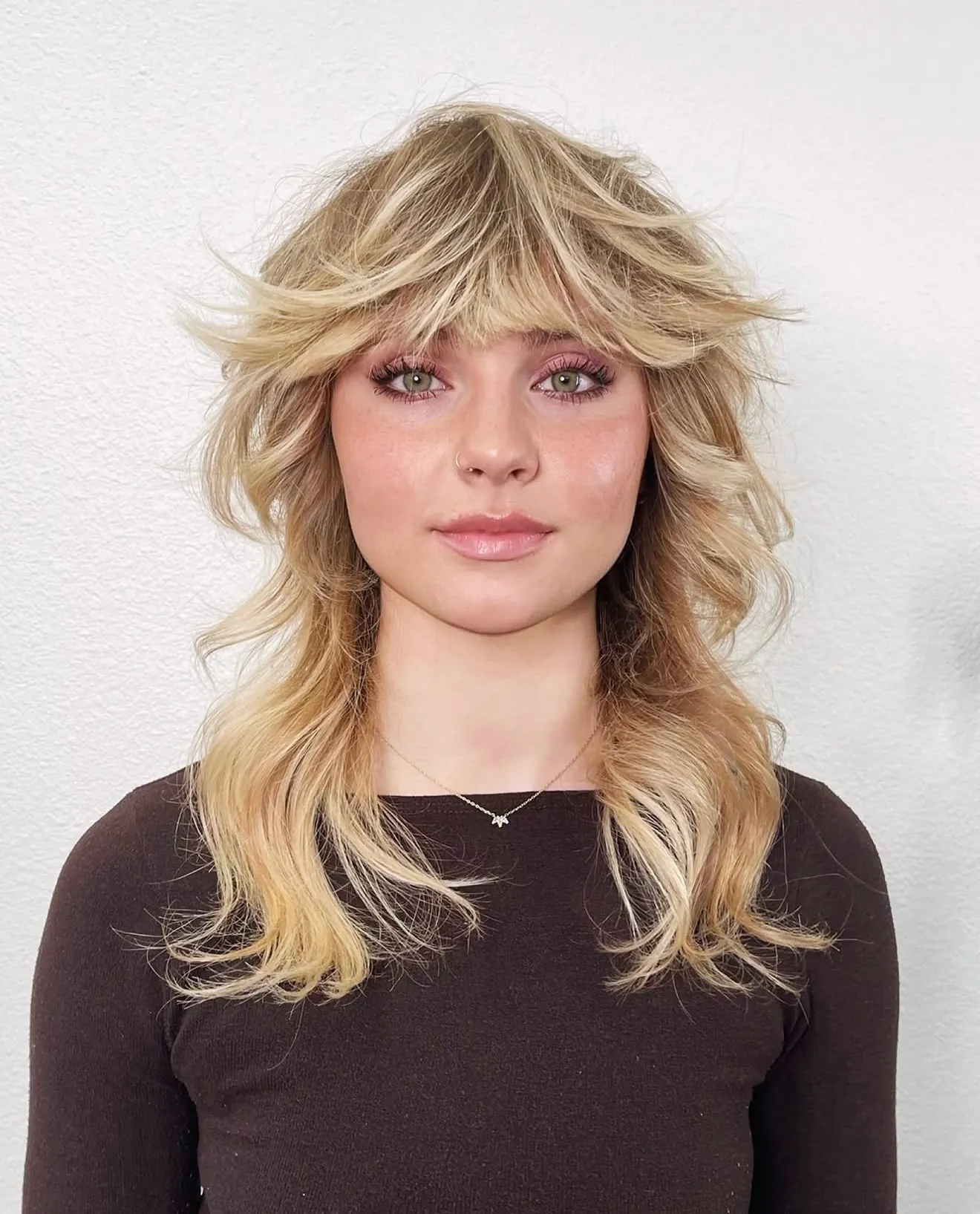
The outward flip exaggerates the different layer levels and gives the cut width through the cheek and shoulder area. Large round-brush sections will recreate that shape more easily than a tight curling iron pattern.
Long Face-Framing Layers

Long face-framing pieces begin around the cheek area and blend into the lengths without removing too much weight. That keeps the haircut full while still giving the front more movement and shape.
Shoulder-Length Shag
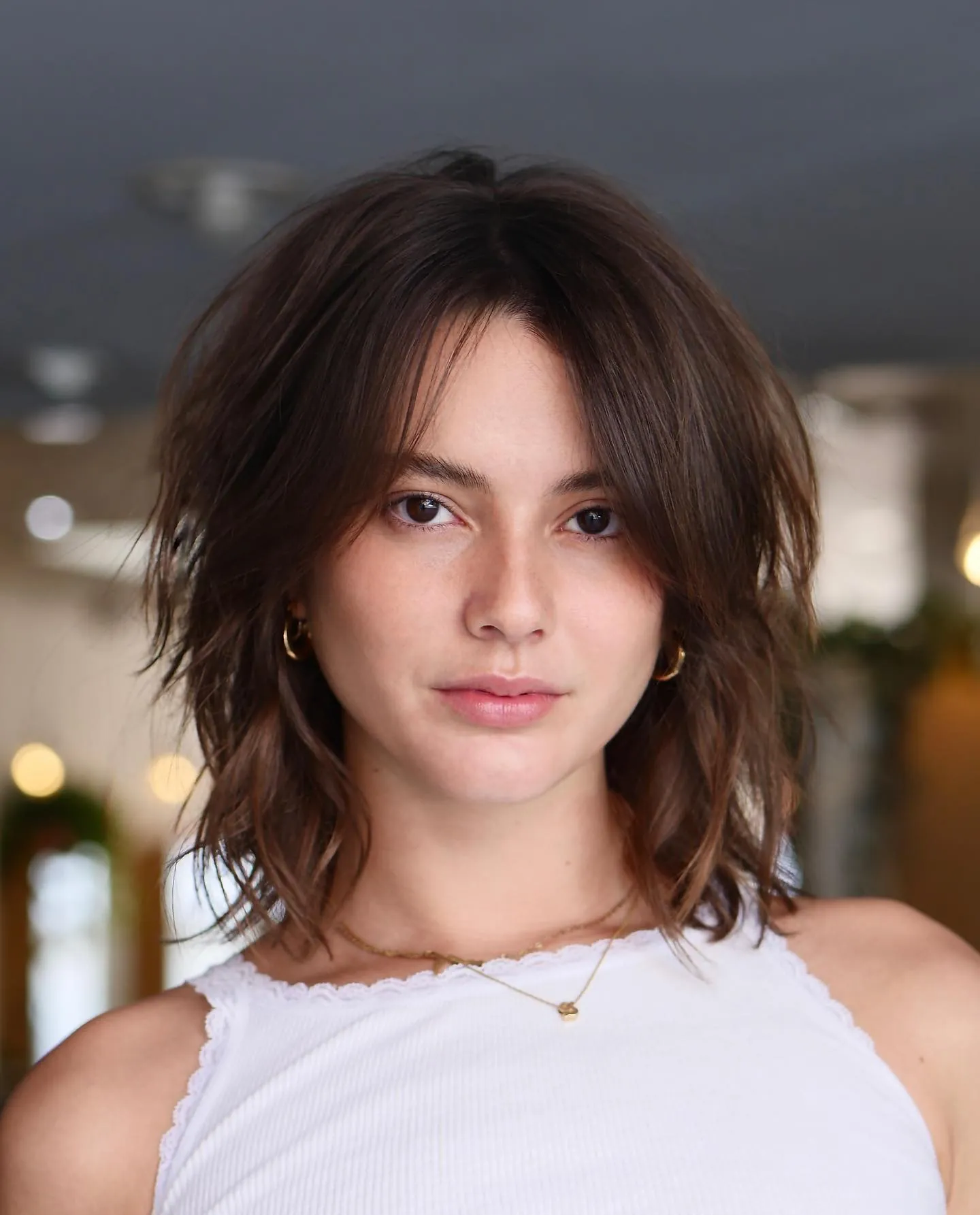
A center opening through the fringe lets the shorter shag layers frame both sides of the face. The shoulder-length perimeter keeps the cut practical while the top layers provide most of the movement.
Layered Cut With Bangs
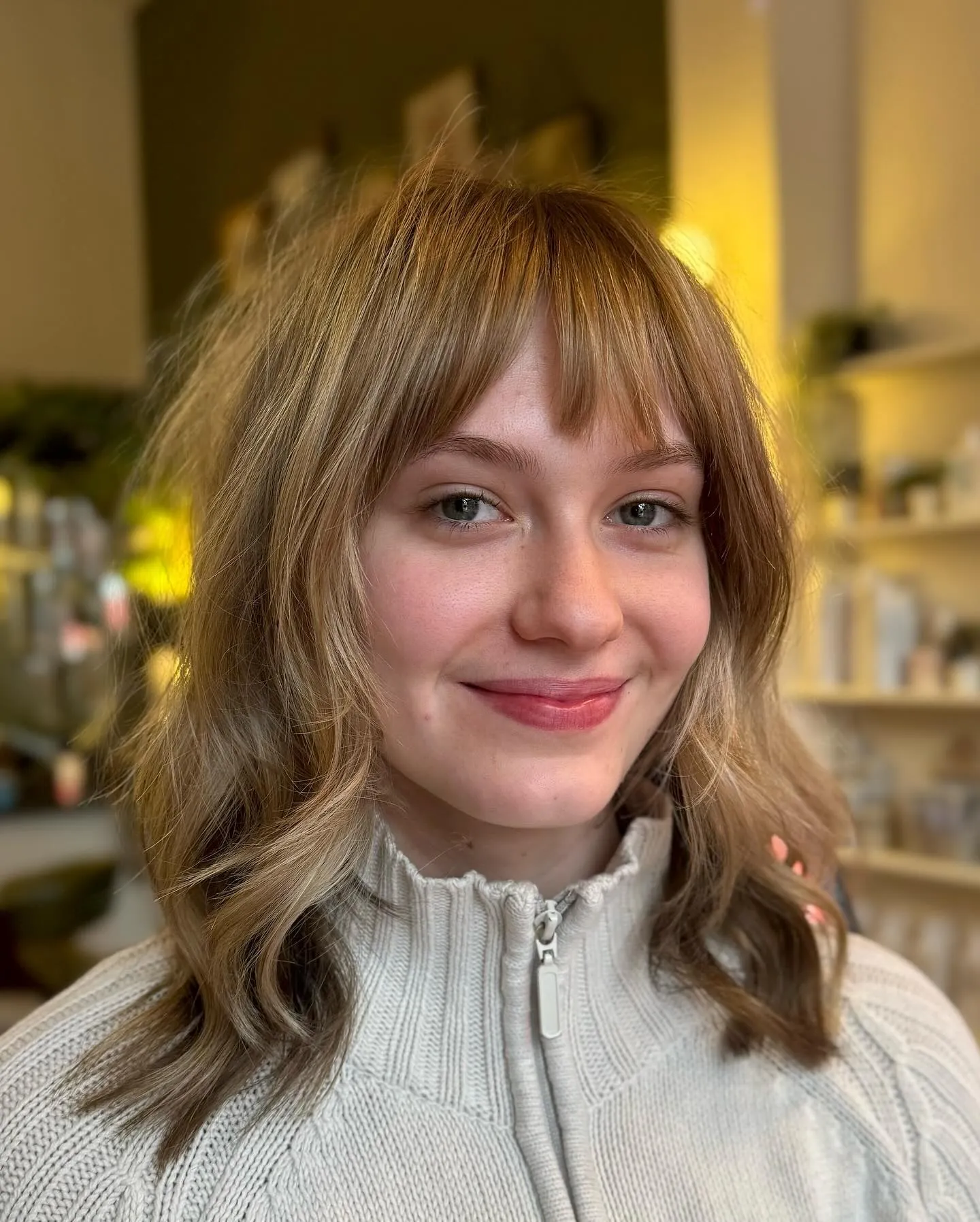
The full fringe creates the shortest point of the cut, then the wavy layers step down through the sides. This works when you want a layered outline that still feels soft rather than sharply disconnected.
Choppy Midi Shag

The broken-up midi layers sit around the jaw and shoulders, creating texture without a long perimeter pulling the shape down. A loose blow-dry will keep the choppy ends visible but not stiff.
Ask your stylist: Keep enough weight at the perimeter so the shag does not turn wispy.
Chunky Shag Transformation
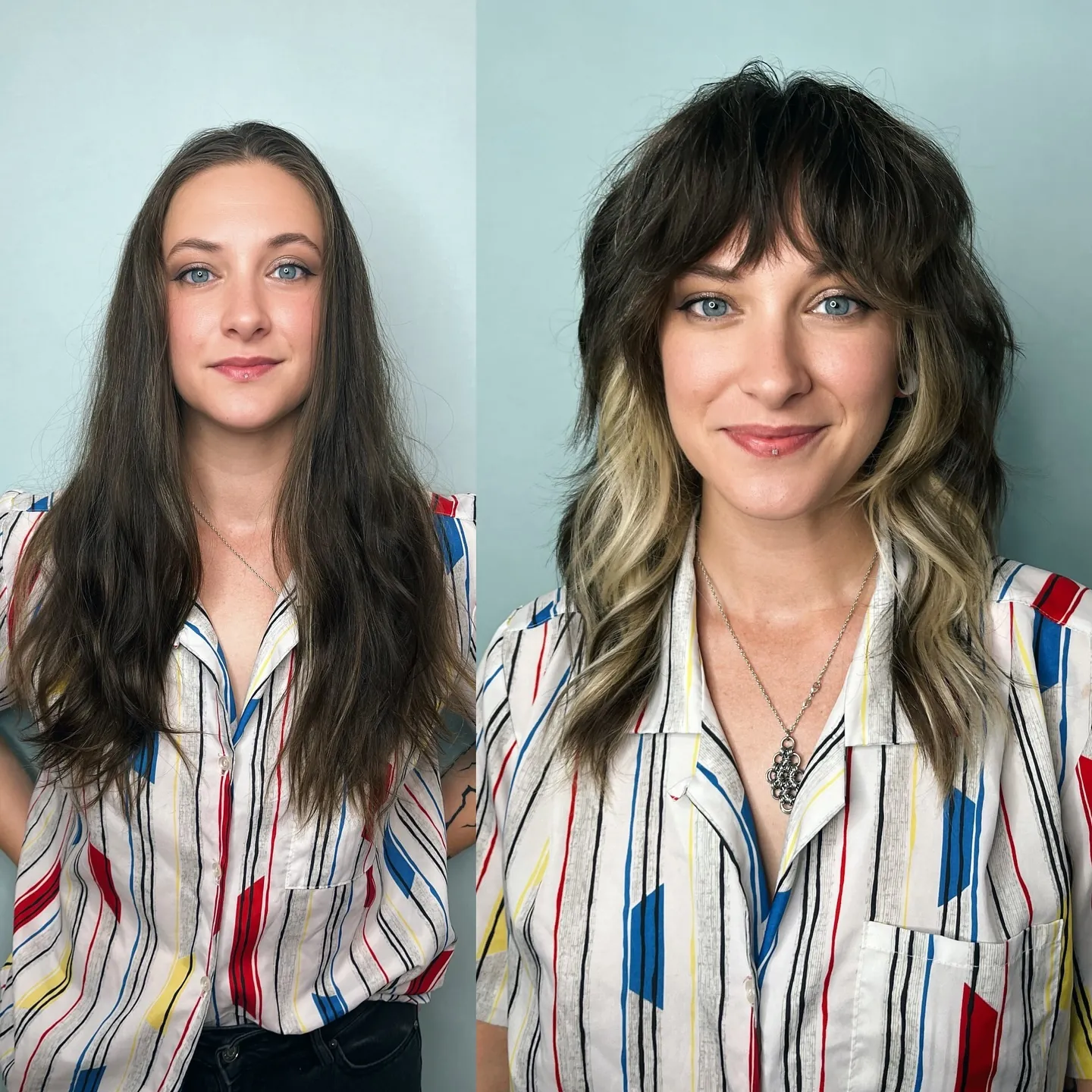
The transformation shows how much shape comes from removing length around the crown and adding a full fringe. The lighter lower panels make the new chunky sections especially easy to see, so minimal styling is enough.
Voluminous Butterfly Layers
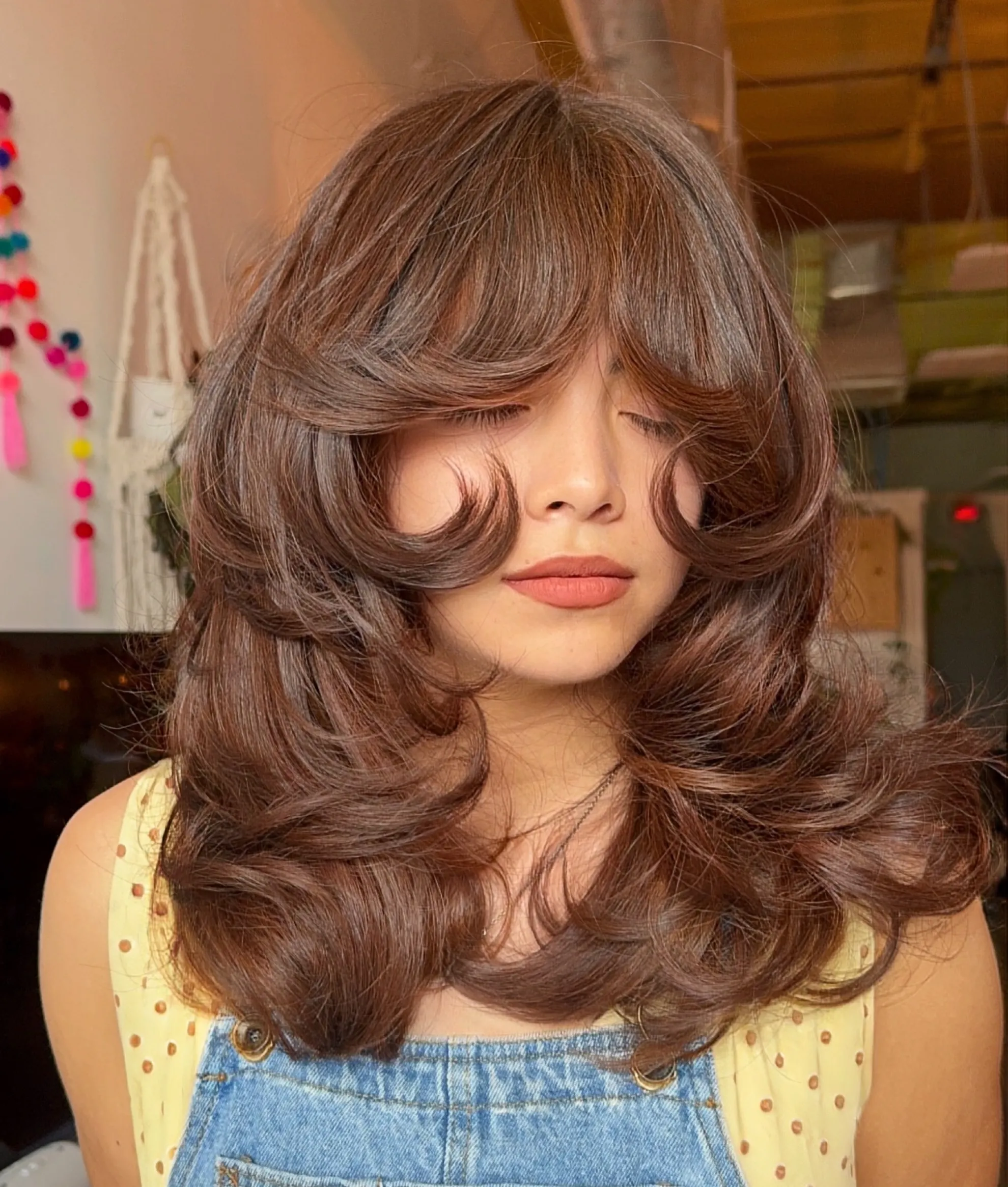
Large, rounded front layers sweep away from the face and create the classic butterfly shape through the upper lengths. Keep the longest sections dense so the volume stays balanced from top to bottom.
Long Layers With Fringe
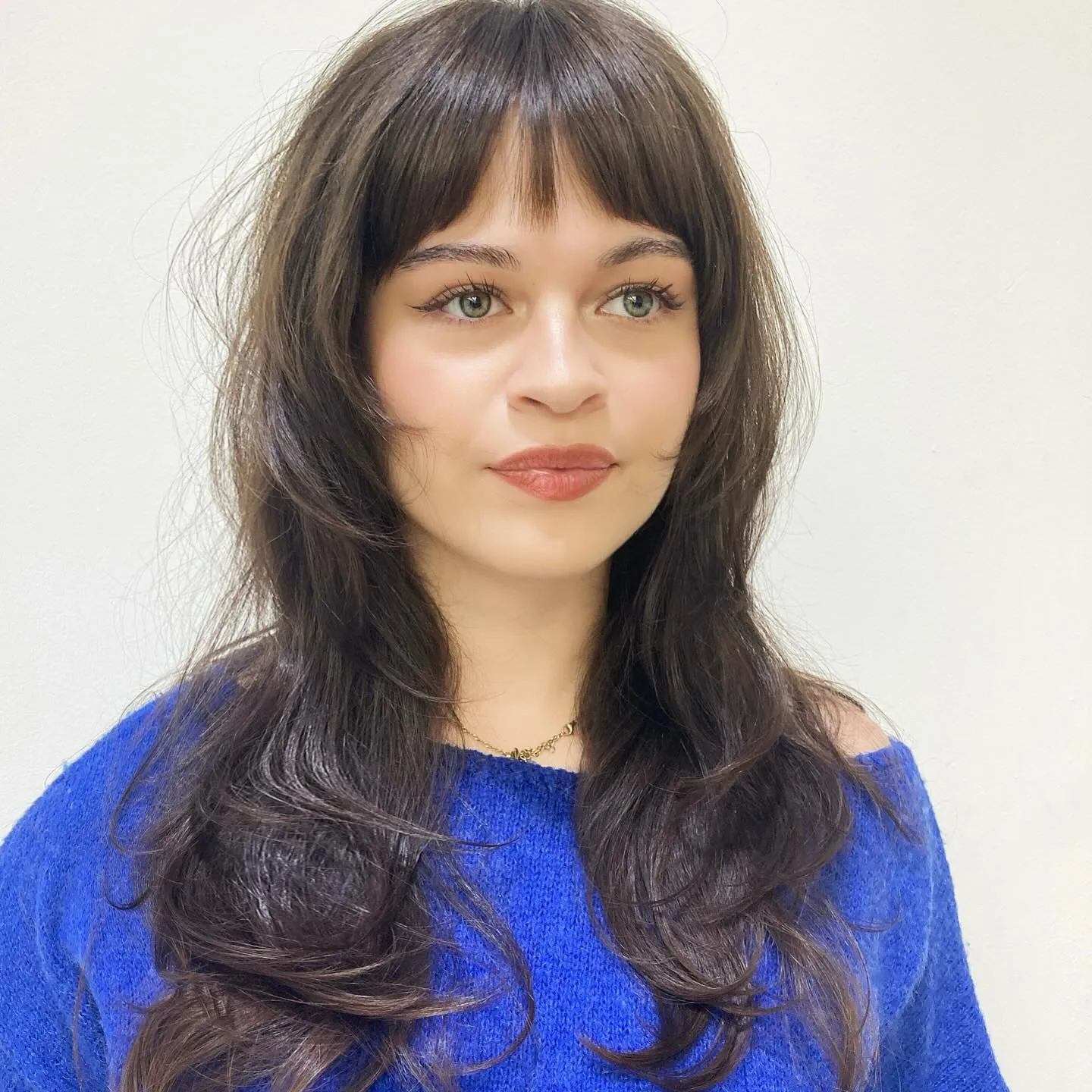
The short fringe gives the long layered cut a clear starting point, while curved ends add movement through the lower lengths. A soft blowout keeps the layers connected instead of making them look overly chopped.