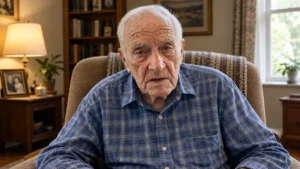

At 52, Charle had everything he once believed would make him happy. He had a corner office, a good salary, and the respect he had spent most of his adult life trying to earn. Yet he remembers sitting behind his desk, looking out the window, and wondering why everything still felt so empty.
Now 77, Charle has spent more than 50 years learning a lesson he wishes he had understood much earlier. He chased money, success, approval, and the promise of a better life, always believing happiness would arrive after his next big achievement.
Looking back, Charle recognizes how much time he spent preparing to enjoy life instead of actually enjoying it. He cannot change those years, but the mistakes, regrets, and experiences have given him a different view of what matters.
1. Happiness Was Never Waiting at the Next Finish Line

For most of his adult life, Charle believed happiness was something he had to earn. He told himself he would finally relax when he received a promotion, paid off his mortgage, or saved enough money to retire. Every major goal seemed like the answer to whatever was missing.
The strange thing was that he accomplished many of those goals. He earned promotions, became financially secure, and eventually retired from a career that had consumed decades of his life. But the satisfaction never lasted as long as he expected.
Once Charle achieved something, his mind immediately found another reason to keep pushing. A bigger title, more savings, or a new concern would replace whatever he had just finished. He was constantly moving the point where he believed happiness would begin.
At 77, Charle understands that there is no final achievement that makes every problem disappear. Life keeps changing, and new concerns will always appear. If happiness depends on having nothing left to worry about, it may never arrive.
2. His Corner Office Cost More Than He Realized

Charle grew up in a family that knew what it meant to struggle financially. His father worked in a factory and often returned home exhausted, with worn hands and little energy left. What bothered Charle most was watching other people treat his father as though his hard work meant nothing.
He was around 10 or 11 when he decided he would never let people look down on him that way. He wanted to become somebody important, someone whose position and achievements would demand respect. That decision shaped much of his adult life.
Charle worked 60 or 70 hours a week at times, convinced that every extra hour was bringing him closer to the life he wanted. By 52, he had become a vice president with an impressive office and the kind of professional standing he once dreamed about.
Yet when he looked around that office, he felt an emptiness he could not explain. He had sacrificed family dinners, baseball games, and ordinary evenings at home to reach a position that did not give him the peace he expected.
Success itself was not the mistake. The mistake was treating professional success as proof that his entire life had value. Charle had built an impressive career without giving enough attention to the people and experiences that made life worth living.
3. He Spent Decades Trying to Prove He Was Enough

For years, Charle told himself he wanted money and respect. Those were the things he worked for, worried about, and measured his progress against. But eventually, he recognized something deeper beneath those goals.
What he really wanted was to feel that he mattered. He wanted to believe he had value, that people could respect him, and that he had earned his place in the world. He had confused those basic human needs with the things he could put on a résumé.
A job title can tell people what position someone holds, but it cannot decide that person’s worth. A large bank account can provide security, but it cannot guarantee personal satisfaction. Other people’s approval can feel wonderful, but it can disappear just as quickly.
Charle was 73 when this lesson finally began to settle in. He had spent nearly five decades trying to earn a sense of worth that he never needed a promotion to possess.
He wishes he had understood earlier that being ordinary does not make somebody unimportant. His father deserved respect whether anyone recognized his work or not. Charle deserved that same basic dignity long before he became a vice president.
4. Providing for His Wife Was Not the Same as Being Present

For much of his marriage, Charle thought being a good husband meant working hard and providing everything his family needed. He wanted his wife to have a comfortable house, reliable cars, and freedom from the money problems he remembered from childhood.
He believed that if he earned enough, he was doing his part. The bills were paid, the house was maintained, and the family had what it needed. In his mind, those things showed how much he cared.
But his wife needed something Charle was not giving her. She wanted conversation, attention, companionship, and a husband who could sit beside her without thinking about the next day at work.
When Charle was around 48, their marriage nearly ended. He had spent so much time trying to build a good life for them that he had become absent from the life they already shared.
Even when he was physically home, he was often distracted or exhausted. He had mistaken financial support for emotional closeness, and it took him far too long to recognize the difference.
Money can help build a comfortable home, but attention helps make that home feel loving. Charle learned that a person can provide everything a family needs on paper and still leave the people closest to them feeling alone.
5. The Ordinary Moments He Missed Were Not Ordinary After All

Charle missed dinners, family activities, and baseball games because he believed work was more important at the time. There was always another meeting to attend, another problem to solve, or another responsibility that seemed too urgent to put aside.
He assumed there would be plenty of time for everything else later. Once his career became stable, he would slow down and enjoy being a husband and father. That was the promise he kept making to himself.
But children do not stay young while their parents finish building careers. Family routines change, relationships grow, and opportunities disappear without warning. Nobody can simply return to an earlier year and collect the moments they missed.
Charle does not believe every parent should feel guilty for working long hours. Many people have little choice because their families depend on the income. His regret comes from the times he kept chasing more after his family already had enough to live reasonably well.
At 77, Charle remembers how important those missed evenings became in hindsight. He would gladly trade some of the recognition he received at work for more memories of being present with the people he loved.
6. Comparing His Life With Others Only Made Him Restless

As Charle grew older, he noticed how differently people responded to the lives they had built. Some friends had plenty of money but remained upset about what somebody else owned. Others had far less and seemed genuinely satisfied.
One of his friends is 84 and still worries about having a less impressive car than his neighbor. Charle finds it surprising that after so many years, something as small as another person’s vehicle can still take up so much of his friend’s attention.
He also knows people who seem unable to enjoy anything because they spend their days thinking about what they lack. Some of their concerns are real, especially when health or money is tight. But constant comparison can make those concerns feel even heavier.
For much of his life, Charle did the same thing. He judged his progress by looking at people who earned more, held better positions, or received greater recognition. There was always somebody ahead of him.
Eventually, he realized that comparison creates a contest nobody can permanently win. Even if someone becomes the richest person on the street, another person somewhere will have more.
Charle now believes a better question is whether a person’s life meets their needs and reflects what matters to them. Another person’s success does not take anything away from the good things already present in someone’s own life.
7. More Money Solved Problems, but It Never Ended His Worries

When Charle was younger, he believed financial security would eventually remove most of his fear. He remembered his father’s struggles and wanted to protect his family from the uncertainty he had experienced.
At 58, Charle finally paid off his house. It was a major accomplishment, and he expected to feel an enormous sense of relief. For a while, he was proud of what he had achieved.
Then his worries simply changed direction. He started thinking about retirement savings, future health care costs, and what would happen if the stock market fell. The concern he had carried for years found something new to attach itself to.
That experience taught Charle that money and peace of mind are connected, but they are not the same thing. Financial security can reduce real hardships and give people more choices. Still, a person who constantly expects disaster may struggle to enjoy even a comfortable situation.
Charle has learned to separate problems that need action from fears that grow stronger through repeated worrying.
| What Charle Used to Worry About | What He Knows Now |
|---|---|
| Earning more money | Enough dependable income matters more than endless growth |
| Paying off every debt | Reducing debt helps, but it does not remove every fear |
| Having a perfect retirement plan | A realistic plan needs room for unexpected events |
| Keeping up with successful people | Personal needs should guide financial choices |
| Being ready for every possible problem | Preparation helps, but total certainty is impossible |
At 77, Charle still believes in saving, planning, and taking money seriously. He simply no longer believes that reaching a certain financial number will automatically create lasting happiness.
8. Some of the Happiest People Charle Knows Have Very Little

One of Charle’s friends, Earl, is 86 years old. He lives in a small apartment, depends on a fixed income, and has health problems that make many everyday tasks more difficult.
Yet Earl is one of the most content people Charle knows. He reads, asks questions, stays curious, and finds something worth appreciating in ordinary days. He does not seem interested in proving that his life is more impressive than somebody else’s.
Watching Earl has taught Charle something he could never learn from a promotion. A person can have modest circumstances and still experience genuine happiness, connection, and purpose.
Of course, Charle would never suggest that money or health does not matter. Poverty can create enormous stress, and serious illness can change almost every part of daily life. Earl’s positive attitude does not erase those difficulties.
What impresses Charle is that Earl refuses to measure his entire life by what has become harder or what he no longer owns. He still pays attention to what remains possible.
Charle spent decades trying to build an extraordinary life. Earl reminds him that an ordinary day can be meaningful when a person remains interested in living it.
9. Real Freedom Came When He Stopped Needing Everyone’s Approval

When Charle was younger, criticism could ruin his entire day. If somebody questioned his judgment or failed to recognize his work, he would carry that feeling home and keep thinking about it.
He wanted people to respect him, agree with him, and see him as successful. Their opinions had far more control over his emotions than he understood.
Getting older slowly changed that. Charle began to recognize that other people’s opinions are not always accurate, fair, or even worth responding to. Someone can dislike a decision without making that decision wrong.
He also realized that trying to please everybody often means disappointing yourself. There will always be people who think someone should earn more, accomplish more, own more, or live differently.
At 77, Charle is much more comfortable being the person he actually is. He can look at his age, his mistakes, and his limitations without feeling the same need to explain himself.
For Charle, real freedom means having enough confidence to make reasonable choices without asking the whole world to approve. That freedom has become more valuable than the impressive titles he once chased.
10. A Peaceful Life Still Needs People, Purpose, and Independence
For years, Charle focused on financial success as though it were the foundation of everything else. Now he recognizes that a satisfying life depends on several ordinary things working together.
A safe place to live matters. So does having somebody to speak honestly with, enough mobility to participate in daily activities, and some control over how time is spent.
Those things may not sound exciting, especially compared with a large house or a prestigious career. But they affect how an ordinary Tuesday feels, and ordinary Tuesdays make up a large part of life.
Charle also understands that independence does not mean refusing help. A person using a walker, accepting transportation, or asking family for assistance can still make meaningful decisions and enjoy personal freedom.
Looking back, Charle would measure a successful life differently.
| What Charle Once Measured | What Matters More to Him Now |
|---|---|
| Job title | Feeling useful and respected |
| Size of his house | Having a safe, comfortable home |
| Number of professional contacts | Having people who genuinely care |
| Total savings | Being able to meet needs without constant fear |
| How busy he stayed | Whether his time felt meaningful |
| Other people’s opinions | Having peace with his own choices |
Charle wishes he had paid attention to these things much earlier. They do not guarantee a perfect life, but they provide something that impressive possessions cannot replace.
11. He Had to Stop Treating Every Day Like a Race

For decades, Charle’s schedule was controlled by meetings, deadlines, and responsibilities. He rarely had a quiet moment without thinking about what needed to happen next.
Even outside the office, he measured his days by how much he accomplished. Rest felt unproductive, and sitting quietly often made him think he should be doing something useful.
Retirement gave Charle time, but it also forced him to reconsider what made that time worthwhile. Without a job title or packed schedule, he had to face a question he had avoided for years: Who was he when nobody needed him at the office?
He gradually understood that staying busy and living meaningfully are different things. A full calendar is not always a fulfilling one, especially when it leaves little room for connection or enjoyment.
Charle now sees value in simple activities such as reading, having a conversation, taking a walk when possible, or learning something new. These things may not impress anybody, but they can make the day feel complete.
A useful life does not always have to be a busy life. Charle has learned that sometimes there is real value in having enough space to notice the people and experiences around him.
12. Worrying About Tomorrow Was Stealing His Happiness Today

Charle used to think constant worry was a sign that he was responsible. If he was thinking about every possible problem, he believed he was protecting himself and the people who depended on him.
But there is a difference between planning for the future and living in fear of it. Planning leads to practical action, while endless worrying often leaves a person feeling exhausted without changing anything.
Charle spent years preparing for retirement, only to discover that retirement came with its own concerns. Health, savings, family changes, and the passing of time can all create new uncertainty.
At 77, Charle cannot pretend those worries are meaningless. Growing older brings real challenges, and some situations require difficult decisions. But he no longer wants to surrender every pleasant afternoon to a problem that may never happen.
When something concerns him, he tries to think about what he can reasonably do. If he can make a plan, have a conversation, or take a useful step, that deserves his attention.
When there is nothing he can do today, Charle reminds himself that worrying for another six hours will not give him greater control. Learning to live with some uncertainty has been one of the hardest lessons of his later years.
13. The People Who Matter Most Rarely Care About His Achievements

When Charle thinks about the people who have stayed in his life, he realizes that their most meaningful moments rarely had anything to do with his career. They came from ordinary conversations, shared memories, family experiences, and simply spending time together.
His wife did not ask him to become a vice president so she could feel loved. She wanted a husband who listened and made time for her. Charle spent years confusing the life he could provide with the relationship she wanted them to share.
Friendship has taught him much the same lesson. People may admire a successful career, but strong relationships depend on care, honesty, and the willingness to show up.
As Charle has grown older, he has also seen friends pass away. Their absence has changed how he thinks about time, especially the hours he once gave away without questioning whether they were well spent.
He would now rather have a meaningful conversation with somebody he loves than spend another afternoon trying to impress people who barely know him.
At this stage of life, Charle is less interested in being remembered for what he achieved. He cares more about whether the people close to him felt appreciated while they had time together.
14. Life Does Not Have to Be Perfect to Be Good

For much of his life, Charle believed peace would arrive once everything was settled. He wanted the mortgage paid, the savings secured, the career completed, and every family concern resolved.
But there was never a point when every part of life was perfect. Something always needed attention, whether it was money, work, relationships, or health.
Charle eventually recognized how harmful that way of thinking had become. By waiting for the perfect situation, he had spent decades overlooking the good things already happening around him.
A meaningful life can include worries, mistakes, health problems, and unfinished goals. Someone can have a difficult week and still experience a pleasant conversation, a peaceful morning, or a moment of genuine happiness.
That does not mean ignoring problems or pretending everything is fine. It means refusing to believe that a problem in one part of life cancels the value of everything else.
At 77, Charle still has concerns and regrets. But he has become much better at recognizing when something good is happening instead of immediately looking for what is missing.
15. The Most Important Change Was Learning to Live Now

If Charle could speak to his younger self, he would not tell that young man to stop working hard or abandon his ambitions. He had good reasons to want financial security, especially after watching his father struggle.
Charle would tell him to make room for life while working toward those goals. He would remind him that his children would grow up, his marriage needed attention, and no amount of professional praise could replace time with the people he loved.
He would also explain that becoming somebody important was never the same as becoming somebody worthy. Charle already had value before he earned his first promotion, even though it would take him decades to believe it.
Most of all, he would encourage his younger self to stop postponing happiness until the next milestone.
There will always be something left to improve. The question is whether a person can recognize what is already good while still working to make other parts of life better.
What Charle Would Do Differently If He Could Start Again
Charle cannot go back and change the decisions he made at 25, 40, or 52. But he can put what he has learned into a few simple habits that might help somebody who is still caught in the same cycle.
| Charle’s Old Habits | What He Would Choose Instead |
|---|---|
| Working every extra hour possible | Protect regular time with family |
| Measuring success by promotions | Consider health, relationships, and peace |
| Comparing himself with others | Focus on personal needs and values |
| Worrying about every possible problem | Plan for real risks without living in fear |
| Waiting for retirement to enjoy life | Make room for enjoyment during working years |
| Seeking approval from everyone | Accept that not everybody will agree |
| Focusing on what was missing | Appreciate what he has while making improvements |
| Treating rest as wasted time | Allow quiet time without guilt |
None of these choices would have made Charle’s life free from mistakes. He would still have faced hard decisions, unexpected losses, and periods when work or family responsibilities demanded more than he wanted to give.
But he believes he would have felt more present during those years. And when he reached 77, he might have had fewer memories of rushing past experiences that deserved his attention.
What Charle Knows at 77 That He Wishes He Had Known at 27
More than 50 years have passed since Charle began trying to build a life that would finally make him feel successful. He has achieved things that once seemed impossible, and he has made mistakes that he still thinks about today.
Charle is grateful for the career he built and the security it helped provide. But he no longer mistakes those achievements for the full measure of a good life.
He knows that money matters, but it cannot replace love. He knows that respect feels good, but self-worth cannot depend entirely on other people’s opinions. And he knows that being busy can make a person feel important while quietly pulling them away from the moments that matter.
Perhaps the biggest lesson Charle learned is that people do not have to finish building their lives before they are allowed to enjoy them. An ordinary afternoon can be appreciated even when there are goals, responsibilities, and problems left to solve.
Charle is 77, and he is still learning how to do that. Some old habits remain, and there are days when he catches himself worrying about things he cannot control.
But he has stopped treating happiness as a reward waiting somewhere in the future. He wants to notice the good things that are still here, spend time with the people who matter, and make better use of whatever years remain.