
Layered Haircuts for Thick Hair: 19 Fresh Ideas
Thick hair behaves better when the layers do the heavy lifting.
KEY TAKEAWAYS
- Strategic layers remove internal weight from thick hair, helping the cut move freely without sacrificing the naturally full perimeter.
- Face-framing, shag, butterfly, and long graduated layers can redistribute density differently depending on where the hair feels heaviest.
- Thick layered cuts usually hold their shape best with regular trims, especially when shorter crown or face pieces begin to grow out.
Long Face-Framing Layers
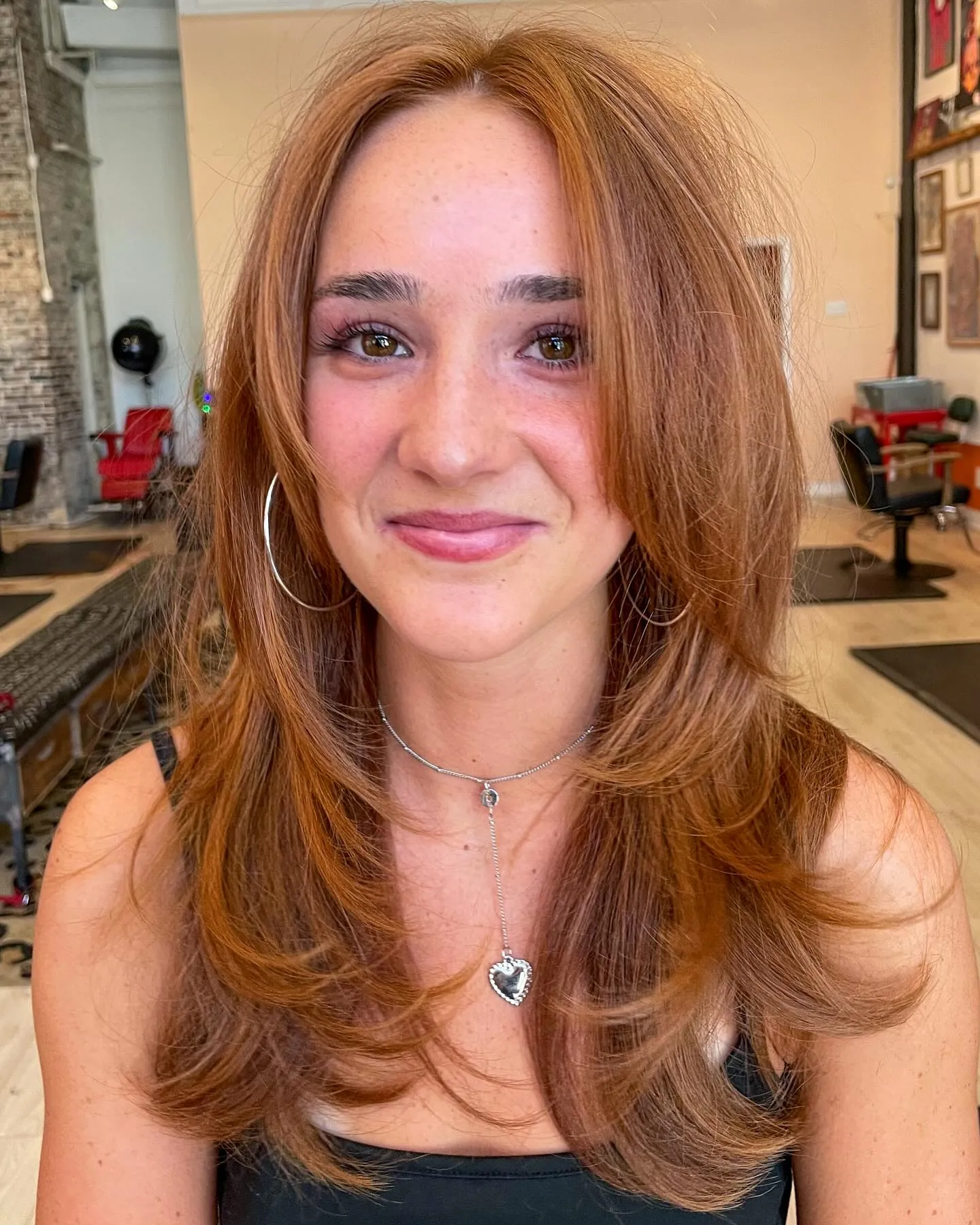
Long face-framing layers take weight away from the front of dense hair while keeping the overall length full. A round-brush finish turns the shorter pieces outward so the cut looks airy rather than heavy around the cheeks and shoulders.
Butterfly Layers With Bangs
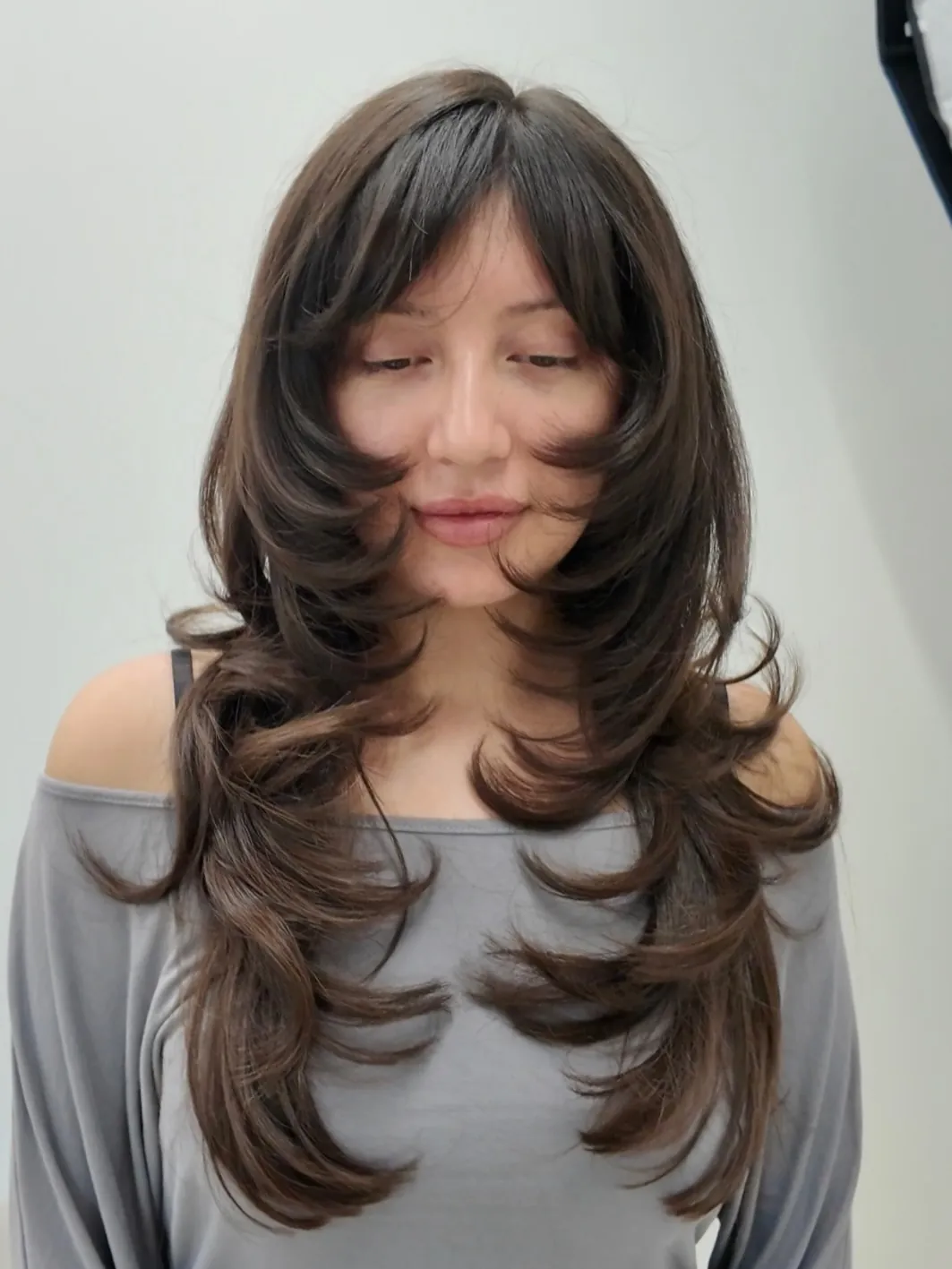
A butterfly shape works especially well on thick hair because the shorter top layers create movement without sacrificing the long perimeter. The curtain fringe blends into the face-framing pieces, so there is no blunt wall of hair around the face.
Long Layers With Fringe
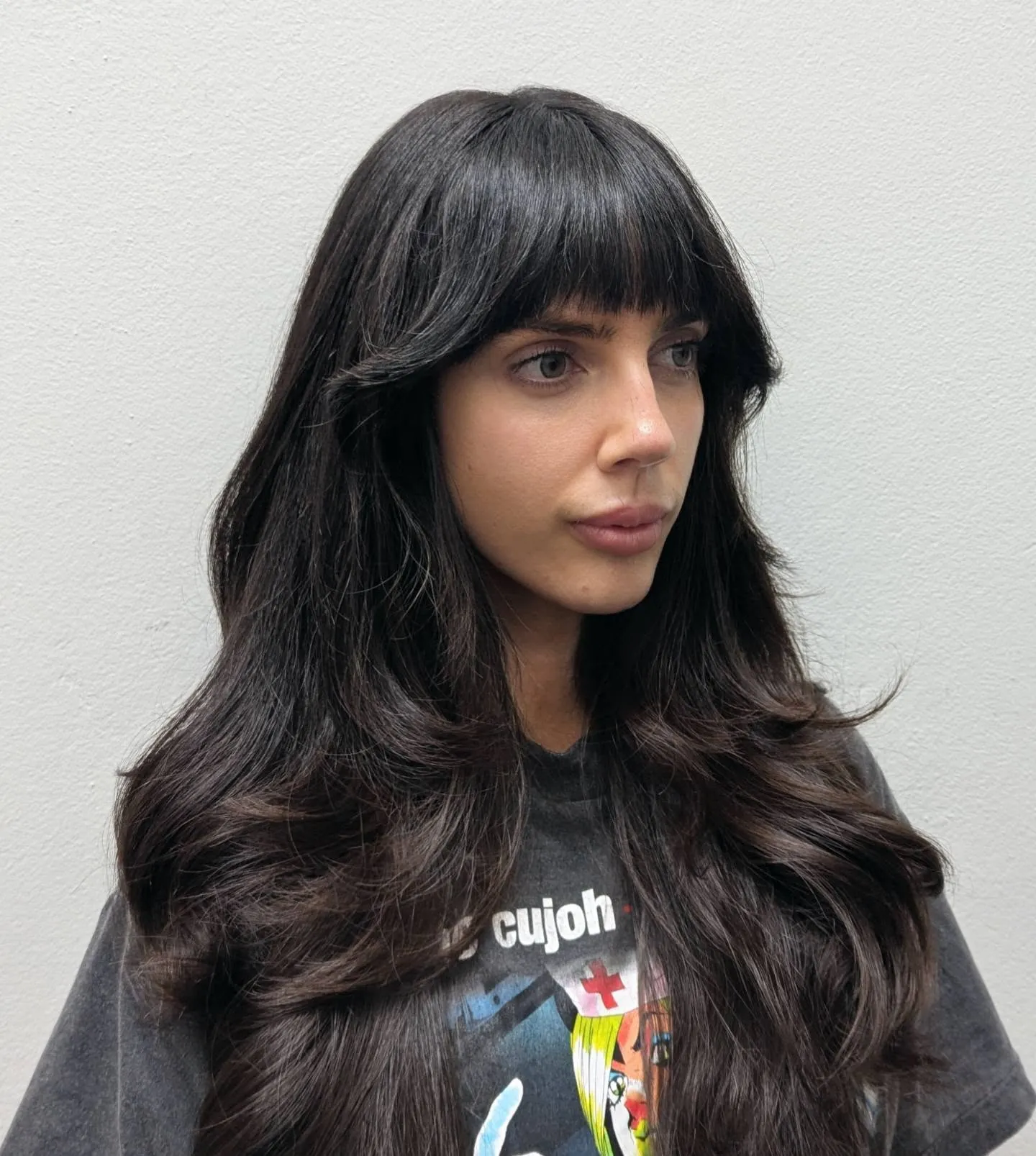
Full fringe gives this long layered cut a stronger outline, while the sweeping lengths underneath break up the density through the midsection. This is a useful balance when thick straight hair tends to sit flat at the crown and bulky at the ends.
Ask your stylist: Keep the fringe soft enough to blend into the side layers.
Rounded Butterfly Layers
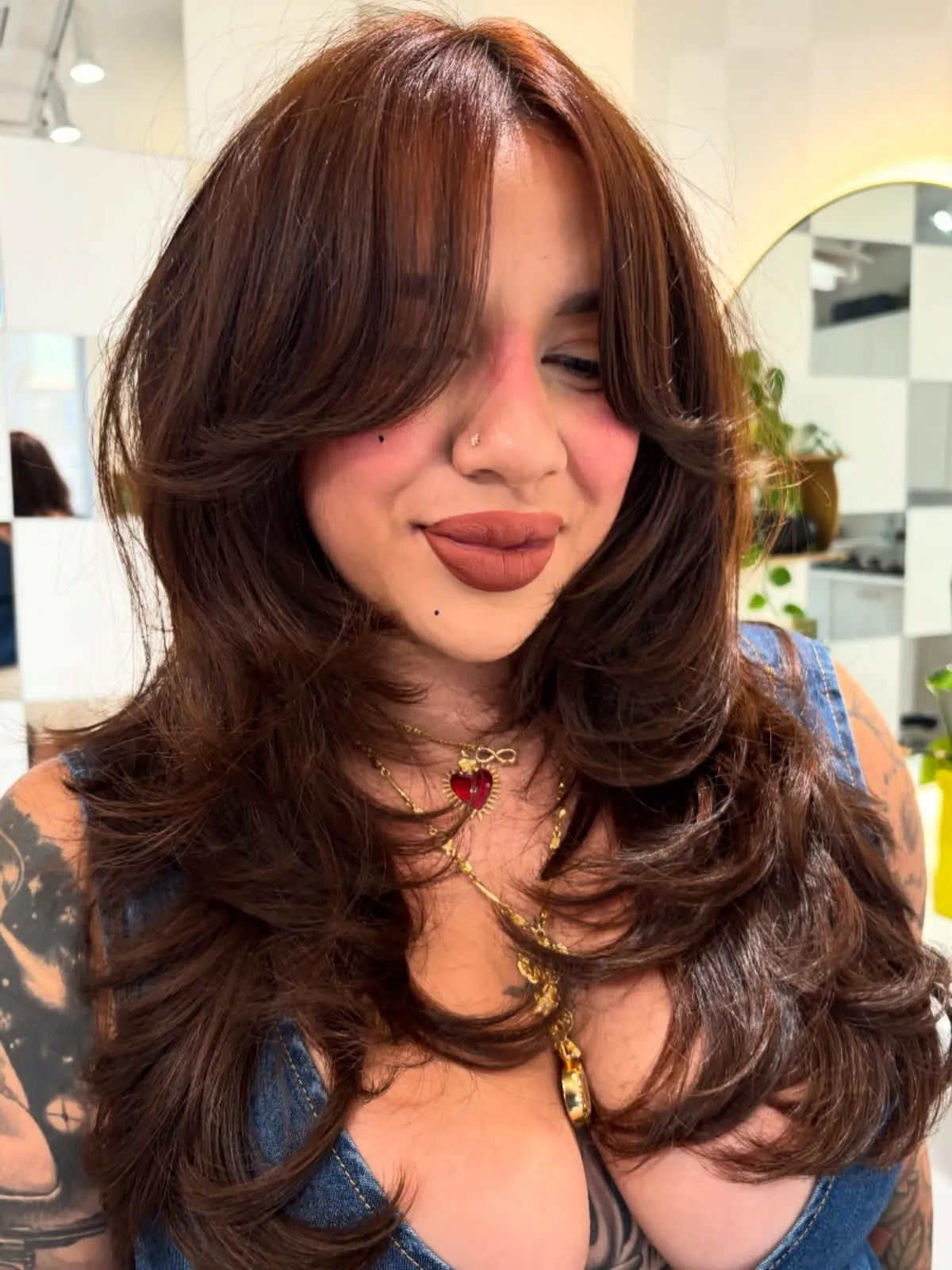
Rounded layers lift thick hair away from the face and let the ends curl in different directions instead of stacking together. The center-parted front pieces keep the shape open, which stops all that volume from collecting around the lower half.
Wavy Shoulder Layers
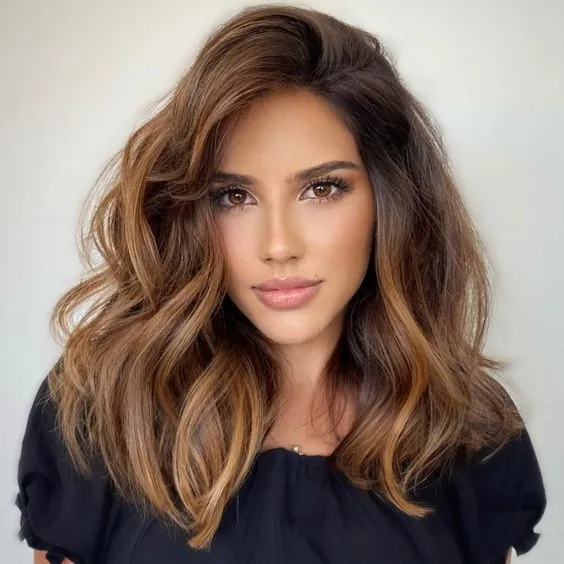
Shoulder-length layers give dense wavy hair room to expand without turning the outline triangular. The side-swept volume and broken-up ends keep the cut broad and soft through the top rather than concentrated at the bottom.
Curly Shag Bob
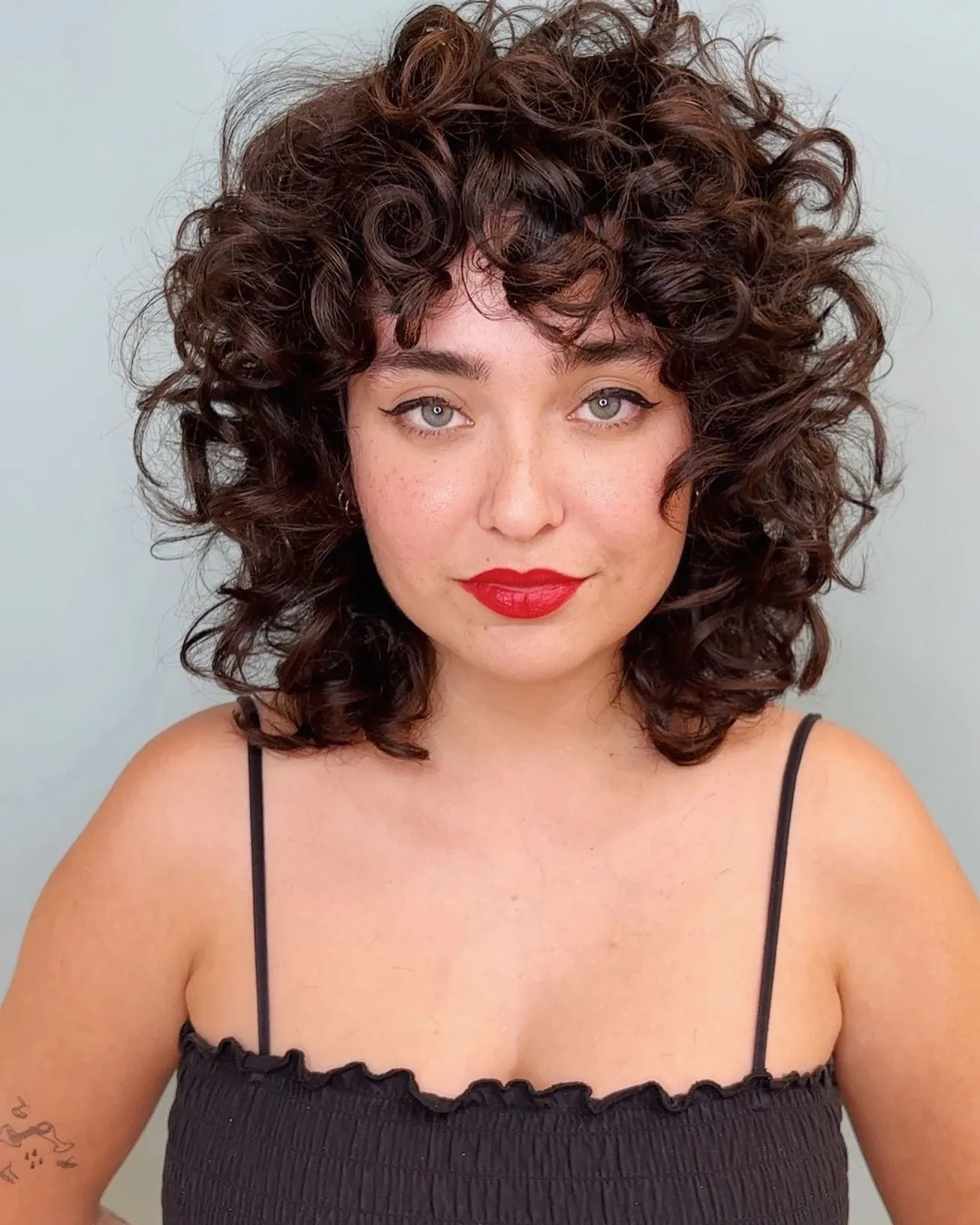
A curly shag bob uses short, rounded layers to distribute natural volume from crown to ends. On thick curls, that helps prevent a heavy shelf at the perimeter and gives the fringe enough lift to sit separately from the rest of the shape.
Best for: Dense curls that spring up naturally around the crown.
Long Curly Layers
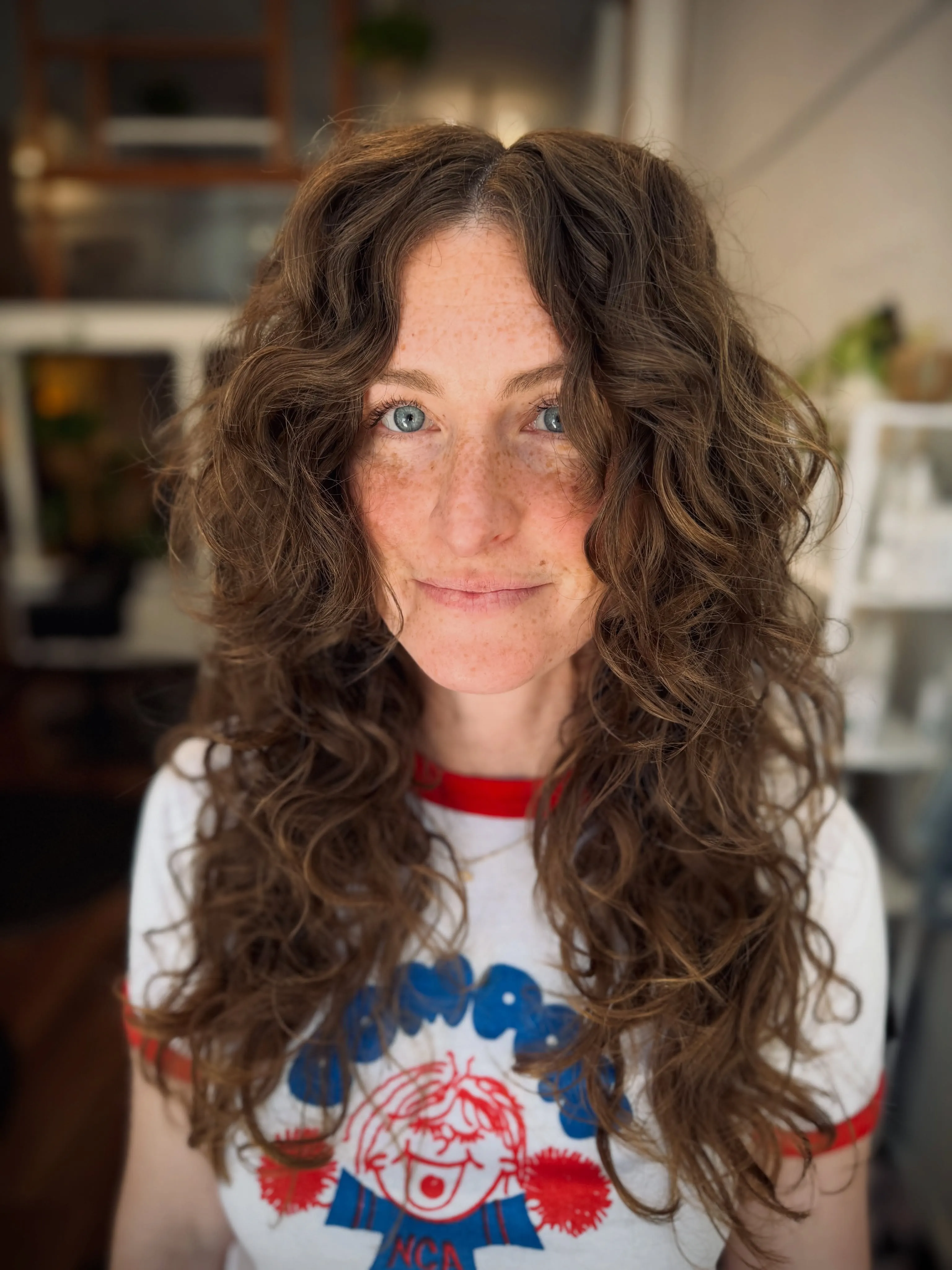
Long curly layers keep the length but remove the solid, weighted feeling that dense curls can develop. The graduated shape encourages each curl group to sit at a different level, creating definition without flattening the top.
Curtain Bang Layers
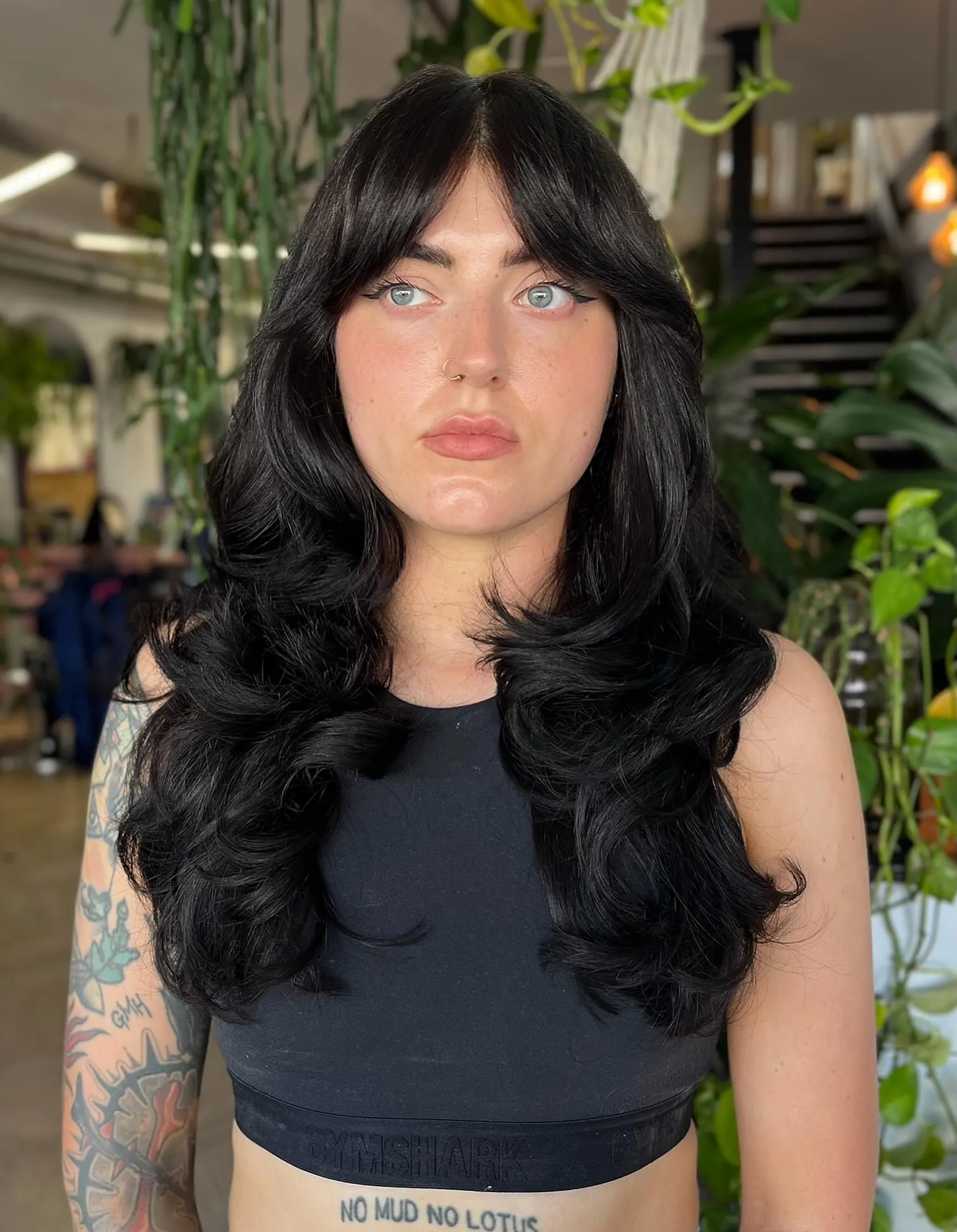
Long curtain bangs connect into sweeping layers through the sides, which is useful when thick straight hair needs movement near the face. The flipped ends spread the volume over several levels instead of leaving one dense line at the bottom.
Soft Long Layers
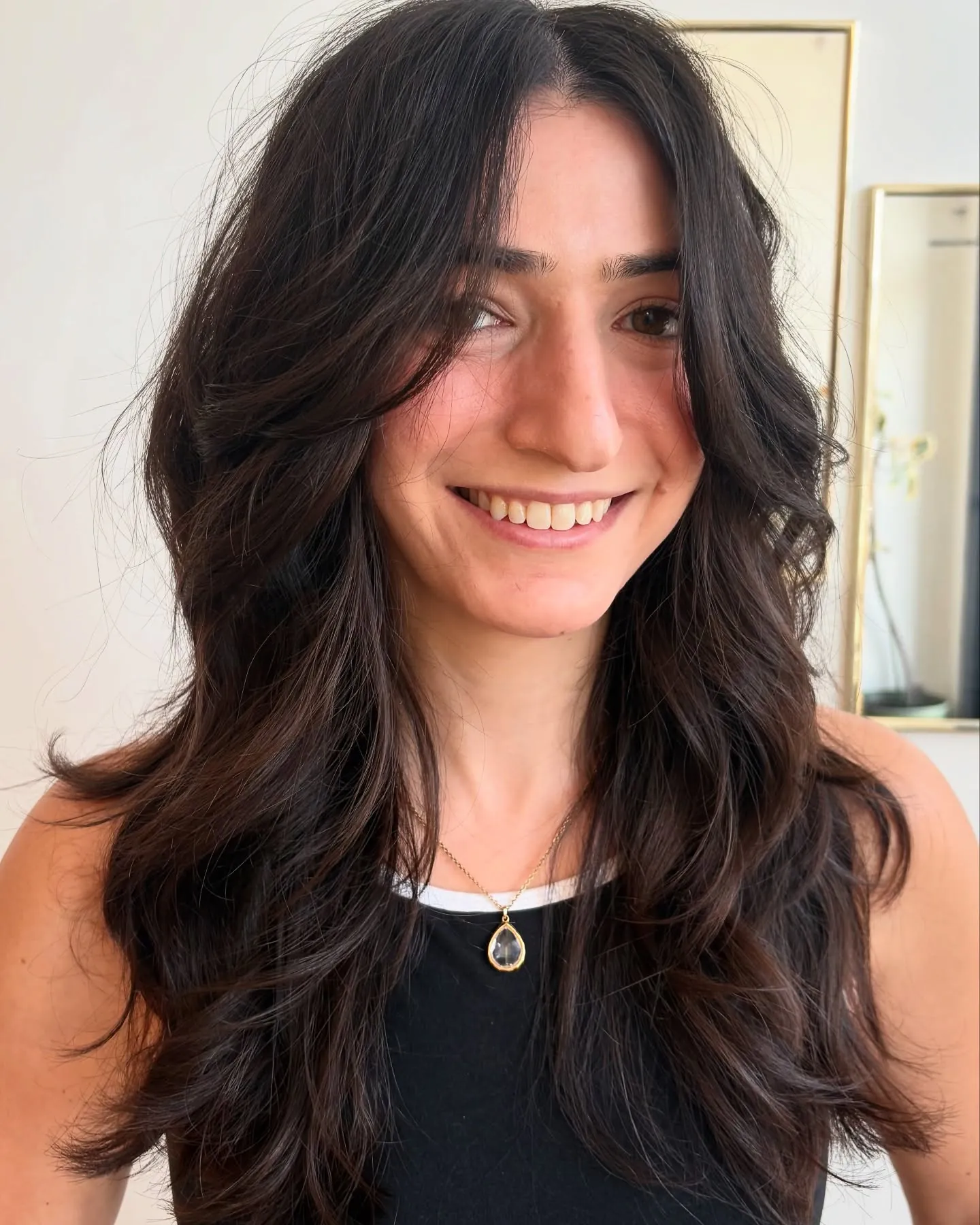
Soft, widely spaced layers are a good option when thick hair needs shape but not a dramatic shag. The shorter front pieces remove weight around the face, while the longer back keeps enough density for a full, smooth perimeter.
Shaggy Layers With Bangs
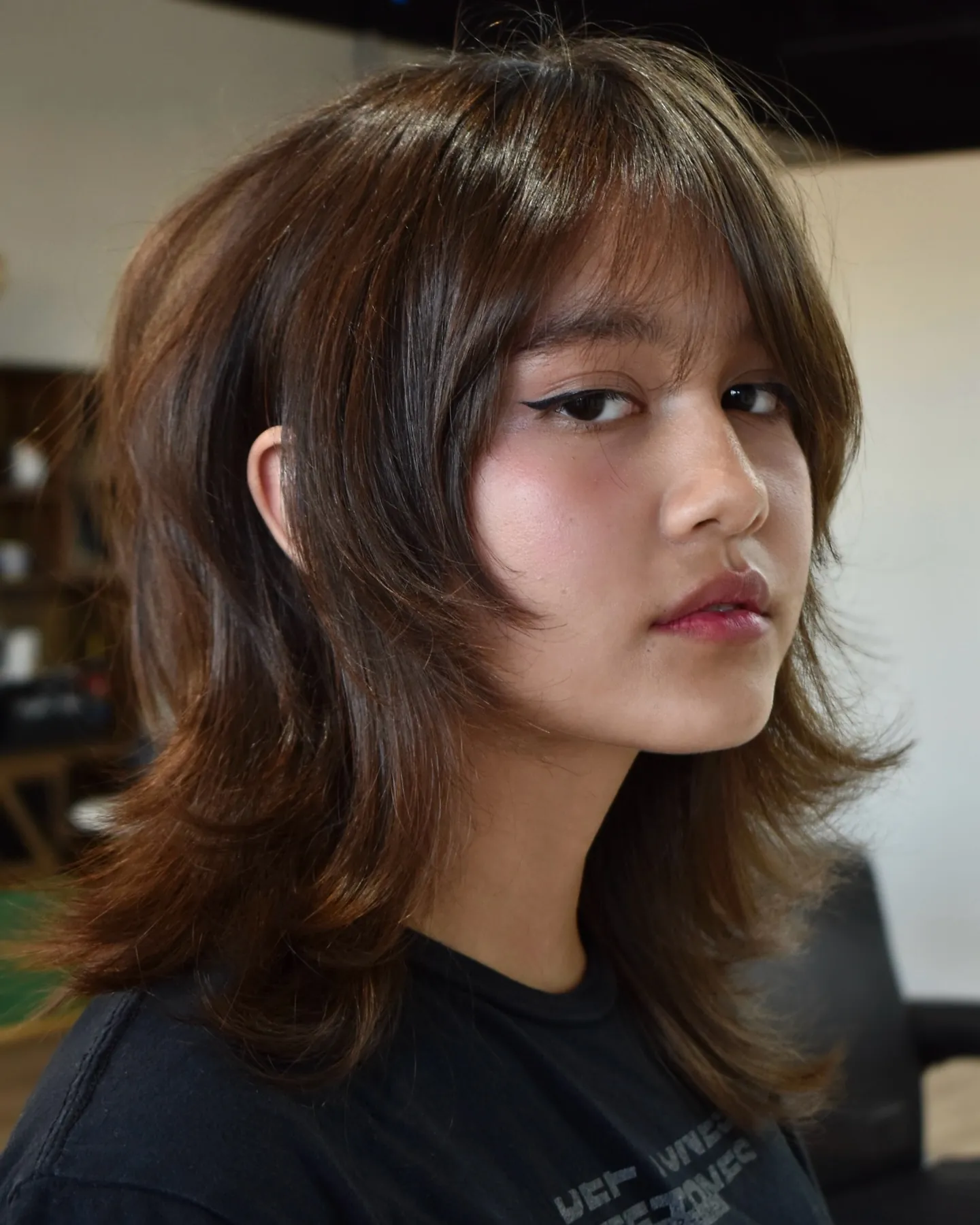
This shoulder-length shag breaks thick hair into shorter sections around the crown, fringe, and ends. That uneven distribution stops the cut from feeling blocky, and the flicked ends make the natural density work as part of the shape.
Shoulder-Length Shag
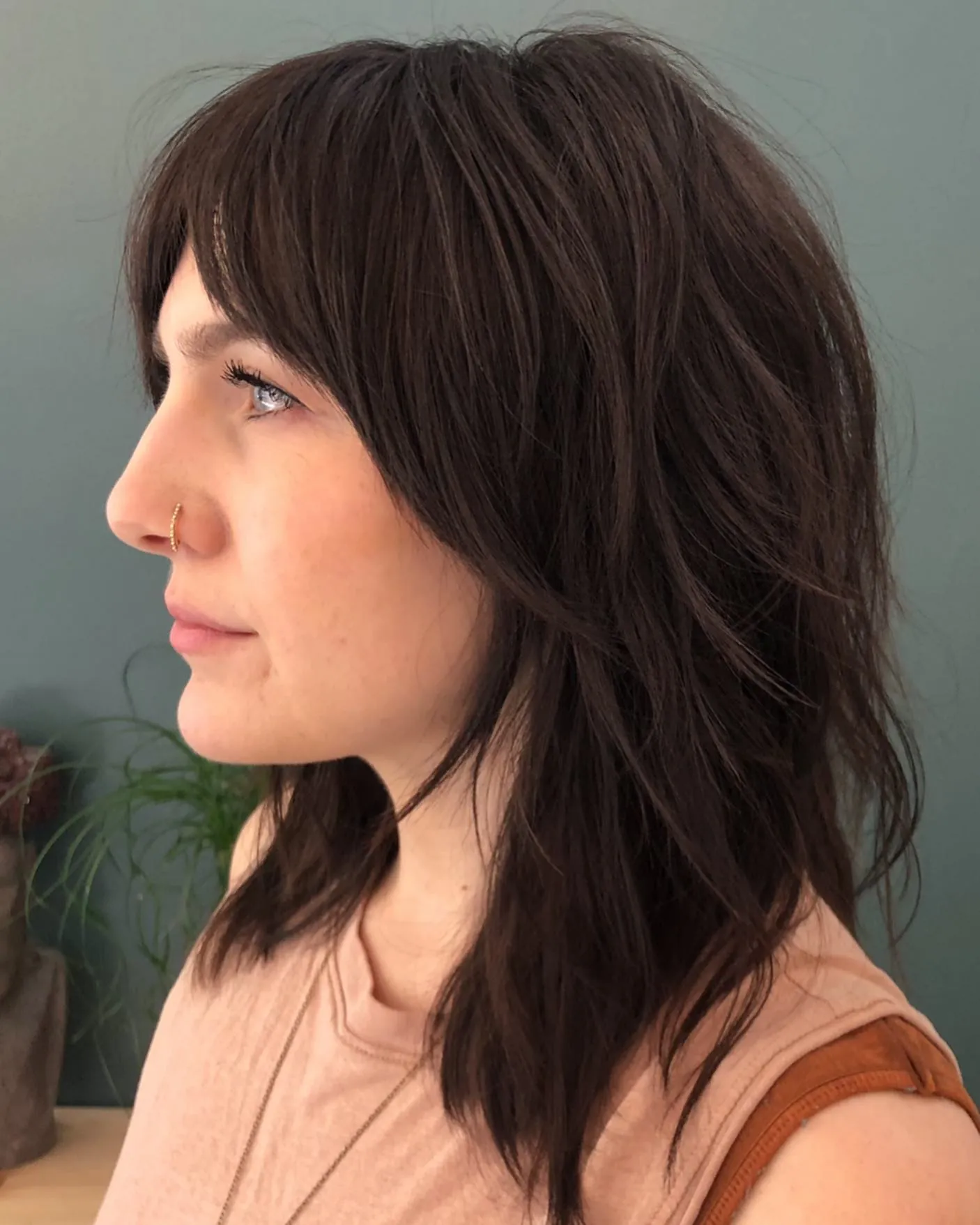
A shoulder-length shag with subtle face-framing pieces removes bulk without creating a heavily layered finish. The broken-up ends keep dense hair from sitting as one solid mass, while the longer front maintains a softer outline.
Long Shag With Fringe
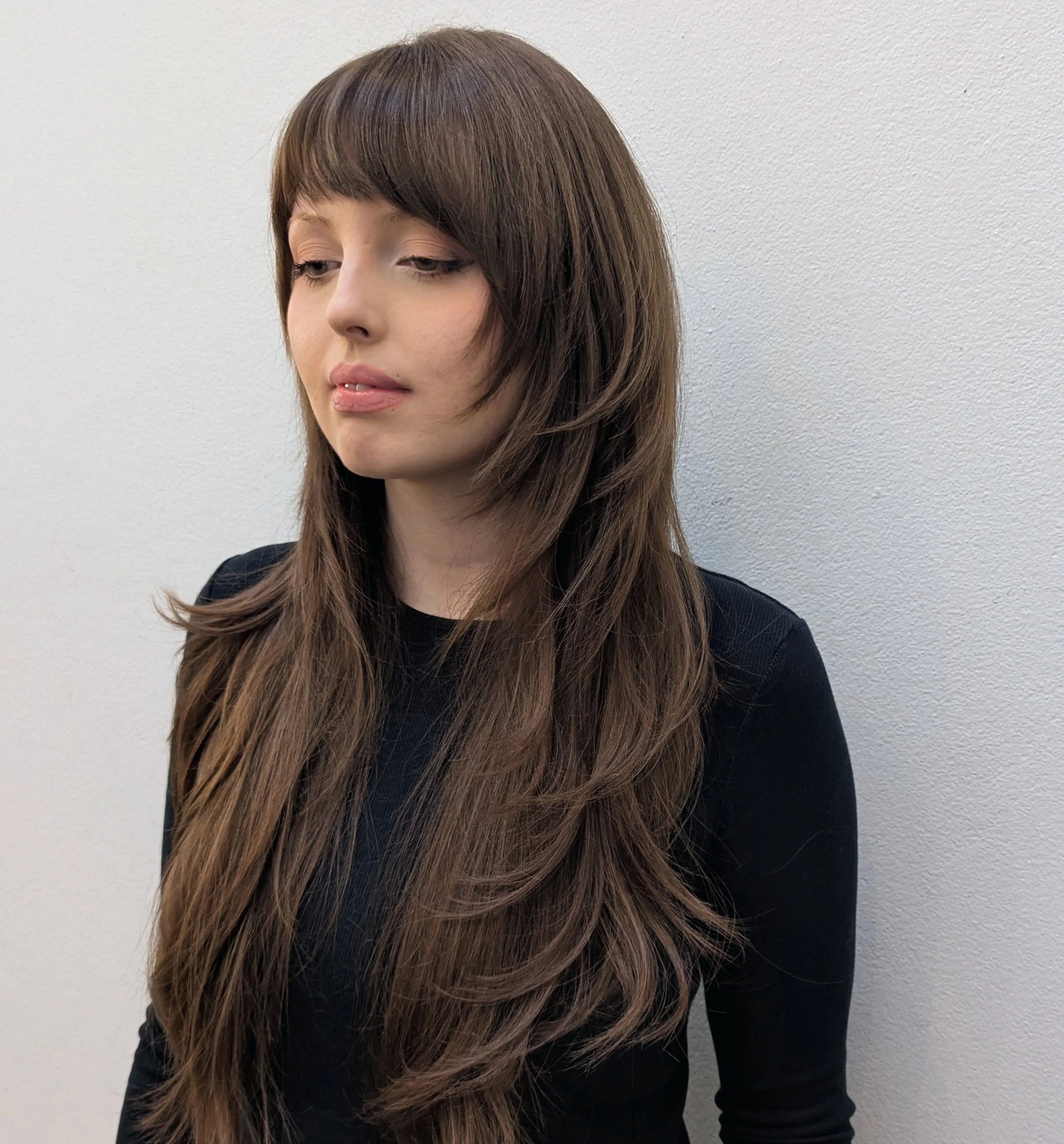
A long shag pairs a full fringe with progressive layers that begin high around the face and continue through the length. On thick hair, that structure creates separation through the mid-lengths so the ends do not carry all the weight.
Layered Long Bob
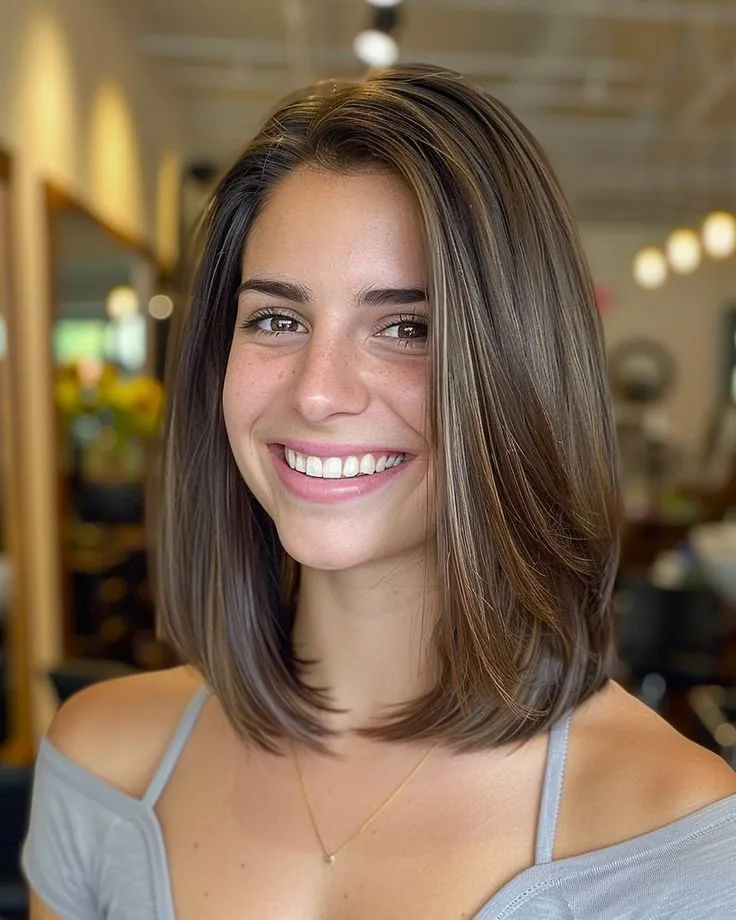
A layered long bob is one of the quieter ways to control thick hair. Subtle internal and face-framing layers keep the shoulder-length shape smooth while preventing the ends from looking too dense or square.
Easy to maintain: Keep the perimeter strong and refresh the face frame between full cuts.
Bouncy Mid-Length Layers
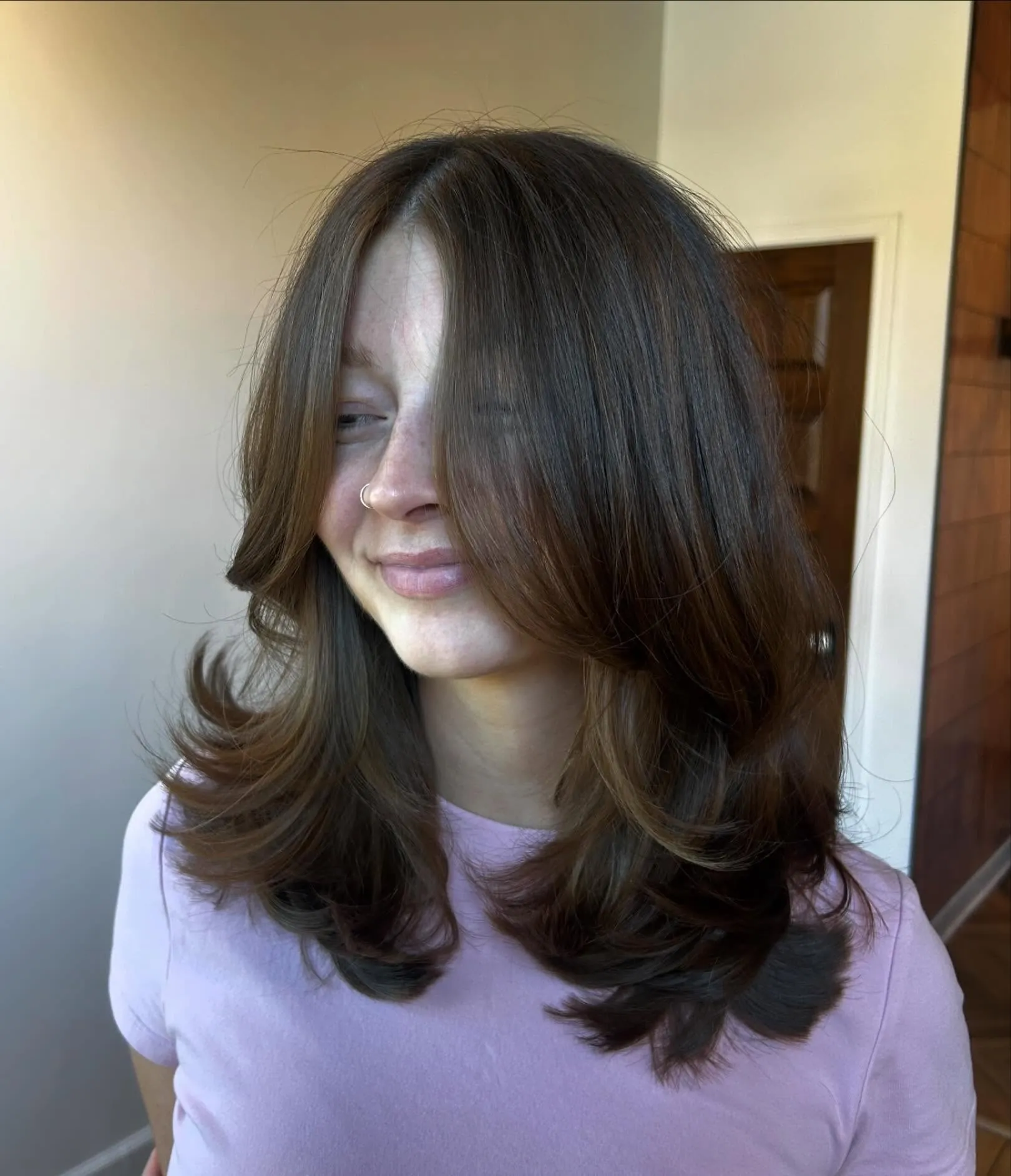
Bouncy mid-length layers work with thick hair by turning its natural fullness into a rounded silhouette. The shorter pieces around the face and the flipped ends keep the volume moving outward in stages rather than building into one heavy section.
Long Rounded Layers
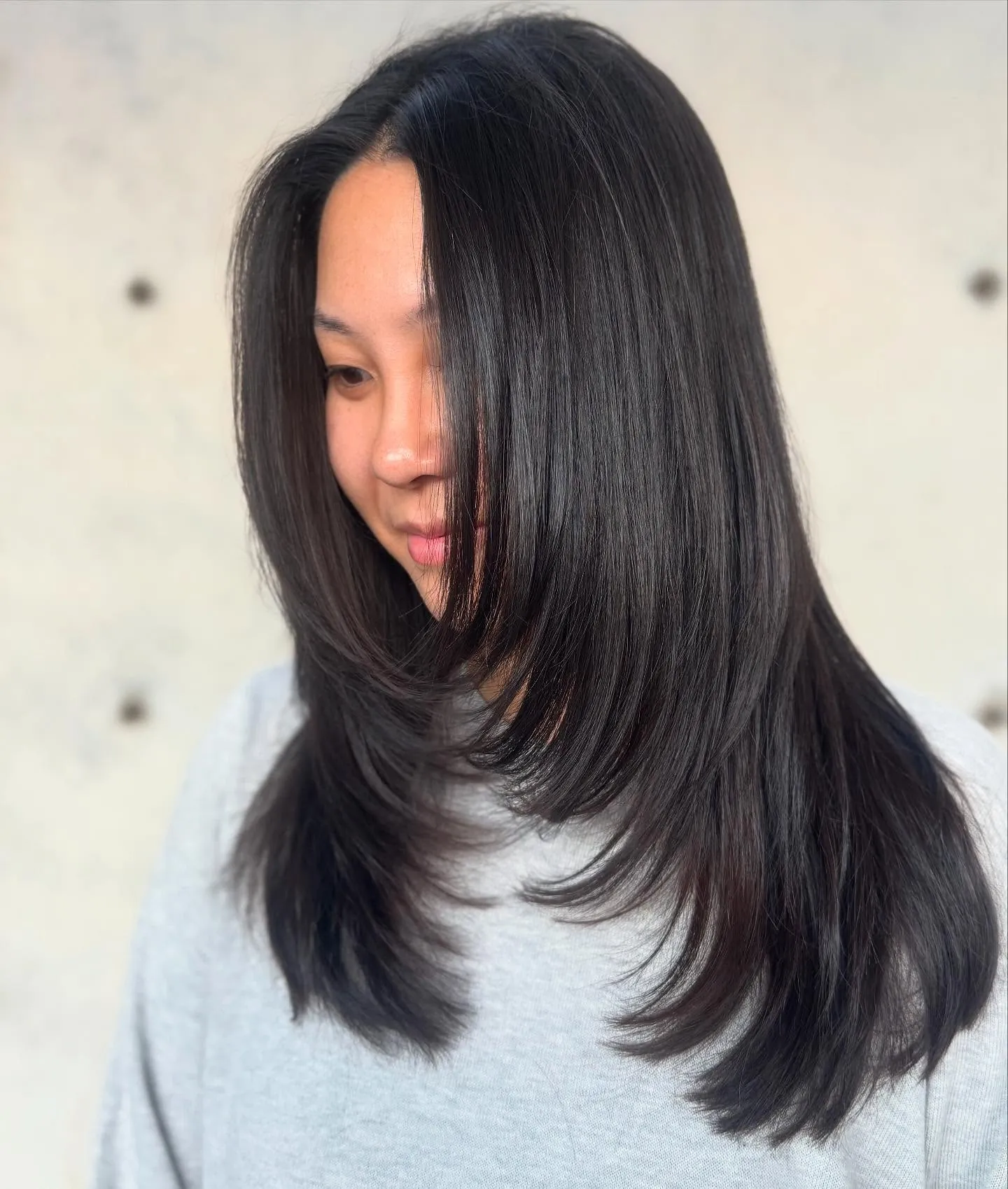
Long rounded layers remove weight mainly through the lower half, so dense straight hair can keep a sleek surface without looking flat or bottom-heavy. The curved ends also give the perimeter movement while preserving plenty of length.
Face-Framing Butterfly Cut
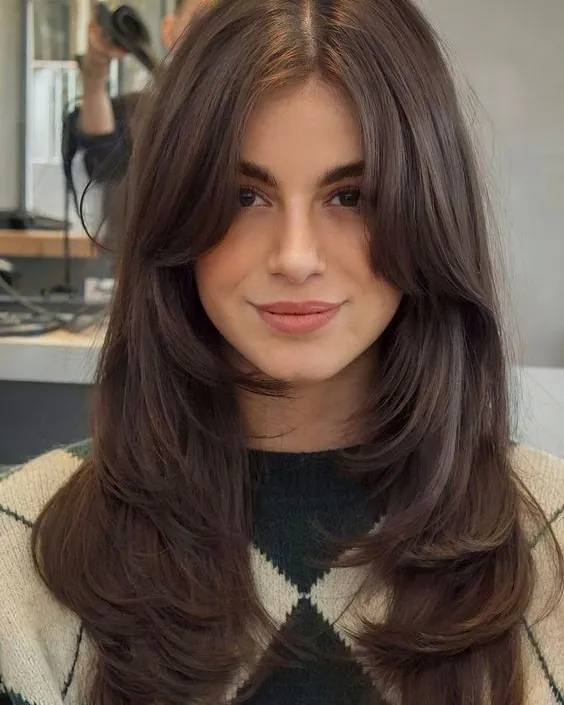
A butterfly cut brings shorter face-framing layers into the upper half of thick hair, creating lift around the cheeks and collarbone. The longer base stays full, so the cut reduces bulk without making the overall length look thin.
Feathered Long Layers
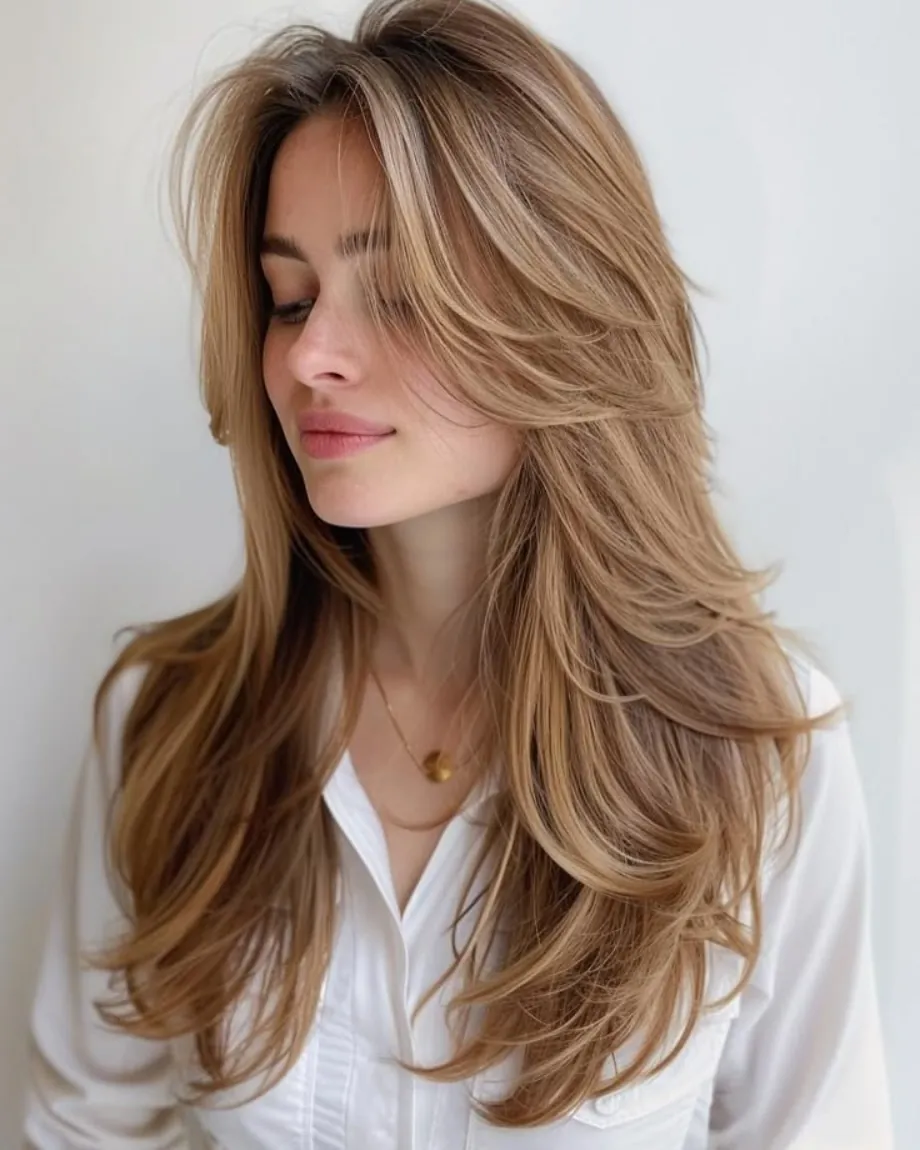
Feathered long layers are ideal for turning dense hair into a lighter, flowing shape. The front sections step gradually away from the face and the tapered ends prevent the length from forming a thick, blunt curtain.
Full Butterfly Layers
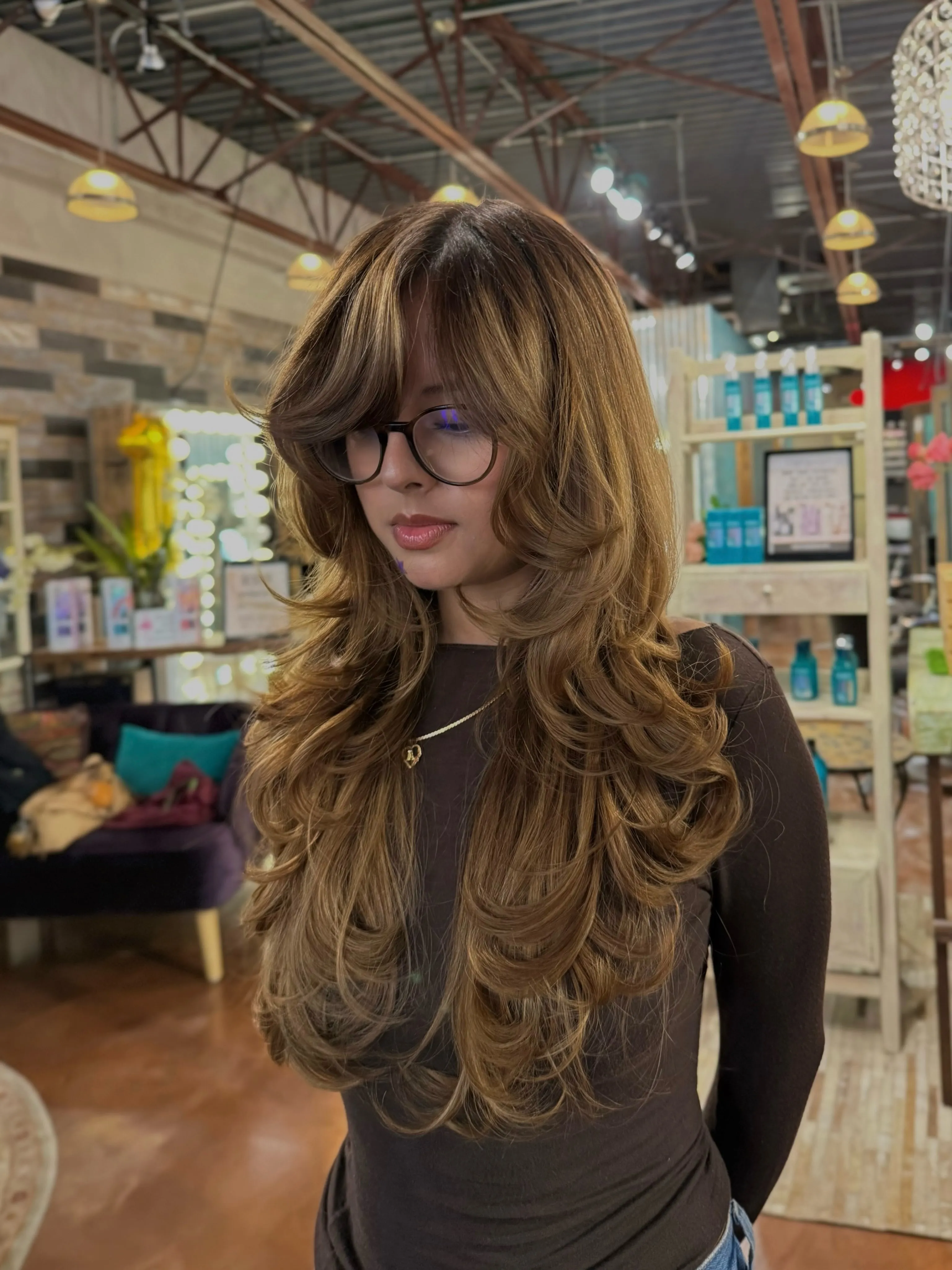
Full butterfly layers make the most of very dense hair by spreading volume from the crown through the long ends. The curtain fringe and repeated curved layers create visible separation, which keeps the overall shape from collapsing into one heavy mass.
For root volume: Dry the shorter crown layers away from the scalp before shaping the ends.
Layered Shag With Bangs
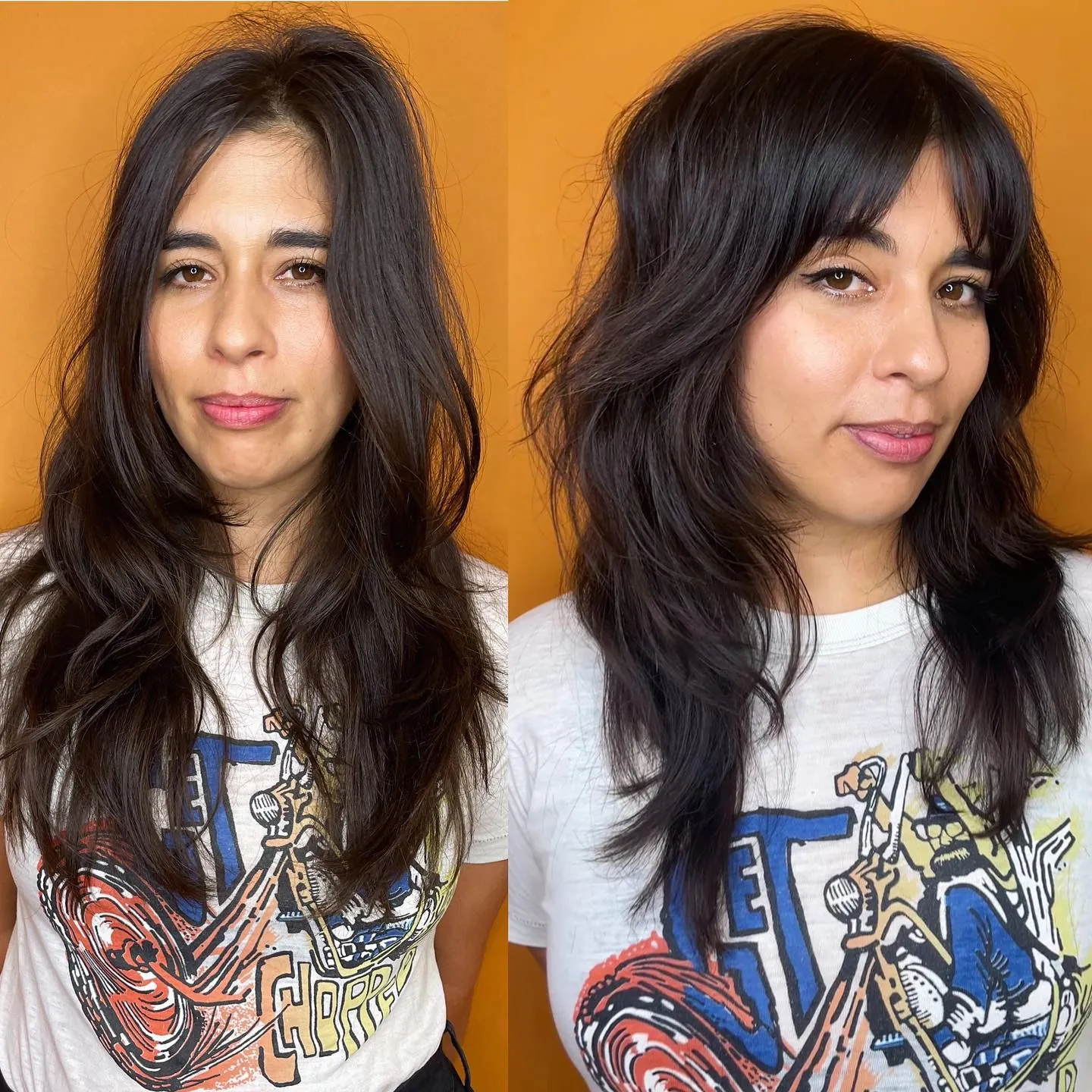
A layered shag with bangs shifts the weight upward, replacing a long, uniform outline with a shorter, more textured shape. For thick hair, the added fringe and face layers make the cut feel lighter around the front while keeping natural fullness through the sides.