
Layered Bob Haircuts for Thick Hair: 15 Ideas That Tame and Impress
Thick hair gives a bob plenty of body, but the right layers decide whether that fullness feels shaped or heavy.
These cuts use graduation, fringe, texture, and weight removal to create movement without sacrificing density.
Look closely at where each style keeps volume and where it releases it before choosing your next bob.
Shaggy Layered Bob with a Flipped Nape
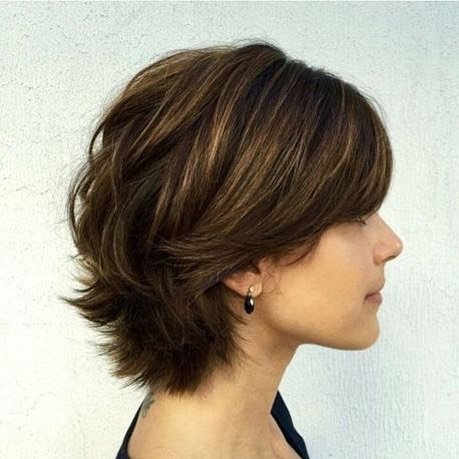
This short bob uses plenty of layering through the crown and back to take weight out of thick hair.
The side-swept front stays smooth, while the flicked nape keeps the silhouette light and slightly undone.
It is a useful shape when you want movement without losing the fullness that makes thick hair look healthy.
Best for: Thick straight or softly wavy hair that needs a lighter outline.
Ask your stylist: For internal layers and a softly tapered nape rather than heavy thinning at the surface.
Rounded Bob with a Heavy Side Fringe
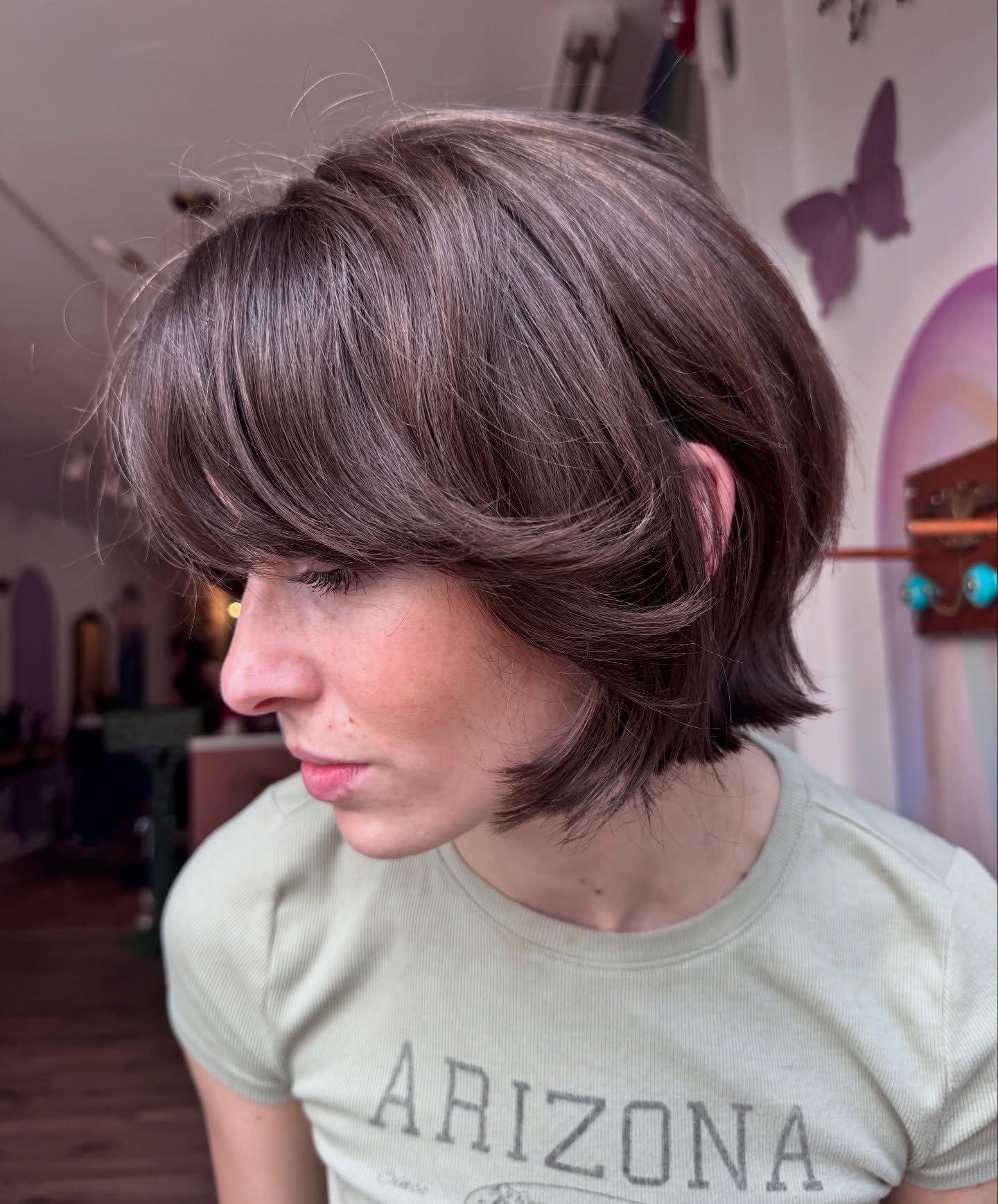
The rounded crown gives this bob a compact shape, while the long side fringe breaks up the fullness around the face.
Layering is concentrated through the ends, helping dense hair curve neatly instead of widening at the sides.
The slightly tousled finish stops the style from looking too controlled.
Works great if: You like a short bob but still want enough fringe to tuck or sweep aside.
For that finish: Blow-dry the fringe across the forehead, then bend the ends with a medium round brush.
Chin-Length Bob with Curtain Fringe

This chin-length shape has a soft centre opening that lets the fringe frame the cheekbones.
The ends curve inward around the jaw, giving thick hair a tidy outline without making the cut look blunt.
Shorter layers near the front add movement while the back remains smooth and balanced.
Best for: Thick hair that holds a rounded shape well.
Quick styling: Direct the fringe away from the face with a small round brush while it is still damp.
Tousled Short Bob with Piecey Fringe
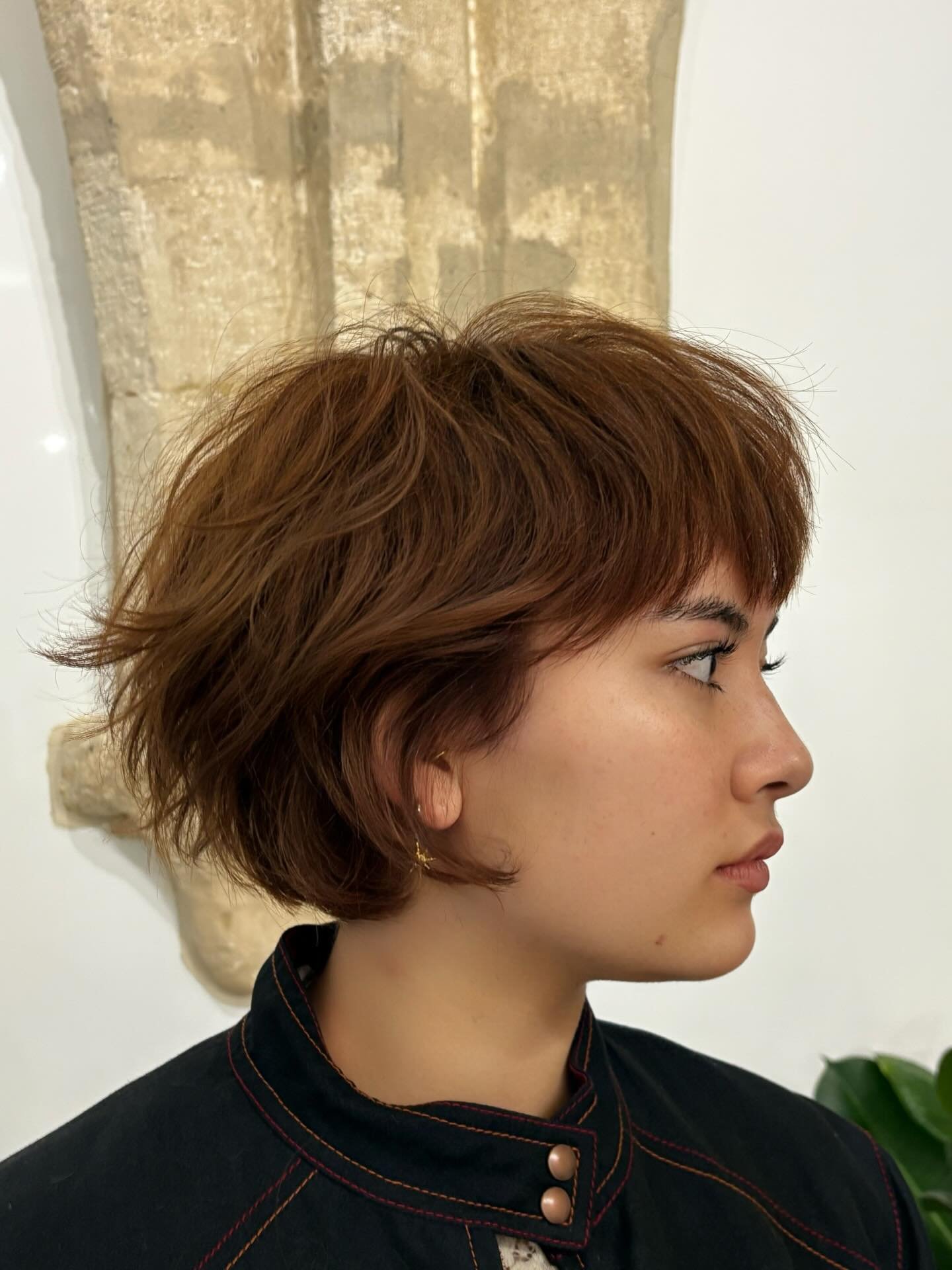
The broken fringe and uneven layers give this short bob a relaxed, airy finish.
Flicked ends around the ears and nape remove visual weight, which helps dense hair sit closer to the head.
This cut can be worn textured or smoothed, so it does not rely on one exact finish.
Works great if: Your thick hair has a natural bend or responds well to texture spray.
At home tip: Twist small sections while drying, then separate them with your fingers instead of a brush.
Voluminous Side-Parted Curved Bob
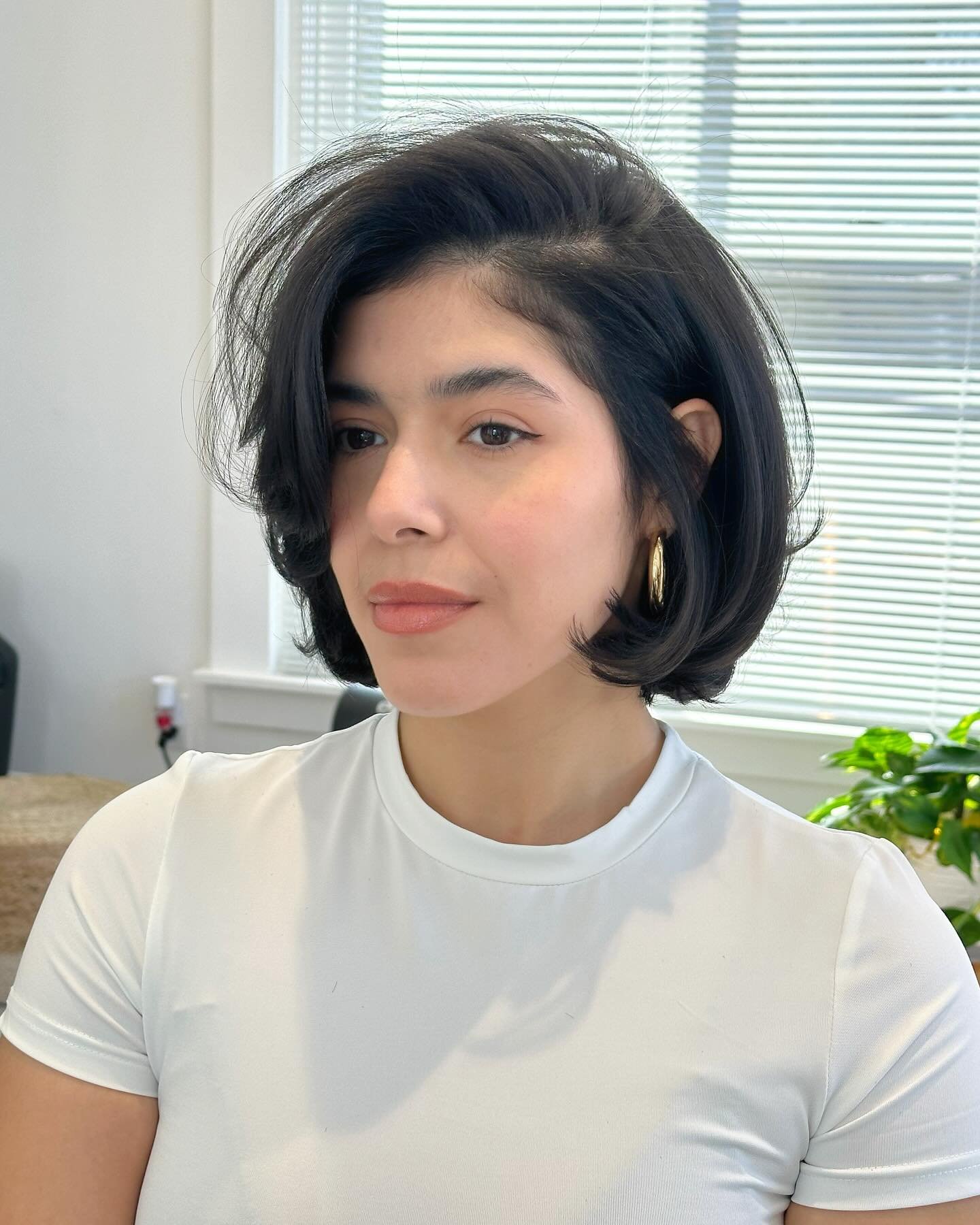
The deep side part creates lift through the front and gives the rounded bob a more open shape.
Long layers remove bulk beneath the surface while preserving the smooth, full outer line.
The curved-under ends frame the jaw and keep the volume controlled rather than boxy.
Best for: Thick straight hair that naturally holds body.
For root volume: Dry the front section in the opposite direction first, then sweep it back into place.
Shoulder-Length Bob with Curtain Layers
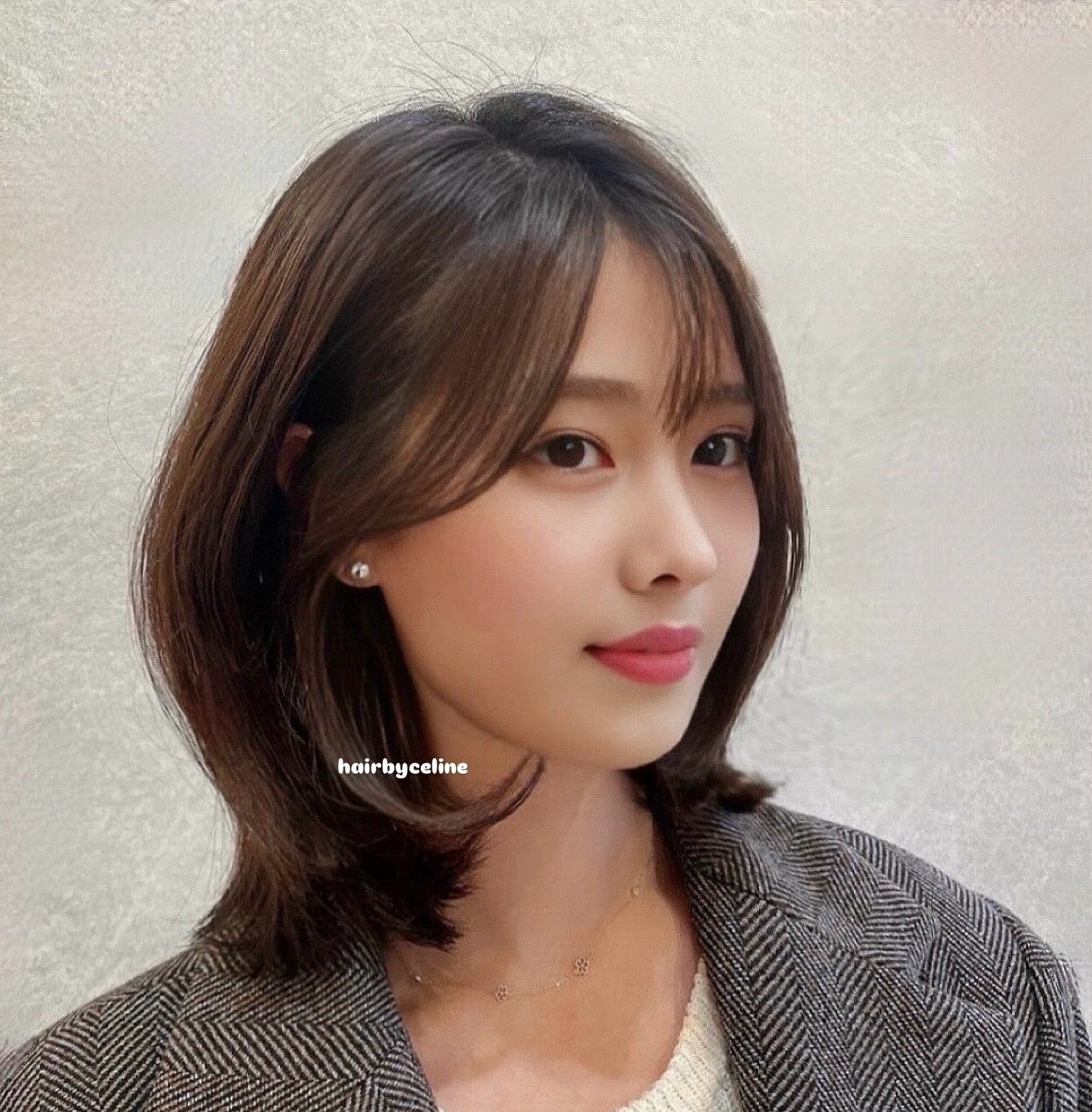
This longer bob uses curtain layers to open the face and guide the thickness away from the cheeks.
The lower layers flick outward slightly, giving the cut movement without creating too much width.
Keeping the perimeter near the shoulders makes it easier to tie the hair back on busy days.
Best for: Thick hair that feels too heavy in a one-length lob.
Ask your stylist: For long face-framing layers and weight removal underneath the perimeter.
Wavy Shag Bob with Tapered Ends
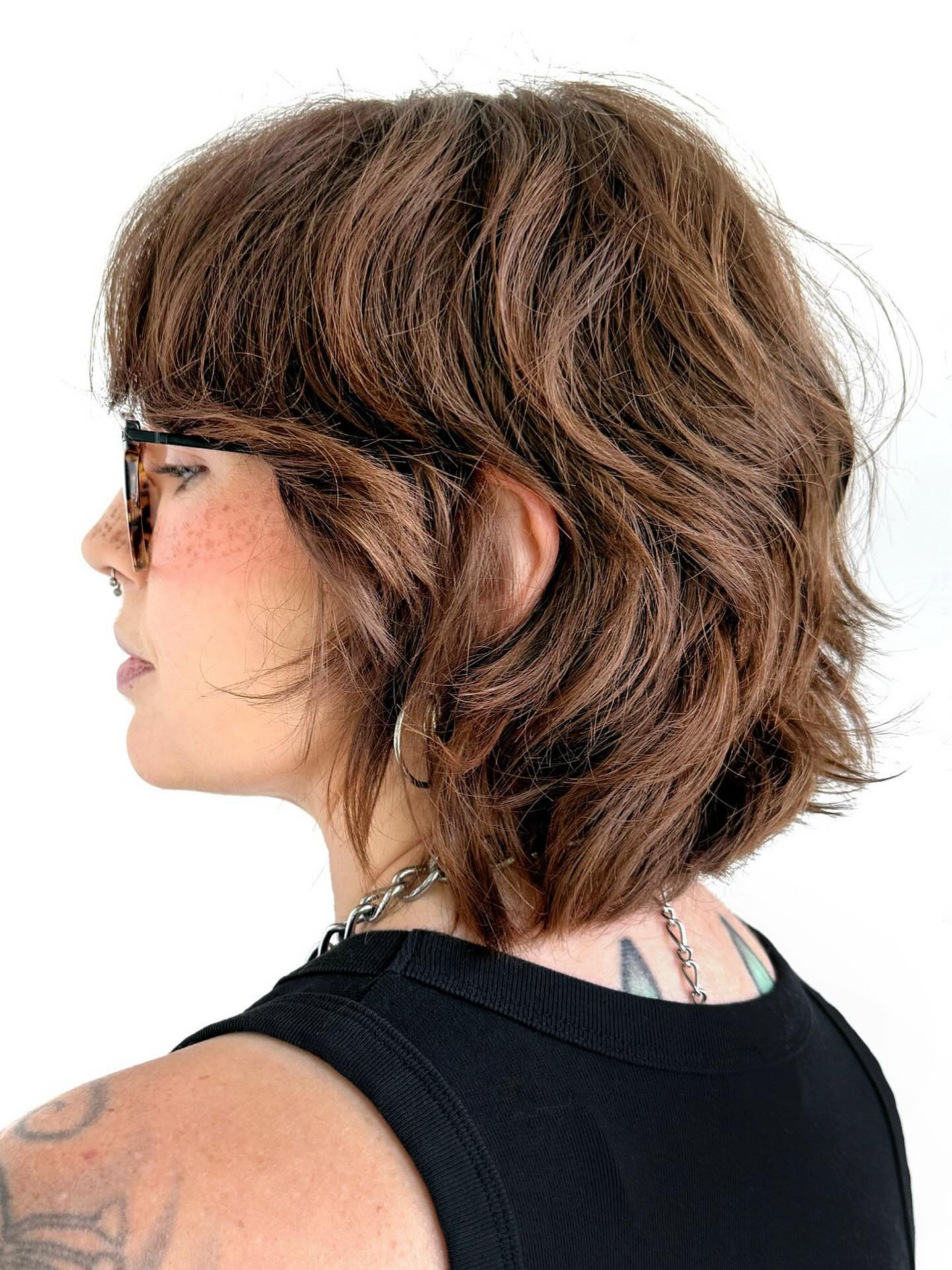
This side view shows how shorter crown layers can lift thick hair without making the ends feel bulky.
The waves separate the layers clearly, while the tapered nape keeps the back controlled.
It is a practical option when you want visible texture and a shape that improves as it becomes slightly undone.
Works great if: Your hair has natural waves or loose curls.
Fighting frizz: Apply a light curl cream through damp lengths and avoid brushing once the hair is dry.
Graduated Bob with a Long Side Fringe
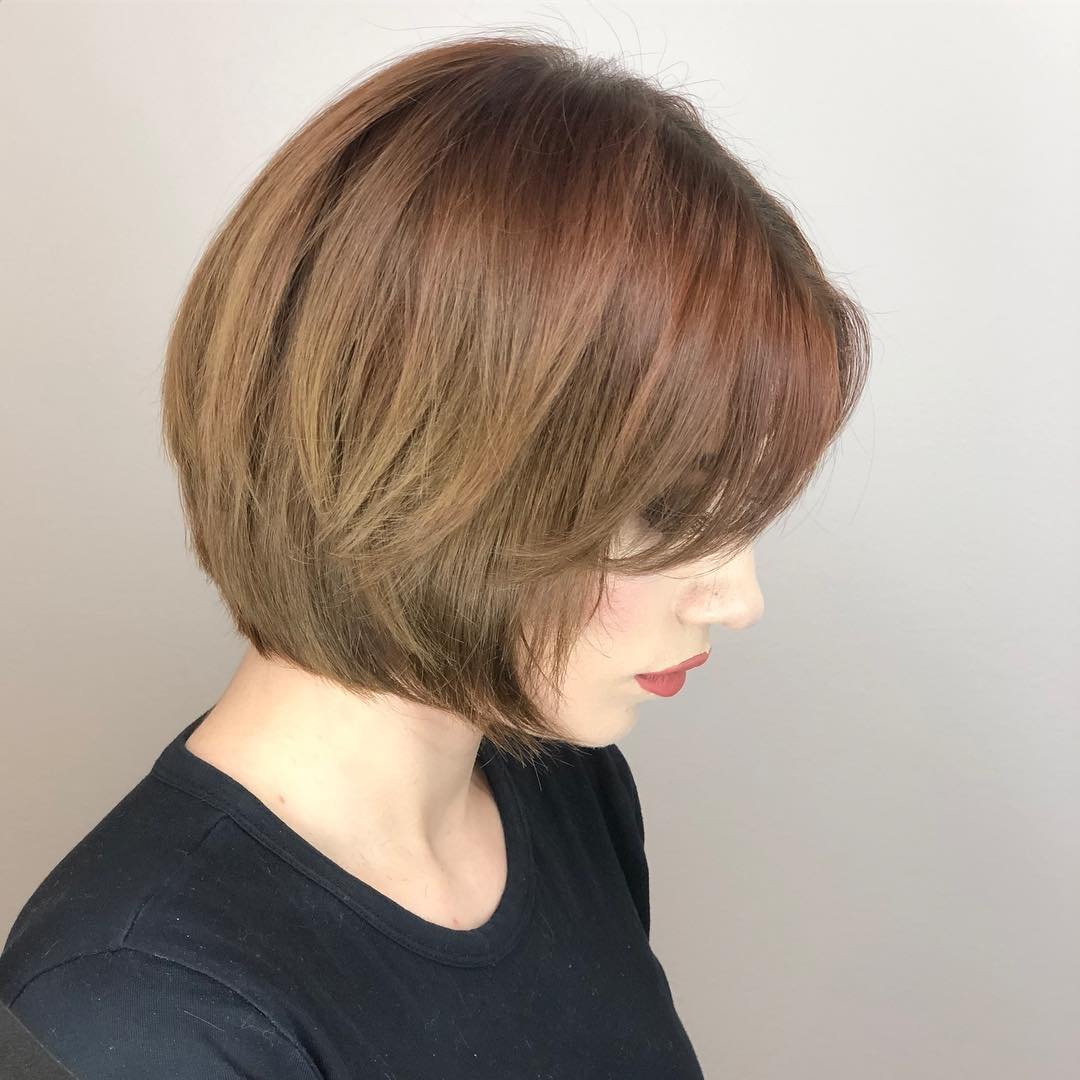
The shorter stacked back creates a clean curve, while the longer front keeps the bob elegant and face-framing.
A sweeping fringe blends into the side length, so the graduation does not look too severe.
This structure removes bulk at the nape and redistributes volume through the crown.
Best for: Very thick straight hair that needs a defined shape.
Salon tip: Ask for graduation at the back with soft internal texturising through the heavier side sections.
Feathered Bob with Swept Side Layers
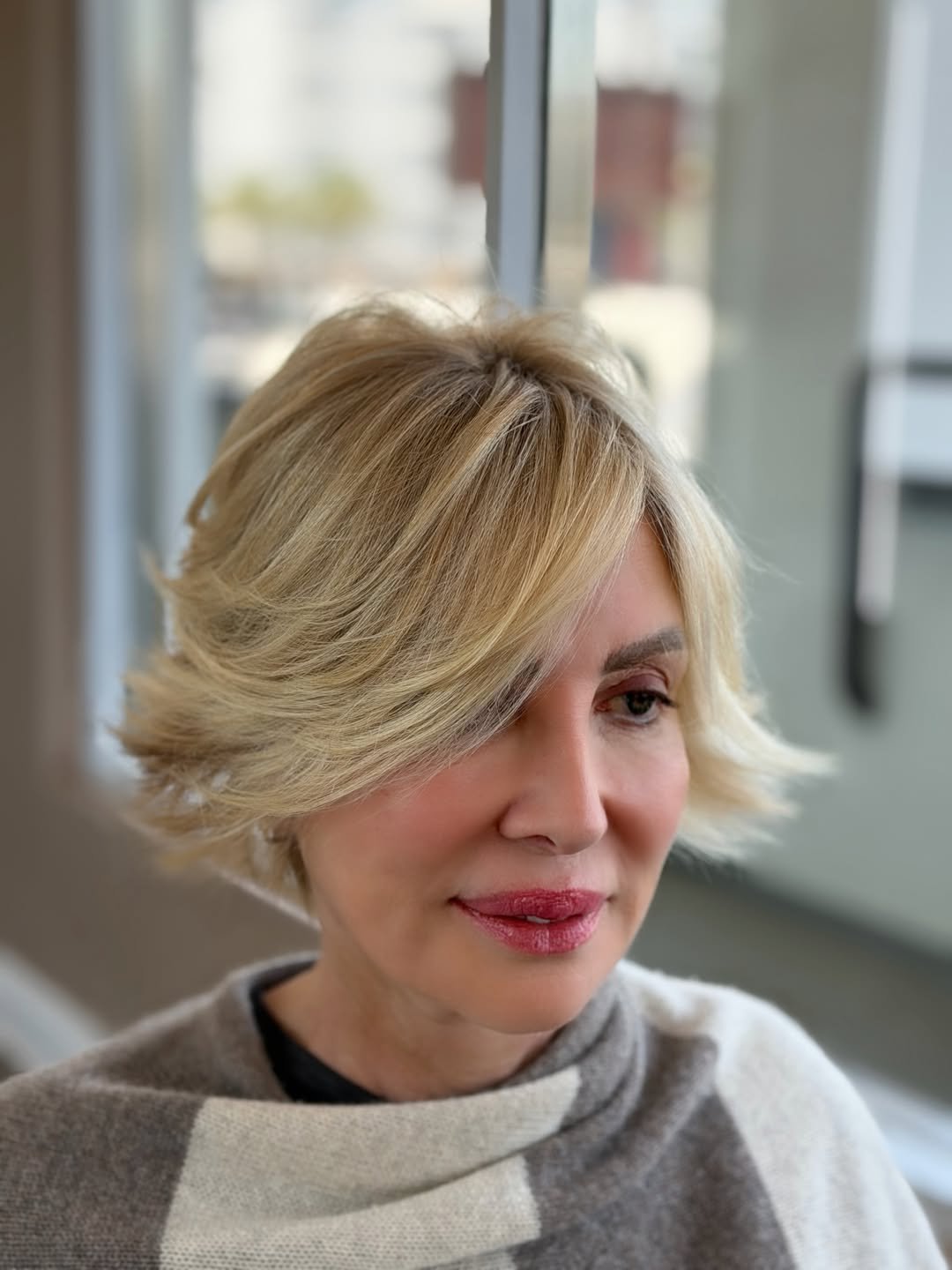
The long side fringe blends into feathered layers that turn outward around the cheeks and nape.
This direction helps thick hair feel lighter and gives the cut a lifted, polished profile.
The back stays short enough to hold its shape while the front remains soft and movable.
Best for: Thick hair that becomes flat at the crown but bulky at the ends.
For that finish: Use a round brush to lift the roots and turn only the last few centimetres outward.
Rounded Stacked Bob with a Clean Baseline
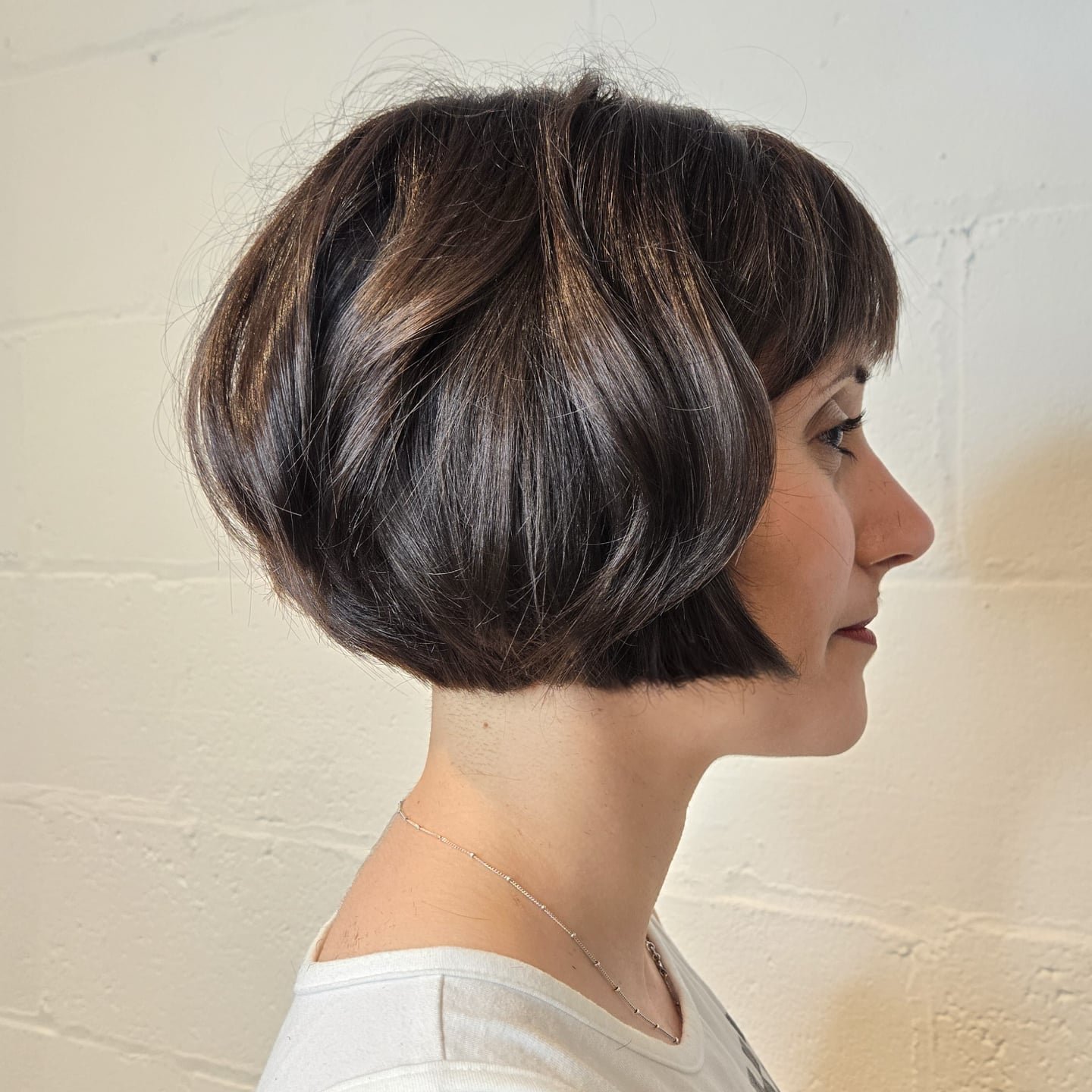
The smooth crown and rounded back create a precise shape that shows off the natural density of thick hair.
Subtle internal layering keeps the curve full without leaving a heavy block of hair at the nape.
The clean baseline makes the cut look polished even when the surface is styled with only a little movement.
Best for: Straight, dense hair that holds a sculpted bob shape.
Easy to maintain: Keep the nape trimmed regularly so the rounded profile does not lose its definition.
Soft Layered Bob with Centre-Parted Fringe
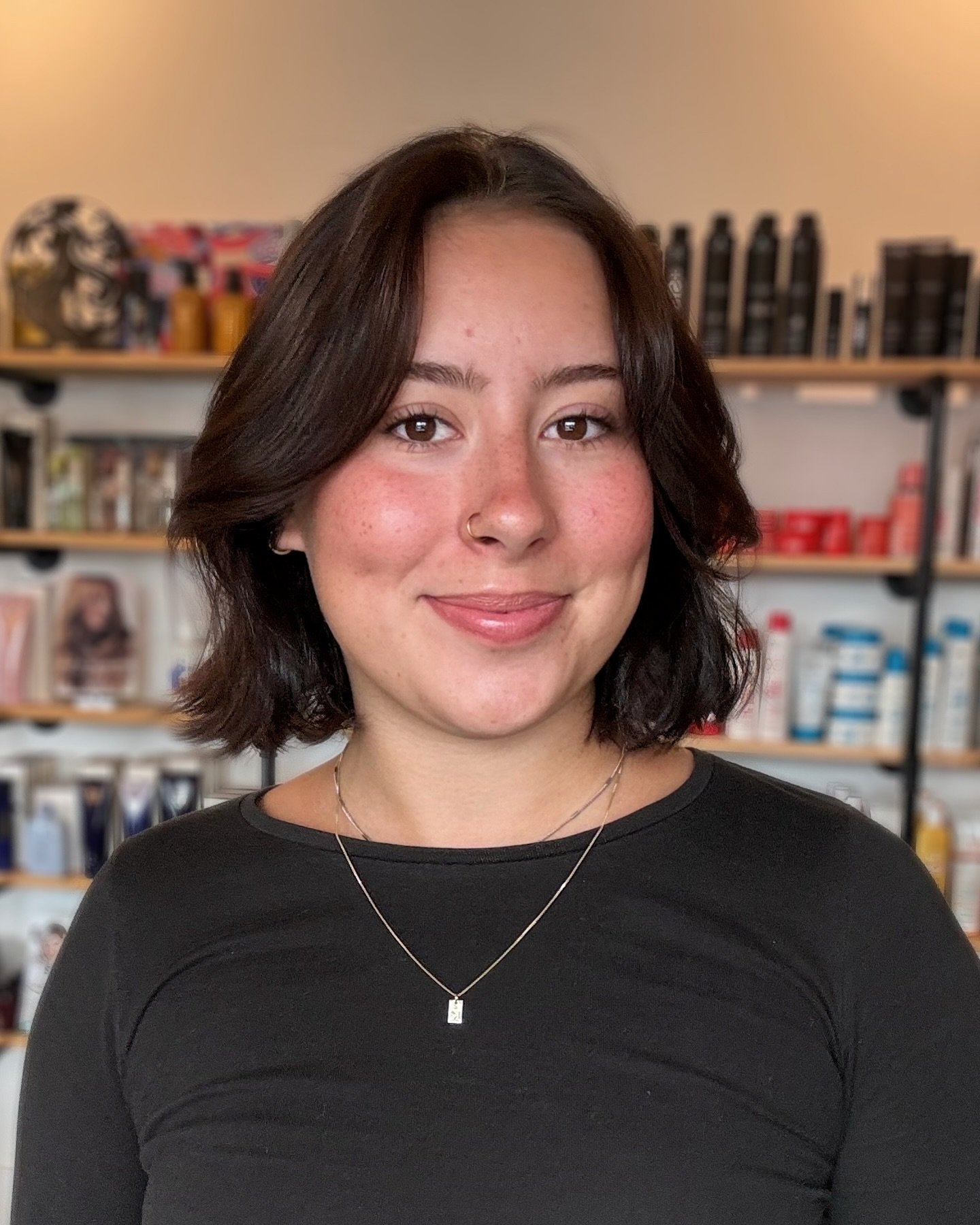
This bob sits between the chin and shoulders, with a centre-parted fringe that blends into the sides.
Light layering through the lower half allows thick hair to move instead of resting in one heavy line.
The softly flipped ends give the shape a casual finish that works well with natural texture.
Works great if: You want a bob that can still be tucked behind the ears.
Morning hack: Refresh only the fringe and outer layers with a round brush rather than restyling the whole cut.
Deep Side-Swept Bob with Rounded Ends
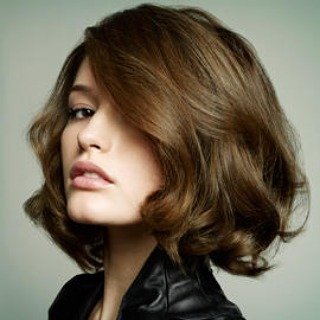
The deep side sweep creates strong movement across the forehead and balances the fullness at the ends.
Large curved layers shape the bob around the jaw while preventing thick hair from forming a solid triangle.
The smooth finish feels polished, but the layers keep the shape from feeling stiff.
Best for: Dense hair that responds well to a smooth blow-dry.
Holds better with: A light mousse at the roots and a flexible spray through the curved ends.
Choppy Shag Bob with a Short Fringe
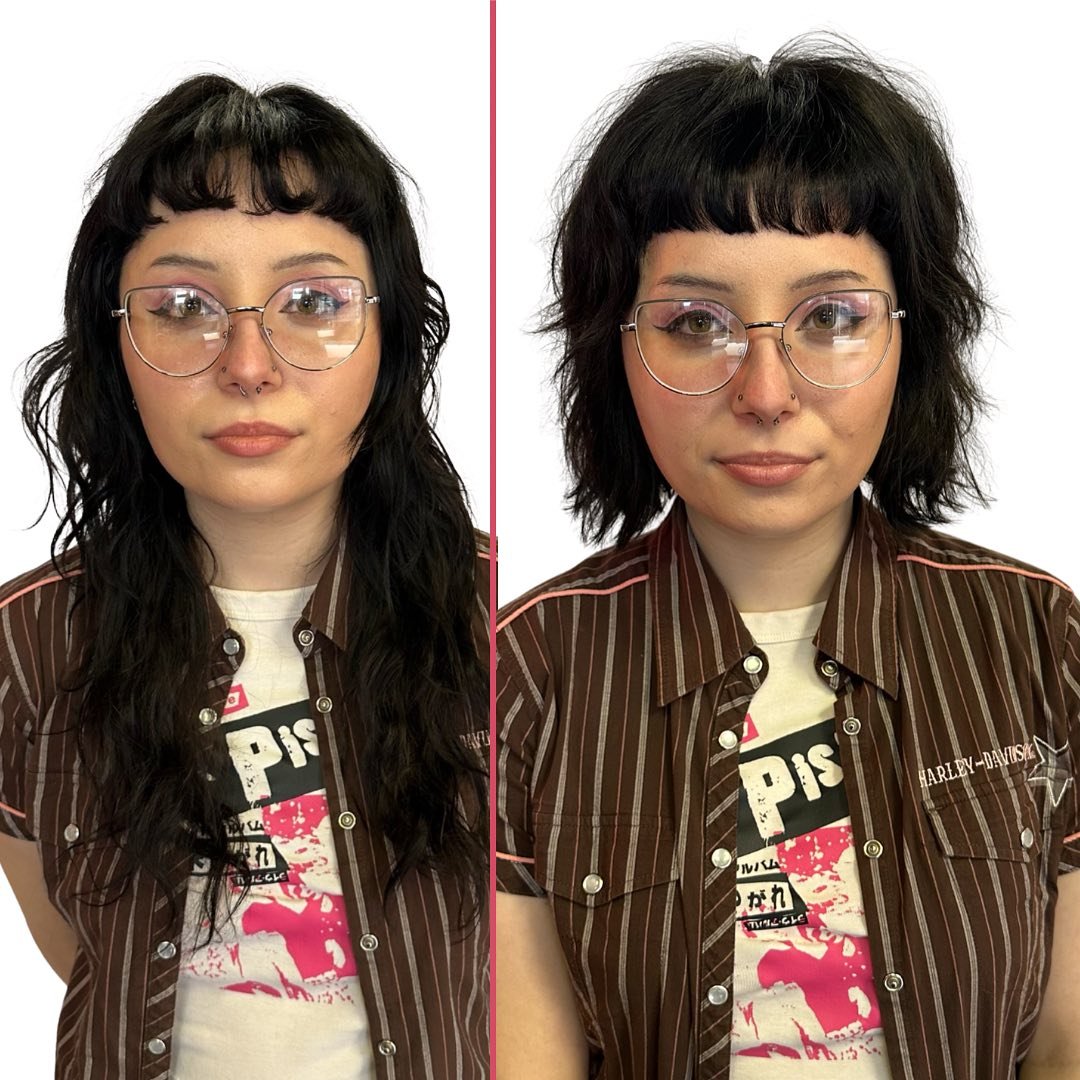
This transformation shows how a short shag bob can remove substantial length and weight from thick hair.
The short fringe and choppy perimeter give the final cut a graphic shape, while uneven layers stop it from looking dense.
It is a bold option that works best when you enjoy visible texture rather than a perfectly smooth outline.
Ask your stylist: For a short textured fringe and disconnected layers that still blend around the sides.
Good to know: The fringe needs regular trims even when the rest of the shag is allowed to grow softer.
Curly Shag Bob with a Full Fringe

This shaggy bob uses a full fringe and rounded layers to distribute thick curls around the entire head.
Shorter pieces at the crown prevent the top from falling flat, while the uneven ends keep the lower shape airy.
The slightly messy finish suits natural waves and curls because every section does not need to match.
Best for: Thick wavy or curly hair that needs weight removed through the crown and sides.
Heat free: Scrunch in curl cream and let the hair dry with minimal handling to protect the texture.
Wavy Long Bob with Internal Layers
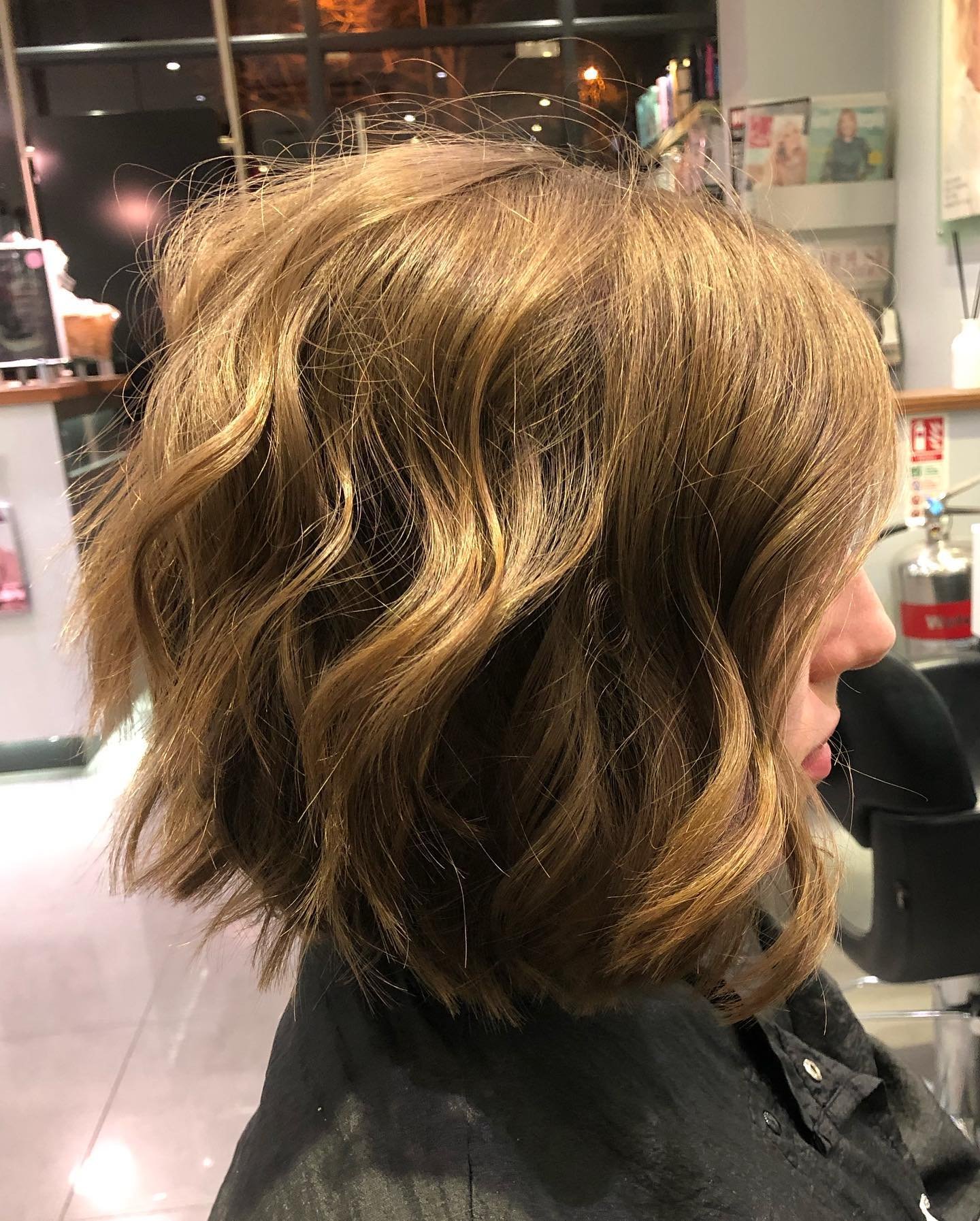
This shoulder-length bob keeps a strong outer shape while hidden layers release weight from the thick interior.
Loose waves reveal the movement through the sides without making the ends look thin.
The longer length gives you styling flexibility while still feeling noticeably lighter than one-length hair.
Best for: Thick hair that needs weight removal but not a dramatic short cut.
For that finish: Curl wide sections in alternating directions and leave the ends slightly straighter.